
Press Brake Troubleshooting Guide: Why Your Bend Angle Is Inaccurate


Introduction to Press Brake Precision and Common Challenges
In the world of precision metal fabrication, the press brake is the cornerstone of the workshop. Whether you are producing complex aerospace components or simple architectural brackets, the accuracy of the bend angle is paramount. However, one of the most frequent issues operators face is the realization that the final product does not match the programmed specifications. When your Press Brake Troubleshooting: Bend Angle Is Inaccurate, it can lead to wasted material, increased labor costs, and missed deadlines. Achieving a perfect 90-degree bend—or any specific angle—requires a harmonious interaction between the machine, the tooling, the material, and the operator’s input.
At HARSLE, we understand that industrial machinery must perform with high repeatability. An inaccurate bend angle is rarely the result of a single catastrophic failure; rather, it is often a combination of subtle factors ranging from hydraulic fluctuations to material inconsistencies. This guide is designed to provide a deep dive into the technical reasons behind angular deviations and offer actionable solutions to restore your machine’s precision. By understanding the mechanics of air bending and the physics of metal deformation, you can transform your production line from one of trial-and-error to one of consistent excellence.
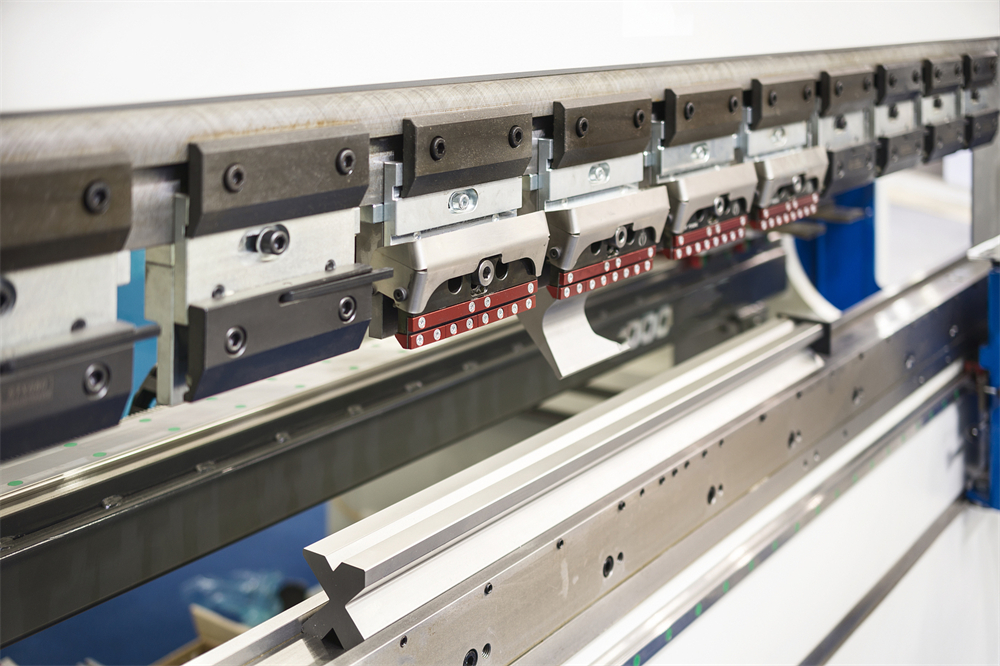
The complexity of modern CNC (Computer Numerical Control) press brakes means that troubleshooting requires a systematic approach. We will explore the mechanical, hydraulic, and software-related variables that influence the final bend. From the importance of crowning systems to the nuances of material springback, this comprehensive guide serves as your primary resource for Press Brake Troubleshooting: Bend Angle Is Inaccurate. Let us begin by examining the key considerations that every operator and shop manager must keep in mind when diagnosing angular errors.
Key Considerations for Accurate Bending
Material Properties and Springback
One of the most significant factors in bend inaccuracy is the material itself. No two sheets of metal are identical. Variations in tensile strength, yield strength, and thickness can cause the metal to react differently under pressure. Springback is the most common phenomenon: after the punch releases the pressure, the metal naturally attempts to return to its original shape, causing the angle to open up. For example, stainless steel typically exhibits much higher springback than mild steel. If your CNC controller is not programmed with the correct material constants, the resulting angle will be wider than intended.
Furthermore, the grain direction of the metal plays a crucial role. Bending with the grain (parallel to the rolling direction) requires less force but is more prone to cracking and offers different springback characteristics than bending against the grain (perpendicular). If a batch of parts is nested on a sheet in different orientations, the operator may find that some parts are accurate while others are not, even though the machine settings remain unchanged. Consistent material sourcing and careful attention to grain orientation are essential first steps in troubleshooting.
Tooling Condition and Selection
The precision of your bend is only as good as the tools performing the work. Worn-out punches and dies are a leading cause of angular inconsistency. Over time, the tip of the punch can become rounded, or the shoulders of the V-die can wear down. Even a few thousandths of an inch of wear can translate into a full degree of error in the final bend. It is also vital to ensure that the tooling is properly seated and aligned. If the punch is not perfectly centered over the die, the pressure will be applied unevenly, resulting in a skewed angle across the length of the workpiece.
Selection of the correct V-opening is equally important. A general rule of thumb is that the V-opening should be 8 times the material thickness for mild steel. Using a V-opening that is too small increases the required tonnage and can lead to excessive deformation, while a V-opening that is too large makes it difficult to achieve tight tolerances. When troubleshooting, always verify that the tooling loaded into the machine matches the parameters entered into the CNC controller.
Machine Deflection and the ‘U-Effect’
When a press brake applies several hundred tons of force, the machine frame itself undergoes a degree of deflection. The side frames may spread slightly, and the ram and bed will bow. This is often referred to as the “U-effect,” where the center of the bend is less acute than the ends because the middle of the machine has deflected away from the workpiece. To counteract this, modern machines use crowning systems. If your crowning system is improperly calibrated or if you are using a manual machine without crowning, the result will be a “boat-shaped” bend where the angle varies along the length of the part.
Technical Details: Deep Dive into Troubleshooting
Hydraulic System Synchronization (Y1 and Y2 Axes)
In a synchronized CNC press brake, the movement of the ram is controlled by two independent hydraulic cylinders, referred to as the Y1 and Y2 axes. These axes must move in perfect unison to ensure the ram stays level. If one cylinder is slightly out of sync due to a faulty proportional valve, air in the hydraulic lines, or a malfunctioning linear encoder, the ram will tilt. This tilt causes the punch to enter the die at an angle, leading to different bend results on the left and right sides of the machine.
To troubleshoot this, operators should check the feedback from the linear scales. These scales provide real-time data to the CNC controller regarding the exact position of each end of the ram. If there is a discrepancy, the machine may need a recalibration of its reference points or a purge of the hydraulic system to remove air bubbles. Regular maintenance of the hydraulic oil—ensuring it is clean and at the correct temperature—is also vital, as oil viscosity changes can affect the responsiveness of the valves.
Crowning Systems: Mechanical vs. Hydraulic
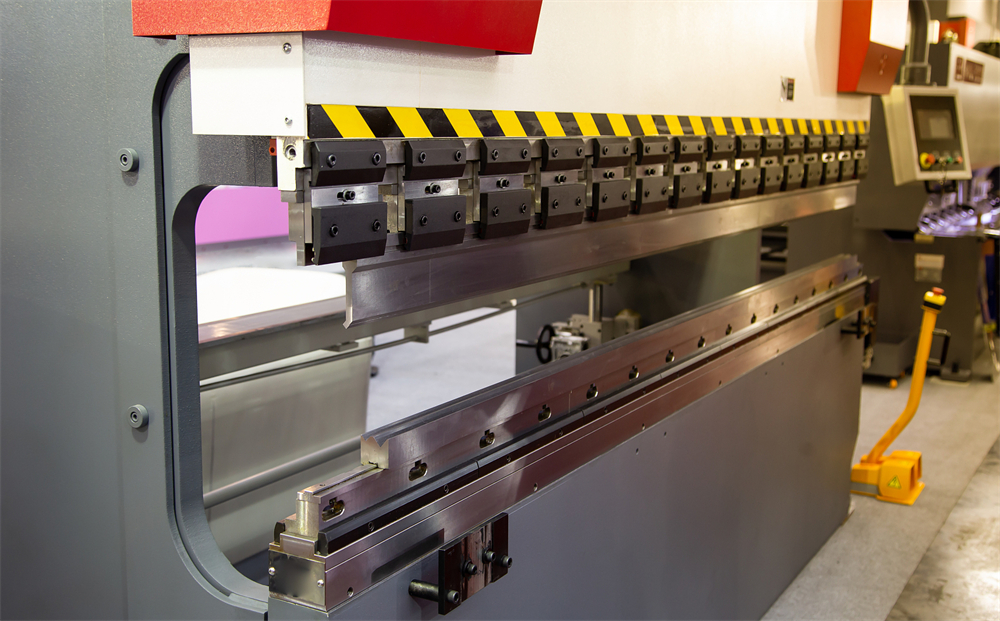
As mentioned, crowning is essential for compensating for machine deflection. There are two primary types: hydraulic crowning and mechanical crowning. Hydraulic crowning uses cylinders built into the lower table to push upward, while mechanical crowning uses a series of wedges. If your Press Brake Troubleshooting: Bend Angle Is Inaccurate specifically in the center of the sheet, the crowning system is the likely culprit. For hydraulic systems, check for leaks or pressure sensor failures. For mechanical systems, ensure the motor driving the wedges is functioning and that the wedges are not jammed with debris or old grease.
CNC Controller Calibration and Parameter Entry
The CNC controller is the brain of the press brake. It calculates the depth of the punch (the Y-axis stroke) based on the material thickness, V-die width, and desired angle. If the input data is incorrect, the output will be incorrect. A common error is entering the nominal material thickness (e.g., 2.0mm) when the actual thickness is slightly different (e.g., 1.92mm). Because air bending relies on the depth of the punch to determine the angle, a variation of 0.08mm in thickness can result in a significant angular error.
Furthermore, the “zero point” or reference point of the machine must be accurately set. If the machine does not know exactly where the punch meets the die (the pinch point), all subsequent calculations will be off. Periodic recalibration of the Y-axis is necessary, especially after changing tooling or performing maintenance. Advanced CNC systems also allow for “angle correction” entries, where the operator can measure the first part and input the deviation, allowing the software to automatically adjust the stroke for subsequent parts.
Selection Advice: Choosing the Right Machine for Precision
Look for High-Quality Linear Encoders
When purchasing a new press brake, the quality of the linear encoders is a critical factor. These components measure the position of the ram with micron-level accuracy. High-end brands like Heidenhain or Givi Misure provide the reliability needed for high-precision work. Machines equipped with high-resolution encoders are much better at maintaining synchronization between the Y1 and Y2 axes, which directly translates to more accurate bend angles across the entire length of the machine.
The Importance of Frame Rigidity
Not all press brake frames are created equal. A machine with a heavy, stress-relieved steel frame will experience less deflection than a lighter, cheaper alternative. When evaluating a machine, look at the throat depth and the thickness of the side plates. A more rigid frame requires less compensation from the crowning system, which simplifies the bending process and reduces the margin for error. HARSLE machines are engineered with robust frames to ensure that even under maximum load, the deflection is kept to an absolute minimum.
Integrated Angle Measurement Systems
For shops that require absolute precision with zero scrap, investing in a machine with an integrated angle measurement system is a game-changer. Systems like the Lazer Safe Iris or specialized laser sensors measure the angle in real-time during the bending process. The sensor sends data back to the CNC controller, which adjusts the punch depth on the fly to compensate for material variations and springback. While these systems increase the initial investment, they virtually eliminate the need for manual Press Brake Troubleshooting: Bend Angle Is Inaccurate, saving thousands of dollars in material and setup time over the life of the machine.
Consider the Crowning Method
Decide between hydraulic and mechanical crowning based on your typical workload. Hydraulic crowning is often faster and integrated directly into the CNC’s automatic calculations. Mechanical crowning, however, is often praised for its consistency and lack of dependence on hydraulic seals and oil temperature. For very long machines (over 4 meters), a high-quality mechanical crowning bed is often preferred for its ability to provide a very precise and repeatable curve across the entire length of the bed.
Frequently Asked Questions (FAQ)
1. Why is my bend angle different at the ends than in the middle?
This is usually caused by machine deflection. The center of the ram and bed bow under pressure. To fix this, you need to adjust your crowning system. If your machine doesn’t have crowning, you may need to use shims under the die, although this is a less precise, manual workaround.
2. How does temperature affect my press brake’s accuracy?
Hydraulic oil changes viscosity as it heats up. If you start bending parts immediately after turning on a cold machine, the valves may react more slowly than they do after the machine has been running for an hour. Many modern CNCs have a warm-up cycle to bring the oil to operating temperature for consistent results.
3. Can worn tooling really cause a 2-degree error?
Yes. In air bending, the angle is determined by the depth of the punch in the die. If the punch tip is worn down, it doesn’t reach the same depth relative to the material, resulting in an under-bent (wider) angle. Similarly, if the die shoulders are worn, the material sits lower in the die, changing the geometry of the bend.
4. What is the best way to compensate for springback?
The most effective way is to use a CNC controller with a built-in material library that includes springback constants. For manual compensation, you must “over-bend” the part. For example, to get a 90-degree bend in stainless steel, you might need to program the machine for 88 degrees.
5. Why is my backgauge position affecting my angle?
While the backgauge primarily controls the flange length, if the backgauge fingers are not level or if the sheet is not held flat against them, the material may be tilted when the punch makes contact. This can lead to a skewed bend where the angle is inconsistent relative to the edge of the part.
Conclusion: Maintaining Excellence in Metal Fabrication
Achieving consistent, accurate bend angles is a journey of continuous improvement and meticulous maintenance. When you encounter a situation where your Press Brake Troubleshooting: Bend Angle Is Inaccurate, remember to look at the problem holistically. Start with the simplest variables—material thickness and CNC data entry—before moving on to more complex mechanical issues like hydraulic synchronization or crowning calibration. A well-maintained machine, combined with high-quality tooling and a knowledgeable operator, is the most effective defense against production errors.
At HARSLE, we are committed to providing the metal fabrication industry with machinery that combines power with precision. Our CNC press brakes are designed with advanced features like automatic crowning, high-resolution feedback systems, and intuitive controllers to minimize the challenges of angular inaccuracy. By following the troubleshooting steps outlined in this guide and investing in the right technology, you can ensure that every bend is a perfect bend, maintaining the high standards your customers expect. Regular calibration, attentive maintenance, and a deep understanding of the bending process will keep your workshop running efficiently for years to come.


