
Comprehensive Press Brake Solutions for Control Panel and Switchgear Enclosures


Introduction to Precision Bending in Electrical Infrastructure
In the modern industrial landscape, the demand for high-quality electrical infrastructure has never been higher. As smart grids, renewable energy installations, and automated factories expand, the need for robust, precise, and aesthetically clean control panels and switchgear enclosures has become a cornerstone of the metal fabrication industry. Achieving the tight tolerances and complex geometries required for these enclosures necessitates advanced Press Brake Solutions Control Panel Switchgear Enclosures. HARSLE, a leader in metal fabrication machinery, provides specialized CNC press brake technology designed to meet the rigorous standards of the electrical housing sector.
Fabricating an enclosure is not merely about bending a piece of metal; it is about ensuring structural integrity, environmental sealing (IP ratings), and perfect alignment for internal components like busbars, circuit breakers, and mounting plates. This article explores the comprehensive technical requirements, machine configurations, and workflow optimizations essential for producing world-class switchgear and control panels.
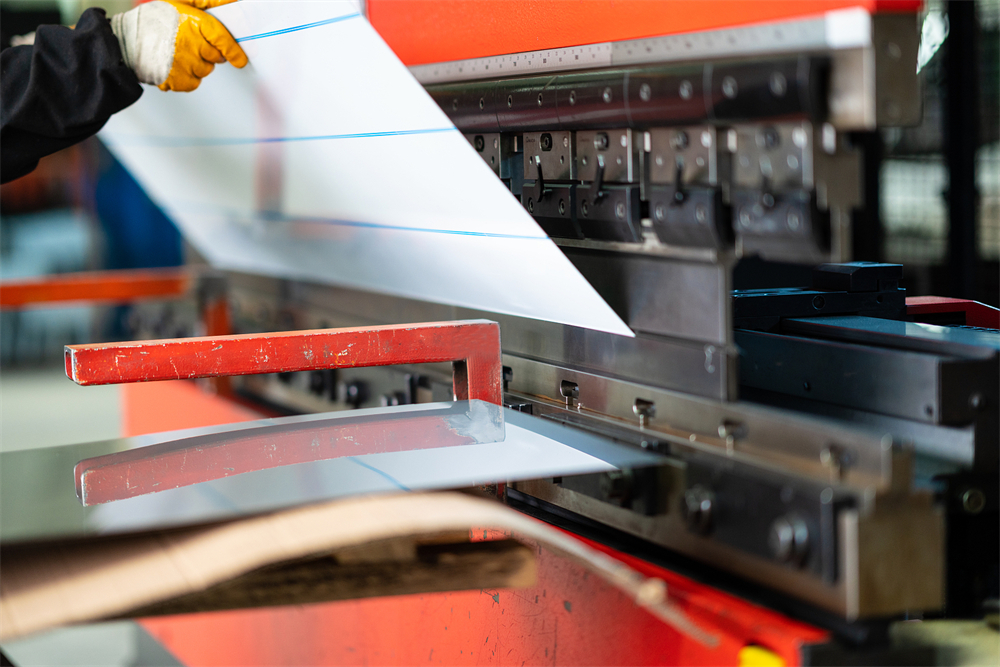
Application Scenario: The Complexity of Enclosure Fabrication
Control panels and switchgear enclosures serve as the protective shell for sensitive electrical components. These structures are found in diverse environments, from climate-controlled data centers to harsh outdoor industrial sites. Consequently, the fabrication process must account for various application scenarios. For instance, a standard indoor control panel might focus on aesthetic finish and ease of assembly, while an outdoor switchgear cabinet requires heavy-duty materials and complex weather-stripping flanges.
The typical enclosure consists of several components: the main body (often a five-sided box), doors, mounting plates, and internal brackets. Each of these parts presents unique bending challenges. The main body often requires deep box bending, which demands a press brake with a significant throat depth and high daylight opening. Doors require precise 90-degree bends and often hemmed edges to provide safety for operators and a smooth surface for gaskets. Internal brackets may involve multiple small-radius bends in quick succession, requiring a highly agile backgauge system.
Furthermore, the trend toward modularity in switchgear design means that individual panels must fit together with zero margin for error. If a press brake cannot maintain consistency across a production run of 500 units, the modular assembly line will face significant delays. This is where high-end CNC solutions become indispensable, providing the repeatability that manual machines simply cannot match.
Material and Process Requirements
Common Materials in Electrical Housing
The choice of material significantly influences the bending strategy. The most common materials used in control panel and switchgear fabrication include:
- Cold-Rolled Steel (SPCC): Preferred for indoor enclosures due to its smooth finish and excellent paint adhesion. It is relatively easy to bend but requires precise springback compensation.
- Stainless Steel (SUS304/316): Used for food processing, pharmaceutical, or marine environments where corrosion resistance is paramount. Stainless steel has a higher tensile strength and greater springback, requiring more tonnage and specialized tooling.
- Galvanized Steel (SECC/SGCC): Common for outdoor cabinets. The zinc coating can be abrasive to standard tooling, and the bending process must avoid cracking the protective layer.
- Aluminum: Used where weight is a factor or for specific electromagnetic shielding properties. Aluminum requires larger bend radii to prevent cracking at the fold line.
Technical Process Challenges
Fabricating enclosures involves more than simple 90-degree folds. One of the most critical processes is Hemming. Hemming is used to fold the edge of a sheet back on itself, creating a rounded, safe edge and increasing the rigidity of door panels. This usually requires a two-stage process: an acute bend followed by a flattening operation, often performed with specialized hemming dies.
Another challenge is the Return Flange. Many enclosures feature a “U” shape with a small return lip to hold a rubber seal. Bending these requires a “Gooseneck” punch that provides clearance for the previously bent side of the metal. Without the correct tooling geometry, the workpiece will collide with the upper beam or the punch itself, making the design impossible to manufacture.
Recommended Machine Configuration
To handle the specific demands of Press Brake Solutions Control Panel Switchgear Enclosures, HARSLE recommends a high-specification CNC Synchronized Press Brake, such as the WE67K series. Below are the critical components of a machine optimized for this industry.
1. Advanced CNC Controller (Delem DA-66T or DA-69T)
A high-end controller is the brain of the operation. For enclosure fabrication, 3D visualization is vital. It allows the operator to see the bending sequence in real-time, identifying potential collisions before the first piece of metal is bent. The DA-66T offers 2D and 3D graphical programming, which simplifies the setup for complex, multi-bend cabinets.
2. Multi-Axis Backgauge System (4+1 or 6+1 Axis)
Precision in enclosure fabrication is largely determined by the backgauge. A 4-axis system (X, R, Z1, Z2) is the baseline. The X-axis controls the depth of the bend, the R-axis controls the height (essential for flanges of different lengths), and the Z1/Z2 axes allow for different widths of parts. For more complex switchgear with asymmetrical internal components, a 6-axis backgauge (adding X1, X2, R1, R2) provides the ultimate flexibility.
3. Crowning System (Hydraulic or Mechanical)
Long enclosure panels (e.g., 2 meters or more) are prone to the “canoeing” effect, where the center of the bend is not as deep as the ends due to machine deflection. An automatic CNC-controlled crowning system compensates for this in real-time, ensuring a perfectly straight bend across the entire length of the sheet. This is critical for ensuring that cabinet doors seal correctly against the frame.
4. Specialized Tooling and Quick-Change Systems
As mentioned, gooseneck punches are essential for return flanges. Additionally, a Quick Clamping System is highly recommended. Enclosure manufacturers often switch between different material thicknesses and part designs throughout the day. A quick-change system reduces setup time from 20 minutes to less than 2 minutes, significantly boosting daily throughput.
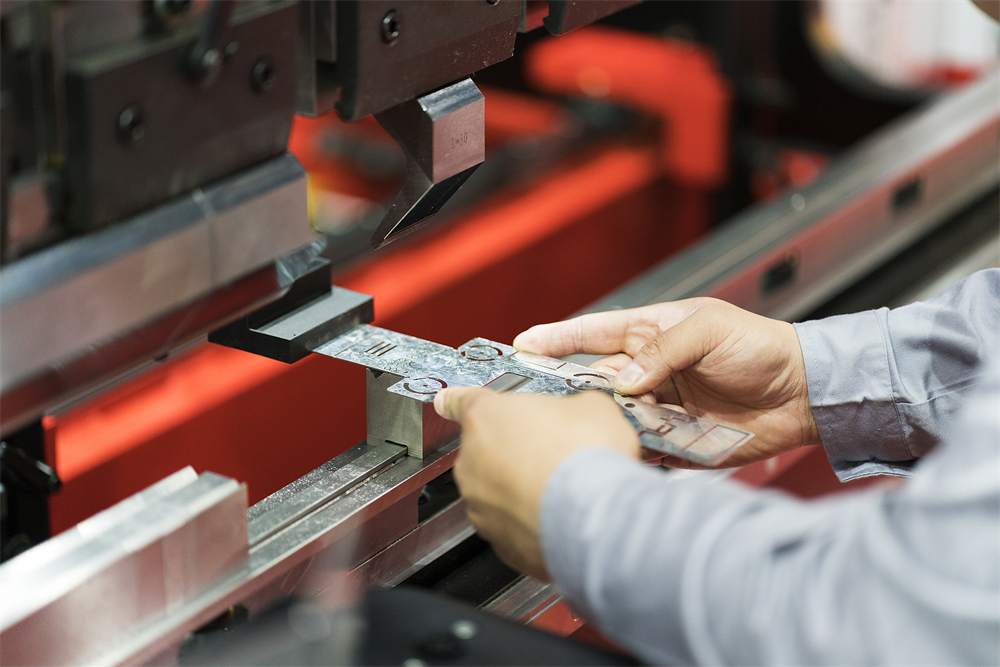
Workflow for Enclosure Fabrication
A streamlined workflow is the difference between a profitable shop and one struggling with scrap and delays. Here is the optimized workflow using HARSLE’s Press Brake Solutions Control Panel Switchgear Enclosures:
- Design and Offline Programming: The process begins in the engineering office. Using CAD/CAM software, the enclosure is designed, and the bending sequence is simulated. This “offline” approach means the press brake is never idle while an operator tries to figure out a sequence.
- Material Preparation: Sheets are laser-cut or punched with all necessary holes for hinges, locks, and cable entries. Precision in the flat pattern is essential for precision in the final bend.
- Tooling Setup: The operator loads the recommended punches and dies. With CNC controllers, the machine automatically calculates the correct position for the backgauge based on the tool geometry.
- The Bending Sequence: The operator follows the 3D guide on the controller screen. For a standard box, this usually involves four perimeter bends followed by any specialized flange work.
- Quality Control: Using digital protractors or integrated laser angle measurement systems, the first piece is verified. HARSLE machines can be equipped with laser angle sensors that adjust the depth of the stroke on the fly to ensure every part is perfect.
Productivity Benefits of CNC Solutions
Investing in a dedicated press brake solution for enclosures yields significant dividends. The primary benefit is Repeatability. In manual bending, the operator’s skill determines the quality. With a HARSLE CNC press brake, the machine’s logic ensures that the 100th part is identical to the first. This reduces scrap rates to near zero.
Another benefit is Labor Efficiency. Modern CNC interfaces are intuitive, meaning that less-experienced operators can be trained quickly to produce complex parts. Features like the 3D graphical interface reduce the cognitive load on the operator, preventing mistakes during long shifts. Furthermore, the speed of the Y-axis (the ram) and the backgauge movement in high-end synchronized machines can increase production speed by up to 30% compared to older hydraulic models.
Finally, there is the Safety Aspect. Modern press brakes are equipped with laser protection systems (like DSP or FIESSLER) that allow the machine to operate at high speeds while ensuring the operator’s hands are always safe. In a high-volume environment like switchgear production, safety is a critical component of productivity.
Case Example: Upgrading a Switchgear Production Line
A mid-sized electrical equipment manufacturer was struggling with the assembly of their modular switchgear units. The doors were not aligning with the frames, leading to hours of manual adjustment and a high failure rate in IP65 water-ingress tests. They were using older, torsion-bar style press brakes with manual backgauges.
After consulting with HARSLE, they implemented a 160T/3200mm WE67K CNC Press Brake equipped with a Delem DA-66T controller and a 4+1 axis backgauge. They also invested in a set of precision-ground gooseneck punches and a hydraulic crowning system.
The Results:
- Setup Time: Reduced from 45 minutes per job to 8 minutes.
- Accuracy: Angular deviation was reduced from ±1.5 degrees to ±0.3 degrees.
- Assembly Speed: Because the parts were now perfectly square, the final assembly of the cabinets was 40% faster, as no manual “tweaking” of the metal was required.
- Scrap Reduction: Material waste dropped by 12% in the first quarter of operation.
This case demonstrates that the right Press Brake Solutions Control Panel Switchgear Enclosures are not just a capital expense but a strategic investment in manufacturing excellence.
Frequently Asked Questions (FAQ)
What is the best tonnage for control panel fabrication?
For most standard control panels (1.5mm to 3mm mild steel), a 100-ton to 160-ton machine is ideal. If you are working with thicker materials for heavy-duty industrial switchgear (5mm+), you may need 200 tons or more.
Can one machine handle both small brackets and large cabinet bodies?
Yes, but it requires a versatile backgauge. A machine with a 3200mm bed length is standard for large panels, while the CNC controller can manage small, intricate bends for internal brackets by using only a portion of the bed and specific tooling segments.
How does CNC crowning improve enclosure quality?
Crowning ensures that the bend angle is consistent across the entire length of the sheet. Without it, the middle of a long cabinet panel might be slightly under-bent, causing the cabinet to look “bowed” and preventing the door from sealing properly.
Is stainless steel harder to bend for enclosures?
Yes, stainless steel requires about 50% more tonnage than mild steel and has significant springback. You must use hardened tooling and a CNC controller capable of calculating stainless steel-specific bend deductions.
What is the role of offline programming?
Offline programming allows engineers to create the bending program on a PC and transfer it to the machine via USB or network. This keeps the press brake running and producing parts instead of being used as a programming station.
Conclusion: Partnering with HARSLE for Your Fabrication Needs
The fabrication of control panels and switchgear enclosures is a demanding field that leaves no room for error. By choosing the right Press Brake Solutions Control Panel Switchgear Enclosures, manufacturers can ensure their products meet the highest standards of precision, durability, and aesthetic appeal. HARSLE’s range of CNC synchronized press brakes offers the technology, reliability, and support needed to thrive in this competitive industry.
Whether you are a small shop looking to automate your first enclosure line or a large-scale manufacturer seeking to optimize throughput, HARSLE has the expertise to guide you. Our machines are built with world-class components and designed for the rigors of 24/7 industrial production.
Ready to elevate your enclosure production? Contact HARSLE today for a customized consultation and discover how our precision bending solutions can transform your manufacturing workflow.

