Shearing Machine Back Gauge Not Working Properly: Troubleshooting Explained


Introduction to Shearing Machine Back Gauge Systems
In the world of metal fabrication, precision is the cornerstone of quality. The shearing machine back gauge is a critical component that determines the accuracy of every cut. When a shearing machine back gauge is not working properly, it can lead to significant material waste, production delays, and increased operational costs. This guide, provided by HARSLE, aims to provide a comprehensive overview of troubleshooting these essential systems, ensuring your workshop maintains peak efficiency.
The back gauge serves as the positioning stop for the metal sheet before the blade descends. Whether you are using a manual, NC, or CNC shearing machine, the back gauge must move smoothly, stop precisely, and remain parallel to the cutting edge. A malfunction can manifest in several ways: the gauge might not move at all, it might move to the wrong position, or it might lose its calibration over time. Understanding the underlying mechanics and electronics is the first step in effective troubleshooting.
Modern shearing machines, such as those manufactured by HARSLE, utilize sophisticated drive systems including servo motors, ball screws, and linear guides. While these components offer high precision, they also require specific maintenance and diagnostic approaches. This article will delve into the technical details of these systems, offering a roadmap for operators and maintenance technicians to identify and resolve common back gauge issues.
Before diving into the technicalities, it is important to emphasize safety. Always ensure the machine is powered down and locked out according to standard safety protocols before inspecting mechanical or electrical components. Troubleshooting a shearing machine back gauge not working properly requires a systematic approach, moving from the simplest potential causes to the more complex internal systems.
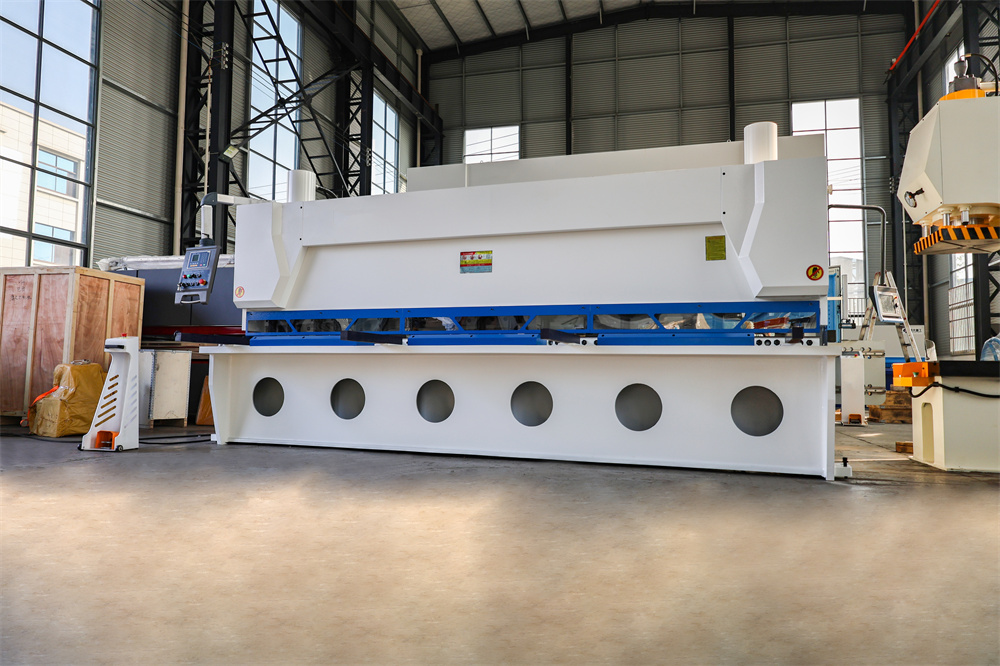
Key Considerations for Back Gauge Malfunctions
When faced with a shearing machine back gauge not working properly, the first step is to categorize the problem. Is it a mechanical failure, an electrical glitch, or a software/controller error? Mechanical issues often involve physical obstructions, wear and tear, or lack of lubrication. Electrical issues might stem from blown fuses, faulty wiring, or motor driver failures. Software issues usually involve corrupted parameters or sensor feedback errors.
Environmental factors also play a significant role in back gauge performance. In many industrial settings, dust, metal shavings, and oil mist can accumulate on the linear guides and ball screws. This buildup increases friction, leading to motor strain and positioning inaccuracies. Regular cleaning is not just a maintenance task; it is a prerequisite for accuracy. If the environment is particularly harsh, the frequency of inspections must increase accordingly.
Operator error is another factor to consider. Sometimes, the “malfunction” is simply a result of incorrect data entry into the CNC controller or a failure to reset the reference point after a power outage. It is essential to verify that the programmed dimensions are within the machine’s physical limits. Most modern controllers have built-in limit switches to prevent the back gauge from crashing, but these switches themselves can become faulty or misaligned.
Finally, consider the age and usage history of the machine. Components like timing belts, couplings, and bearings have a finite lifespan. If the back gauge has been in service for several years without a major overhaul, mechanical wear is a likely culprit. Identifying the specific symptoms—such as a grinding noise, a jerky movement, or a consistent dimensional offset—will help narrow down the search for the root cause.
Technical Details: How the Back Gauge Functions
To troubleshoot effectively, one must understand the technical architecture of the back gauge. Most high-end shearing machines use a CNC-controlled system. This system consists of a controller (like the E21, DAC310, or DAC360T), a motor driver, a motor (stepper or servo), and the mechanical transmission assembly. The controller sends a signal to the driver, which then provides the necessary power to the motor to move the gauge to the desired coordinate.
The transmission assembly typically involves a timing belt or a direct coupling connected to a ball screw. The ball screw converts the rotational motion of the motor into linear motion. High-quality ball screws are essential for eliminating “backlash”—the tiny amount of play that can occur when the screw changes direction. If the back gauge is not working properly due to accuracy issues, the ball screw and its supporting bearings are the first places to check for wear.
Feedback loops are critical in CNC systems. An encoder, usually mounted on the back of the motor, tracks the exact position of the gauge and sends this information back to the controller. If there is a discrepancy between the commanded position and the feedback signal, the controller will trigger an error. This is often why a back gauge might stop mid-motion or refuse to start; it is a safety mechanism preventing inaccurate cuts.
| Component | Function | Common Failure Mode |
|---|---|---|
| Servo/Stepper Motor | Provides the torque for movement. | Overheating, internal short, or bearing failure. |
| Ball Screw | Converts rotation to linear motion. | Wear, lack of lubrication, or debris accumulation. |
| Linear Guides | Ensures smooth and straight travel. | Pitting, rust, or misalignment. |
| Limit Switches | Prevents over-travel and defines home. | Stuck contact, broken wire, or physical displacement. |
| CNC Controller | Processes user input and manages logic. | Parameter loss, screen failure, or I/O board damage. |
Step-by-Step Troubleshooting for Common Issues
1. The Back Gauge Does Not Move
If the back gauge is completely unresponsive, start with the electrical supply. Check the main circuit breaker and the specific fuses for the back gauge motor drive. Often, a sudden power surge or a mechanical jam can blow a fuse to protect the motor. If the fuses are intact, inspect the emergency stop buttons; sometimes a button is engaged or has a faulty contact that prevents the axis from enabling.
Next, look at the motor driver display. Most modern drivers will show an error code (e.g., “AL-01” for overcurrent). Refer to the machine’s manual to decode these signals. If the driver shows no power, the problem is likely in the power supply unit or the wiring. If the driver is active but the motor doesn’t turn, check the cables connecting the driver to the motor for any signs of fraying or loose connectors.
2. Inaccurate Positioning or Dimensional Errors
When the back gauge moves but the resulting cut is the wrong size, the issue is usually mechanical or related to calibration. First, check for mechanical looseness. Ensure the couplings between the motor and the ball screw are tight. A loose coupling will cause the motor to turn without moving the screw the full distance, leading to inconsistent dimensions. Also, inspect the back gauge bar itself to ensure it is parallel to the blade.
If the mechanics are sound, the system may need recalibration. Over time, the “zero point” or reference position can shift. Most CNC controllers have a parameter for “reference offset” or “backlash compensation.” Use a high-precision caliper to measure the actual cut and compare it to the programmed value. Adjust the controller parameters according to the manufacturer’s instructions to bring the gauge back into alignment.
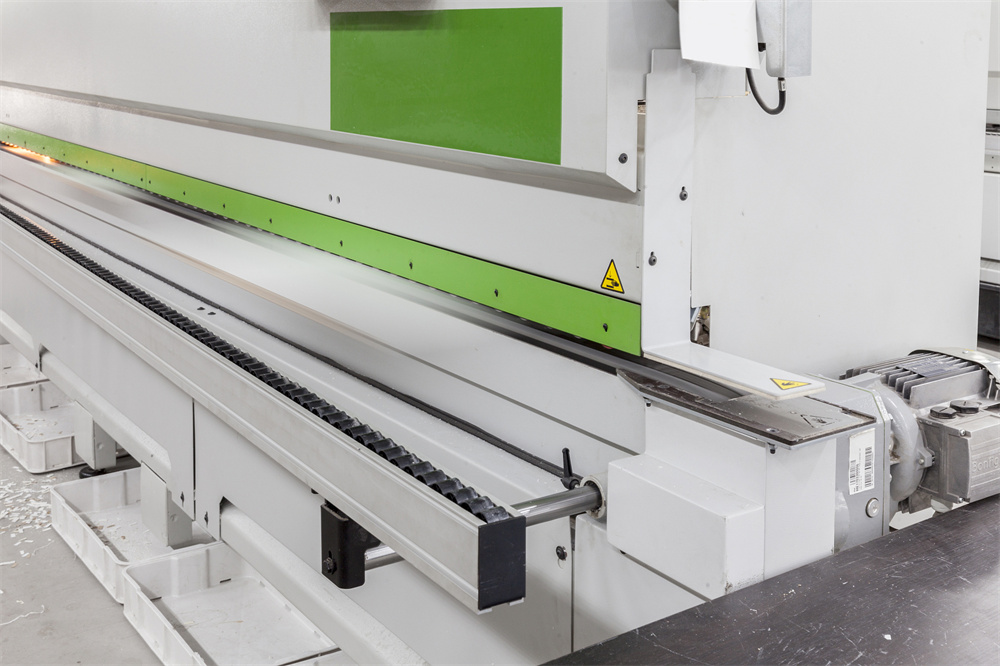
3. Noisy Operation or Jerky Movement
Grinding, squealing, or vibrating during movement usually points to a lubrication problem or worn bearings. The ball screws and linear guides must be lubricated regularly with the specified grease or oil. If the lubricant has dried out or become contaminated with metal dust, it acts as an abrasive, rapidly wearing down the precision surfaces. Clean the rails thoroughly and apply fresh lubricant.
Jerky movement can also be caused by electrical interference (EMI). If the signal cables for the encoder are run too close to high-voltage power lines without proper shielding, the controller may receive “noisy” data, causing the motor to stutter. Ensure all cables are properly shielded and grounded. Additionally, check the PID tuning parameters in the controller; if the gain is set too high, the motor may oscillate.
Selection Advice: Choosing a Reliable Back Gauge System
When purchasing a new shearing machine, the quality of the back gauge system should be a primary consideration. A cheap back gauge might save money upfront but will lead to frequent “shearing machine back gauge not working properly” scenarios later. Look for machines that utilize reputable CNC brands like Delem, Cybelec, or Estun. These controllers offer better diagnostic tools and more stable performance.
The mechanical construction is equally important. Prefer machines with ball screws and linear guides rather than simple lead screws. Ball screws offer higher efficiency, lower friction, and significantly better long-term accuracy. Additionally, consider the “swing-up” feature. A swing-up back gauge allows the gauge bar to move out of the way when cutting sheets longer than the maximum gauge range, preventing damage to the mechanism.
Rigidity is the final factor. The back gauge assembly should be robust enough to withstand the impact of heavy metal sheets being pushed against it. Thin, flimsy gauge fingers or support arms will flex, leading to inaccuracies. HARSLE machines are designed with heavy-duty back gauge assemblies that maintain parallelism even under high-volume production environments. Always ask about the motor type; servo motors are generally superior to stepper motors for back gauge applications due to their closed-loop feedback and higher torque at speed.
Maintenance Tips to Prevent Back Gauge Issues
- Daily Cleaning: Use a soft brush or compressed air to remove metal shavings from the ball screws and linear rails at the end of every shift.
- Weekly Lubrication: Check the oil levels in the automatic lubrication system or manually grease the points specified in the manual.
- Monthly Inspection: Check the tension of the timing belts. A loose belt can cause positioning errors, while a belt that is too tight can cause premature bearing failure.
- Semi-Annual Calibration: Even if the machine seems accurate, perform a calibration check using a master gauge or high-precision measuring tools to catch drifting parameters early.
- Electrical Cabinet Care: Ensure the cooling fans in the electrical cabinet are working. Overheating is a common cause of motor driver failure.
Frequently Asked Questions (FAQ)
Why does my back gauge lose its position after a power cut?
Most NC and CNC systems require a “homing” or “referencing” procedure after power-up. This allows the controller to find the physical limit switches and establish its coordinate system. If your machine doesn’t have absolute encoders, it “forgets” its position when power is lost. Always perform the homing sequence before starting production.
Can I replace a manual back gauge with a CNC one?
Yes, retrofitting is possible, but it requires significant mechanical and electrical modifications. You would need to install a motor, ball screws, and a controller. For many older machines, it is often more cost-effective to invest in a new CNC shearing machine from HARSLE that comes with these features integrated and warrantied.
What should I do if the back gauge is not parallel to the blade?
This is usually a mechanical adjustment. Most back gauge bars are attached to the drive nuts with adjustable bolts. You will need to loosen these bolts, use a dial indicator to align the bar perfectly parallel to the lower blade, and then retighten them. Ensure you check the parallelism at both ends of the gauge travel.
How do I know if the motor driver is faulty?
If the driver displays an error code that cannot be cleared, or if it shows no signs of life despite having input power, it may be faulty. You can often swap drivers between axes (if the machine has multiple axes) to see if the problem follows the driver. However, this should only be done by a qualified technician.
Conclusion
A shearing machine back gauge not working properly is a challenge that requires a blend of mechanical intuition and electrical knowledge. By following a systematic troubleshooting process—checking power, inspecting mechanics, and verifying controller settings—most issues can be resolved with minimal downtime. Regular maintenance remains the most effective strategy for preventing these problems before they occur.
At HARSLE, we understand that your productivity depends on the reliability of your equipment. Our shearing machines are engineered with high-quality components and intuitive control systems to minimize malfunctions and simplify maintenance. If you are experiencing persistent issues or are looking to upgrade to a more reliable shearing solution, our technical team is always ready to provide expert support and industry-leading machinery.