
Troubleshooting Press Brake Crowning Problems for Better Bend Accuracy


Introduction to Press Brake Crowning and Bend Accuracy
In the world of precision metal fabrication, achieving a perfectly uniform bend across the entire length of a workpiece is the ultimate hallmark of quality. However, fabricators often encounter a phenomenon known as the ‘canoe effect,’ where the angle at the center of the bend differs significantly from the angles at the ends. This discrepancy is primarily caused by machine deflection. When a press brake applies several hundred tons of force to bend a sheet of metal, the side frames, the bed, and the ram all experience structural deflection. Without a corrective mechanism, this results in an inconsistent bend. Troubleshooting press brake crowning problems for better bend accuracy is therefore essential for any shop aiming to reduce scrap rates and improve throughput.
Crowning is the process of compensating for this natural deflection by introducing a counter-curve into the machine’s bed or ram. By ensuring that the punch and die remain parallel under load, crowning systems allow for a consistent depth of penetration along the full length of the tool. HARSLE, a leader in metalworking machinery, integrates advanced crowning technologies into its CNC press brakes to ensure that even the most demanding jobs meet tight tolerances. Understanding how these systems work and how to troubleshoot them is the first step toward mastering high-precision fabrication.
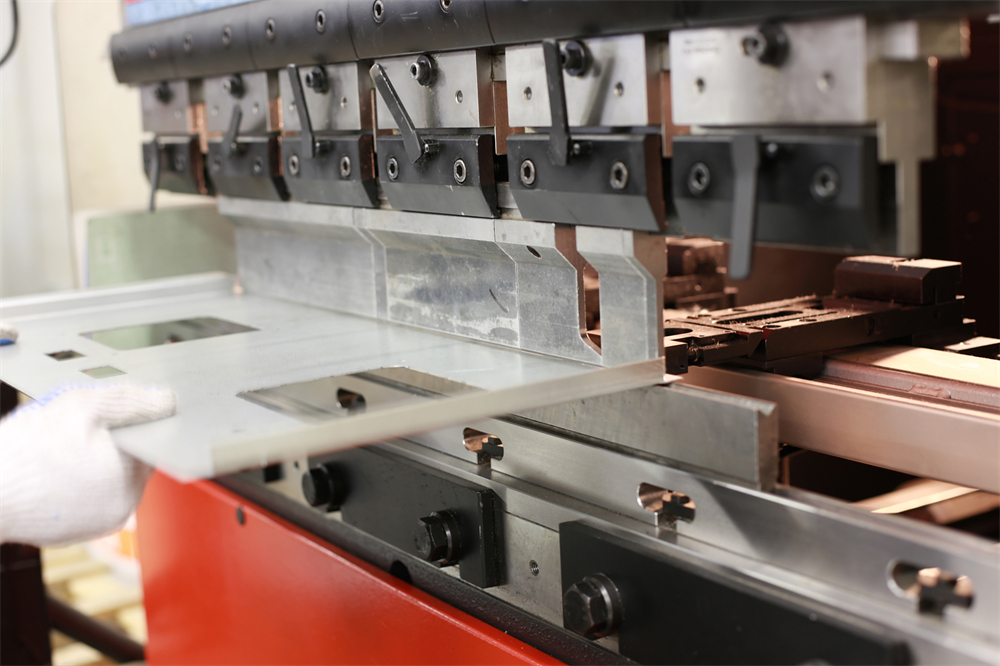
Key Considerations for Troubleshooting Crowning Issues
Before diving into the mechanical adjustments, it is vital to understand the variables that influence crowning performance. Troubleshooting press brake crowning problems for better bend accuracy requires a holistic view of the bending process, starting with the material itself. Different materials exhibit different levels of springback and resistance. For instance, stainless steel requires significantly more force than aluminum, leading to greater machine deflection. If your crowning settings are optimized for mild steel but you are running a batch of high-tensile alloy, you will likely see inaccuracies.
Another key consideration is the length of the workpiece relative to the machine’s bed. Deflection is most pronounced when bending long parts that span the entire length of the press brake. If you are bending a short part in the center of the machine, the crowning requirements are minimal. However, if that same part is bent off-center, it can lead to asymmetrical deflection, which is much harder to compensate for. Operators must ensure that the part is centered whenever possible to maintain balanced force distribution.
Tooling condition also plays a massive role. Worn dies or punches can mimic crowning problems. If the radius of the die is unevenly worn, the depth of penetration will vary, leading to inconsistent angles that no amount of crowning compensation can fully fix. Regular inspection of the tooling for signs of deformation or wear is a prerequisite for effective troubleshooting. Furthermore, the cleanliness of the bed and the underside of the die holder must be maintained; even a small piece of debris can throw off the alignment and affect the final bend angle.
Technical Details: Mechanical vs. Hydraulic Crowning Systems
To effectively troubleshoot, one must understand the two primary types of crowning systems: hydraulic and mechanical. Each has its own set of technical nuances and common failure points. Hydraulic crowning systems utilize a series of cylinders embedded within the lower bed. As the bending force increases, the CNC controller activates these cylinders to push up the center of the bed, countering the downward deflection. Troubleshooting hydraulic systems often involves checking for proportional valve responsiveness, hydraulic leaks, or air trapped in the lines, which can cause ‘spongy’ or inconsistent compensation.
Mechanical crowning, often referred to as a ‘wedge’ system, uses a series of sliding wedges located beneath the die holder. These wedges are moved by a motor-driven screw, creating a precise curve in the bed. The advantage of mechanical crowning is its stability and repeatability, as it is not subject to the thermal fluctuations that can affect hydraulic oil viscosity. When troubleshooting mechanical systems, focus on the drive motor’s calibration and the lubrication of the wedge surfaces. If the wedges become dry or contaminated with metal dust, they may stick, leading to inaccurate positioning and inconsistent bends.
Modern CNC controllers use complex algorithms to calculate the required crowning based on material type, thickness, length, and die opening. A common issue in troubleshooting press brake crowning problems for better bend accuracy is incorrect data entry. If the operator inputs the wrong material thickness or tensile strength, the controller will calculate an incorrect crowning value. Always verify that the software parameters match the physical reality of the material being processed. Advanced HARSLE machines often feature real-time angle measurement systems that provide feedback to the crowning unit, allowing for automatic adjustments during the stroke.

Selection Advice: Choosing the Right Crowning Solution
When selecting a press brake or upgrading an existing one, the choice of crowning system should be dictated by your specific production needs. For shops that handle a wide variety of materials and thicknesses, a CNC-controlled crowning system is indispensable. Manual crowning systems exist but are prone to human error and are time-consuming to set up for each new job. If your goal is troubleshooting press brake crowning problems for better bend accuracy, investing in a machine with a high-resolution mechanical wedge system is often the most reliable long-term solution.
Consider the tonnage and length of the machine. A 4-meter press brake will experience significantly more deflection than a 2-meter machine of the same tonnage. Therefore, the longer the machine, the more sophisticated the crowning system needs to be. HARSLE recommends that for any machine over 2.5 meters in length, a CNC-integrated crowning system should be considered standard equipment. This ensures that the compensation is dynamic and adjusts automatically to the specific requirements of each bend, reducing the reliance on operator trial-and-error.
Furthermore, look for systems that offer ‘point-to-point’ adjustment. Some advanced mechanical crowning beds allow for micro-adjustments at specific intervals along the bed. This is incredibly useful for troubleshooting localized inaccuracies caused by uneven floor foundations or slight structural variations in the machine frame over years of use. Being able to fine-tune the bed at specific points allows for a level of precision that global compensation systems cannot match.
Comprehensive Troubleshooting Checklist
| Symptom | Potential Cause | Recommended Action |
|---|---|---|
| Canoe Effect (Over-bent ends) | Insufficient Crowning | Increase crowning value in CNC or check for hydraulic pressure loss. |
| Reverse Canoe (Over-bent center) | Excessive Crowning | Decrease crowning value or check for stuck mechanical wedges. |
| Inconsistent angles on one side | Machine Leveling/Alignment | Verify the machine is level and the side frames are not twisted. |
| Random angle variations | Material Consistency | Check for variations in material thickness or grain direction. |
| Crowning not responding | Electrical/Software Issue | Check CNC communication with the crowning motor or proportional valve. |
Effective troubleshooting starts with a test bend. Use a long strip of the material you intend to use for production. Perform a bend and measure the angle at at least five points: both ends, the center, and the mid-points between the center and the ends. If the angles are consistent at the ends but open in the middle, your crowning is insufficient. If the middle is tighter than the ends, you have too much crowning. If the variation is non-linear (e.g., one end is different from the other), the issue may be related to the machine’s leveling or the synchronization of the dual ram cylinders (Y1 and Y2 axes).
Frequently Asked Questions (FAQ)
1. How often should I calibrate my press brake crowning system?
Calibration should be checked at least once a month for high-production environments, or whenever you notice a trend of inconsistent bend angles. It is also necessary after any major maintenance or if the machine has been moved.
2. Can I add a crowning system to an older press brake?
Yes, many older machines can be retrofitted with manual or even CNC-controlled mechanical crowning beds. This is a cost-effective way to improve the accuracy of an aging machine without replacing the entire unit.
3. Does the die opening affect crowning requirements?
Absolutely. A narrower die opening requires more force to achieve the same bend, which in turn increases machine deflection. The CNC controller should automatically account for this if the correct die parameters are entered.
4. Why is my hydraulic crowning inconsistent in the morning?
This is often due to oil temperature. Hydraulic fluid changes viscosity as it warms up, which can affect the responsiveness of the crowning cylinders. Many modern HARSLE machines include oil heaters or compensation algorithms to mitigate this effect.
5. Is mechanical crowning better than hydraulic crowning?
Neither is strictly ‘better,’ but they have different strengths. Mechanical crowning is generally more precise and less affected by temperature, while hydraulic crowning can be faster and easier to integrate into certain machine designs.
Conclusion: Achieving Perfection in Every Bend
Troubleshooting press brake crowning problems for better bend accuracy is a blend of science, mechanical intuition, and rigorous maintenance. By understanding the physics of deflection and the mechanics of compensation systems, fabricators can eliminate the frustrations of the ‘canoe effect’ and deliver parts that meet the highest industrial standards. Whether you are using a HARSLE WE67K series CNC press brake or a specialized custom machine, the principles remain the same: maintain your equipment, verify your material data, and never settle for ‘close enough’ when it comes to bend angles.
Investing time in mastering your crowning system not only reduces waste but also extends the life of your tooling and machine. As materials become more advanced and tolerances become tighter, the ability to control every micron of deflection will be the competitive edge that sets your shop apart. Remember, a press brake is only as accurate as its crowning system allows it to be. Stay proactive with your troubleshooting, and your production quality will reflect that dedication.


