Why Press Brakes Are Essential In Custom Sheet Metal Bending: A Comprehensive Guide


Introduction to Modern Metal Fabrication
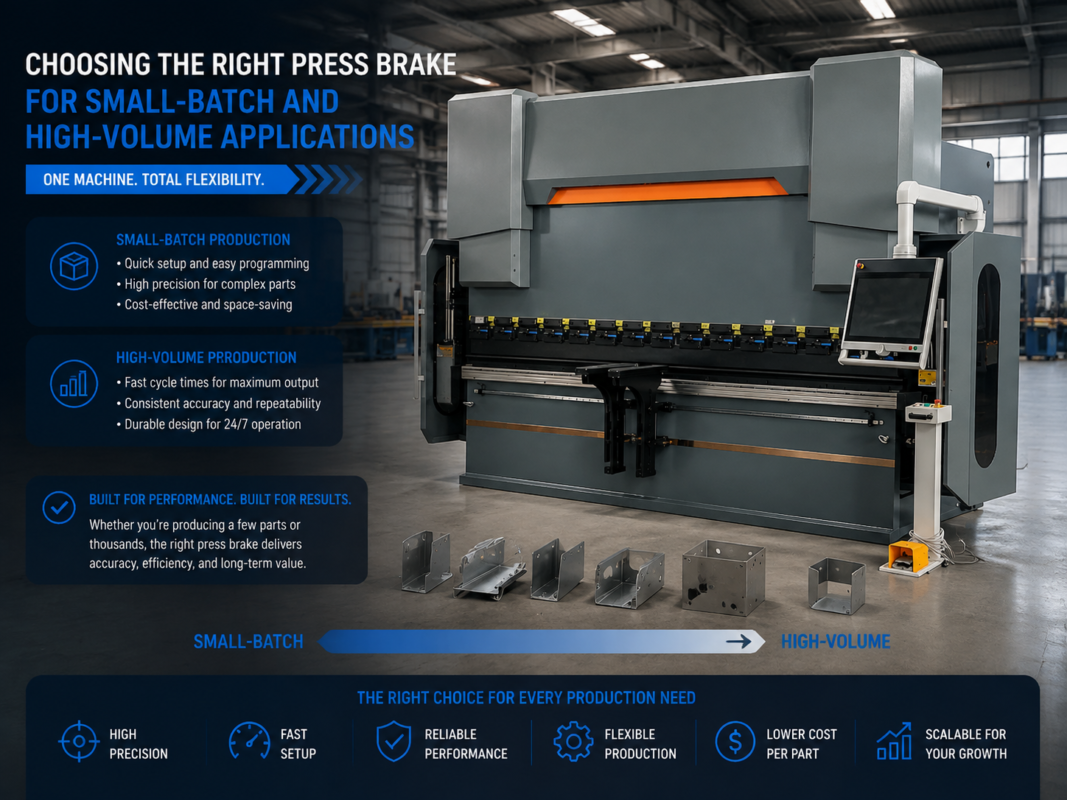
In the rapidly evolving landscape of industrial manufacturing, the demand for precision, speed, and versatility has never been higher. Among the various tools that populate a modern machine shop, the press brake stands out as a cornerstone of production. Understanding Why Press Brakes Are Essential In Custom Sheet Metal Bending requires a deep dive into how these machines transform flat sheets of metal into complex, three-dimensional components used in everything from household appliances to aerospace technology.
Custom sheet metal bending is not merely about folding metal; it is an engineering discipline that requires calculating material elasticity, managing tolerances, and ensuring repeatability across thousands of cycles. As industries move toward high-mix, low-volume production models, the flexibility of the press brake becomes its most valuable asset. Unlike dedicated stamping dies which are expensive and rigid, a press brake can be reconfigured in minutes to produce a completely different part, making it the ultimate tool for custom fabrication.
Application Scenarios for Custom Sheet Metal Bending
The versatility of the press brake allows it to serve a vast array of industries. In the aerospace sector, components must meet incredibly tight tolerances while maintaining structural integrity. Custom bending is used to create airframe ribs, brackets, and interior panels where weight and precision are critical. Without the controlled force of a CNC press brake, achieving the specific aerodynamic curves required would be nearly impossible.
In the automotive industry, custom bending is essential for prototyping and aftermarket modifications. While mass-produced car bodies are often stamped, specialized vehicles, heavy-duty trucks, and racing components rely on press brakes for custom chassis parts, bumpers, and roll cages. The ability to handle high-strength steels and aluminum alloys makes the press brake indispensable for modern vehicle safety and performance.
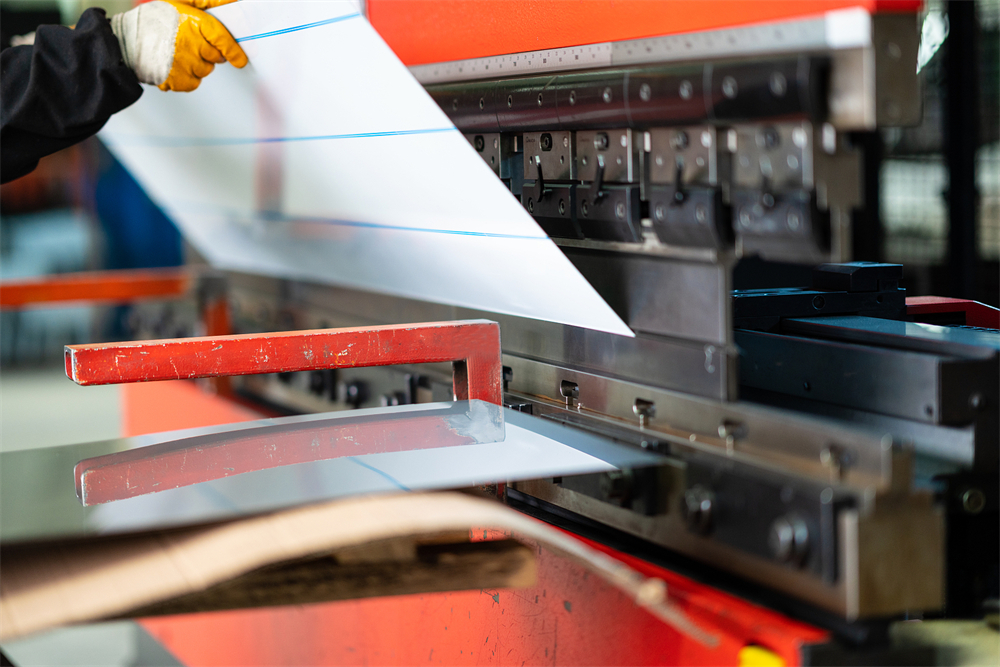
The architectural and construction fields also rely heavily on custom bending. From decorative facades and stainless steel elevator interiors to structural HVAC ducting and roofing systems, the press brake allows architects to realize complex geometric designs. Custom metalwork adds both aesthetic value and functional durability to modern infrastructure, and the press brake is the primary engine behind these creations.
Finally, the electronics and medical industries require small, intricate parts. Enclosures for sensitive medical equipment, server racks for data centers, and shielding for electronic components all start as flat sheets. The precision of a high-end press brake ensures that these enclosures fit perfectly, providing the necessary protection and heat dissipation for high-tech hardware.
Material and Process Requirements
To understand Why Press Brakes Are Essential In Custom Sheet Metal Bending, one must consider the diversity of materials used in modern manufacturing. Each material reacts differently to stress and deformation, requiring a machine that can adapt its parameters accordingly.
- Mild Steel: The most common material in fabrication, valued for its ductility and strength. It is relatively easy to bend but requires accurate tonnage calculations to avoid over-bending.
- Stainless Steel: Known for its corrosion resistance, stainless steel has a higher yield strength and significant springback. This requires a press brake with high precision and often a crowning system to ensure a uniform angle across the entire length of the bend.
- Aluminum: Lightweight and conductive, aluminum is prone to cracking if the bend radius is too tight. Custom bending requires specific tooling and pressure control to maintain the material’s integrity.
- Copper and Brass: Often used for electrical components, these materials are softer and require delicate handling to prevent surface marking while ensuring precise angles for connectivity.
The process of custom bending involves several technical factors, including the K-Factor (the ratio of the neutral axis to the material thickness) and Bend Allowance. A professional fabricator must calculate these values to determine the flat length of a part before bending. Modern CNC press brakes integrate these calculations into their software, allowing operators to input the desired final dimensions while the machine automatically adjusts the backgauge and stroke depth.
Recommended Machine Configuration for Custom Work
Not all press brakes are created equal. For custom sheet metal bending, the configuration of the machine determines the range of projects a shop can handle. A high-performance setup typically includes the following components:
1. CNC Control System
A multi-axis CNC controller (such as Delem or Cybelec) is the brain of the machine. It allows for the storage of thousands of programs, 3D visualization of the bending sequence, and automatic calculation of the bending force. For custom work, a controller that supports offline programming is essential, as it allows engineers to prepare jobs without stopping the machine’s production.
2. Multi-Axis Backgauge
In custom bending, parts often have multiple bends at different angles and orientations. A 4-axis (X, R, Z1, Z2) or 6-axis backgauge provides the flexibility to position complex parts accurately. This reduces the need for manual measurement and significantly speeds up the setup time for complex geometries.
3. Crowning System
When a press brake applies force, the bed and the ram can deflect slightly, leading to a “canoe effect” where the angle in the middle of the part is different from the ends. A mechanical or hydraulic crowning system compensates for this deflection in real-time, ensuring a perfectly straight bend across the entire length of the workpiece.
4. Tooling Options
Custom bending often requires specialized tooling, such as gooseneck punches for deep channels or multi-V dies for different material thicknesses. Quick-change clamping systems are vital for custom shops to minimize downtime between different jobs.
The Workflow of Custom Sheet Metal Bending
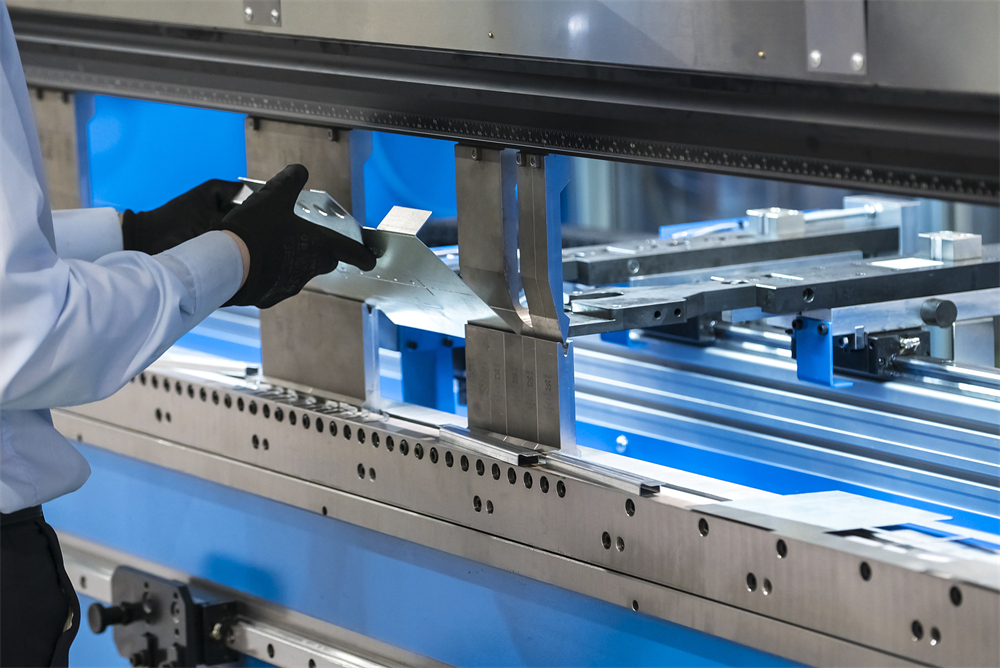
The efficiency of a press brake is best seen through its operational workflow. In a custom environment, the process usually follows these steps:
- Design and Simulation: The part is designed in CAD software. The file is then imported into the press brake’s CAM software to simulate the bending sequence, checking for potential collisions with the tools or the machine frame.
- Material Preparation: The sheet metal is cut to the exact flat dimensions using a laser or waterjet cutter. The accuracy of the cut is critical for the accuracy of the final bend.
- Machine Setup: The operator loads the required punches and dies. On a CNC machine, the program is loaded, and the backgauge moves into the starting position.
- The Bending Cycle: The operator places the metal against the backgauge. The ram descends, controlled by hydraulic or electric actuators, to a precise depth. Modern machines use optical sensors to measure the angle in real-time and adjust the stroke if necessary.
- Quality Inspection: The first part of a custom run is measured using precision protractors or 3D scanners. If the part meets the specifications, the rest of the batch is processed.
Productivity Benefits of Using Press Brakes
Why are press brakes considered essential? The answer lies in the tangible productivity gains they offer. Firstly, precision and repeatability are unmatched. A CNC press brake can repeat a bend within microns, ensuring that every part in a custom run is identical. This eliminates the “trial and error” approach common in manual bending.
Secondly, waste reduction is a major factor. Because the machine simulates the bend before it happens, the likelihood of ruining expensive materials like stainless steel or specialized alloys is greatly reduced. In custom fabrication, where material costs can be high, this saving directly impacts the bottom line.
Thirdly, labor efficiency is improved. A modern press brake with an intuitive interface allows a single operator to perform complex sequences that would have previously required multiple machines or manual setups. Features like automatic tool changers and robotic integration further push the boundaries of what a single workstation can achieve.
Case Example: Custom Electrical Enclosures
Consider a manufacturer tasked with producing 500 custom stainless steel electrical enclosures for an outdoor solar farm. These enclosures require NEMA 4X ratings, meaning they must be perfectly sealed and weather-resistant. The design involves multiple 90-degree bends, hemmed edges for safety, and offset bends for mounting brackets.
Using a HARSLE CNC Press Brake, the manufacturer can program the entire sequence in one go. The machine’s crowning system ensures that the long bends on the enclosure body are perfectly straight, allowing for a seamless weld later in the process. The 4-axis backgauge handles the small mounting brackets with ease. By using a press brake, the manufacturer reduces the production time per unit by 40% compared to older NC equipment, while maintaining a 0% rejection rate on the final assembly.
Frequently Asked Questions (FAQ)
1. What is the difference between an NC and a CNC press brake?
An NC (Numerical Control) press brake typically controls only the depth of the stroke and the backgauge position on a simple scale. A CNC (Computer Numerical Control) press brake offers full automation, 3D graphics, and the ability to control multiple axes simultaneously, making it far superior for complex custom work.
2. How do I choose the right tonnage for my press brake?
Tonnage depends on the material type, thickness, bend length, and the V-opening of the die. A general rule is to consult a tonnage chart or use the formula: Tonnage = (1.42 x Tensile Strength x Thickness^2) / V-opening. For custom shops, it is usually better to have a machine with slightly higher tonnage than currently needed to allow for future project variety.
3. Why is springback a problem in custom bending?
Springback occurs because metal has an elastic memory; when the pressure is released, the part tends to open up slightly. CNC press brakes compensate for this by “over-bending” the part by a calculated degree based on the material properties stored in the database.
4. Can a press brake be used for small parts?
Yes, but it requires appropriate safety measures and small-scale tooling. For very small parts, specialized electric press brakes are often used because they offer higher speeds and better sensitivity for delicate work.
Conclusion: Investing in the Future of Fabrication
In conclusion, Press Brakes Are Essential In Custom Sheet Metal Bending because they provide the necessary bridge between raw material and finished product. They offer the flexibility to handle diverse materials, the precision to meet modern engineering standards, and the efficiency to remain competitive in a global market. For any fabrication business looking to expand its capabilities, a high-quality press brake is not just a purchase; it is a strategic investment in quality and versatility.
At HARSLE, we specialize in providing state-of-the-art press brake solutions tailored to the needs of custom fabricators. Whether you need a compact machine for intricate parts or a heavy-duty tandem system for large-scale infrastructure, our team is here to help you find the perfect configuration for your shop.
Ready to Elevate Your Bending Precision?
Contact HARSLE today to discover our full range of CNC press brakes and custom tooling solutions. Let us help you optimize your workflow and achieve the highest standards in sheet metal fabrication.