Top Things to Check Before Buying a Press Brake Machine: A Comprehensive Guide


Introduction to Press Brake Procurement
Investing in a press brake is one of the most significant capital expenditures a metal fabrication shop will undertake. Whether you are upgrading an existing facility or starting a new production line, the machine you choose will dictate your production capacity, accuracy, and overall profitability for the next decade or more. However, the market is flooded with various brands, technologies, and configurations, making the decision-making process complex. Understanding the Top Things Check Before Buying A Press Brake Machine is essential to ensure you don’t overspend on unnecessary features or, conversely, end up with a machine that cannot handle your specific workload.
At HARSLE, we understand that a press brake is more than just a piece of iron; it is the heart of your fabrication process. From simple NC torsion bar machines to complex 8-axis electro-hydraulic CNC systems, the technical nuances can be overwhelming. This guide is designed to walk you through the critical checkpoints, from financial considerations to technical specifications, ensuring you make an informed decision that aligns with your business goals.
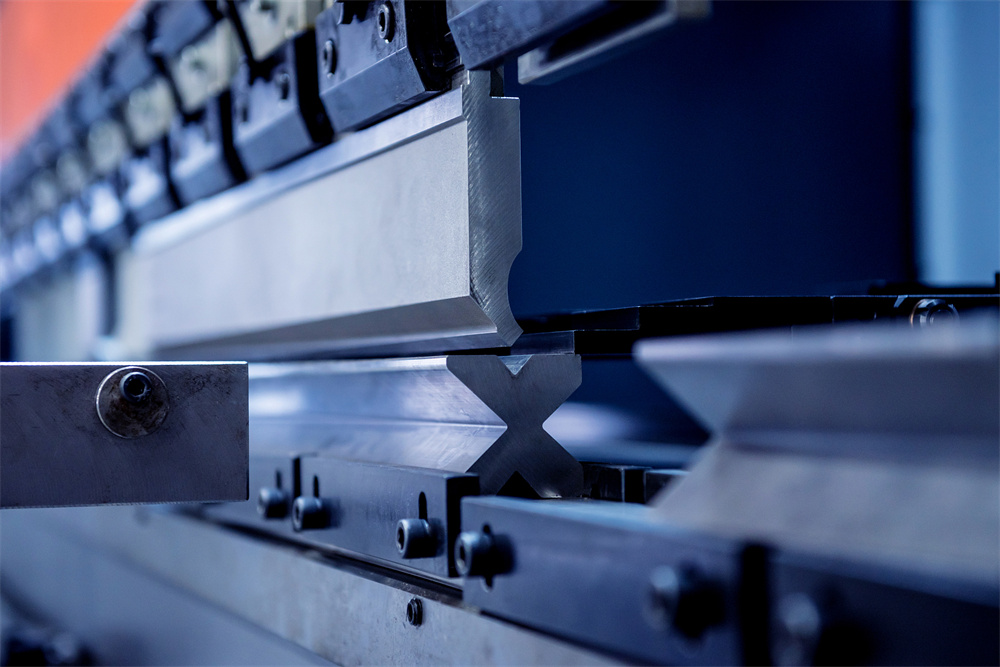
Price Range Overview: What to Expect
The price of a press brake can vary wildly based on its technology, size, and origin. Generally, the market is divided into three tiers. Entry-level machines, often featuring NC (Numerical Control) systems and torsion bar synchronization, typically range from $10,000 to $30,000. These are ideal for small shops or simple bending tasks where high-speed repetition and extreme precision are not the primary concerns. While affordable, they require more manual adjustment and skilled operators to achieve consistent results.
Mid-range machines, which usually feature basic CNC (Computer Numerical Control) systems and electro-hydraulic synchronization (Y1, Y2 axes), fall between $35,000 and $80,000. These machines offer significantly better accuracy and faster setup times, making them the workhorses of the modern fabrication industry. They often include features like basic backgauge control and simple graphical interfaces that reduce the learning curve for new operators.
High-end, high-precision machines can exceed $150,000. These units are equipped with multi-axis backgauges (up to 8 or more axes), advanced 3D graphical controllers (like Delem DA-66T or DA-69T), automatic crowning systems, and high-speed hydraulics. These are designed for high-volume production environments where every second of cycle time matters and where complex parts require intricate bending sequences. When considering the Top Things Check Before Buying A Press Brake Machine, identifying which price tier aligns with your budget and production needs is the first step.
Main Cost Drivers in Press Brake Selection
Tonnage and Bending Length
The most fundamental cost drivers are the machine’s tonnage (clamping force) and its maximum bending length. Tonnage is determined by the material type, thickness, and the V-opening of the die you intend to use. A common mistake is underestimating the required tonnage, which leads to machine strain and poor bend quality. Conversely, buying a 300-ton machine for 10-gauge mild steel is an inefficient use of capital. Calculating your maximum required force using a standard bending chart is a critical part of the Top Things Check Before Buying A Press Brake Machine.
Synchronization Technology
How the machine maintains parallelism between the upper beam and the lower table significantly impacts cost. Torsion bar machines use a mechanical link to keep the ends of the beam synchronized. They are cheaper but less precise over long periods. Electro-hydraulic machines use independent linear encoders and proportional valves to monitor and adjust the position of the cylinders thousands of times per second. This technology is more expensive but essential for high-precision work and off-center bending.
Frame Construction and Throat Depth
The physical build of the machine also dictates price. A heavy-duty, stress-relieved frame prevents deflection under load, ensuring long-term accuracy. Throat depth—the distance from the center of the tools to the back of the frame—determines how large of a flange you can bend. Deep throats require more steel and engineering to maintain rigidity, thus increasing the price. If you frequently work with large, deep-box shapes, a larger throat depth is a non-negotiable requirement.
Configuration Impact: Customizing for Efficiency
The configuration of your press brake determines its versatility. One of the Top Things Check Before Buying A Press Brake Machine is the backgauge configuration. A standard 2-axis backgauge (X and R) allows for depth and height adjustment. However, for complex parts with tapered flanges or multiple steps, you may need Z1/Z2 (lateral movement) and even X1/X2 or Delta-X axes. Each additional axis increases the machine’s price but drastically reduces setup time and operator error.
The control system is the brain of the machine. Brands like Delem, Cybelec, and ESA offer various levels of sophistication. A touch-screen interface with 2D or 3D visualization allows operators to see the bending sequence before they even touch the metal. This feature is invaluable for reducing scrap and training new employees. Furthermore, offline programming software allows engineers to create programs in the office and transfer them to the machine via USB or network, keeping the machine running rather than sitting idle during programming.
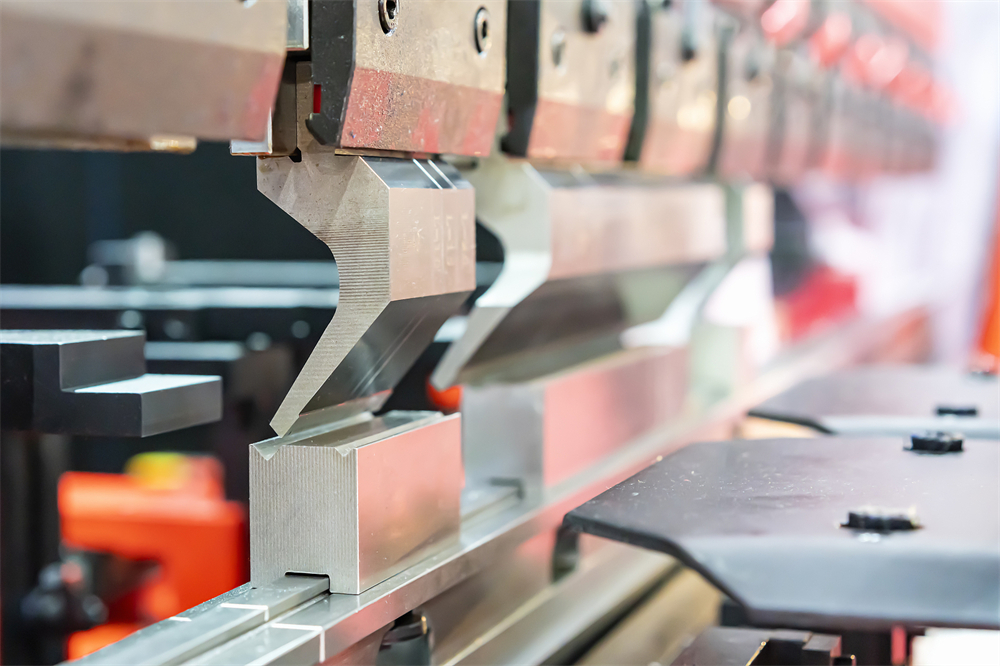
Crowning Systems: Mechanical vs. Hydraulic
When a press brake applies force, the bed and the beam naturally deflect or “bow.” Without compensation, the angle in the middle of the part will be wider than at the ends. Crowning systems counteract this. Hydraulic crowning uses cylinders in the lower table to push up, while mechanical crowning uses a series of wedges. Mechanical crowning is often preferred for its consistency and lack of dependence on hydraulic seals, but it adds to the initial cost. Checking for an integrated crowning system is a top priority for anyone bending parts longer than 2 meters.
Hidden Costs of Owning a Press Brake
The sticker price of the machine is only part of the investment. Tooling is perhaps the most significant hidden cost. High-quality, hardened, and precision-ground tools can easily cost $5,000 to $20,000 depending on the variety of profiles you need. Using cheap, unhardened tooling on a high-end CNC machine is a waste of the machine’s potential, as the inaccuracies in the tools will negate the precision of the hydraulics.
Logistics and installation are also factors. A 100-ton press brake can weigh over 6,000 kg, requiring specialized rigging and transport. Once on-site, the machine needs a stable, level concrete floor—sometimes requiring a dedicated foundation for very large machines. Furthermore, don’t overlook the cost of training. Even the most intuitive CNC system requires a few days of professional instruction to ensure your team can operate it safely and efficiently. Finally, consider the electrical requirements; industrial press brakes require significant power, and you may need to upgrade your shop’s electrical panel or install a transformer.
ROI Calculation: Justifying the Purchase
To determine if a machine is a good investment, you must calculate the Return on Investment (ROI). This involves looking at more than just the monthly lease payment. Consider the following:
- Throughput Increase: How many more parts per hour can a CNC machine produce compared to your current method?
- Scrap Reduction: If a CNC machine reduces scrap by 5% through better accuracy and simulation, how much material cost is saved annually?
- Labor Costs: Can a more advanced machine be operated by a less experienced (and thus less expensive) operator, or does it allow one operator to do the work of two?
- Energy Efficiency: Modern hybrid or servo-electric press brakes use significantly less electricity than traditional hydraulic systems, which can save thousands in utility bills over the machine’s life.
Typically, a well-chosen press brake should pay for itself within 18 to 36 months in a busy shop. If the Top Things Check Before Buying A Press Brake Machine are addressed correctly during the selection phase, the machine will continue to generate high margins long after the initial investment is recouped.
Buying Advice: Final Checklist
Before signing a purchase agreement, perform a final audit of your needs. First, analyze your part drawings. What is the thickest material? What is the longest bend? What is the smallest flange? This data should dictate the machine specs. Second, research the manufacturer’s reputation for after-sales service. A machine is only an asset if it is running; if a sensor fails and the manufacturer takes three weeks to send a replacement, your production halts.
Third, request a live or video demonstration using your specific material and parts. This proves the machine can handle your unique challenges. Fourth, check the availability of spare parts. Common components like seals, valves, and electrical switches should be standard and easily sourced. Finally, consider the resale value. Brands like HARSLE maintain their value well in the secondary market because of their robust construction and use of globally recognized components like Schneider electronics and Bosch Rexroth hydraulics.
| Feature | NC Torsion Bar | CNC Electro-Hydraulic | Servo-Electric |
|---|---|---|---|
| Accuracy | Moderate | High | Ultra-High |
| Setup Time | Slow (Manual) | Fast (Automated) | Very Fast |
| Energy Use | High | Moderate | Low |
| Maintenance | Simple | Moderate | Low |
| Price Point | $ | $$ | $$$ |
Frequently Asked Questions (FAQ)
1. What is the difference between NC and CNC press brakes?
NC (Numerical Control) machines usually control only the X-axis (backgauge depth) and require manual adjustment for the bend angle and beam depth. CNC (Computer Numerical Control) machines automate multiple axes, including the Y1/Y2 cylinder synchronization, backgauge height, and crowning, allowing for complex, multi-step bending in a single setup.
2. How do I calculate the tonnage I need?
The general rule for mild steel is Tonnage = (650 x thickness² x length) / V-opening. However, it is always safer to consult a tonnage chart provided by the manufacturer, as different materials like stainless steel or aluminum require different force levels.
3. Is a mechanical or hydraulic crowning system better?
Mechanical crowning is generally considered more precise and durable because it uses physical wedges that don’t leak or change with temperature. Hydraulic crowning is often cheaper to implement and is sufficient for many standard applications, but it may require more maintenance over time.
4. Can I use my old tooling on a new press brake?
It depends on the clamping system. Most modern machines use either Amada/Promecam style or Wila/Trumpf style clamping. If your old tooling matches the new machine’s tang style, you can reuse it, but ensure the tools are in good condition to avoid damaging the new machine’s bed.
5. Why is the backgauge so important?
The backgauge is responsible for the dimensional accuracy of the part. A high-quality backgauge ensures that every bend is placed exactly where it needs to be. Without a reliable backgauge, even the most powerful hydraulic system cannot produce a usable part.
6. What are the top things check before buying a press brake machine regarding safety?
Safety is paramount. Ensure the machine is equipped with laser guarding (like DSP or Fiessler) that stops the beam if an obstruction is detected. Also, check for emergency stop buttons, side and rear safety gates, and CE or UL certification to ensure compliance with local workplace safety regulations.