A Complete Guide to Press Brake Bend Length, Depth, and Worktable Size


Introduction to Press Brake Dimensions and Capacity
In the world of metal fabrication, selecting the right press brake is a critical decision that dictates the future capabilities of a workshop. Among the myriad of technical specifications, three physical dimensions stand out as the most influential: bend length, throat depth, and worktable size. These parameters do not just define the physical footprint of the machine; they determine the maximum size of the workpiece, the complexity of the bends possible, and the overall structural integrity of the equipment under high pressure. This guide provides a complete press brake bend length, depth, and worktable size analysis to help manufacturers make informed investment decisions.
Understanding these dimensions requires a shift from looking at the machine as a simple press to viewing it as a precision system. A press brake’s capacity is a delicate balance of tonnage and geometry. If the bend length is too short, you are limited to small parts; if the throat depth is insufficient, you cannot perform deep box bends or handle wide sheets. HARSLE, as a leader in industrial machinery, emphasizes that matching these specifications to your specific production needs is the first step toward achieving high-quality results and operational efficiency.
Price Range Overview: How Dimensions Dictate Cost
The price of a press brake is directly proportional to its physical dimensions and the structural reinforcement required to maintain precision across those dimensions. Generally, press brakes are categorized into small, medium, and large-scale machines. Small machines, typically with a bend length of 1.2 to 2 meters and a tonnage of 30 to 60 tons, are the most affordable, often ranging from $15,000 to $35,000 depending on the CNC control level. These are ideal for small components, brackets, and electronic enclosures.
Medium-scale machines are the industry workhorses, featuring bend lengths of 2.5 to 4 meters and tonnages between 100 and 250 tons. These machines usually fall within the $40,000 to $85,000 price bracket. The increase in price is not just for the extra steel; it accounts for more sophisticated hydraulic systems and crowning mechanisms necessary to prevent beam deflection over longer distances. When you move into large-scale territory—machines exceeding 6 meters in length or 400 tons in capacity—prices can easily exceed $150,000, as these require specialized foundations and heavy-duty components.
Main Cost Drivers in Press Brake Construction
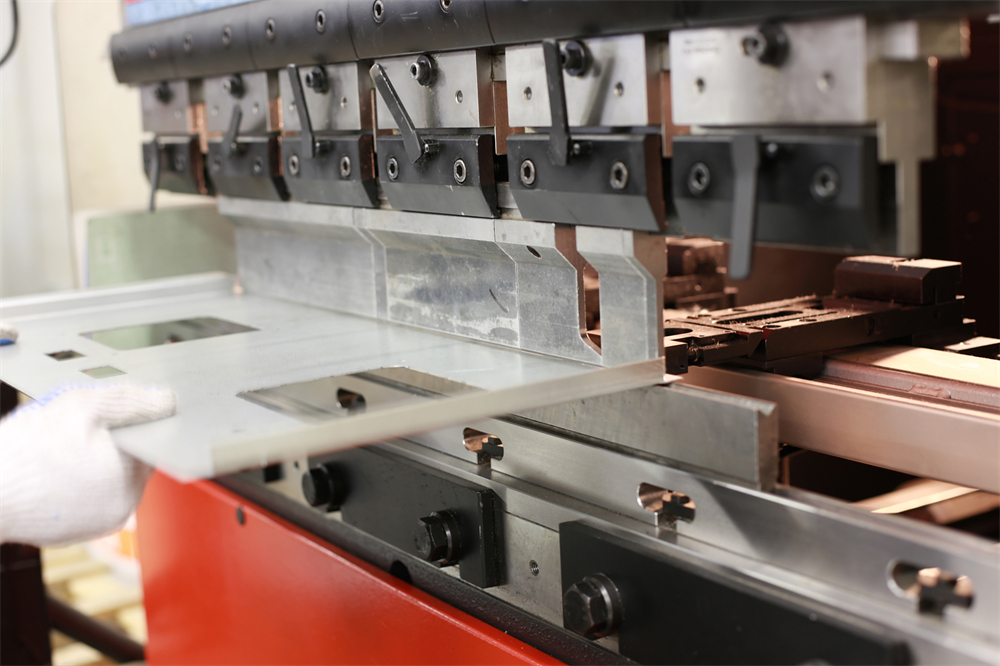
The primary cost driver in a press brake is the frame’s rigidity. As the bend length increases, the risk of the upper beam and lower table bowing (deflecting) under load increases exponentially. To counteract this, manufacturers must use thicker high-quality steel plates and advanced welding techniques, followed by stress-relieving heat treatments. This structural integrity ensures that the machine maintains a consistent angle across the entire length of the bend, which is the hallmark of a quality press brake.
Another significant cost driver is the throat depth. The throat is the gap between the bending centerline and the side frames of the machine. A deeper throat allows for larger flanges to be bent, but it also creates a larger “C” shape in the side frames. Under high pressure, this C-shape wants to open up. To prevent this deformation, the side frames must be significantly reinforced or made from much thicker material, which adds to the overall manufacturing cost. Finally, the complexity of the backgauge system, which must travel accurately across the entire worktable size, adds to the final price tag.
Configuration Impact: Bend Length and Throat Depth
When discussing bend length, it is vital to distinguish between the “total length of the worktable” and the “distance between housings.” The total length is the maximum length of a sheet you can bend if the flange is shallow enough to stay in front of the side frames. However, if you need to pass a long part through the machine, you are limited by the distance between the side housings. For example, a 4000mm machine might only have 3200mm between the housings. This is a critical configuration detail that buyers often overlook, leading to limitations in part design.
Throat depth is equally impactful. It determines how far back into the machine a piece of metal can go before hitting the back of the frame. If you are manufacturing deep boxes or large panels with multiple bends, a standard throat depth (usually 320mm to 400mm) might be insufficient. Opting for an extended throat (500mm or more) provides the clearance needed for complex geometries. However, users must be aware that larger throat depths can slightly reduce the overall rigidity of the frame unless the machine is specifically engineered for high-tonnage applications with that depth.
The Role of Worktable Size and Crowning Systems
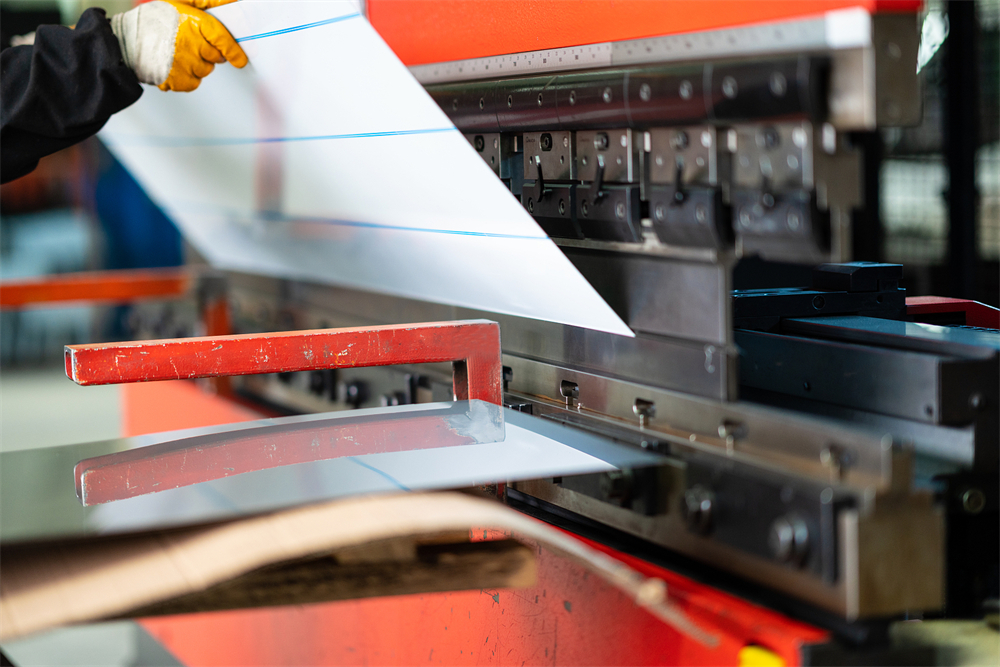
The worktable size is not just about the surface area; it is about the support it provides to the die and the workpiece. A wider worktable allows for the installation of multi-station tooling, where several different die sets are placed side-by-side. This allows an operator to complete a complex part with multiple different bends in a single handling, significantly reducing production time. The worktable must also be perfectly aligned with the upper beam to ensure angular accuracy.
Because no machine is perfectly rigid, the worktable often incorporates a “crowning” system. As the machine bends, the center of the beam tends to deflect upward. A crowning system (either mechanical or hydraulic) compensates for this by slightly arching the worktable upward in the center. The longer the worktable, the more critical a high-quality CNC-controlled crowning system becomes. Without it, a part might have a 90-degree angle at the ends but an 88-degree angle in the middle, leading to scrapped material and wasted time.
Hidden Costs: Logistics, Tooling, and Maintenance
Buying a press brake involves costs beyond the sticker price. Logistics for a machine with a 4-meter bend length are substantial. These machines are heavy and oversized, requiring specialized transport, cranes for offloading, and sometimes even modifications to the factory floor (such as reinforced concrete pits). If the machine is exceptionally tall or wide due to a large throat depth, shipping costs can escalate quickly, especially for international deliveries.
Tooling is another significant hidden cost. A longer bend length requires longer segments of punches and dies. High-quality, hardened tooling can cost thousands of dollars. Furthermore, if you have a large worktable size intended for multi-station setups, you will need a diverse library of tools to make that configuration profitable. Maintenance also scales with size; larger hydraulic reservoirs require more oil, larger filters, and more robust cooling systems to handle the heat generated during continuous high-tonnage operations.
ROI Calculation: Is a Larger Machine Worth It?
Calculating the Return on Investment (ROI) for a press brake involves analyzing the types of jobs you currently turn away. If you frequently outsource parts longer than 2.5 meters, bringing that capability in-house with a 3-meter or 4-meter machine can pay for itself through saved outsourcing costs and faster turnaround times. Additionally, a machine with a deeper throat depth allows for more complex part designs, which can command higher market prices due to the specialized nature of the work.
Efficiency is the biggest driver of ROI. A CNC press brake with an optimized worktable size for multi-station bending can reduce part handling by 50% or more. By calculating the labor cost savings per part and the reduction in scrap material (thanks to precision crowning and backgauge systems), most shops find that a higher-spec machine pays for itself within 18 to 36 months. It is often better to buy a machine with slightly more capacity than you currently need to allow for future business growth.
Buying Advice: Selecting the Right Specifications
When selecting a press brake, start by auditing your most common parts and your “dream” parts—the ones you want to be able to make. Measure the maximum length, the maximum flange depth, and the material thickness. Always choose a bend length that is at least 20% longer than your longest part to allow for easier handling and positioning. For throat depth, consider the maximum return flange on your largest box or panel; if it’s close to the standard depth, upgrade to a deeper throat to avoid production bottlenecks.
Don’t compromise on the crowning system if you are buying a machine longer than 2.5 meters. While manual crowning is cheaper, CNC-controlled hydraulic crowning is far more accurate and saves hours of setup time over the course of a month. Finally, consider the backgauge. A 4-axis or 6-axis backgauge combined with a generous worktable size allows for the most flexibility in modern metal fabrication. Work with a reputable manufacturer like HARSLE who can provide detailed technical drawings and load-deformation charts for the specific model you are considering.
Frequently Asked Questions (FAQ)
1. What is the difference between bend length and distance between housings?
Bend length refers to the total length of the worktable and the maximum length of a straight bend. The distance between housings is the clear space between the two side frames of the machine. If your part needs to pass through the machine or has deep flanges that would hit the frames, you are limited by the distance between housings.
2. Why does throat depth matter for box bending?
When bending a box, the previously bent sides (flanges) must have space to move into the machine. If the throat depth is too shallow, the side of the box will hit the back of the frame before the bend is completed. A deeper throat allows for taller box sides and more complex return bends.
3. How does worktable size affect accuracy?
A larger worktable provides a more stable base for the dies, but it also introduces more potential for deflection. Accuracy on a large worktable is maintained through a crowning system, which compensates for the natural flexing of the machine under load to ensure a consistent angle from end to end.
4. Can I bend short parts on a long press brake?
Yes, you can bend short parts on a long machine. However, it is important to avoid “center loading” exclusively, as this can cause localized wear on the bed and ram. It is often better to vary the position of the bend or use a machine with a robust crowning system to maintain accuracy when bending off-center.
5. Is a deeper throat depth always better?
Not necessarily. While a deeper throat offers more clearance, it can reduce the overall rigidity of the frame if not properly engineered. It also increases the machine’s footprint and cost. You should choose a throat depth that accommodates your largest planned parts without over-specifying, which adds unnecessary expense.
6. What maintenance is required for large press brakes?
Large machines require regular checks of the hydraulic oil levels and quality, lubrication of the backgauge and guiding rails, and periodic calibration of the CNC system and crowning mechanism. Because of the high forces involved, inspecting the frame for any signs of stress or bolt loosening is also critical for long-term safety and precision.