
How to Buy a Press Brake That Boosts Production Without Overspending


Introduction to Strategic Press Brake Acquisition
In the competitive landscape of modern metal fabrication, the ability to produce high-quality parts quickly and accurately is the difference between a thriving workshop and one that struggles to keep up. The press brake is the heartbeat of most fabrication shops. However, the market is flooded with options ranging from basic manual machines to ultra-high-end robotic cells. For many business owners, the challenge is clear: how to buy a press brake that boosts production without overspending on features that will never be used.
Overspending often occurs when a buyer lacks a clear understanding of their specific production requirements or falls for high-tech marketing without calculating the actual return on investment (ROI). Conversely, underspending on a machine that lacks necessary automation can lead to bottlenecks, high labor costs, and excessive scrap. This guide is designed to navigate the middle ground, helping you identify the ‘sweet spot’ of technology and price to maximize your shop’s efficiency.
Price Range Overview: Understanding the Market Tiers
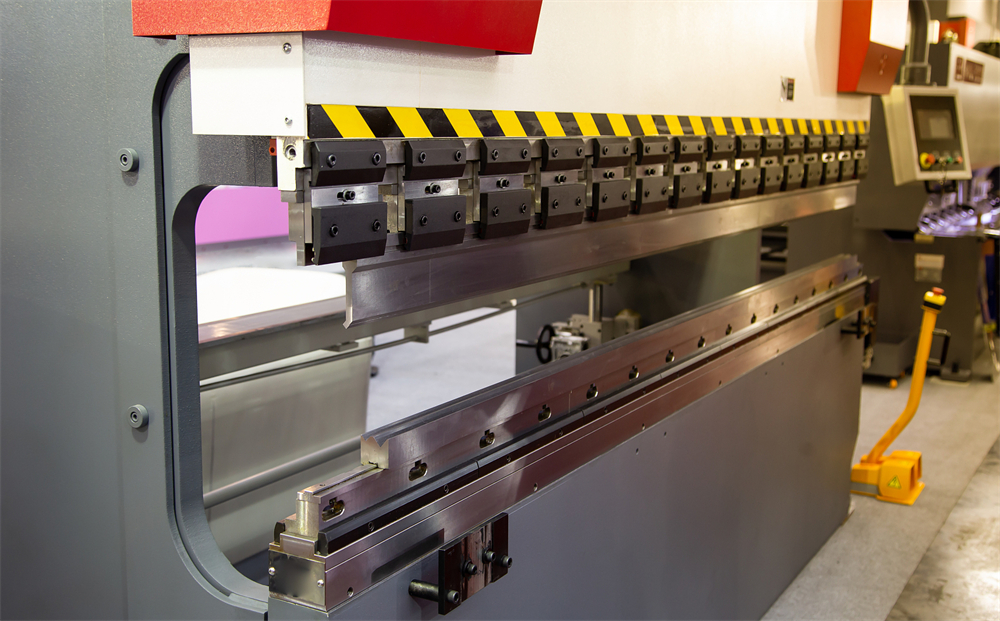
When you set out to buy a press brake that boosts production without overspending, you must first understand the three primary price tiers in the industry. Entry-level machines, often featuring NC (Numerical Control) systems or simple 2-axis CNC controllers, typically range from $15,000 to $35,000. These are ideal for simple, repetitive bends where high-speed setup isn’t the primary concern. While they are affordable, they may lack the sophisticated crowning systems or multi-axis backgauges needed for complex geometry.
The mid-range tier, where HARSLE excels, generally falls between $40,000 and $85,000. These machines are the workhorses of the industry, featuring advanced CNC controllers like the Delem DA-53T or DA-58T, 4 to 6 axes of movement, and integrated hydraulic crowning. This tier offers the best balance for those looking to boost production because it automates the most time-consuming aspects of setup without the six-figure price tag of specialized European brands.
High-end and specialized machines can exceed $150,000. These units often include 3D graphical programming, 8+ axes, robotic integration, and high-speed servo-electric drives. While impressive, these are often ‘over-spec’d’ for the average job shop. To avoid overspending, you must determine if your volume and part complexity truly justify the leap to this premium tier. Most production boosts come from moving from a manual or NC machine to a well-configured mid-range CNC machine.
Main Cost Drivers in Press Brake Selection
The price of a press brake is primarily driven by three factors: Tonnage, Length, and the Control System. Tonnage is the amount of pressure the machine can exert. A 100-ton machine is significantly cheaper than a 300-ton machine. To avoid overspending, calculate your maximum required tonnage based on your thickest material and shortest V-die opening. Buying a 200-ton machine when you only ever bend 3mm mild steel is a classic example of unnecessary expenditure.
The bending length is the second major driver. A 3200mm (10-foot) machine is the industry standard. Going longer, such as 4000mm or 6000mm, requires a much heavier frame and more robust hydraulics to prevent deflection, which increases the price exponentially. If 95% of your parts are under 2500mm, buying a 4000mm machine ‘just in case’ might not be the most cost-effective strategy. Instead, consider if you can gang-bend smaller parts on a standard-length machine.
Finally, the hydraulic system and frame construction play a role. High-quality components from brands like Bosch-Rexroth or Hoerbiger add to the initial cost but drastically reduce downtime. A machine that breaks down once a month is not boosting production, regardless of its initial price. Investing in a solid, stress-relieved steel frame is essential for long-term accuracy, which prevents the ‘hidden cost’ of scrapped parts.
Configuration Impact: Features That Actually Boost Production
To buy a press brake that boosts production without overspending, you must prioritize features that reduce setup time. In modern fabrication, the ‘bending’ part is fast; it’s the ‘setup’ that kills productivity. A CNC-controlled backgauge is the most critical feature here. A 4-axis backgauge (X, R, Z1, Z2) allows the machine to automatically position the fingers for different bend lengths and heights, eliminating manual adjustments between every stroke.
Another essential feature is the CNC Crowning system. As a press brake bends, the bed and ram naturally deflect. Without crowning, the angle in the middle of the part will be different from the ends. Manual crowning requires the operator to adjust shims or a hand-crank, which is slow and prone to error. A CNC-controlled hydraulic or mechanical crowning system adjusts automatically based on the material thickness and length entered into the controller, ensuring a perfect bend the first time.
The choice of CNC controller is also vital. A touch-screen interface with 2D graphical programming, such as the Delem DA-53T, allows operators to draw the part directly on the screen. The software then calculates the bend sequence and backgauge positions automatically. This reduces the need for highly skilled ‘master’ operators and allows less experienced staff to produce accurate parts, which is a massive boost to overall shop production capacity.
Hidden Costs: What to Look Out For
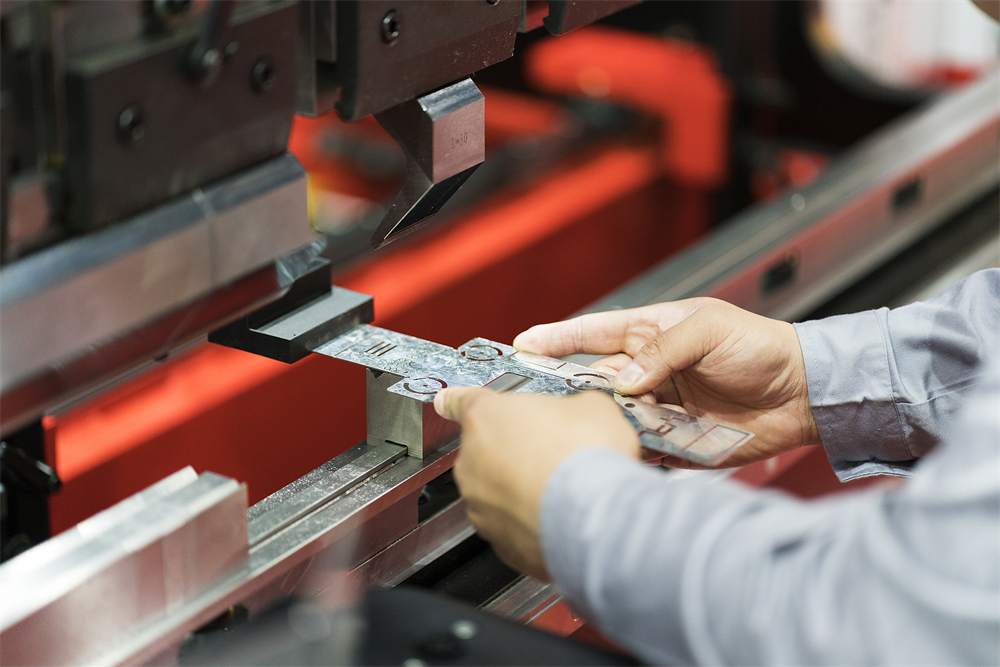
The sticker price of the machine is rarely the final cost. To truly avoid overspending, you must account for the ‘hidden’ expenses. Tooling is the most significant. A press brake is useless without high-quality punches and dies. Depending on the variety of parts you produce, a comprehensive tooling set can cost anywhere from $5,000 to $20,000. Opting for a machine with a standard ‘Amada-Promecam’ style quick-clamping system allows you to use widely available and affordable tooling.
Shipping and installation are often overlooked. A 100-ton press brake weighs several tons and requires specialized rigging and transport. Furthermore, the machine must be leveled and commissioned by a technician to ensure the hydraulics and electronics are calibrated correctly. When you buy from a manufacturer like HARSLE, it is important to clarify what support is provided for remote installation or if a local technician is available.
Training and maintenance are the final hidden costs. A complex 8-axis machine requires extensive training for your staff. If your team can’t use the features, the investment is wasted. Additionally, consider the cost of consumables like hydraulic oil and filters, and the availability of spare parts. Choosing a machine with globally recognized components (like Schneider electrics or Delta servos) ensures that you won’t be stranded waiting for a proprietary part from overseas.
ROI Calculation: Justifying Your Purchase
Calculating the Return on Investment (ROI) is the only way to ensure you are not overspending. To do this, compare your current production method with the projected output of the new press brake. For example, if your current manual machine takes 15 minutes to set up a 4-bend part and the new CNC machine takes 2 minutes, you are saving 13 minutes per setup. If you do 10 setups a day, that’s over 2 hours of saved labor daily.
Furthermore, consider the reduction in scrap. If a high-precision CNC machine reduces your scrap rate from 5% to 1%, the material savings alone can contribute thousands of dollars to the bottom line annually. In many cases, a mid-range CNC press brake pays for itself within 12 to 18 months through labor savings and increased throughput. If the ROI calculation shows a 5-year payback period, you are likely looking at a machine that is too expensive for your current needs.
Another factor in ROI is the ability to take on more complex work. A 4-axis or 6-axis machine allows you to bid on jobs that were previously impossible or too slow to be profitable. This expansion of your service offering is a direct result of buying a press brake that boosts production. When the machine enables you to win higher-margin contracts, the ‘cost’ of the machine becomes a secondary concern to the ‘revenue’ it generates.
Buying Advice: A Step-by-Step Strategy
To buy a press brake that boosts production without overspending, follow this strategic approach. First, audit your last six months of production. What was the maximum thickness, the longest part, and the most complex bend sequence? This data defines your ‘must-have’ specs. Do not buy for the ‘one-off’ job you might get next year; buy for the work you have right now and the 20% growth you expect.
Second, prioritize the controller and the backgauge. These are the components that drive speed. A machine with a fast, accurate backgauge and an intuitive controller will always outperform a higher-tonnage machine with a basic NC system in a job-shop environment. Look for brands like HARSLE that offer the latest Delem or Cybelec controllers as standard options, as these provide the best balance of power and ease of use.
Third, request a live or video demonstration using your own part drawings. Any reputable manufacturer should be able to show you exactly how their machine handles your specific challenges. This is the best way to verify the software’s ease of use and the machine’s cycle time. Finally, check the warranty and after-sales support. A slightly more expensive machine with a 2-year warranty and lifetime technical support is a better value than a ‘bargain’ machine with no safety net.
Frequently Asked Questions (FAQ)
1. What is the difference between NC and CNC press brakes?
An NC (Numerical Control) press brake usually controls only the depth of the ram (Y-axis) and the position of the backgauge (X-axis) through simple numerical input. A CNC (Computer Numerical Control) press brake uses a more advanced computer to manage multiple axes simultaneously, often with graphical interfaces, automatic crowning, and bend sequencing. CNC is much faster for complex parts and multiple setups.
2. How much tonnage do I really need?
Tonnage depends on material type, thickness, and the V-opening of your die. For example, bending 3mm mild steel over a 24mm V-die requires about 25 tons per meter. Always consult a tonnage chart. It is generally wise to buy a machine with 20% more capacity than your maximum requirement to avoid running the hydraulics at peak pressure constantly.
3. Is a servo-electric press brake better than a hydraulic one?
Servo-electric machines are faster, more energy-efficient, and more precise, but they are significantly more expensive and usually limited to lower tonnages (under 100 tons). For most general fabrication, a high-quality CNC hydraulic press brake offers the best balance of power, versatility, and cost-effectiveness.
4. Can I upgrade my press brake later?
Some components, like tooling and certain software features, can be upgraded. However, core physical attributes like tonnage, bending length, and the number of backgauge axes are very difficult and expensive to change after the machine is built. It is better to get the right hardware configuration from the start.
5. Why should I choose HARSLE for my press brake?
HARSLE provides industrial-grade machinery that focuses on high-value configurations. By integrating world-class components (Delem, Rexroth, Schneider) into robust frames, HARSLE allows fabricators to access high-end CNC capabilities at a price point that ensures a rapid ROI, perfectly aligning with the goal of boosting production without overspending.












