
Press Brake Applications in Sheet Metal Fabrication: A Complete Guide


Introduction to Press Brake Applications in Sheet Metal Fabrication
In the realm of modern industrial manufacturing, the press brake stands as a cornerstone of efficiency and precision. As a critical piece of equipment in any metalworking facility, understanding the full scope of Press Brake Applications In Sheet Metal Fabrication: A Complete guide is essential for engineers, workshop managers, and business owners alike. A press brake is a machine tool designed to bend sheet and plate material, most commonly sheet metal, by clamping the workpiece between a matching punch and die. While the concept may seem simple, the technological evolution of these machines—from manual mechanical brakes to sophisticated multi-axis CNC hydraulic systems—has revolutionized how we build everything from household appliances to aerospace components.
The versatility of the press brake allows it to handle a wide variety of materials, including carbon steel, stainless steel, aluminum, and even specialized alloys. By utilizing different tooling sets and adjusting the machine’s parameters, fabricators can create complex geometries that would be impossible with other forming methods. This guide explores the diverse applications, technical requirements, and strategic advantages of integrating high-quality press brakes, such as those manufactured by HARSLE, into your production line.
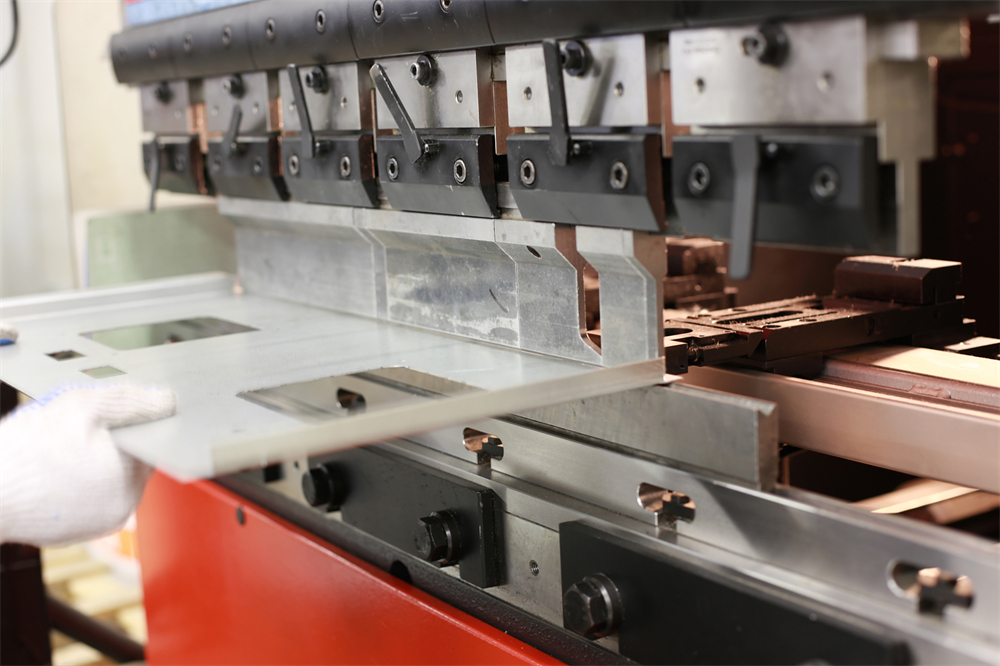
Comprehensive Application Scenarios
1. Automotive Industry
The automotive sector is perhaps the most prominent user of press brake technology. From the structural frame of a vehicle to the intricate brackets holding internal components, press brakes are used to create parts that require high strength-to-weight ratios. Modern vehicles rely on high-strength steels that demand precise bending pressures and sophisticated springback compensation, both of which are hallmarks of advanced CNC press brakes. Components such as bumpers, door pillars, and chassis reinforcements are frequently produced using heavy-duty hydraulic brakes.
2. Aerospace and Defense
In aerospace, precision is not just a requirement; it is a safety mandate. Press brakes are used to form fuselage sections, wing ribs, and internal structural supports. These applications often involve exotic materials like titanium or high-grade aluminum alloys. The ability of a CNC press brake to maintain tolerances within microns ensures that every component fits perfectly within the complex assembly of an aircraft. Furthermore, the defense industry utilizes these machines to manufacture armored plating for vehicles and specialized enclosures for sensitive electronic equipment.
3. Construction and Infrastructure
The construction industry utilizes press brakes for large-scale structural components. This includes roofing panels, wall cladding, and heavy-duty beams. In infrastructure projects, press brakes are essential for creating the metal forms used in bridge construction and the large-scale ductwork required for industrial ventilation systems. The ability to handle long sheets of metal—sometimes exceeding 6 meters in length—makes the press brake an indispensable tool for architectural metalwork.
4. HVAC and Home Appliances
Every time you look at a refrigerator, a washing machine, or an air conditioning unit, you are seeing the work of a press brake. The HVAC industry relies heavily on these machines to create airtight ducting, furnace casings, and heat exchanger components. For home appliances, the focus is often on aesthetic quality and high-volume production. Press brakes equipped with specialized non-marking tooling allow manufacturers to bend pre-painted or polished stainless steel without damaging the surface finish.
5. Electronics and Telecommunications
The digital age is built on metal. Server racks, computer chassis, and telecommunications enclosures are all products of precision sheet metal fabrication. These applications often require a high number of small, intricate bends in thin-gauge materials. CNC press brakes with high-speed backgauges are ideal for these scenarios, allowing for rapid cycling and high throughput while maintaining the strict dimensional accuracy required for electronic assembly.
Material and Process Requirements
To achieve success in Press Brake Applications In Sheet Metal Fabrication: A Complete understanding of material science is required. Different metals react differently under pressure, and the fabricator must account for several variables to ensure a perfect bend. The most critical factor is the material’s yield strength. For instance, stainless steel requires significantly more tonnage to bend than aluminum of the same thickness. Additionally, the “springback” effect—where the metal slightly returns to its original shape after the pressure is released—must be calculated and compensated for in the machine’s programming.
Thickness consistency is another vital consideration. Even minor variations in the gauge of the sheet metal can lead to angle inaccuracies. High-end CNC press brakes utilize thickness detection systems to adjust the stroke depth in real-time. Furthermore, the choice of bending method—air bending, bottoming, or coining—depends on the required precision and the material’s properties. Air bending is the most common method due to its versatility, as it allows for different angles to be achieved with a single set of tools by varying the depth of the punch into the die.
Surface requirements also dictate the process. For decorative architectural pieces or food-grade stainless steel, fabricators often use urethane die inserts or protective tapes to prevent “die marks.” Understanding the K-factor (the ratio of the neutral axis to the material thickness) is also essential for calculating the flat pattern of a part before it is bent, ensuring that the final dimensions meet the design specifications after the deformation process.
Recommended Machine Configuration
Selecting the right machine configuration is the difference between a profitable operation and a bottleneck. For most industrial applications, a CNC Hydraulic Press Brake is the gold standard. Key components to consider include:
- Tonnage and Length: Calculate the maximum thickness and length of the parts you intend to produce. It is always advisable to choose a machine with 20% more capacity than your maximum requirement to avoid overstressing the frame.
- CNC Controller: Modern controllers like Delem or Cybelec offer 3D visualization, automatic bend sequencing, and collision detection. This reduces setup time and minimizes operator error.
- Backgauge System: A multi-axis backgauge (X, R, Z1, Z2, X5, X6) is essential for complex parts. The more axes the backgauge has, the more complex the geometries the machine can handle without manual repositioning.
- Crowning System: To compensate for the natural deflection of the machine’s bed under high pressure, a hydraulic or mechanical crowning system is necessary to ensure a consistent angle across the entire length of the bend.
- Tooling Style: European (Amada/Promecam) or American style tooling. Quick-change clamping systems can significantly reduce downtime between different jobs.
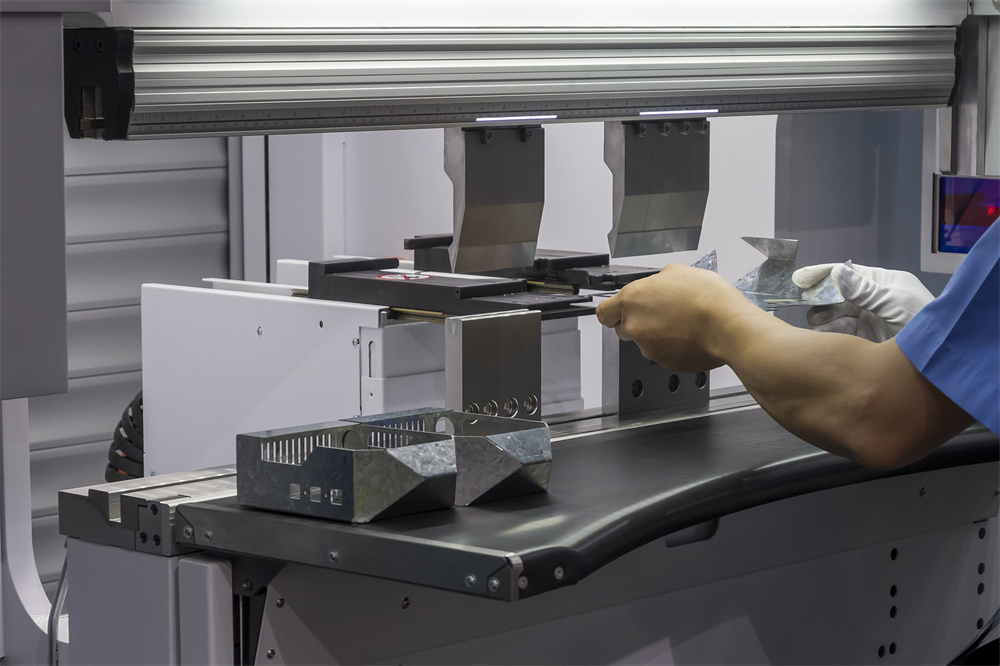
Standard Workflow in Press Brake Operations
The workflow for a professional press brake operation begins long before the machine is turned on. It starts in the engineering department with CAD/CAM software. The 3D model of the part is “unfolded” into a 2D flat pattern, accounting for the bend deduction and material thickness. This file is then imported into the press brake’s controller, where the software determines the optimal bending sequence to avoid collisions with the tooling or the machine frame.
Once the program is ready, the operator selects the appropriate punch and die. Modern machines often feature tool identification systems to ensure the correct tools are installed. After the tools are clamped, the operator performs a test bend on a scrap piece of the same material. This allows for fine-tuning the angle and backgauge positions. In a high-production environment, this setup process is streamlined through the use of saved programs and standardized tooling layouts.
During the production run, the operator feeds the sheet metal against the backgauge fingers, and the machine executes the bend. For large or heavy parts, sheet followers (robotic supports) may be used to assist the operator and prevent “back-bending” or injury. Finally, every part undergoes quality control, often using digital protractors or laser measuring systems integrated into the press brake itself to verify that every angle is within the specified tolerance.
Productivity and Economic Benefits
Investing in a high-quality press brake offers substantial productivity benefits. The most immediate advantage is the reduction in scrap. With CNC precision and automatic crowning, the “first part, right part” philosophy becomes a reality, eliminating the waste associated with manual trial-and-error. Furthermore, the speed of modern hydraulic systems and the rapid movement of multi-axis backgauges significantly reduce cycle times, allowing for higher throughput and faster turnaround for customers.
From an economic standpoint, the versatility of a press brake means a single machine can produce a vast array of products, allowing a shop to diversify its service offerings. The durability of machines from reputable manufacturers like HARSLE ensures a long service life with minimal maintenance, providing a high return on investment (ROI). Additionally, the integration of offline programming software allows the machine to keep running while the next job is being prepared, maximizing the “green light” time of the equipment.
Case Example: Manufacturing Electrical Enclosures
Consider a manufacturer specializing in stainless steel electrical enclosures for outdoor use. These enclosures require multiple 90-degree bends, hemmed edges for safety, and precise offsets for door seals. By using a HARSLE CNC Press Brake with a 4-axis backgauge and a specialized hemming die, the manufacturer was able to reduce their production time by 40%. The CNC controller’s ability to store complex sequences meant that switching between different enclosure sizes took minutes rather than hours. The result was a more consistent product, lower labor costs, and the ability to take on larger contracts with tighter deadlines.
Frequently Asked Questions (FAQ)
| Question | Answer |
|---|---|
| How do I calculate the tonnage required for a bend? | Tonnage depends on material thickness, tensile strength, and the V-opening of the die. A standard formula is (1.42 x Tensile Strength x Thickness^2) / V-opening. |
| What is the difference between NC and CNC press brakes? | NC machines are simpler and usually control only the depth of the stroke and one backgauge axis. CNC machines offer full automation, 3D graphics, and control over multiple axes. |
| Why are my bend angles inconsistent? | This is often caused by material thickness variation, lack of a crowning system, or worn-out tooling. Regular calibration and maintenance are key. |
| Can I bend small parts on a large press brake? | Yes, but it requires careful tooling selection and safety precautions. Using a machine that is too large for very small parts can sometimes lead to accuracy issues if the tonnage is not controlled precisely. |
Conclusion and Call to Action
Mastering Press Brake Applications In Sheet Metal Fabrication: A Complete understanding of both the machine’s capabilities and the material’s behavior is the key to success in the competitive world of metalworking. Whether you are producing simple brackets or complex aerospace assemblies, the right press brake is the heart of your production line. At HARSLE, we specialize in providing high-performance, reliable, and technologically advanced press brakes tailored to your specific industrial needs.
Ready to elevate your fabrication capabilities? Contact HARSLE today to speak with our technical experts about finding the perfect press brake solution for your workshop. Visit our website to explore our full range of CNC hydraulic press brakes and take the first step toward unmatched precision and productivity.












