How Press Brakes Are Used In HVAC Duct Manufacturing: A Comprehensive Guide


Introduction to Press Brakes in the HVAC Industry
In the world of modern construction, Heating, Ventilation, and Air Conditioning (HVAC) systems are the lungs of a building. The efficiency of these systems depends heavily on the quality and precision of the ductwork that carries air throughout the structure. This is where the role of high-precision machinery becomes critical. Specifically, understanding how press brakes are used in HVAC duct manufacturing is essential for any fabrication shop looking to improve its output quality and operational efficiency.
Press brakes are the workhorses of the sheet metal industry. While many people associate ductwork with simple folding machines or manual brakes, the complexity of modern architectural designs and the demand for energy-efficient, airtight seals have made the CNC press brake an indispensable tool. From creating standard rectangular ducts to complex transitions and fittings, these machines provide the force and accuracy required to handle various gauges of galvanized steel, aluminum, and stainless steel.
HARSLE, a leader in metal fabrication technology, provides advanced CNC press brakes designed to meet the rigorous demands of the HVAC sector. In this guide, we will delve deep into the technicalities of duct fabrication, the specific machine configurations required, and the workflow that transforms flat sheets of metal into sophisticated ventilation components.
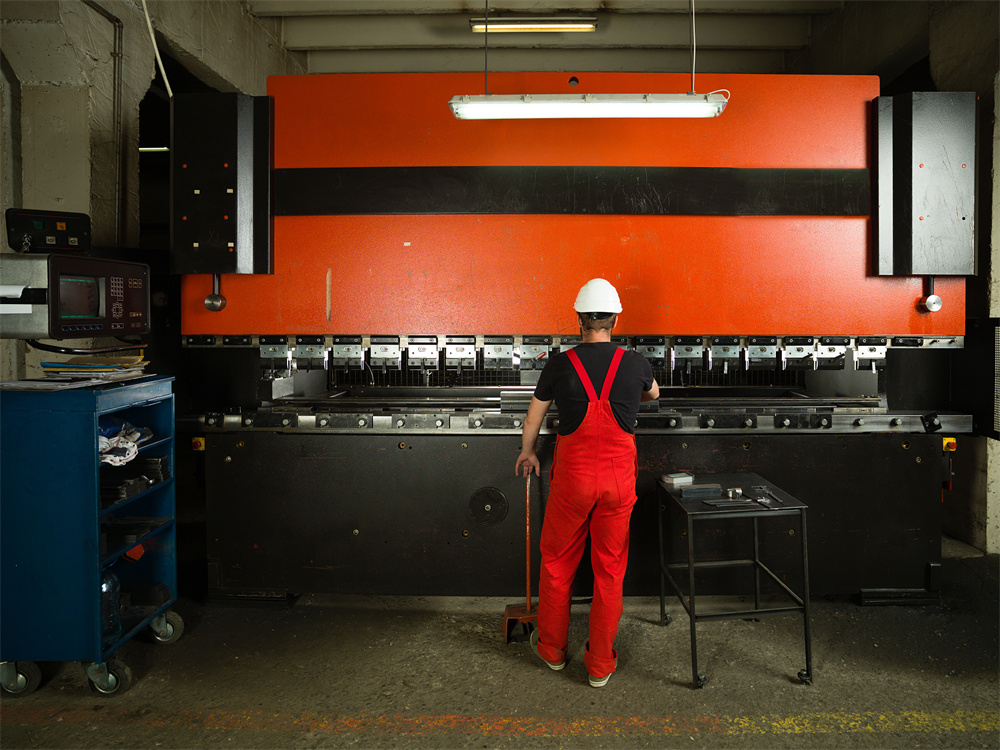
Application Scenarios: Where Press Brakes Excel in HVAC
The application of press brakes in HVAC is diverse, ranging from small-scale residential projects to massive industrial ventilation systems. One of the primary scenarios involves the creation of rectangular ductwork. Unlike round ducts, which are often spiral-wound, rectangular ducts require precise 90-degree bends and specialized flange profiles. A press brake allows for the rapid creation of ‘L-sections’ or ‘U-sections’ that are later joined to form a complete duct.
Beyond standard straight runs, HVAC systems require a multitude of fittings. These include elbows, offsets, transitions (changing from one size or shape to another), and plenums. Each of these components involves non-standard angles and complex bending sequences. For instance, a transition piece might require multiple slight bends to create a tapered effect. A CNC press brake can be programmed to execute these varying angles in a single setup, significantly reducing the time spent on manual measurements.
Another critical application is the fabrication of specialized duct connectors like TDC (Transverse Duct Connector) and TDF (Transverse Duct Flange). While some shops use dedicated flange-forming machines, a press brake equipped with the right tooling can create custom flanges and hems that ensure an airtight fit. This is particularly important in high-pressure commercial systems where air leakage can lead to significant energy loss and system whistling.
Finally, press brakes are used in the manufacturing of HVAC accessories such as damper blades, louvers, and unit casings. These components often require intricate bending of thinner gauge materials where aesthetic finish and structural integrity are equally important. The versatility of the press brake allows a single machine to handle both the heavy-duty duct sections and the delicate internal components of an HVAC unit.
Material and Process Requirements for Ductwork
The materials used in HVAC duct manufacturing are chosen for their durability, weight, and resistance to corrosion. The most common material is galvanized steel, typically ranging from 26 gauge to 18 gauge for standard ductwork, and even thicker for industrial applications. Galvanized steel presents a unique challenge: the zinc coating must not be cracked or flaked during the bending process, as this would expose the underlying steel to rust.
Aluminum is another popular choice, especially in environments where weight is a concern or where high moisture levels are present, such as in laboratory exhaust systems. Aluminum is softer than steel and has a different springback coefficient, meaning the press brake must be finely tuned to achieve the correct angle. Stainless steel is reserved for specialized applications, such as commercial kitchens or chemical exhaust systems, where extreme heat or corrosive fumes are present. Stainless steel requires significantly more tonnage to bend and is more prone to work-hardening.
The process requirements for HVAC bending often involve specific joint types. The ‘Pittsburgh Lock’ and ‘Snap Lock’ are industry standards for longitudinal seams. While the locks themselves are often formed on a roll-former, the initial bends that allow these pieces to fit together are frequently performed on a press brake. Furthermore, ‘hemming’—the process of folding the edge of the metal back on itself—is used to eliminate sharp edges and add rigidity to the duct ends. This requires a press brake capable of a two-stage process: an acute bend followed by a flattening operation.
Accuracy in the bending process is not just about the angle; it is also about the length of the flange. In HVAC, even a 1/16th of an inch deviation can prevent a duct section from sliding into its mate, leading to costly field modifications. Therefore, the use of a precision backgauge system is non-negotiable. The backgauge ensures that every bend is positioned perfectly relative to the edge of the sheet, ensuring consistency across hundreds of identical parts.
Recommended Machine Configuration for HVAC Shops
When considering how press brakes are used in HVAC duct manufacturing, the configuration of the machine is the most important factor for success. For most HVAC applications, a CNC (Computer Numerical Control) press brake is superior to an NC (Numerical Control) or manual version. The ability to store programs for different duct sizes and shapes allows for rapid changeovers, which is vital in a high-mix, low-volume production environment.
Tonnage and Length: Most HVAC ductwork is made from relatively thin material, so high tonnage is rarely the primary requirement. A 40-ton to 100-ton machine is usually sufficient. However, the length of the bed is crucial. Since duct sections are often 4 feet, 5 feet, or even 10 feet long, a press brake with a bed length of at least 3100mm (10 feet) is standard. This allows the operator to bend full-length sheets in a single hit.
Backgauge System: A multi-axis backgauge (at least 3-axis: X, R, and Z) is highly recommended. The X-axis controls the depth of the bend, the R-axis controls the height (useful when bending flanges that have already been formed), and the Z-axis (Z1, Z2) allows the gauge fingers to move left and right to support different widths of metal. For complex transitions, a 4-axis or 6-axis backgauge provides the ultimate flexibility.
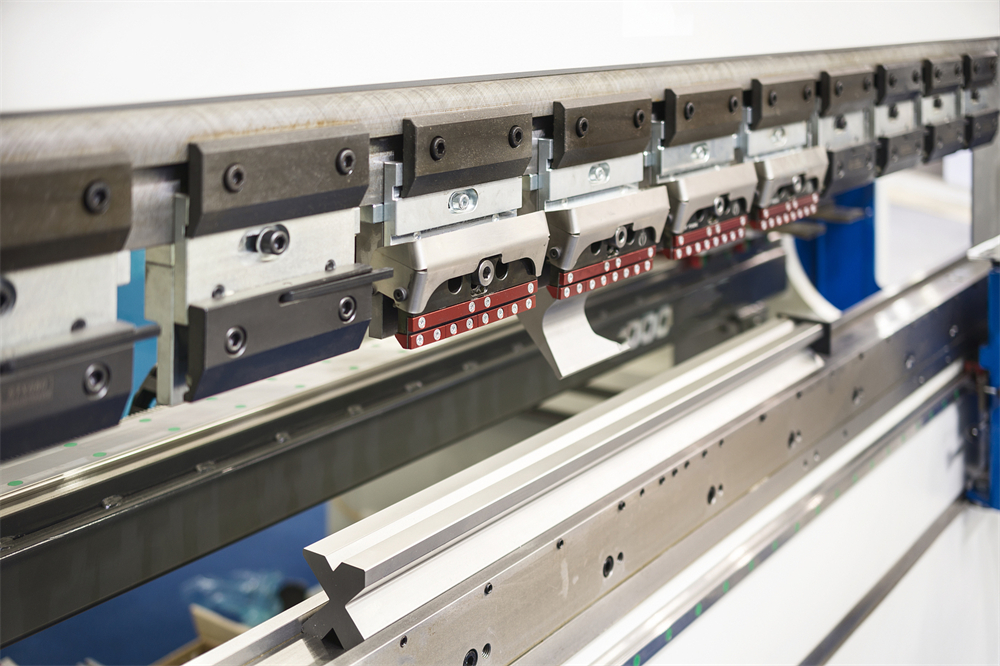
Tooling: HVAC shops benefit from ‘Gooseneck’ punches, which have a deep relief area that allows for the creation of deep ‘U’ channels without the metal hitting the upper beam. For hemming, a specialized hemming die set (often a combination of an acute die and a flattening spring-loaded top) can save immense amounts of time. Additionally, using a multi-V die allows the operator to switch between different material thicknesses without changing the bottom tool.
Crowning System: Even with thin materials, long bends can suffer from ‘canoeing’ or bowing in the center. A CNC-controlled crowning system compensates for the deflection of the machine frame, ensuring that the bend angle is consistent from one end of the 10-foot sheet to the other. This is critical for ensuring that duct sections join together without gaps.
The Workflow: From Flat Sheet to Finished Duct
The workflow in an HVAC fabrication shop using a press brake typically begins in the design office. Using CAD/CAM software, the ductwork is laid out, and the ‘flat pattern’ is calculated. This calculation must account for the ‘bend deduction’—the amount of metal that is ‘lost’ or ‘gained’ during the bending process based on the material thickness and the radius of the bend.
Once the flat patterns are cut (usually via a CNC plasma or fiber laser table), the parts move to the press brake. The operator loads the specific program for that part into the CNC controller. Modern HARSLE machines feature graphical interfaces where the operator can see a 3D representation of the part and the sequence of bends. This visual aid is invaluable for preventing ‘inside-out’ or ‘backwards’ bends, which are common mistakes in complex duct fittings.
The operator then places the sheet against the backgauge fingers. The machine executes the first bend, and the backgauge automatically moves to the next position for the subsequent bend. For a standard rectangular duct, this might involve four 90-degree bends. If the duct is being made in two ‘L’ shapes, it involves one 90-degree bend per piece, plus the smaller bends for the locking mechanisms.
Quality control is the final step in the workflow. The operator checks the first piece of a run using a protractor or a digital angle finder. With a high-quality CNC press brake, once the first piece is dialed in, the machine’s repeatability ensures that the next hundred pieces will be identical. The finished components are then moved to the assembly area where they are seamed, flanged, and sealed before being shipped to the job site.
Productivity Benefits of Using CNC Press Brakes
The transition from manual folding to CNC press braking offers a massive leap in productivity. The most immediate benefit is speed. A CNC press brake can perform a sequence of bends in a fraction of the time it takes to manually reset a leaf brake for each operation. This speed allows HVAC contractors to meet tight construction deadlines and handle larger volumes of work without increasing their footprint.
Waste reduction is another significant advantage. In manual fabrication, human error is a constant factor. A single misplaced bend can turn an expensive sheet of stainless steel into scrap. CNC machines eliminate this by automating the positioning and the pressure. Furthermore, the precision of the bends means that parts fit together perfectly the first time, eliminating the need for ‘re-work’ or ‘field-fitting’—both of which are major profit killers in the HVAC industry.
Labor savings are also a key driver. Skilled manual brake operators are becoming harder to find. A CNC press brake with an intuitive controller allows a less experienced operator to produce high-quality parts with minimal training. The machine ‘holds the knowledge’ of the bend deductions and sequences, reducing the reliance on the operator’s tribal knowledge. This democratization of skill allows shops to scale their operations more easily.
Finally, the ability to offer custom ductwork becomes a competitive advantage. Many HVAC shops are limited to standard sizes because their equipment cannot easily handle complex geometries. With a CNC press brake, creating a custom offset to clear a structural beam or a unique transition for a high-efficiency air handler becomes a routine task. This flexibility allows the shop to take on more complex, higher-margin projects that competitors might turn down.
Case Example: Upgrading an HVAC Shop with HARSLE
Consider a mid-sized HVAC contractor that previously relied on manual hand brakes and a basic NC folder. They faced challenges with consistency, especially when fabricating large-scale commercial ducting for a new hospital project. The manual process was slow, and the variations in bend angles led to significant air leakage during pressure testing, requiring hours of additional caulking and sealing.
The shop decided to invest in a HARSLE WE67K Series CNC Press Brake. They chose a 100-ton model with a 3200mm bed and a Delem DA-53T touch-screen controller. They also opted for a 4-axis backgauge and a set of gooseneck punches. The impact was immediate. The programming feature allowed them to pre-load all the duct sizes for the hospital project, meaning the operator only had to select the part number and start bending.
The precision of the HARSLE machine’s crowning system ensured that the 10-foot duct sections were perfectly straight, allowing the TDC flanges to mate seamlessly. The shop reported a 40% increase in production speed and a 15% reduction in material waste. More importantly, the ductwork passed the pressure tests on the first try, saving the company thousands of dollars in labor costs. This case illustrates how the right equipment can transform a shop’s bottom line and reputation.
Frequently Asked Questions (FAQ)
1. What is the best tonnage for HVAC ductwork?
For most standard HVAC applications (26 to 18 gauge galvanized steel), a press brake with 40 to 100 tons of pressure is more than sufficient. If you are working with heavy industrial ducting or thick stainless steel, you may need 125 tons or more.
2. Can I bend 10-foot duct sections on a smaller press brake?
No, you generally need a machine with a bed length that matches or exceeds the length of your longest part. For 10-foot ducts, a 3100mm or 3200mm bed is the industry standard. Attempting to ‘step-bend’ a long sheet on a short machine will result in poor quality and potential safety hazards.
3. How does a CNC press brake handle springback in galvanized steel?
CNC controllers have built-in material libraries and algorithms to calculate springback. The operator enters the material type and thickness, and the machine automatically over-bends the metal by a specific degree so that it ‘springs back’ to the desired final angle.
4. Is a press brake better than a folding machine for HVAC?
Both have their place. Folding machines are excellent for large, thin sheets and prevent ‘whip-up.’ However, press brakes are much more versatile, capable of handling thicker materials, complex transitions, and a wider variety of specialized tooling for flanges and hems.
5. What maintenance does a press brake require in a dusty HVAC shop?
Regular maintenance is crucial. This includes checking hydraulic oil levels, cleaning the backgauge rails, and ensuring the cooling fans for the electrical cabinet are functional. In a dusty environment, it is especially important to wipe down the precision surfaces to prevent abrasive wear.
6. Can I use a press brake to make round ducts?
Press brakes are primarily for linear bends. While you can ‘bump-bend’ a sheet (making many small bends close together) to create a curve, this is inefficient for standard round ducts. Round ducts are better suited for plate rolling machines or spiral duct formers.
Conclusion: Elevating Your HVAC Fabrication
Understanding how press brakes are used in HVAC duct manufacturing reveals the intersection of traditional craftsmanship and modern technology. As the industry moves toward more stringent energy codes and complex architectural requirements, the precision offered by CNC press brakes is no longer a luxury—it is a necessity. By investing in high-quality machinery like that offered by HARSLE, fabrication shops can ensure they stay ahead of the curve, delivering airtight, high-performance ductwork that stands the test of time.
Whether you are a small shop looking to automate your first few bends or a large-scale manufacturer aiming for maximum throughput, the right press brake configuration will be the cornerstone of your success. Focus on precision, versatility, and ease of use, and your HVAC production will reach new heights of efficiency.
Ready to upgrade your HVAC fabrication capabilities? Contact HARSLE today to explore our range of CNC press brakes and find the perfect fit for your duct manufacturing needs. Our experts are standing by to help you select the right tonnage, length, and tooling to maximize your ROI.