
Understanding Press Brake Applications In Industrial Equipment Manufacturing


Introduction to Press Brake Technology in Modern Industry
In the realm of metal fabrication, the press brake stands as a cornerstone of production efficiency and precision. Understanding Press Brake Applications In Industrial Equipment Manufacturing is essential for any facility looking to optimize its workflow and produce high-quality components. A press brake is a machine tool used for bending sheet and plate material, most commonly sheet metal. It forms predetermined bends by clamping the workpiece between a matching punch and die. As industrial demands evolve toward higher complexity and tighter tolerances, the role of the press brake has transitioned from a simple manual operation to a highly sophisticated, CNC-controlled process.
The significance of the press brake in industrial equipment manufacturing cannot be overstated. From the massive frames of agricultural machinery to the delicate enclosures of medical devices, the ability to accurately deform metal into specific shapes is a fundamental requirement. This guide explores the multifaceted applications of press brakes, the technical requirements of different materials, and how to select the right machine configuration to meet the rigorous demands of modern manufacturing environments. By the end of this article, you will have a deep understanding of how these machines drive productivity and innovation across various sectors.
Application Scenarios in Industrial Equipment Manufacturing
The versatility of the press brake allows it to serve a wide array of industries. In the heavy machinery sector, press brakes are used to create structural components for excavators, cranes, and bulldozers. These parts often require high-tonnage machines capable of bending thick high-strength steel plates. The precision of the bend ensures that structural integrity is maintained, which is critical for equipment operating under extreme stress. Without the accuracy of a CNC press brake, the assembly of these massive machines would be plagued by misalignments and structural weaknesses.
In the automotive and transportation industry, press brakes are utilized for manufacturing chassis components, brackets, and body panels. The move toward lightweight materials like aluminum and high-strength alloys has necessitated more advanced bending techniques to manage springback and maintain dimensional accuracy. Furthermore, the aerospace industry relies on press brakes for forming wing ribs, fuselage sections, and internal brackets. In this sector, the margin for error is virtually zero, requiring machines with advanced crowning systems and real-time angle measurement capabilities.
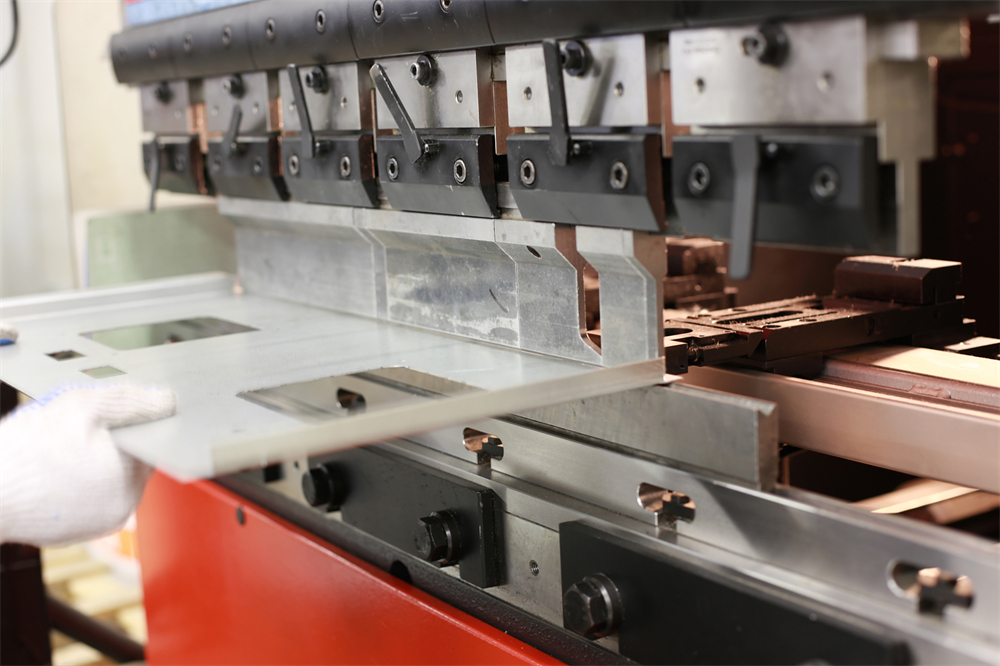
Beyond heavy industry, press brakes are vital in the production of electrical enclosures, HVAC ducting, and commercial kitchen equipment. For electrical cabinets, the press brake must produce clean, sharp bends to ensure that doors fit perfectly and the enclosure remains weather-tight. In HVAC applications, the speed of production is often the priority, leading to the use of automated backgauges and quick-change tooling systems. Each of these scenarios highlights a different aspect of the press brake’s capability, from raw power to delicate precision.
Material and Process Requirements
Understanding the material being processed is the first step in successful press brake application. Different metals exhibit unique behaviors when subjected to bending forces. Carbon steel is the most common material, valued for its predictability and strength. However, even within carbon steel, variations in yield strength can affect the required tonnage and the amount of springback. Stainless steel, on the other hand, is much stiffer and requires significantly more force to bend. It also tends to gall, meaning the tooling must be kept clean and sometimes polished to prevent marking the workpiece.
Aluminum is widely used for its weight-to-strength ratio, but it presents its own set of challenges. It is more prone to cracking if the bend radius is too tight, and its surface is easily marred by standard steel tooling. For these applications, manufacturers often use specialized urethane inserts or polished dies. Copper and brass are also common in electrical applications, requiring precise control to avoid over-bending due to their high ductility. The thickness of the material is another critical factor; as thickness increases, the required V-die opening must also increase to prevent excessive force and potential tool failure.
The process of bending involves more than just pressing a punch into a die. Operators must account for the K-factor, which determines how much the material stretches during the bend. This calculation is vital for determining the flat pattern length of a part before it is cut. Additionally, the choice between air bending, bottoming, and coining depends on the required accuracy and the machine’s capabilities. Air bending is the most common method in modern CNC manufacturing because it requires less force and allows for a wide range of angles with a single set of tools, though it requires sophisticated control systems to manage springback.
Recommended Machine Configuration
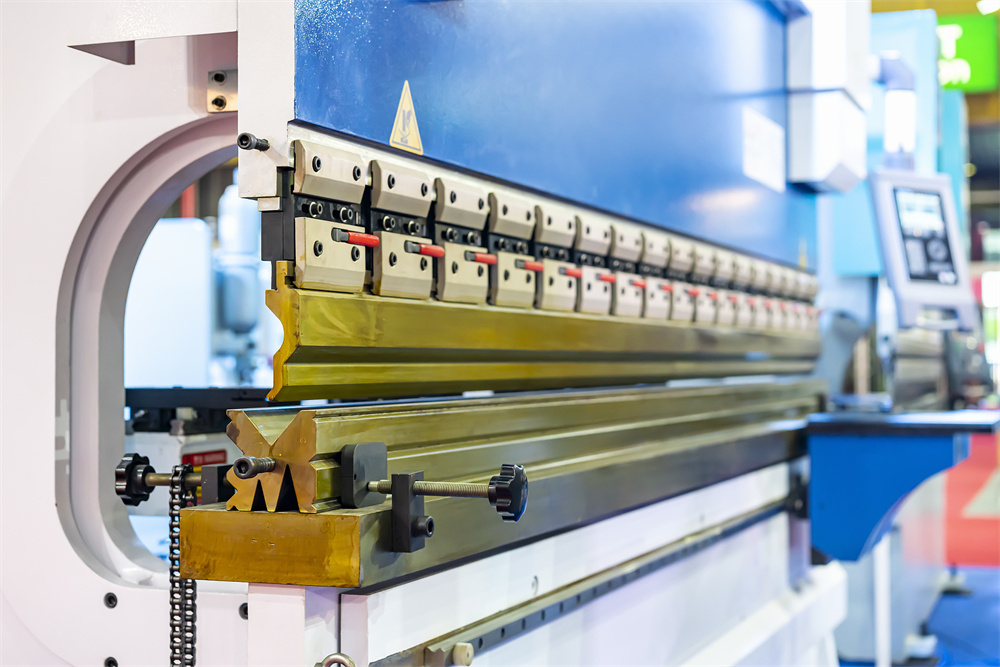
When selecting a press brake for industrial equipment manufacturing, the configuration must align with the specific needs of the production line. For high-precision work, a CNC (Computer Numerical Control) press brake is indispensable. These machines allow for the storage of complex bending sequences, automatic calculation of backgauge positions, and integration with CAD/CAM software. A multi-axis backgauge (X, R, Z1, Z2) is highly recommended for parts with complex geometries, as it allows the machine to support the workpiece at multiple points and angles automatically.
Tonnage and bed length are the primary physical specifications to consider. A general rule of thumb is to choose a machine with 20% more tonnage than your heaviest calculated load to ensure longevity and safety. For long parts, such as those found in the lighting pole or trailer industry, tandem press brakes—where two machines work in synchronization—are often the best solution. Another critical feature is the crowning system. As the machine applies force, the bed and ram can deflect slightly, leading to inconsistent angles across the length of the bend. Hydraulic or mechanical crowning systems compensate for this deflection, ensuring a straight bend every time.
Tooling is the final piece of the configuration puzzle. Quick-change clamping systems, such as those from Wila or Promecam, significantly reduce setup times, which is essential for high-mix, low-volume production. Furthermore, the use of hardened and ground tooling ensures that the accuracy of the machine is translated to the part. For manufacturers looking to move toward Industry 4.0, integrating the press brake with robotic arm loaders and unloaders can create a fully automated bending cell, drastically increasing throughput and reducing labor costs.
Workflow in a Professional Bending Operation
A professional workflow begins long before the metal touches the machine. It starts in the engineering department, where parts are designed using 3D CAD software. These designs are then processed through CAM software specifically for press brakes, which simulates the bending sequence to check for collisions and optimize the tool path. This offline programming saves hours of setup time on the shop floor, as the operator simply loads the program and the required tools.
Once the program is loaded, the operator performs the setup. This involves installing the punches and dies, calibrating the backgauge, and performing a test bend on a scrap piece of material. Modern CNC controllers often feature graphical interfaces that show the operator exactly where to place the tools and how to orient the part for each bend. This reduces the skill gap required for new operators and ensures consistency across different shifts. During the production run, the operator must periodically check the angles using digital protractors or integrated laser angle-measuring systems.
The final stage of the workflow is quality control and documentation. In industries like aerospace or medical manufacturing, every part must be inspected and its dimensions recorded. Advanced press brakes can export data directly to a factory’s ERP system, providing real-time tracking of production metrics and quality data. This closed-loop system ensures that any deviations are caught early, minimizing waste and ensuring that only perfect parts reach the assembly line. Maintenance is also a part of the workflow; regular checks of hydraulic oil levels, filter replacements, and lubrication of the guides are essential for keeping the machine in peak condition.
Productivity Benefits of Advanced Press Brakes
Investing in a high-quality press brake offers numerous productivity benefits. The most immediate is the reduction in setup time. With CNC controls and quick-change tooling, a job that used to take an hour to set up can now be done in minutes. This allows manufacturers to take on smaller batch sizes profitably, responding more quickly to customer demands. Furthermore, the precision of modern machines reduces the need for secondary operations. If a part is bent correctly the first time, there is no need for manual straightening or expensive rework.
Energy efficiency is another major benefit of modern press brake technology. Hybrid and all-electric press brakes use significantly less power than traditional hydraulic systems. Hybrid systems only run the hydraulic pump when the machine is actually moving, while electric machines use servo motors to drive the ram directly. These technologies not only lower utility bills but also reduce the heat generated in the shop, leading to a more comfortable working environment and lower cooling costs. Additionally, the increased speed of these machines—both in terms of ram movement and backgauge positioning—directly translates to more parts produced per hour.
Finally, the integration of safety features like laser guards (e.g., Lazersafe) allows the machine to operate at high speeds without compromising operator safety. These systems monitor the area around the punch in real-time, stopping the machine instantly if an obstruction is detected. This allows the operator to work confidently and quickly, knowing they are protected. When combined with the ergonomic benefits of modern machine design, such as adjustable control arms and foot pedals, the overall result is a more efficient, safer, and more profitable fabrication department.
Case Example: Manufacturing Heavy-Duty Electrical Switchgear
Consider a manufacturer of heavy-duty electrical switchgear for power plants. These units require large enclosures made from 3mm stainless steel. The challenges include maintaining tight tolerances for the door seals and managing the significant springback of the stainless steel. By implementing a HARSLE CNC press brake with a 200-ton capacity and a 4-meter bed, the manufacturer was able to revolutionize their production process.
Previously, they used an older manual machine that required two operators and multiple test bends for every part. By switching to a CNC system with hydraulic crowning and a 5-axis backgauge, they reduced their setup time by 70%. The offline programming software allowed engineers to verify that the complex internal brackets would not collide with the machine frame during the bending sequence. As a result, the scrap rate dropped from 5% to less than 0.5%, and the overall production capacity for the switchgear units increased by 40% within the first six months of operation.
Frequently Asked Questions (FAQ)
1. What is the difference between NC and CNC press brakes?
An NC (Numerical Control) press brake typically controls only the depth of the ram and the position of the backgauge on a single axis. A CNC (Computer Numerical Control) press brake is much more advanced, controlling multiple axes, calculating bend sequences, and offering graphical interfaces and offline programming capabilities. CNC machines are preferred for complex parts and high-precision requirements.
2. How do I calculate the tonnage required for a bend?
Tonnage depends on the material type, thickness, bend length, and the V-die opening. The standard formula is (1.42 x Tensile Strength x Thickness^2) / V-die opening. However, most manufacturers provide tonnage charts or software tools to help operators quickly determine the required force for a specific job.
3. Why is crowning important in a press brake?
When a press brake applies pressure, the center of the machine tends to deflect or “bow” slightly. This causes the bend angle to be wider in the middle than at the ends. A crowning system (either hydraulic or mechanical) applies a counter-force to the bed or ram to keep them perfectly parallel, ensuring a consistent angle across the entire length of the workpiece.
4. Can I bend aluminum on a standard press brake?
Yes, aluminum can be bent on a standard press brake, but you must be careful with the bend radius. Aluminum is more prone to cracking than steel, so a larger radius punch is often required. Additionally, using protective tapes or specialized dies can prevent the tooling from marking the softer surface of the aluminum.
5. How often should a hydraulic press brake be maintained?
Daily maintenance should include checking oil levels and cleaning the machine. Monthly, you should inspect the filters and lubricate the moving parts. A full professional service, including a hydraulic oil change and system calibration, is typically recommended once a year or every 2,000 hours of operation to ensure long-term reliability.
6. What are the advantages of a hybrid press brake?
Hybrid press brakes combine hydraulic power with servo-motor control. They are much faster, more accurate, and up to 60% more energy-efficient than traditional hydraulic machines. They also run much quieter and require less hydraulic oil, making them more environmentally friendly and cheaper to maintain.
Conclusion and Call to Action
Understanding Press Brake Applications In Industrial Equipment Manufacturing is the key to staying competitive in today’s fast-paced industrial landscape. Whether you are working with heavy plates for construction equipment or thin sheets for electronics, the right press brake configuration can make the difference between a profitable operation and one plagued by delays and waste. By focusing on precision, automation, and material science, manufacturers can unlock new levels of productivity and quality.
At HARSLE, we specialize in providing high-performance metal fabrication solutions tailored to your specific needs. Our range of CNC press brakes, from entry-level models to advanced tandem systems, is designed to meet the most rigorous industrial standards. If you are looking to upgrade your facility or need expert advice on the best machine for your application, our team is here to help. Visit our website or contact us today to learn more about how HARSLE can empower your manufacturing journey.


