
Common Press Brake Bending Defects and How to Solve Them: A Comprehensive Technical Guide


Technical Overview of Press Brake Bending Processes
Press brake bending is a fundamental process in the metal fabrication industry, involving the deformation of sheet metal along a straight axis. While the concept seems straightforward—pressing a punch into a die with a metal sheet in between—the physics involved are complex. Achieving a perfect bend requires a harmonious balance between machine precision, material properties, and tooling accuracy. When any of these variables fluctuate, defects occur. Understanding common press brake bending defects and how to solve them is essential for any fabrication shop aiming for high-quality output and minimal waste.
In modern manufacturing, the demand for high-precision components means that even a deviation of half a degree or a millimeter can result in a rejected part. Press brakes, whether they are hydraulic, electric, or CNC-controlled, must be calibrated to handle various materials like stainless steel, aluminum, and carbon steel, each of which reacts differently under pressure. The technical overview of these defects often points back to the transition from elastic deformation to plastic deformation. If the machine does not account for the material’s tendency to return to its original shape, or if the force is applied unevenly, the resulting part will fail to meet specifications.
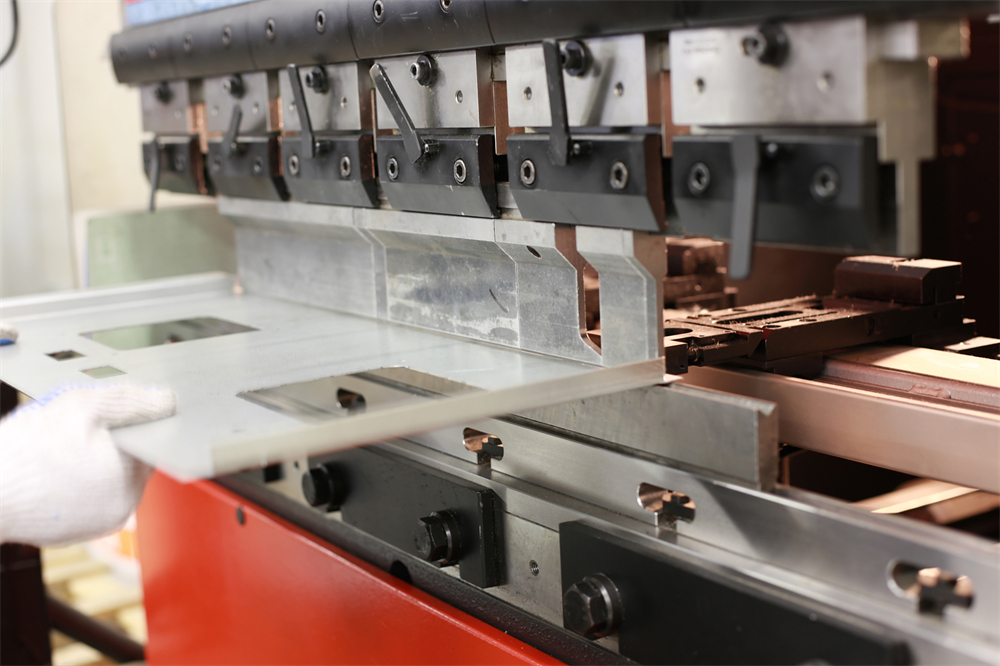
HARSLE machines are engineered to mitigate many of these issues through advanced CNC controllers and robust frame designs. However, operators must still be vigilant. Defects can range from simple aesthetic issues, like surface scratches, to structural failures, such as cracking at the bend line. By identifying the root causes—be it incorrect tooling selection, improper machine settings, or material inconsistencies—operators can implement corrective measures that save time and reduce material costs. This guide delves deep into the mechanics of these defects and provides actionable solutions for the modern fabricator.
Core Parameters Influencing Bending Quality
To effectively address common press brake bending defects and how to solve them, one must first master the core parameters that govern the bending process. The most critical parameter is Tonnage. Tonnage is the amount of pressure the press brake exerts to perform a bend. If the tonnage is too low, the bend will be incomplete; if it is too high, it can damage the tooling or cause excessive deformation in the workpiece. Calculating the required tonnage based on material thickness, tensile strength, and the V-die opening is the first step in preventing defects.
Another vital parameter is the V-opening (the width of the bottom die). The general rule of thumb is that the V-opening should be 8 times the material thickness (8T) for mid-range materials. Choosing a V-opening that is too narrow increases the required tonnage and the risk of cracking, while a V-opening that is too wide results in a larger, less precise internal radius. Additionally, the Bend Radius is a parameter that cannot be ignored. The internal radius of a bend is determined primarily by the V-die width, not necessarily the punch radius, especially in air bending. If the radius is too small for the material type, the outer fibers of the metal will stretch beyond their limit, leading to fractures.
Finally, the Backgauge Positioning and Crowning settings are essential for consistency. The backgauge ensures that the bend is placed exactly where it needs to be on the sheet. If the backgauge is misaligned, the flange lengths will be inconsistent. Crowning, on the other hand, compensates for the natural deflection of the machine’s bed and ram under load. Without proper crowning, the angle at the center of a long workpiece will be different from the angles at the ends, a defect commonly known as the ‘banana effect’.
Calculation Method for Precision Bending
Precision in metal fabrication is not a matter of guesswork; it is a matter of mathematics. To solve common bending defects, operators must utilize specific formulas to predict how the metal will behave. The most common calculation is for the Bending Force (P). The standard formula used in the industry is:
P = (650 * S^2 * L) / V
Where:
P = Bending force in Kilonewtons (kN)
S = Material thickness in millimeters (mm)
L = Length of the sheet in meters (m)
V = V-die opening width in millimeters (mm)
This formula provides the tonnage required for mild steel. For materials like stainless steel, which has a higher tensile strength, the result must be multiplied by approximately 1.5. For aluminum, which is softer, the multiplier is roughly 0.5. Failing to adjust for material type is a leading cause of machine strain and inaccurate bends.
Another critical calculation is the Bend Allowance (BA) and Bend Deduction (BD). These calculations allow engineers to determine the flat length of a part before it is bent. The formula for Bend Deduction is:
BD = 2 * (R + T) * tan(A/2) – BA
Where R is the inside radius, T is the thickness, and A is the bend angle. Accurate BD calculations prevent the defect of incorrect flange lengths, ensuring that the final part dimensions match the CAD drawing perfectly. Furthermore, calculating the Springback Factor (K) is necessary for high-tensile materials. Since all metal has some elasticity, it will ‘spring back’ slightly after the punch is released. Operators must calculate the expected springback angle and program the CNC controller to ‘over-bend’ the part by that specific amount.
Parameter Table for V-Die Selection
The following table provides a standard reference for selecting the appropriate V-die opening based on material thickness for mild steel. Using the correct V-opening is the most effective way to prevent cracking and excessive tonnage requirements.
| Material Thickness (mm) | Recommended V-Opening (mm) | Min. Flange Length (mm) | Internal Radius (mm) | Required Tonnage (per meter) |
|---|---|---|---|---|
| 1.0 | 8 | 5.5 | 1.3 | 70 kN |
| 1.5 | 12 | 8.5 | 2.0 | 110 kN |
| 2.0 | 16 | 11.5 | 2.6 | 150 kN |
| 3.0 | 24 | 17.0 | 4.0 | 230 kN |
| 4.0 | 32 | 22.0 | 5.3 | 310 kN |
| 6.0 | 50 | 35.0 | 8.0 | 450 kN |
| 8.0 | 63 | 45.0 | 10.5 | 650 kN |
Note: For stainless steel, increase the required tonnage by 50%. For aluminum, decrease it by 50%. Always consult your HARSLE machine manual for specific tonnage limits to avoid damaging the frame or hydraulic system.
Common Engineering Mistakes and Their Solutions
1. Springback (Elastic Recovery)
Springback is perhaps the most frequent challenge in press brake operation. It occurs because the metal’s elastic fibers attempt to return to their original flat state after the bending pressure is removed. This results in a bend angle that is wider than intended (e.g., a 90-degree bend becoming 93 degrees).
The Solution: To solve this common press brake bending defect, operators should use the ‘over-bending’ technique. If a material has 3 degrees of springback, the machine should be programmed to bend to 87 degrees so that it settles at 90. Modern CNC press brakes from HARSLE often feature integrated angle measurement systems that detect springback in real-time and automatically adjust the stroke depth to compensate. Additionally, using a smaller V-opening can sometimes reduce springback, though this increases tonnage requirements.
2. Cracking at the Bend Line
Cracking occurs when the outer surface of the bend is stretched beyond the material’s ultimate tensile strength. This is common in hard materials, thick plates, or when bending with the grain of the metal rather than against it.
The Solution: First, ensure the internal bend radius is not too small. Increasing the V-die opening will naturally increase the bend radius, reducing stress on the outer fibers. Second, pay attention to the grain direction of the sheet metal. Bending perpendicular to the grain direction is much less likely to cause cracking than bending parallel to it. For very hard materials, pre-heating the bend area can also improve ductility and prevent fractures.
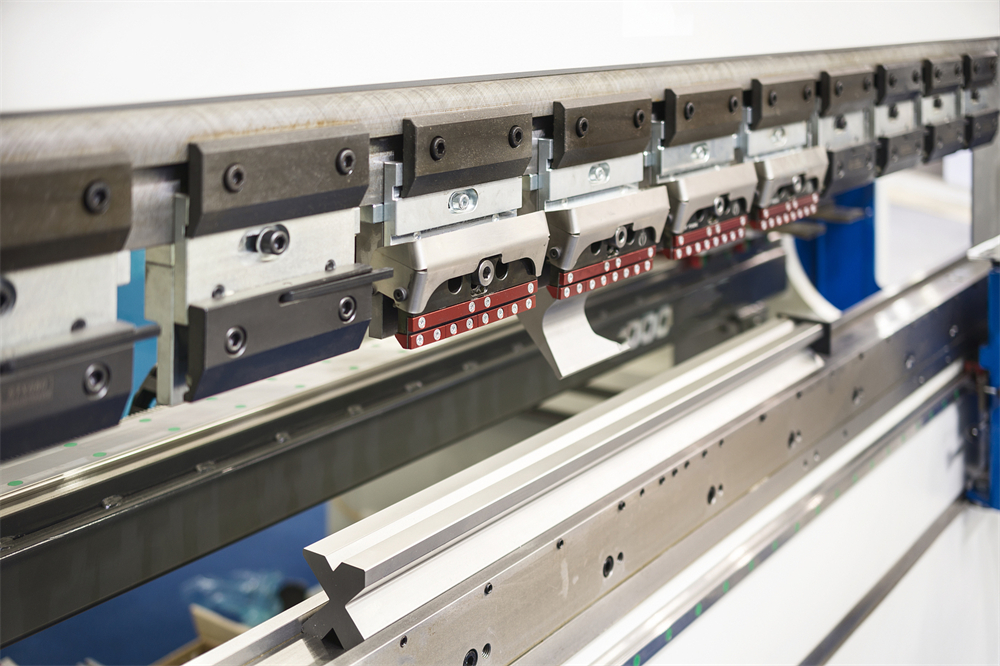
3. Uneven Bending Angles (The Banana Effect)
When bending long workpieces, it is common to find that the angle in the middle of the sheet is different from the angles at the ends. This is caused by machine deflection; the center of the ram and bed bow slightly under high pressure.
The Solution: This is solved through a process called ‘Crowning’. HARSLE press brakes are equipped with either hydraulic or mechanical crowning systems. These systems apply a counter-force to the center of the bed, ensuring it remains perfectly parallel to the ram during the bend. If your machine lacks an automatic system, you may need to use manual shimming under the die, though this is time-consuming and less precise.
4. Indentations and Surface Marking
In industries like appliance manufacturing or architectural metalwork, surface finish is critical. Standard V-dies often leave ‘die marks’ or indentations on the workpiece where the metal slides over the edges of the die during the bend.
The Solution: To eliminate marking, operators can use urethane die inserts or ‘no-mar’ tape. These materials act as a cushion between the metal and the hard steel die. Another solution is to use dies with rotating supports (like the ‘Rolla-V’ style) which roll with the material rather than letting it slide, significantly reducing friction and marking.
5. Hole Deformation Near Bend Lines
If a hole is placed too close to the bend line, it will stretch into an oval shape during the bending process. This is a common engineering mistake in the design phase.
The Solution: The rule of thumb is that the edge of a hole should be at least 3 to 4 times the material thickness away from the bend line. If the design requires a hole closer than this, the hole should be punched or laser-cut *after* the bending process, or a relief slot should be added to the design to absorb the deformation.
Selection Checklist for Avoiding Defects
Choosing the right equipment and setup is the best way to prevent defects before they happen. Use this checklist when preparing for a production run:
- Material Verification: Have you confirmed the actual thickness and tensile strength of the batch? (Material thickness can vary by +/- 10% from the nominal value).
- Tooling Condition: Are the punch and die free from chips, wear, or deformation? Worn tooling is a primary cause of inconsistent angles.
- Machine Calibration: Is the backgauge zeroed correctly? Is the crowning system active for long parts?
- V-Die Selection: Is the V-opening at least 8x the material thickness for mild steel?
- Tonnage Limits: Does the required tonnage fall within 80% of the machine’s maximum capacity to avoid hydraulic strain?
- Grain Direction: Is the part oriented so that the bend line is perpendicular to the material grain?
- Safety Check: Are all light curtains and safety guards operational? A safe operator is a precise operator.
Frequently Asked Questions (FAQ)
How do I stop my press brake from ‘creeping’ or losing angle consistency over a shift?
Creeping is often caused by hydraulic oil temperature changes. As the oil heats up, its viscosity changes, affecting the valve response. High-quality machines like HARSLE use oil coolers and sophisticated feedback loops to maintain consistency. Ensure your hydraulic fluid is clean and at the correct level.
Why does my stainless steel crack even with a large V-opening?
Stainless steel work-hardens very quickly. If you are using a ‘cold-rolled’ stainless, it may already have significant internal stress. Try using a ‘hot-rolled’ or annealed grade, or increase the internal punch radius to further spread the stress of the bend.
Can I bend a flange that is shorter than the recommended minimum?
Bending a short flange is dangerous because the material may not bridge the V-die opening, causing it to slip into the die. This can damage the tooling and the machine. If you must bend a short flange, you need to use a special ‘acute’ die or a ‘wing-bend’ style tool that supports the material throughout the entire stroke.
What is the difference between air bending and bottoming?
In air bending, the workpiece only touches the two edges of the die and the tip of the punch. The angle is determined by the depth of the stroke. In bottoming, the punch presses the material fully into the die. Air bending is more versatile and requires less tonnage, but bottoming is more accurate for eliminating springback if the machine has enough power.
How often should I calibrate my CNC backgauge?
For high-precision shops, the backgauge should be checked daily at the start of the shift using a master gauge block. A full calibration should be performed monthly or whenever the machine has been moved or subjected to a hard ‘crash’.
By understanding these common press brake bending defects and how to solve them, fabricators can significantly improve their operational efficiency. HARSLE continues to lead the industry by providing the tools and technology necessary to overcome these challenges, ensuring that every bend is a perfect bend.












