
Best Hydraulic Press Applications for Precision Manufacturing Operations


Introduction to Precision Hydraulic Pressing in Modern Industry
In the realm of industrial fabrication, the hydraulic press remains an indispensable cornerstone of production. As manufacturing demands evolve toward tighter tolerances and more complex geometries, understanding the Best Hydraulic Press Applications Precision Manufacturing Operations becomes critical for facility managers and engineers alike. A hydraulic press utilizes Pascal’s Principle to generate massive compressive force through fluid pressure, allowing for the manipulation of various materials with extreme accuracy. Unlike mechanical presses, hydraulic systems offer full pressure throughout the entire stroke, providing unparalleled control over the forming process.
HARSLE has been at the forefront of this technological evolution, developing machinery that bridges the gap between raw power and delicate precision. In modern manufacturing, the focus has shifted from simple ‘crushing’ to sophisticated ‘forming.’ This transition requires a deep understanding of how hydraulic force interacts with material properties. Whether it is the production of intricate aerospace components or the mass manufacturing of automotive body panels, the versatility of the hydraulic press is what makes it a preferred choice over other forming methods. This guide explores the diverse applications, technical requirements, and strategic benefits of integrating high-end hydraulic presses into your production line.
Top Application Scenarios for Hydraulic Presses
The versatility of hydraulic machinery allows it to excel in several high-stakes environments. Identifying the Best Hydraulic Press Applications Precision Manufacturing Operations starts with recognizing the specific needs of different industrial sectors. Below are the primary scenarios where hydraulic presses outperform their mechanical counterparts.
1. Deep Drawing for Complex Geometries
Deep drawing is perhaps the most common application for high-precision hydraulic presses. This process involves pulling a metal sheet blank into a forming die by a mechanical punch. It is widely used in the production of kitchen sinks, fire extinguishers, and automotive fuel tanks. The advantage of using a hydraulic press here is the ability to control the speed and pressure of the ram throughout the draw, which prevents the material from tearing or wrinkling. Precision control over the blank holder force ensures that the metal flows smoothly into the die cavity, maintaining uniform wall thickness.
2. Precision Forging and Extrusion
Forging requires the application of immense pressure to shape metal while it is in a solid state. Hydraulic presses are ideal for open-die and closed-die forging because they can deliver a constant force over a long stroke. This is essential for large components used in the energy and defense sectors. Extrusion, another critical application, involves forcing metal through a shaped die to create long objects with a fixed cross-sectional profile. The steady, vibration-free movement of a HARSLE hydraulic press ensures that the extruded profiles have a superior surface finish and dimensional stability.
3. Powder Compaction
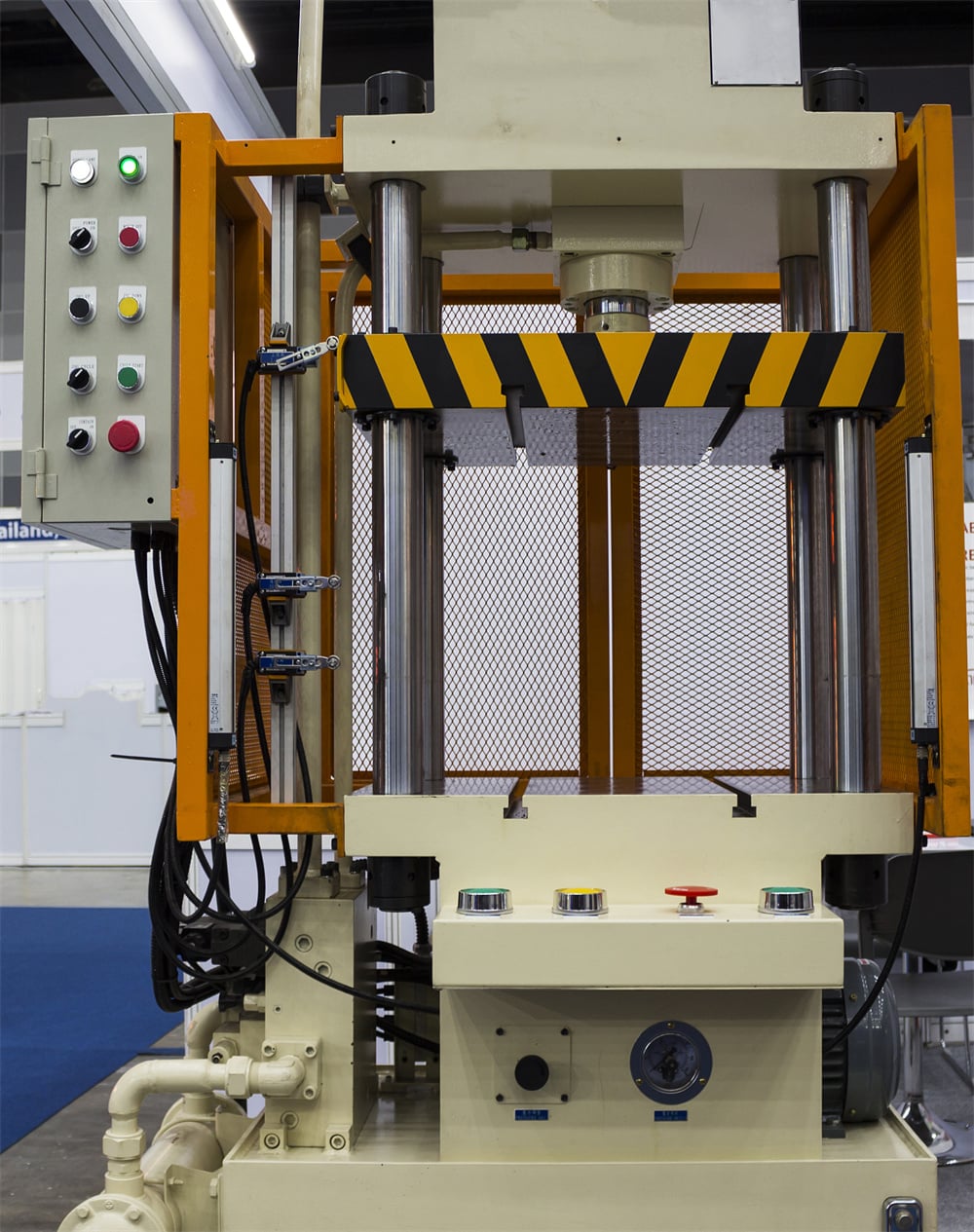
In the pharmaceutical, ceramic, and metallurgy industries, powder compaction is a vital process. This involves compressing fine powders into a solid form (a green compact). The precision required here is immense; even a slight deviation in pressure can result in a product that lacks structural integrity. Hydraulic presses equipped with advanced PLC systems allow for multi-stage pressing cycles, ensuring that the air is properly evacuated from the powder and the density is uniform throughout the part.
4. Composite Molding
As industries move toward lighter and stronger materials, the use of composites like carbon fiber and GRP (Glass Reinforced Plastic) has surged. Hydraulic presses are used for Compression Molding and Resin Transfer Molding (RTM). These processes require heated platens and precise pressure dwell times to cure the resins correctly. The ability of a hydraulic press to maintain a specific pressure for an extended period is a key reason why it is the gold standard for composite manufacturing in the aerospace and automotive sectors.
Material and Process Requirements for High-Precision Results
To achieve success in the Best Hydraulic Press Applications Precision Manufacturing Operations, one must consider the synergy between the machine and the material. Different materials react uniquely under pressure, and the process parameters must be adjusted accordingly.
- Material Ductility: For deep drawing, materials like aluminum and low-carbon steel are preferred due to their high ductility. The press must be calibrated to avoid exceeding the material’s ultimate tensile strength.
- Thermal Management: In hot forging or composite molding, temperature control is as important as pressure. The press must often integrate with heating systems to ensure the material remains at the optimal forming temperature.
- Tolerances and Springback: Precision manufacturing often deals with tolerances in the microns. Engineers must account for ‘springback’—the tendency of a metal to return to its original shape after the pressure is released. Advanced hydraulic presses use sensors to measure the actual deformation and adjust the stroke in real-time.
- Surface Integrity: For decorative or high-friction parts, the surface finish is paramount. The hydraulic system must provide a smooth, jitter-free motion to prevent tool marks or surface scarring on the workpiece.
Furthermore, the choice of lubricants plays a significant role in precision operations. Proper lubrication reduces friction between the die and the workpiece, which not only extends the life of the tooling but also ensures a more consistent flow of material, leading to higher precision in the final product.
Recommended Machine Configuration for Precision Operations
Selecting the right machine configuration is the difference between a profitable operation and a bottleneck. When targeting the Best Hydraulic Press Applications Precision Manufacturing Operations, HARSLE recommends several key configurations based on the specific task at hand.
H-Frame vs. Four-Column Presses
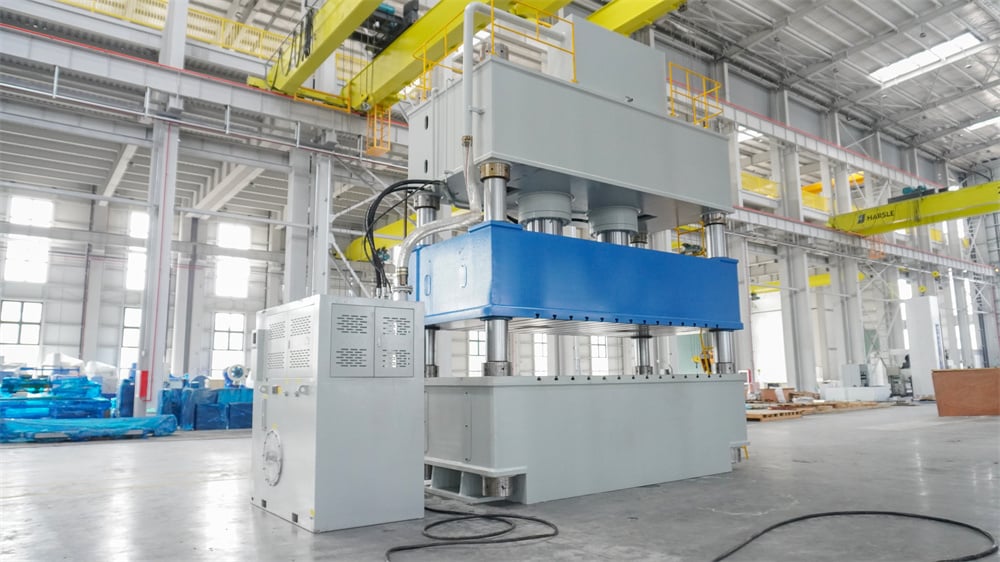
The H-frame (or side-housing) press offers extreme rigidity and is ideal for heavy-duty applications where off-center loading might occur. It minimizes frame deflection, which is crucial for maintaining die alignment. On the other hand, the Four-Column (or Four-Post) press offers excellent accessibility from all four sides, making it perfect for automated lines and large, complex dies. The choice depends on the part size and the level of automation required.
Servo-Hydraulic Systems
Modern precision manufacturing is moving toward servo-driven hydraulic systems. Unlike traditional induction motors that run constantly, servo motors only operate when pressure or movement is required. This results in significant energy savings (up to 50%) and much higher precision in ram positioning and pressure control. For applications like powder compaction or electronic component assembly, a servo-hydraulic press is almost mandatory.
PLC and HMI Integration
A precision press is only as good as its brain. Integration with high-end PLCs (like Siemens or Schneider) allows for the storage of hundreds of ‘recipes’ or tool profiles. This reduces setup time and ensures that every batch of parts is produced under identical conditions. Human-Machine Interfaces (HMI) provide real-time data visualization, allowing operators to monitor pressure curves and detect anomalies before they result in scrap.
The Standard Workflow in Precision Manufacturing
Implementing a hydraulic press into a precision workflow involves several structured steps to ensure quality and safety. Following a standardized process is essential for maximizing the Best Hydraulic Press Applications Precision Manufacturing Operations.
- Preparation and Material Loading: The raw material (blank, powder, or billet) is prepared. In automated systems, this involves a robotic arm or a coil feeder placing the material into the die.
- Die Setting and Alignment: The upper and lower dies are secured. Precision alignment is checked using laser levels or dial indicators to ensure that the force is distributed evenly.
- The Pressing Cycle: The ram descends. In a precision operation, this cycle often includes a fast approach, a slow pressing speed, a dwell time (to allow material flow or curing), and a fast return.
- Ejection and Part Removal: Once the cycle is complete, hydraulic or pneumatic ejectors push the finished part out of the die. This must be done carefully to avoid deforming the hot or freshly formed part.
- Quality Inspection: Parts are checked against specifications using CMM (Coordinate Measuring Machines) or vision systems. Data from the press (peak pressure, stroke distance) is often logged for traceability.
Productivity Benefits of High-Precision Hydraulic Presses
Investing in high-quality hydraulic machinery from HARSLE yields significant long-term benefits. When we discuss the Best Hydraulic Press Applications Precision Manufacturing Operations, we must also discuss the Return on Investment (ROI).
Reduced Scrap Rates: Precision control means fewer rejected parts. In industries like aerospace, where raw material costs are astronomical, reducing scrap by even 2% can save tens of thousands of dollars annually. Energy Efficiency: As mentioned, servo-hydraulic systems drastically reduce power consumption. Furthermore, hydraulic presses only use energy when the ram is moving or maintaining pressure, unlike mechanical presses that have large flywheels spinning constantly.
Versatility and Tooling Protection: A single hydraulic press can perform various tasks—from punching to deep drawing—simply by changing the die and the PLC program. Additionally, the built-in overload protection of hydraulic systems prevents damage to expensive dies. If the press encounters an obstruction, the hydraulic relief valve opens, stopping the ram instantly, whereas a mechanical press would likely break the tool or the frame.
Case Example: Automotive Component Production
Consider a Tier 1 automotive supplier tasked with producing high-strength steel structural components. The requirement was for a part with complex curves and zero tolerance for thinning in the corners. By utilizing a HARSLE 800-ton Four-Column Hydraulic Press with a CNC-controlled blank holder, the manufacturer was able to achieve a 98% first-pass yield.
The press utilized a multi-stage drawing process where the pressure was adjusted dynamically as the punch moved deeper into the die. This prevented the localized thinning that had plagued their previous mechanical press setup. The result was a lighter, stronger part that met all safety standards while reducing material waste by 15%. This case perfectly illustrates why choosing the right machine for the Best Hydraulic Press Applications Precision Manufacturing Operations is a strategic business decision.
Maintenance Best Practices for Industrial Hydraulic Presses
To maintain precision over years of operation, a rigorous maintenance schedule is required. Hydraulic systems are sensitive to contamination and heat.
- Oil Filtration: The hydraulic oil is the lifeblood of the machine. It must be filtered regularly to remove microscopic particles that can score valve seats and cylinder walls.
- Seal Inspection: Leaking seals lead to pressure drops and inconsistent performance. A proactive seal replacement program prevents unplanned downtime.
- Heat Exchanger Maintenance: Hydraulic fluid thins as it gets hot, which can affect the precision of the press. Ensuring the cooling system is functioning correctly is vital for consistent operation during long shifts.
- Frame Bolting and Leveling: Over time, the vibrations of heavy pressing can loosen foundation bolts. Regularly checking the level of the press ensures that the ram remains perfectly perpendicular to the bed.
Frequently Asked Questions
What is the main advantage of a hydraulic press over a mechanical press?
The main advantage is the ability to deliver full rated pressure at any point in the stroke, along with superior control over pressing speed and dwell time. This makes it much better for deep drawing and complex forming tasks.
Can a hydraulic press be used for high-speed stamping?
While traditionally slower than mechanical presses, modern high-speed hydraulic presses with advanced valving and servo-motors can achieve speeds suitable for many stamping applications, though mechanical presses still lead in ultra-high-speed, simple blanking.
How do I choose the right tonnage for my application?
Tonnage is calculated based on the material type, thickness, the perimeter of the cut or the surface area of the form, and the shear strength of the material. It is always recommended to choose a press with 20-30% more capacity than your maximum calculated requirement to ensure longevity.
Is a 4-column press better than an H-frame press?
Neither is objectively ‘better’; they serve different purposes. 4-column presses offer better access for large dies and automation, while H-frame presses offer superior rigidity for off-center loading and heavy-duty work.
Conclusion: Elevate Your Production with HARSLE
Understanding the Best Hydraulic Press Applications Precision Manufacturing Operations is the first step toward transforming your production capabilities. From the intricate requirements of powder compaction to the brute force needed for heavy forging, the hydraulic press offers a level of versatility and control that is unmatched in the metalworking industry. By selecting a machine with the right configuration—be it a servo-driven 4-column press or a rigid H-frame system—manufacturers can ensure high-quality output, reduced waste, and a safer working environment.
HARSLE is committed to providing the industry with the tools needed to succeed in an increasingly competitive global market. Our range of hydraulic presses is designed with precision, durability, and user-friendliness in mind. If you are looking to upgrade your facility or need expert advice on the best machinery for your specific application, our team is ready to assist you. Contact HARSLE today to discover how our hydraulic solutions can drive your precision manufacturing operations to new heights of excellence.












