Hydraulic Press Oil Selection Guide: Fluid Requirements for Reliable Performance


Technical Overview of Hydraulic Press Oil Selection
In the world of metal fabrication, the hydraulic press stands as a cornerstone of production, delivering the immense force required for forging, stamping, and deep drawing. However, the mechanical prowess of a HARSLE hydraulic press is entirely dependent on the medium that transmits its power: the hydraulic oil. Hydraulic Press Oil Selection : Fluid Requirements Reliable Performance is not merely a maintenance task; it is a critical engineering decision that dictates the machine’s efficiency, longevity, and safety. Hydraulic fluid serves four primary functions: power transmission, lubrication of moving parts, heat dissipation, and sealing of internal clearances.
The technical complexity of modern hydraulic systems requires fluids that can withstand high pressures, often exceeding 3000 PSI, while maintaining stable chemical properties. Most industrial presses utilize mineral-based oils, which are refined from crude oil and enhanced with specific additive packages. These additives are designed to prevent oxidation, inhibit rust, and reduce foam. For specialized applications, such as those involving high fire risks, synthetic fluids or water-glycol mixtures may be employed. Understanding the base chemistry is the first step in ensuring that your equipment operates within its designed parameters.
Reliable performance is directly linked to the fluid’s ability to maintain a consistent film thickness between sliding surfaces. In a hydraulic press, the pump, valves, and cylinders all rely on this microscopic layer of oil to prevent metal-to-metal contact. If the oil is too thin, wear accelerates; if it is too thick, the system becomes sluggish and energy-inefficient. Therefore, the selection process must account for the specific mechanical tolerances of the HARSLE machinery and the environmental conditions of the fabrication shop.
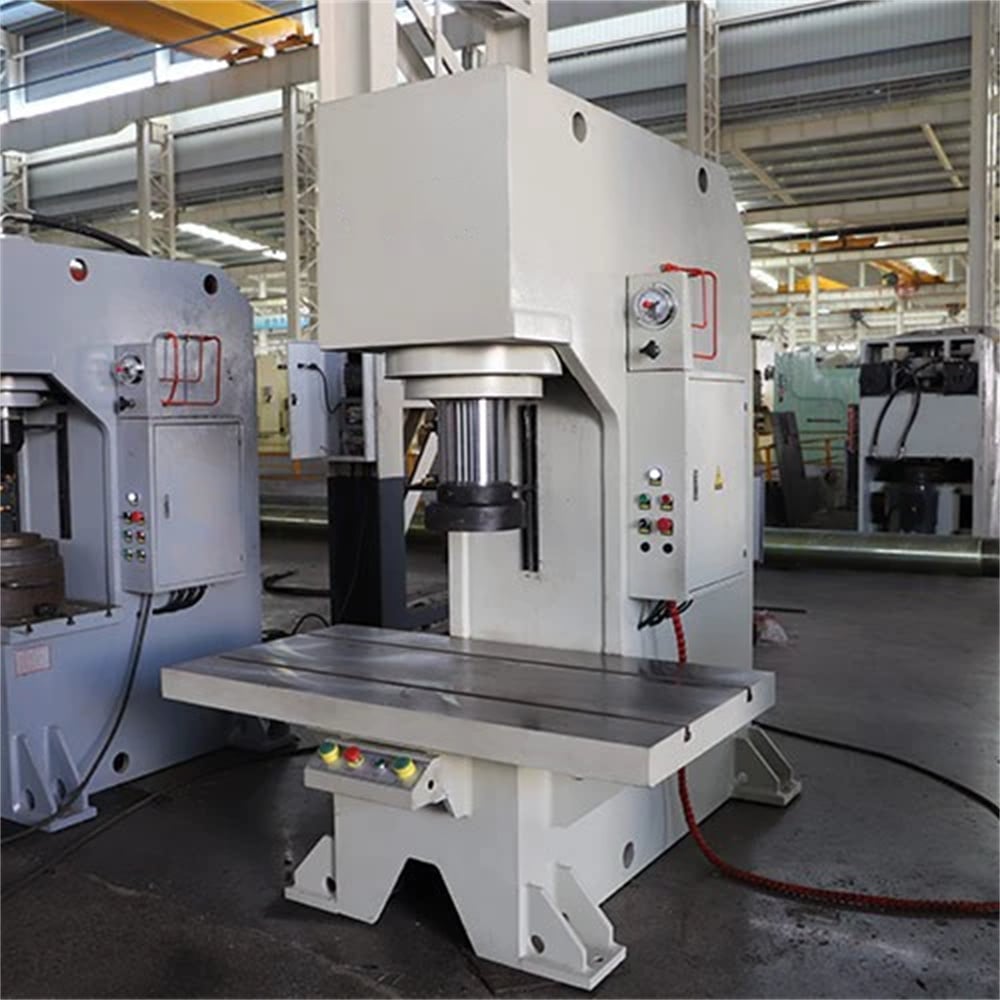
Furthermore, the evolution of hydraulic technology has led to tighter tolerances in proportional valves and high-pressure pumps. These components are highly sensitive to fluid degradation and contamination. Selecting the right oil involves balancing the physical properties of the fluid with the operational demands of the press. This guide explores the intricate details of fluid requirements to ensure that your metal fabrication operations remain uninterrupted and cost-effective.
Core Parameters for Fluid Requirements and Reliable Performance
1. Viscosity and Viscosity Index (VI)
Viscosity is arguably the most critical parameter in Hydraulic Press Oil Selection : Fluid Requirements Reliable Performance. It measures the fluid’s resistance to flow. For hydraulic presses, the ISO Viscosity Grade (VG) is the standard metric, with VG 32, 46, and 68 being the most common. The choice depends on the operating temperature; a higher number indicates a thicker oil. However, viscosity changes with temperature. This is where the Viscosity Index (VI) becomes vital. A high VI indicates that the oil’s viscosity remains relatively stable across a wide temperature range, which is essential for presses that operate in non-climate-controlled environments or undergo heavy duty cycles.
2. Anti-Wear (AW) Properties
Modern hydraulic presses exert significant force on pump vanes and piston shoes. To prevent premature failure, hydraulic oils must contain Anti-Wear additives, typically Zinc Dialkyldithiophosphate (ZDDP). These additives form a sacrificial layer on metal surfaces, protecting them during boundary lubrication conditions where the oil film might be momentarily breached. When selecting oil for HARSLE equipment, ensuring the fluid meets or exceeds the AW requirements specified by the pump manufacturer is paramount for reliable performance.
3. Oxidation Stability and Thermal Resistance
As hydraulic oil is pumped through narrow orifices and subjected to high pressure, it generates heat. Over time, exposure to heat and oxygen causes the oil to oxidize, leading to the formation of sludge and varnish. These byproducts can clog filters and cause valves to stick. High-quality hydraulic fluids are formulated with oxidation inhibitors that extend the oil’s service life and maintain the cleanliness of the internal circuitry. This is a core requirement for maintaining the precision of metal forming operations over several years of service.
4. Demulsibility and Air Release
Water contamination is an inevitable challenge in industrial settings, often resulting from condensation within the reservoir. Demulsibility refers to the oil’s ability to separate from water, allowing the water to settle at the bottom of the tank where it can be drained. Similarly, air release properties are crucial. If air becomes trapped in the oil (entrainment), it can cause cavitation in the pump and spongy cylinder movement. Reliable performance requires a fluid that quickly releases air and sheds water to maintain the incompressibility of the hydraulic medium.
Calculation Method for Selecting the Right Oil Grade
Determining the correct oil grade is not a matter of guesswork; it involves calculating the optimal viscosity for the system’s operating temperature. The goal is to ensure the viscosity stays within the “optimum window” (typically 16 to 36 centistokes) during peak operation. To calculate this, one must first identify the maximum and minimum ambient temperatures of the facility, as well as the expected steady-state operating temperature of the hydraulic reservoir.
The formula for selecting the ISO VG grade involves using a Viscosity-Temperature diagram (ASTM D341). For example, if a HARSLE press has a target operating temperature of 50°C (122°F), and the pump manufacturer requires a minimum viscosity of 20 cSt at that temperature, an ISO VG 46 oil would be appropriate, as it typically provides approximately 25 cSt at 50°C. If the temperature rises to 65°C, the viscosity of VG 46 might drop to 15 cSt, which is below the safety threshold, necessitating a move to ISO VG 68 or the installation of a more robust cooling system.
Another factor in the calculation is the “Start-up Viscosity.” In cold climates, the oil must be thin enough to flow into the pump inlet without causing cavitation. If the calculated start-up viscosity exceeds 800-1000 cSt, a tank heater or a fluid with a higher Viscosity Index is required. By performing these calculations, engineers can prevent the two most common causes of hydraulic failure: excessive wear due to thin oil and pump starvation due to thick oil.
Hydraulic Press Oil Parameter Table
The following table provides a general reference for selecting hydraulic oil based on common industrial operating conditions for metal fabrication machinery.
| ISO Viscosity Grade | Kinematic Viscosity @ 40°C (cSt) | Typical Operating Temp Range | Common Applications | HARSLE Compatibility |
|---|---|---|---|---|
| ISO VG 32 | 28.8 – 35.2 | 0°C to 45°C | High-speed presses, cold climates | Excellent for light-duty stamping |
| ISO VG 46 | 41.4 – 50.6 | 10°C to 60°C | General purpose fabrication | Standard for most HARSLE models |
| ISO VG 68 | 61.2 – 74.8 | 20°C to 75°C | Heavy forging, high-heat environments | Recommended for deep drawing |
| ISO VG 100 | 90.0 – 110.0 | 30°C to 90°C | Extremely heavy loads, slow speeds | Specialized industrial applications |
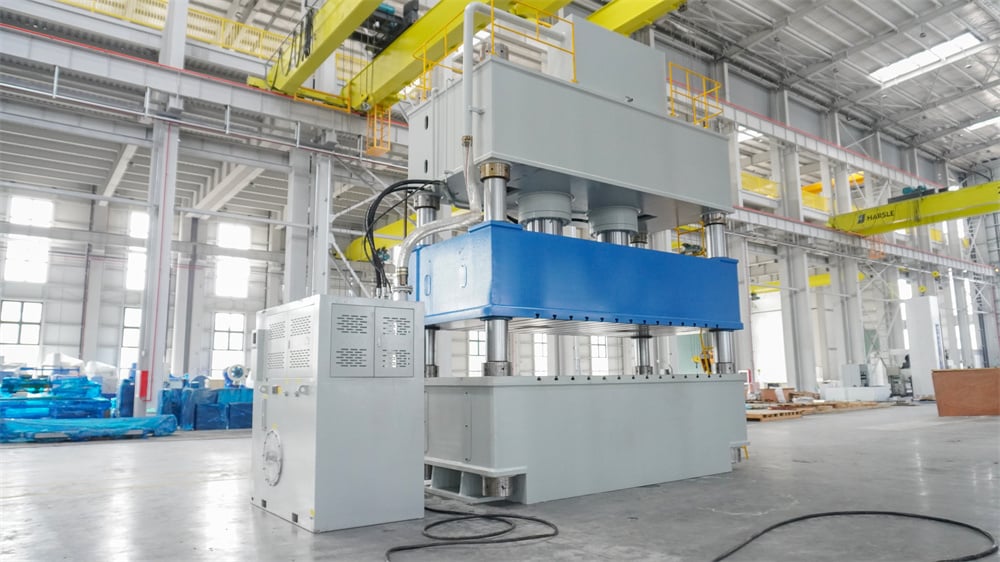
Common Engineering Mistakes in Oil Selection
One of the most frequent mistakes in Hydraulic Press Oil Selection : Fluid Requirements Reliable Performance is the mixing of different oil brands or types. Even if two oils share the same ISO VG rating, their additive packages may be chemically incompatible. Mixing a zinc-based AW oil with a zinc-free (ashless) oil can lead to the precipitation of additives, creating a “gel” that blocks fine filters and proportional valve screens. This mistake often results in costly downtime and the need for a complete system flush.
Another common error is ignoring the “Cleanliness Level” of the new oil. Many operators assume that oil straight from the drum is clean. In reality, new oil often contains particulate contamination that exceeds the ISO 4406 cleanliness standards required for high-pressure hydraulic systems (typically 18/16/13). Failing to filter new oil through a 5-micron or 10-micron filter cart before it enters the HARSLE press reservoir can introduce contaminants that immediately begin scouring the pump and valves.
Furthermore, many facilities fail to adjust their oil selection based on seasonal changes. Using a heavy VG 68 oil during a cold winter in an unheated shop can lead to pump cavitation during morning start-ups. Conversely, using a light VG 32 oil in the peak of summer can lead to internal leakage and loss of pressing force. Engineering teams must either standardize on a high-VI multi-grade oil or implement a seasonal oil change protocol to maintain reliable performance.
Lastly, neglecting the role of the hydraulic seals is a significant oversight. Certain synthetic fluids or aggressive additive packages can cause seal materials (like Nitrile or Viton) to swell, shrink, or harden. Always verify that the selected fluid is compatible with the seal elastomers used in your specific hydraulic press model to prevent catastrophic external leaks.
Selection Checklist for Hydraulic Press Fluid
- Verify Manufacturer Specifications: Always consult the HARSLE manual for the recommended ISO VG grade and minimum performance standards (e.g., DIN 51524).
- Assess Operating Environment: Determine the minimum start-up temperature and the maximum steady-state operating temperature.
- Check Additive Requirements: Ensure the oil has the necessary Anti-Wear (AW), Rust & Oxidation (R&O), and Anti-Foam properties.
- Evaluate Viscosity Index: For environments with high temperature fluctuations, select an oil with a VI of 140 or higher.
- Confirm Seal Compatibility: Cross-reference the oil’s chemical base with the machine’s seal materials (Buna-N, Viton, etc.).
- Establish Cleanliness Standards: Ensure the oil meets ISO 4406 18/16/13 or better before system entry.
- Plan for Monitoring: Schedule regular oil analysis (every 2,000 hours) to check for viscosity changes, oxidation, and metal wear particles.
- Consider Environmental Impact: If the press is located near water sources or food processing areas, evaluate biodegradable or food-grade hydraulic fluids.
Frequently Asked Questions (FAQ)
How often should I change the hydraulic oil in my press?
For most HARSLE hydraulic presses, a full oil change is recommended every 4,000 to 8,000 operating hours, or once a year. However, this interval can be extended or shortened based on regular oil analysis. If the oil shows signs of oxidation (darkening color, burnt smell) or high contamination levels that cannot be filtered out, it must be replaced immediately to ensure reliable performance.
Can I use motor oil in my hydraulic press?
No. While motor oil and hydraulic oil may look similar, they are formulated for entirely different environments. Motor oil contains detergents designed to keep soot in suspension, which can cause foaming and emulsification in a hydraulic system. Hydraulic oil is designed to shed water and release air quickly. Using motor oil can lead to pump damage and sluggish valve response.
What is the difference between HLP and HVLP hydraulic oils?
HLP oils are standard mineral-based hydraulic fluids with anti-wear additives, suitable for most indoor applications with stable temperatures. HVLP (High Viscosity Index) oils contain viscosity index improvers, making them better suited for outdoor equipment or shops with extreme temperature swings. If your HARSLE press operates in a variable environment, HVLP is the superior choice for reliable performance.
What causes hydraulic oil to turn milky?
Milky oil is a clear indicator of water contamination. This usually happens due to condensation in the reservoir or a leak in the oil cooler (if water-cooled). Water reduces the oil’s lubricating ability and can cause rust and cavitation. If the oil is milky, the source of the water must be identified and fixed, and the oil should be dehydrated or replaced.
Does the color of the oil indicate its quality?
Not necessarily. While a significant darkening of the oil can indicate oxidation or thermal distress, the initial color of the oil is determined by the base stock and additives. The only way to accurately assess oil quality is through laboratory analysis, which measures viscosity, acid number, and particle counts. Relying on visual inspection alone is a common mistake in hydraulic maintenance.
Is it necessary to use a filter cart when adding oil?
Yes, absolutely. New oil is rarely clean enough for modern hydraulic systems. Using a filter cart ensures that any contaminants introduced during the manufacturing or transport of the oil are removed before they can damage the sensitive components of your hydraulic press. This simple step is one of the most effective ways to ensure long-term reliable performance.