Comprehensive Guide: How to Diagnose Hydraulic Press Noise and Vibration Through Maintenance


Introduction: The Language of Industrial Machinery
In the high-stakes world of metal fabrication, a hydraulic press is the heartbeat of the production line. However, when that heartbeat becomes irregular—manifesting as unusual noises or excessive vibrations—it is the machine’s way of communicating a localized or systemic failure. To diagnose hydraulic press noise vibration through maintenance is not merely a reactive task; it is a sophisticated diagnostic process that requires an understanding of fluid dynamics, mechanical tolerances, and electrical synchronization. For operators of HARSLE machinery, maintaining the silent, smooth operation of a press is paramount to ensuring part accuracy, tool longevity, and operator safety.
Noise and vibration are rarely isolated incidents. They are symptoms of underlying issues such as cavitation, aeration, mechanical misalignment, or hydraulic shock. Ignoring these signals often leads to catastrophic component failure, unplanned downtime, and significant financial loss. This comprehensive guide explores the methodologies used to identify, analyze, and rectify these issues through a rigorous maintenance framework, ensuring your hydraulic press operates at peak efficiency for decades.
The Critical Importance of Proactive Maintenance
Maintenance is often viewed as a cost center, but in the context of hydraulic presses, it is a primary driver of ROI. A well-maintained machine produces parts with tighter tolerances and experiences fewer micro-stoppages. When we discuss the need to diagnose hydraulic press noise vibration through maintenance, we are looking at the preservation of the machine’s structural integrity. Excessive vibration can lead to work hardening of hydraulic lines, loosening of critical fasteners, and the premature wear of expensive seals and bushings.
Furthermore, the psychological impact on the shop floor cannot be understated. A noisy, vibrating machine creates an environment of uncertainty and stress for operators. By implementing a proactive maintenance strategy, manufacturers can transform their facility into a precision-oriented environment. This involves moving beyond ‘break-fix’ mentalities toward predictive maintenance, where sensors and regular inspections catch issues before they manifest as audible noise or felt vibration.
From a technical standpoint, the energy efficiency of a hydraulic press is directly linked to its mechanical and hydraulic health. Vibration often indicates energy being lost as heat or friction rather than being applied to the workpiece. Therefore, diagnosing and fixing these issues is also an exercise in energy conservation and operational sustainability.
Daily Inspection: The First Line of Defense
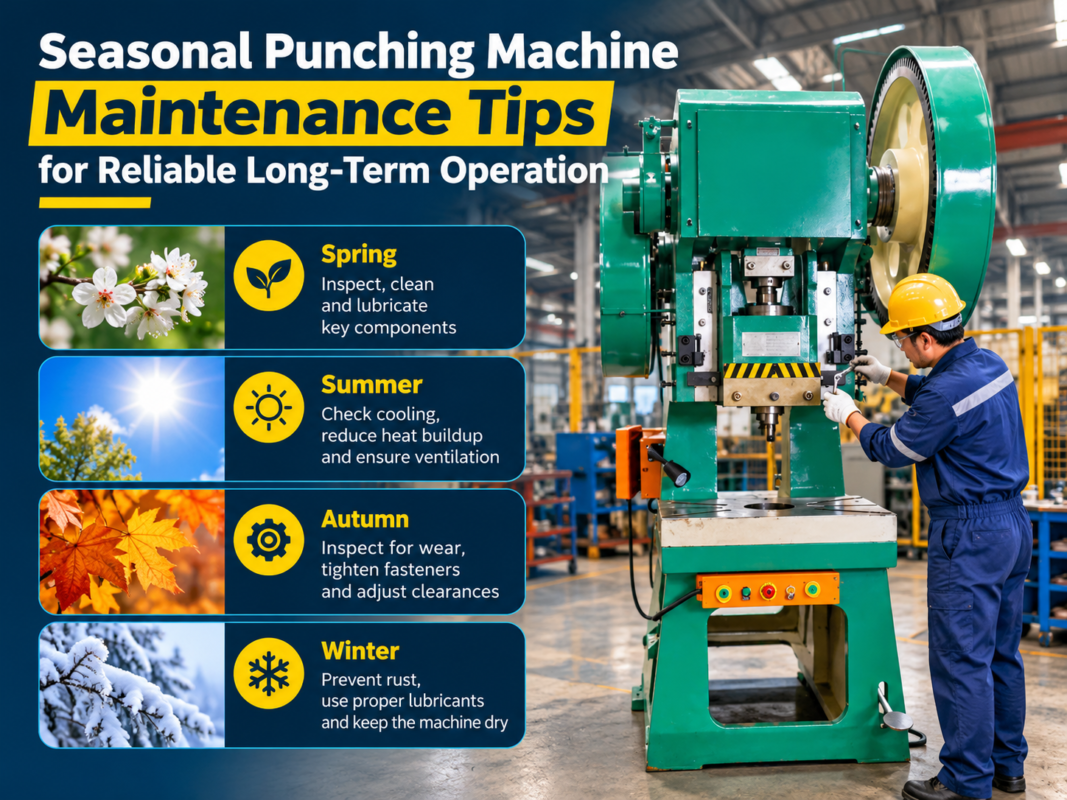
The most effective way to diagnose hydraulic press noise vibration through maintenance is through a disciplined daily inspection routine. Before the shift begins, the operator should perform a visual and auditory sweep of the machine. This starts with checking the oil level and clarity. Cloudy or foamy oil is a primary indicator of aeration, which is a leading cause of high-pitched whining noises in hydraulic pumps.
During the initial warm-up cycle, the operator should listen for any deviation from the standard ‘hum’ of the motor and pump. Are there clicking sounds? Is there a rhythmic thumping? These sounds provide immediate clues. For instance, a rhythmic knocking often points to a mechanical issue in the drive coupling or a loose mounting bolt. A high-pitched squeal, on the other hand, usually indicates a restriction in the suction line or a failing bearing within the pump assembly.
Visual inspections should also include a check for ‘sweating’ or weeping at hydraulic joints. Even a minor leak can introduce air into the system, leading to the very vibrations we aim to eliminate. Checking the pressure gauges during a dry cycle can also reveal fluctuations that suggest a malfunctioning relief valve or an unstable pump compensator. By documenting these daily observations, maintenance teams can identify trends and intervene before a minor vibration becomes a major breakdown.
Deep Dive: Hydraulic System Checks
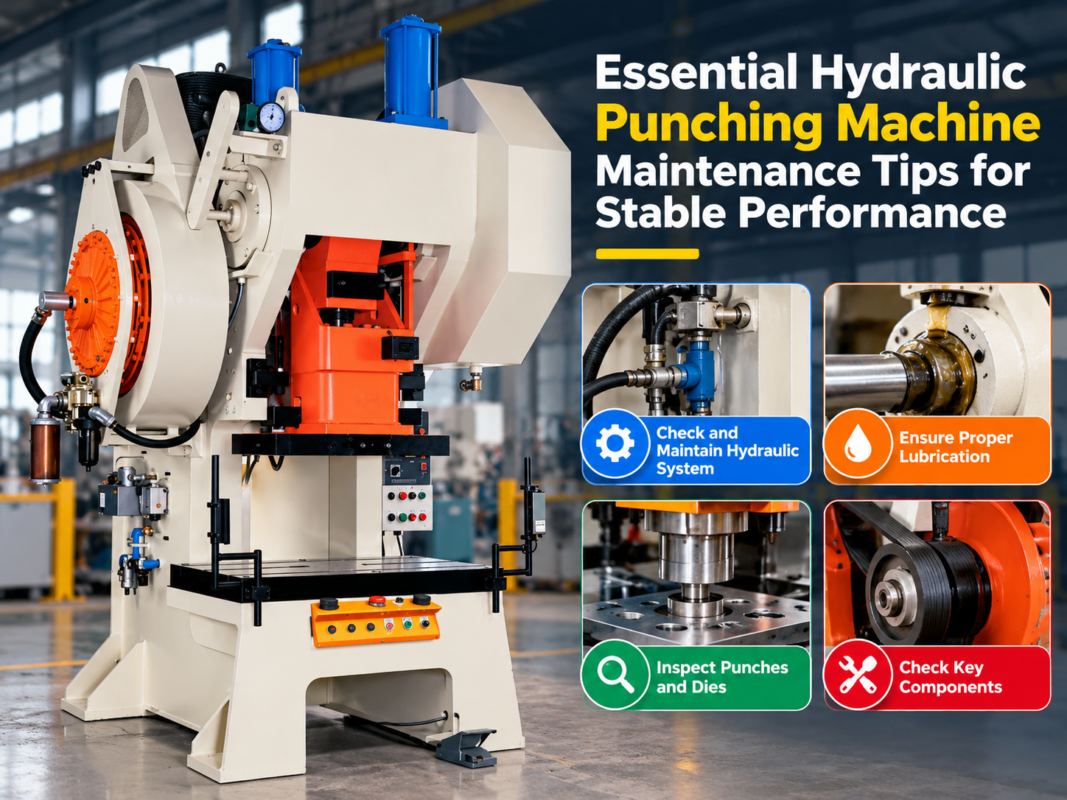
The hydraulic circuit is the most common source of noise in a press. To effectively diagnose hydraulic press noise vibration through maintenance, one must understand the phenomena of cavitation and aeration. Cavitation occurs when the pressure in the pump inlet drops below the vapor pressure of the fluid, causing bubbles to form and then implode violently against the metal surfaces. This creates a sound often described as ‘pumping marbles.’ Maintenance checks should focus on the suction strainer; if it is clogged with debris, it restricts flow and induces cavitation.
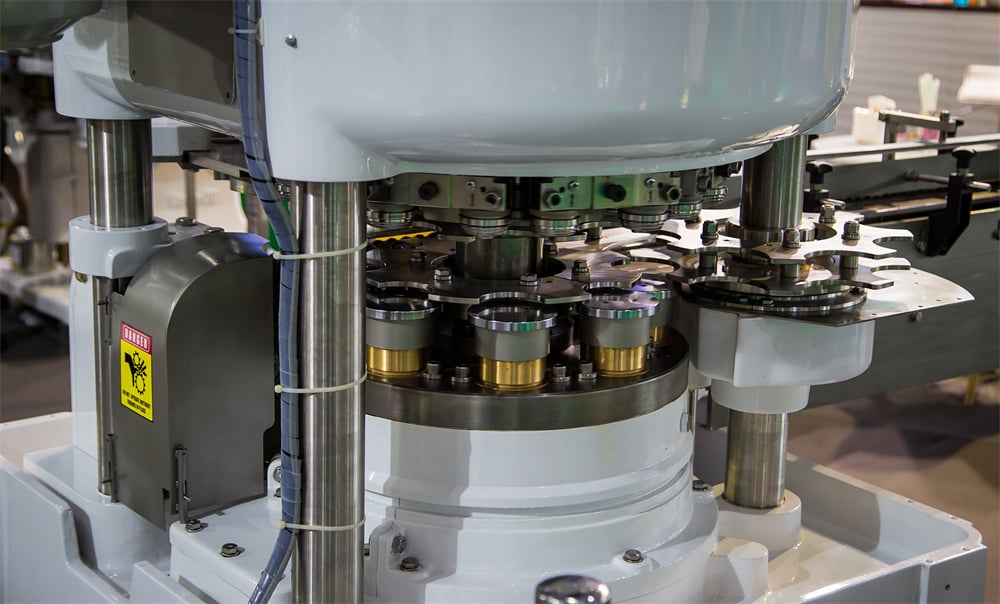
Aeration is the introduction of free air into the hydraulic fluid. This usually happens through a leak in the suction line or a low oil level in the reservoir that allows the pump to suck in air. Aeration causes the fluid to become compressible, leading to ‘spongy’ operation and a loud, erratic whining noise. During maintenance, all suction-side fittings must be torqued to specification, and seals should be inspected for brittleness.
Another hydraulic culprit is the relief valve. If the valve is set too close to the operating pressure or if the internal spring is fatigued, it may ‘chatter.’ This chatter sends high-frequency vibrations through the entire hydraulic manifold and piping. Maintenance protocols should include periodic testing of relief valve settings using a calibrated pressure gauge to ensure they are functioning within the manufacturer’s specified range.
Electrical and Control System Diagnostics
While the hydraulic system is the muscle, the electrical system is the brain. Often, what sounds like a mechanical vibration is actually an electrical disharmony. For example, an unbalanced three-phase power supply can cause an electric motor to vibrate excessively. This vibration is then transmitted through the coupling to the hydraulic pump. During maintenance, electricians should check the amperage draw on all three phases to ensure they are balanced within 5% of each other.
Variable Frequency Drives (VFDs) are common in modern HARSLE presses. If the VFD parameters are not tuned correctly, the motor may experience ‘hunting’ or resonance at certain frequencies. This manifests as a vibrating hum that changes pitch with the motor speed. Maintenance should involve reviewing the VFD error logs and ensuring that the carrier frequency is optimized for the specific motor and cable length used in the installation.
Solenoid valves also play a role. A failing solenoid coil or a sticking valve spool can cause ‘water hammer’—a sudden pressure spike that creates a loud bang and vibrates the piping. This occurs when a valve closes too quickly or fails to shift smoothly. Regular maintenance of the electrical cabinet, including tightening terminal blocks and cleaning cooling fans, prevents the overheating that leads to these erratic electrical behaviors.
Mechanical Integrity and Structural Checks
The frame of a hydraulic press is designed to withstand immense forces, but it is not immune to the laws of physics. To diagnose hydraulic press noise vibration through maintenance, one must inspect the mechanical connections. Loose foundation bolts are a frequent but overlooked cause of vibration. If the press is not perfectly level and securely anchored to a reinforced concrete floor, the energy of the stroke will cause the entire machine to rock, leading to structural fatigue over time.
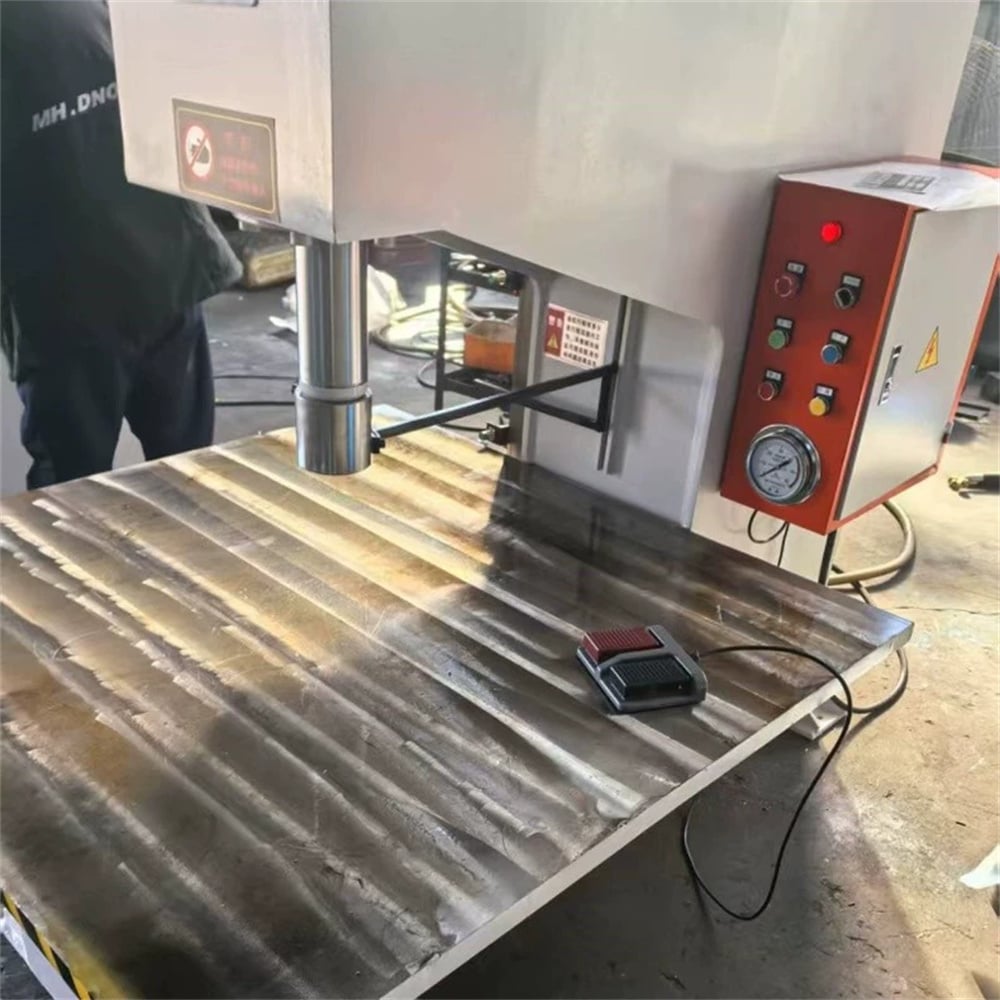
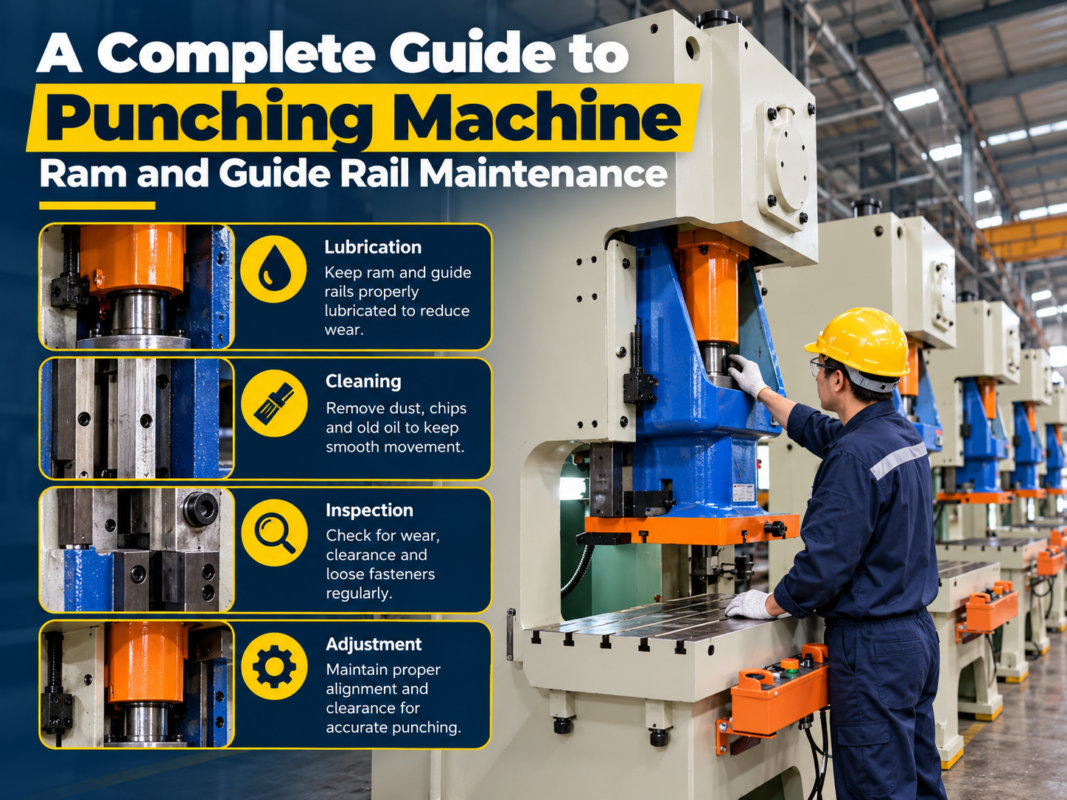
The slide (or ram) and its guiding system (gibs) are critical mechanical components. If the gibs are too loose, the slide will ‘slap’ against the guides during the pressing cycle, creating a loud metallic bang and causing vibration that ruins the surface finish of the workpiece. Conversely, if they are too tight, they create excessive friction, leading to jerky movement and a groaning sound. Maintenance should include measuring the clearance with feeler gauges and adjusting them to the HARSLE factory specifications.
Furthermore, the connection between the piston rod and the slide must be inspected. A loose nut or a worn spherical bearing at this junction will cause a ‘clunk’ at the transition point between the rapid approach and the pressing stroke. Checking these mechanical fasteners with a torque wrench is a vital part of any quarterly maintenance schedule.
The Lubrication Plan: Reducing Friction and Noise
Lubrication is the lifeblood of mechanical movement. A lack of lubrication in the gibs, bearings, or bushings will inevitably lead to noise and vibration. When metal-on-metal contact occurs due to a broken lubrication film, the resulting friction creates high-frequency vibrations and heat. To diagnose hydraulic press noise vibration through maintenance, one must first verify that the lubrication system is delivering the correct volume of oil or grease to every point.
Automatic lubrication systems should be checked for blocked lines. A single blocked line can lead to the failure of a specific guide, causing the slide to tilt slightly and vibrate. The choice of lubricant is also critical. Using a lubricant with the wrong viscosity can lead to ‘stick-slip’ motion, where the slide moves in tiny, jerky increments rather than a smooth flow. This creates a characteristic ‘shuddering’ vibration during the downward stroke.
Maintenance teams should also analyze the condition of the used lubricant. The presence of bronze or steel particles in the grease indicates that a bearing or guide is already failing. By catching these particles early through regular ‘grease-out’ inspections, you can replace a relatively inexpensive bushing before it scores a costly shaft or slide way.
Troubleshooting Signals: Deciphering the Sounds
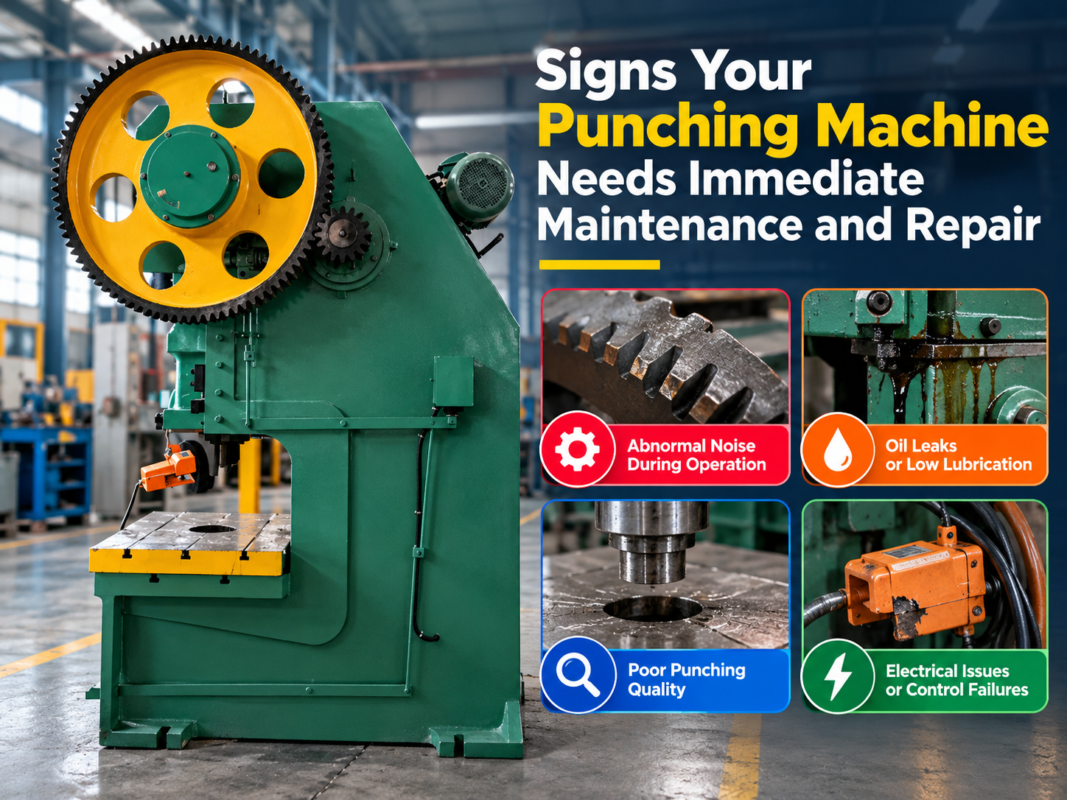
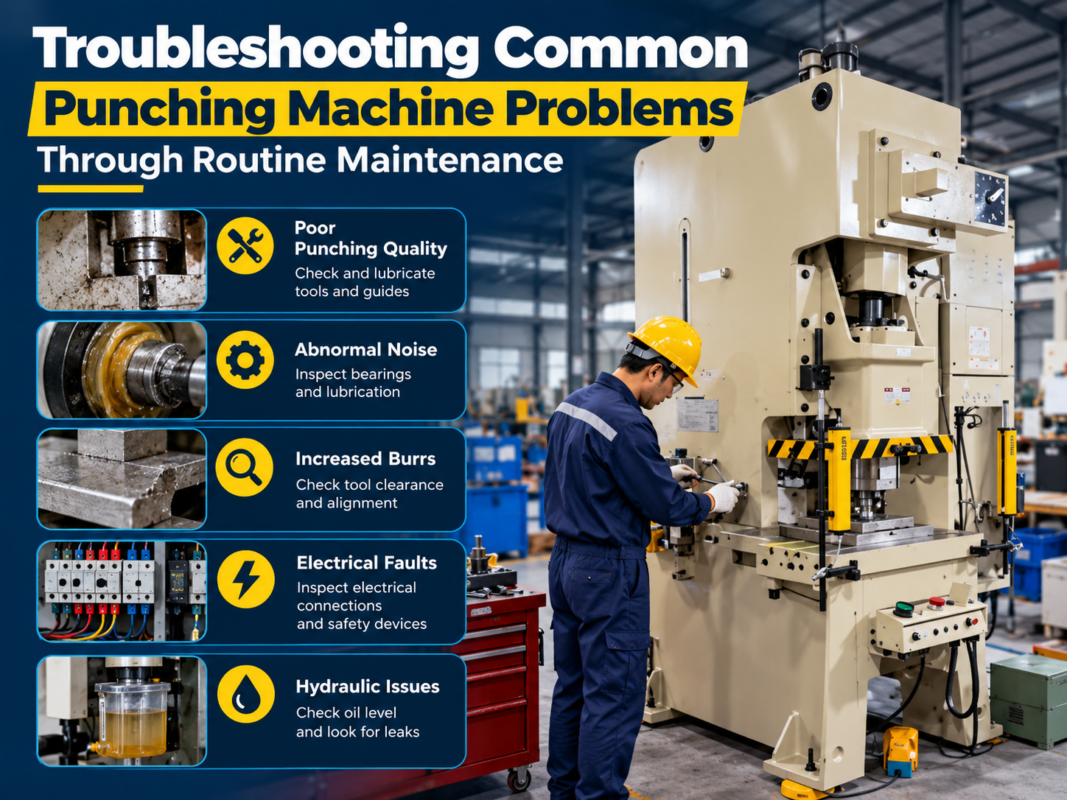
Learning to diagnose hydraulic press noise vibration through maintenance is like learning a new language. Here are some common ‘phrases’ your machine might use:
- High-Pitched Whining: Usually indicates pump cavitation or aeration. Check the oil level, suction filters, and intake pipe fittings.
- Rhythmic Thumping: Often points to a mechanical issue, such as a flat spot on a bearing, a loose coupling, or an unbalanced motor fan.
- Loud Bang at Stroke End: This is typically ‘hydraulic shock.’ It may be caused by a decompression valve failing to open or a cylinder cushion that needs adjustment.
- Grinding or Screeching: This is a critical warning of metal-on-metal contact. Stop the machine immediately and check the lubrication of the gibs and the condition of the pump bearings.
- Chattering or Shuddering: Often related to air trapped in the cylinders or incorrect gib clearance. Bleeding the air from the highest point in the hydraulic circuit often resolves this.
By categorizing these sounds, maintenance personnel can quickly narrow down the search area. For example, if the noise only occurs when the press is under full load, the issue is likely in the high-pressure side of the hydraulic circuit or the main structural frame. If the noise is constant regardless of load, the motor, pump, or cooling system is the more likely culprit.
Comprehensive Maintenance Schedule Table
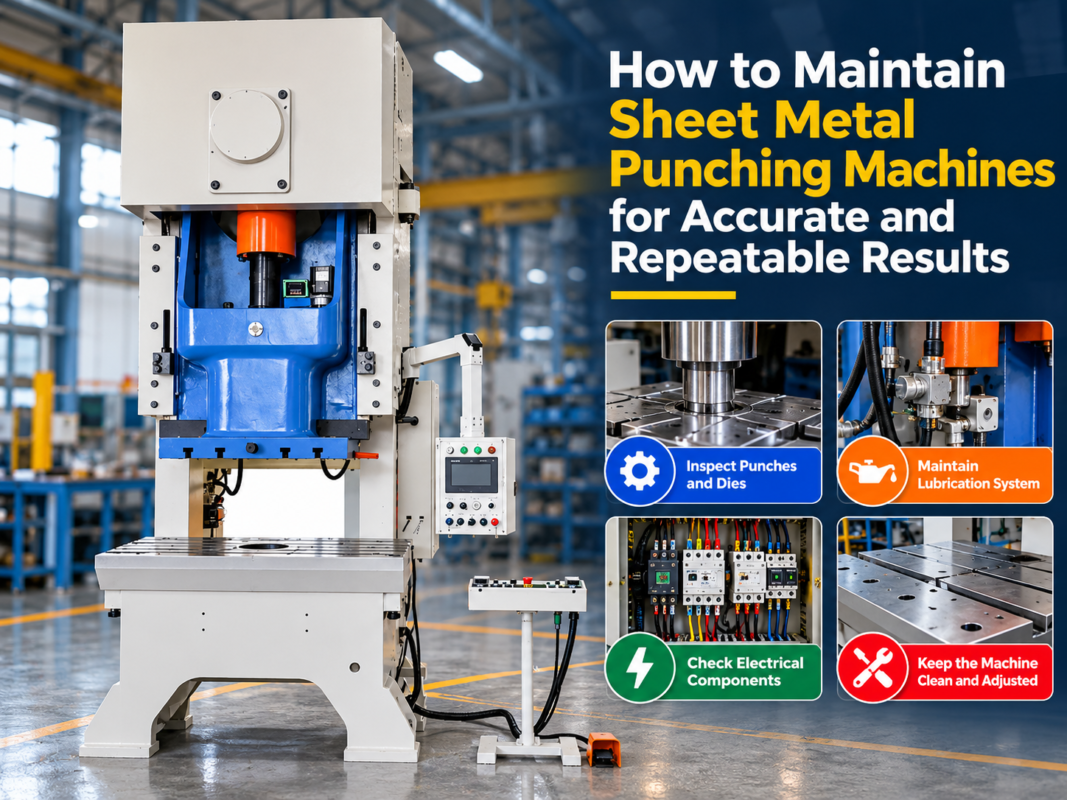
To ensure nothing is missed, use the following table as a template for your HARSLE hydraulic press maintenance program. Consistent adherence to this schedule is the best way to diagnose hydraulic press noise vibration through maintenance before they lead to failure.
| Frequency | Component | Action Required | Goal |
|---|---|---|---|
| Daily | Oil Level & Temp | Check reservoir level and operating temperature. | Prevent aeration and overheating. |
| Daily | Hydraulic Lines | Inspect for leaks, weeping, or excessive hose movement. | Prevent air ingress and pressure loss. |
| Daily | Auditory Sweep | Listen for new or unusual noises during operation. | Early detection of pump or valve issues. |
| Weekly | Filters | Check pressure drop indicators on all filters. | Prevent cavitation and contamination. |
| Weekly | Gib Lubrication | Ensure grease/oil is reaching all guide surfaces. | Reduce friction and mechanical noise. |
| Monthly | Foundation Bolts | Check and tighten all anchoring hardware. | Eliminate structural vibration. |
| Monthly | Electrical Cabinet | Clean filters, tighten terminals, check fan operation. | Prevent electrical ‘hunting’ and motor stress. |
| Quarterly | Oil Analysis | Send a sample to a lab for particle and chemical analysis. | Identify internal wear before it causes noise. |
| Quarterly | Gib Clearance | Measure and adjust slide-to-guide clearances. | Prevent slide ‘slap’ and ensure precision. |
| Annually | Accumulators | Check pre-charge pressure of nitrogen bladders. | Reduce hydraulic shock and vibration. |
| Annually | Pump Coupling | Inspect the flexible element for wear or hardening. | Ensure smooth power transmission. |
Advanced Diagnostic Tools
While the human senses are excellent for initial detection, professional maintenance teams often use advanced tools to diagnose hydraulic press noise vibration through maintenance. Vibration pens and accelerometers can measure the exact frequency and amplitude of a vibration. By comparing these readings to the ‘baseline’ taken when the machine was new, technicians can pinpoint exactly which bearing is failing or if the motor is out of balance.
Ultrasonic leak detectors are another invaluable tool. They can ‘hear’ the high-frequency sound of air being sucked into a hydraulic fitting or the internal bypass of a valve, even in a noisy factory environment. Thermal imaging cameras can also help; a hot spot on a hydraulic manifold often indicates a valve that is partially stuck, causing fluid turbulence and noise.
Finally, a portable pressure data logger can capture pressure spikes that happen too fast for a standard gauge to show. These spikes are often the cause of ‘mysterious’ vibrations and hydraulic shock. By visualizing the pressure curve, engineers can adjust the PLC ramp times or the valve shifting speeds to smooth out the operation.
FAQ: Common Questions on Press Noise and Vibration
1. Why does my hydraulic press make a loud ‘bang’ when the pressure is released?
This is known as decompression shock. When the press is under high pressure, the oil and the machine frame actually compress and stretch. If the pressure is released too quickly, that stored energy is released instantly, creating a shockwave. To fix this, check the decompression valve settings or the PLC timing to ensure a gradual pressure bleed-off before the cylinder reverses.
2. Can the wrong type of hydraulic oil cause noise?
Yes. If the oil’s viscosity is too high, the pump may struggle to pull it from the reservoir, leading to cavitation. If it is too low, the oil may not provide an adequate lubricating film, leading to internal pump wear and noise. Always use the ISO grade recommended in your HARSLE manual.
3. How do I know if the vibration is coming from the motor or the pump?
A simple test is to briefly decouple the motor from the pump. If the motor runs silently on its own, the issue is either the pump or the alignment between the two. If the motor still vibrates, the problem lies in the motor bearings or the electrical supply.
4. Is some vibration normal for a large hydraulic press?
While no machine is perfectly silent, a high-quality press like those from HARSLE should operate smoothly. Any vibration that causes the floor to shake, fasteners to loosen, or visible ‘shuddering’ in the hydraulic hoses is not normal and should be investigated immediately.
5. How often should I bleed air from the system?
You should only need to bleed air after a maintenance procedure that opened the hydraulic circuit (like a hose or valve replacement). If you find yourself needing to bleed air regularly, you have a leak on the suction side of the pump that is allowing air to enter the system.
Conclusion: The Path to Silent Precision
To diagnose hydraulic press noise vibration through maintenance is to commit to a higher standard of industrial excellence. By understanding that every sound and tremor is a data point, operators and maintenance technicians can work together to ensure the longevity of their equipment. From the daily visual check to the annual oil analysis, every step in the maintenance process serves to silence the machine and sharpen its performance.
HARSLE remains dedicated to providing robust, high-precision machinery, but the ultimate performance of any press lies in the hands of those who maintain it. By following the strategies outlined in this guide, you can ensure that your hydraulic press remains a quiet, powerful, and reliable asset in your fabrication arsenal for years to come. Remember: a quiet machine is a healthy machine, and a healthy machine is a profitable one.