
Laser Cutting Machine Cutting Deviation Troubleshooting for Precise Results


Introduction to Laser Cutting Precision
In the world of modern metal fabrication, precision is the cornerstone of quality. Laser cutting technology has revolutionized the industry by offering high-speed, high-accuracy solutions for complex geometries. However, even the most advanced systems can encounter issues with accuracy over time. Understanding Laser Cutting Machine Cutting Deviation Troubleshooting for Precise Results is essential for any operator or facility manager looking to maintain tight tolerances and minimize material waste. When a laser cutting machine begins to deviate from its programmed path, it doesn’t just affect a single part; it can compromise entire production runs, leading to increased costs and delayed timelines.
HARSLE, a leader in metal fabrication machinery, recognizes that a machine is only as good as its maintenance and calibration. Cutting deviation can manifest in various ways, such as dimensional inaccuracies, non-perpendicular edges, or inconsistent kerf widths. These issues often stem from a combination of mechanical wear, optical misalignment, or software misconfigurations. By systematically addressing these factors, operators can restore their equipment to factory-spec precision. This guide provides a comprehensive deep dive into the technical aspects of troubleshooting and resolving cutting deviations in industrial laser systems.
The pursuit of Laser Cutting Machine Cutting Deviation Troubleshooting Precise Results requires a holistic approach. It involves not only fixing the immediate problem but also understanding the underlying physics of laser-material interaction. Whether you are working with fiber lasers or CO2 systems, the principles of motion control and beam delivery remain paramount. In the following sections, we will explore the critical variables that influence cutting accuracy and provide actionable steps to diagnose and correct deviations effectively.
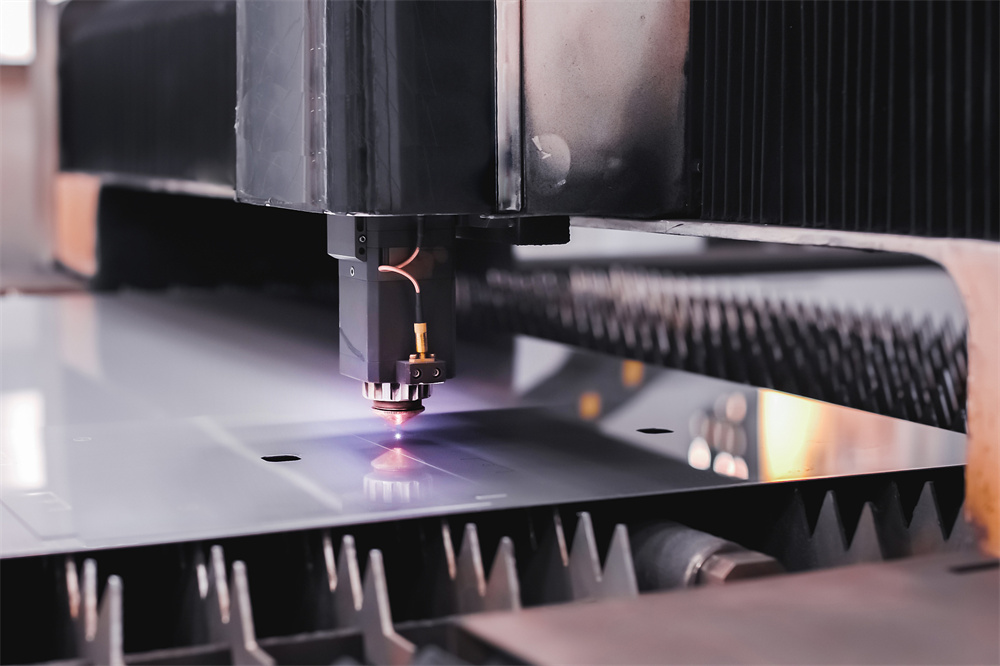
Key Considerations for Cutting Accuracy
Before diving into specific troubleshooting steps, it is vital to understand the key factors that contribute to cutting deviation. Accuracy in laser cutting is the result of a delicate balance between the machine’s mechanical structure, its optical delivery system, and the control software. If any of these elements are out of sync, the resulting part will likely fall outside of the required tolerances. One of the primary considerations is the mechanical stability of the machine bed and gantry. A high-quality laser cutting machine must have a heavy-duty, heat-treated frame to resist thermal deformation and vibration during high-speed operation.
Another critical factor is the optical path. For fiber lasers, this involves the fiber cable and the cutting head assembly, while for CO2 lasers, it includes a series of mirrors and lenses. Any contamination, such as dust or oil on the protective window or focusing lens, can cause beam distortion. This distortion leads to an asymmetrical energy distribution, which in turn causes the laser to cut more on one side than the other, resulting in dimensional deviation. Regular inspection of the optical components is a non-negotiable part of Laser Cutting Machine Cutting Deviation Troubleshooting Precise Results.
Environmental factors also play a significant role. Industrial environments are often subject to temperature fluctuations and external vibrations. If a laser machine is placed near a heavy stamping press or a high-traffic area, the resulting vibrations can translate into micro-deviations in the cut path. Furthermore, thermal expansion of the workpiece itself during the cutting process can lead to inaccuracies, especially in long or thin parts. Proper nesting strategies and cooling pauses can help mitigate these thermal effects.
Finally, the software and control system parameters must be correctly configured. This includes kerf compensation, lead-in/lead-out settings, and acceleration/deceleration curves. If the kerf width—the amount of material removed by the laser—is not accurately measured and entered into the CNC system, the finished part will be consistently undersized or oversized. Troubleshooting these software settings is often the quickest way to resolve minor deviations that are consistent across all parts.
Technical Details: Laser Cutting Machine Cutting Deviation Troubleshooting for Precise Results
Step 1: Optical Path Alignment and Beam Quality
The first step in Laser Cutting Machine Cutting Deviation Troubleshooting Precise Results is ensuring that the laser beam is perfectly centered through the nozzle. If the beam is slightly off-center, it will hit the side of the nozzle, causing the beam to clip or scatter. This results in a slanted cut or a rough surface finish on one side of the part. To check this, operators should perform a “tape test.” By placing a piece of thermal tape over the nozzle and firing a short pulse at low power, you can see exactly where the beam exits. If the hole is not perfectly centered in the nozzle’s aperture, the mirrors or the laser head must be adjusted.
Beyond centering, the focus position is critical. The focal point should be set according to the material type and thickness. For example, when cutting thick carbon steel, the focus is typically set slightly above or at the surface, whereas for stainless steel, it might be set deeper into the material. If the focus is drifting due to a loose lens mount or a failing autofocus sensor, the cutting width will vary, leading to deviation. Regularly calibrating the Z-axis sensor and ensuring the lens is securely seated are vital technical checks.
Step 2: Mechanical Transmission and Backlash Compensation
Mechanical deviation is often caused by wear and tear in the transmission system. Most modern laser machines use a rack-and-pinion or ball screw system driven by servo motors. Over time, the gears can wear, or the belts can stretch, leading to “backlash.” Backlash occurs when there is a slight gap between moving parts, causing a delay when the machine changes direction. This is most noticeable when cutting circles, which may turn out oval-shaped if there is backlash in either the X or Y axis.
To troubleshoot mechanical deviation, operators should inspect the lubrication of the guide rails and the tension of the drive belts. Using a dial indicator, you can measure the physical movement of the gantry against the commanded movement from the CNC. If a discrepancy is found, it can often be compensated for within the machine’s software parameters (backlash compensation). However, excessive mechanical play usually requires the replacement of worn components to achieve Laser Cutting Machine Cutting Deviation Troubleshooting Precise Results.
Step 3: Servo Motor Tuning and Synchronization
The servo motors are the muscles of the laser cutting machine. They must respond instantly and accurately to the CNC’s commands. If the servo gains are set too low, the machine will “lag” during high-speed corners, leading to rounded edges where sharp corners were intended. Conversely, if the gains are too high, the machine may vibrate or overshoot the target position. Tuning the servo drivers involves adjusting the PID (Proportional-Integral-Derivative) loops to ensure the gantry follows the programmed path with minimal following error.
In large-format machines, the Y-axis is often driven by two synchronized motors (dual-drive). If these two motors fall out of sync, the gantry will become “racked” or skewed. This means the X-axis is no longer perfectly perpendicular to the Y-axis. Squaring the gantry is a critical maintenance task that involves using a precision square or a laser interferometer to ensure the axes are exactly 90 degrees to each other. Even a fraction of a degree of skew can result in significant dimensional errors over a large workpiece.

Step 4: Gas Dynamics and Nozzle Condition
The assist gas (Oxygen, Nitrogen, or Air) plays a dual role: it helps eject molten metal from the kerf and protects the optics from splashes. If the gas pressure is inconsistent or the nozzle is damaged, the gas flow becomes turbulent. Turbulent gas flow can push the molten metal unevenly, causing the laser beam to deviate slightly or creating a “burr” that affects the final measurement of the part. Troubleshooting this involves checking the gas regulator, ensuring there are no leaks in the hoses, and replacing nozzles that show signs of wear or deformation.
Selection Advice for High-Precision Laser Machines
When purchasing a new machine, selecting one designed to minimize deviation is the best way to ensure long-term success. Here are several factors to consider for achieving Laser Cutting Machine Cutting Deviation Troubleshooting Precise Results from day one:
- Frame Construction: Look for machines with a heavy, welded steel frame that has been stress-relieved through vibration or thermal aging. A rigid frame is the foundation of accuracy.
- Component Quality: Ensure the machine uses reputable brands for critical components, such as Alpha or Wittenstein gearboxes, HIWIN or THK linear guides, and Yaskawa or Panasonic servo motors.
- Control System: Advanced CNC systems like CypCut, Beckhoff, or FSCUT offer superior algorithms for path planning and real-time error correction.
- Laser Source: A stable laser source (e.g., Raycus, IPG, or Max) ensures consistent beam quality, which is essential for maintaining a constant kerf width.
- Cooling System: A high-quality industrial chiller is necessary to keep the laser source and the cutting head at a constant temperature, preventing thermal drift.
HARSLE provides a range of fiber laser cutting machines that incorporate these high-end features. By focusing on structural integrity and high-performance motion control, HARSLE machines are engineered to provide Laser Cutting Machine Cutting Deviation Troubleshooting Precise Results even under heavy industrial workloads. When evaluating a supplier, always ask for the machine’s positioning accuracy and repeatability specifications, and request a cutting sample of a complex part to verify real-world performance.
Troubleshooting Summary Table
| Symptom | Potential Cause | Recommended Action |
|---|---|---|
| Parts are consistently too small/large | Incorrect Kerf Compensation | Measure actual kerf and update CNC parameters. |
| Circles are oval-shaped | Mechanical Backlash or Axis Skew | Check belt tension, gear wear, and gantry squareness. |
| One side of the cut is slanted | Beam Misalignment / Nozzle Centering | Perform tape test and adjust mirrors or laser head. |
| Rough finish on one side only | Turbulent Assist Gas Flow | Inspect nozzle for damage and check gas pressure. |
| Corners are rounded at high speed | Servo Gain Too Low | Tune servo motor PID parameters for better response. |
| Dimensions drift over time | Thermal Expansion / Loose Optics | Check chiller operation and tighten lens/mirror mounts. |
FAQ: Common Questions on Laser Cutting Deviation
Why does my laser machine lose accuracy after a few hours of work?
This is usually due to thermal drift. As the machine operates, the laser source, cutting head, and even the machine frame can heat up and expand. Ensure your chiller is functioning correctly and that the machine is not exposed to direct sunlight or drafts. In some cases, the protective window or lens may be dirty, causing it to absorb heat and shift the focal point.
How often should I calibrate my laser cutting machine?
For high-precision work, a quick check of nozzle centering and focus should be done daily. A more thorough mechanical inspection, including checking the squareness of the axes and the condition of the drive system, should be performed monthly. Full recalibration using a laser interferometer is recommended annually or after any major move or repair.
Can software updates improve cutting precision?
Yes, CNC manufacturers frequently release updates that improve motion control algorithms, better handle cornering, and provide more accurate kerf compensation. Keeping your software up to date is a simple way to enhance Laser Cutting Machine Cutting Deviation Troubleshooting Precise Results.
What is the difference between positioning accuracy and repeatability?
Positioning accuracy refers to how close the machine can get to a specific coordinate. Repeatability refers to how consistently the machine can return to that same coordinate multiple times. For precise results, both metrics must be within the manufacturer’s specified tolerances.
Conclusion
Achieving Laser Cutting Machine Cutting Deviation Troubleshooting Precise Results is an ongoing process that combines technical knowledge with diligent maintenance. By understanding the interplay between the optical path, mechanical transmission, and CNC control, operators can quickly identify the root causes of inaccuracy and implement effective solutions. Whether it is a simple adjustment of the kerf compensation or a more complex realignment of the gantry, every step taken toward precision contributes to a more efficient and profitable fabrication process.
HARSLE remains committed to providing the industry with high-performance machinery and the technical support needed to keep it running at peak performance. By investing in quality equipment and following a rigorous troubleshooting protocol, you can ensure that your laser cutting operations deliver the highest quality parts, meeting the most demanding standards of modern manufacturing. Remember, precision is not just a goal—it is a competitive advantage in the global marketplace.












