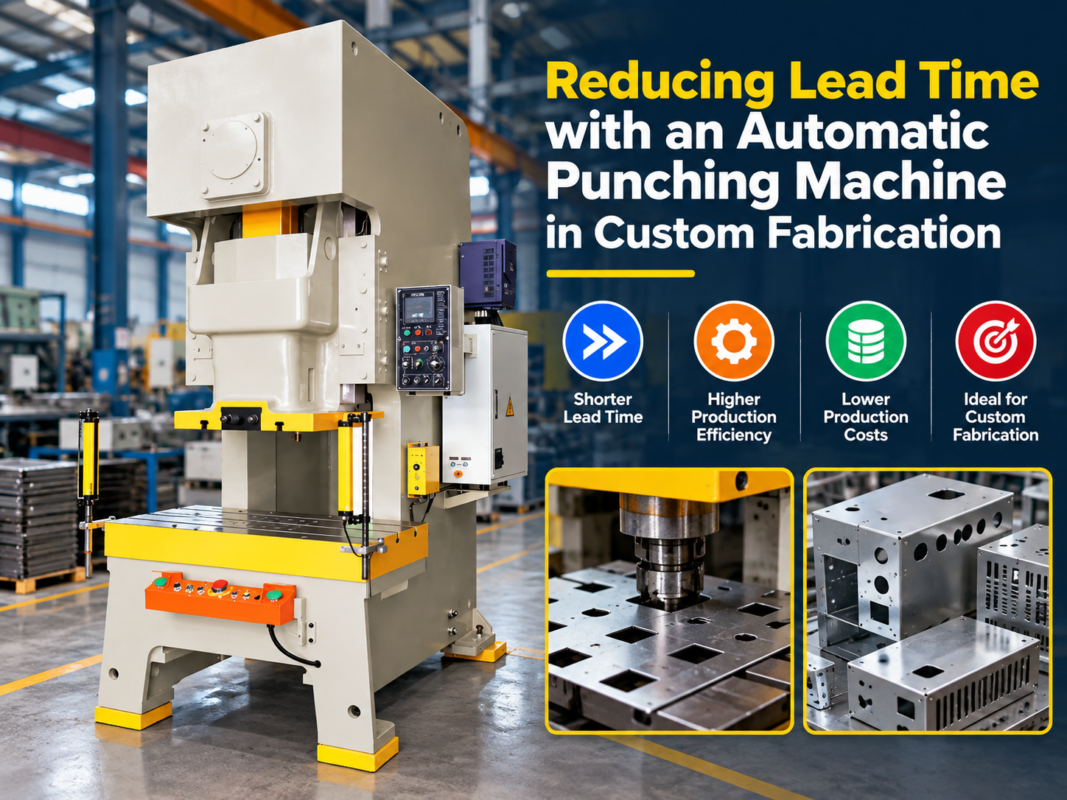
Automatic Punching Machine vs Semi-Automatic Punching Machine: Which Reduces Labor Costs?


Comparison Summary: The Evolution of Punching Efficiency
In the modern metal fabrication landscape, the drive toward automation is fueled by a single, pressing objective: the reduction of operational overhead, specifically labor costs. When evaluating an Automatic Punching Machine Vs Semi-Automatic Punching Machine: Which Reduces Labor Costs?, the answer initially seems obvious, but the reality involves a nuanced look at production volume, initial capital expenditure, and long-term scalability. HARSLE, a leader in industrial machinery, recognizes that while automation is the future, the ‘best’ machine depends heavily on the specific workflow of a factory.
Automatic punching machines are designed for high-speed, high-volume production with minimal human intervention. They utilize advanced CNC (Computer Numerical Control) systems and automatic feeding mechanisms to process entire sheets of metal without a technician needing to reposition the workpiece. Conversely, semi-automatic punching machines require an operator to manually load the material, trigger the punch (often via a foot pedal), and move the sheet to the next coordinate. This fundamental difference in operation creates a significant gap in labor requirements and throughput potential.
Labor costs are not merely the hourly wages paid to operators; they encompass training, safety insurance, the cost of human error (scrap), and the physical limitations of manual labor. As we delve into this comparison, we will analyze how each machine type impacts these variables. For large-scale manufacturers, the automatic system offers a path to ‘lights-out’ manufacturing, whereas for smaller job shops, the semi-automatic machine provides a flexible, lower-entry-cost solution that still outperforms manual hand-punching methods.
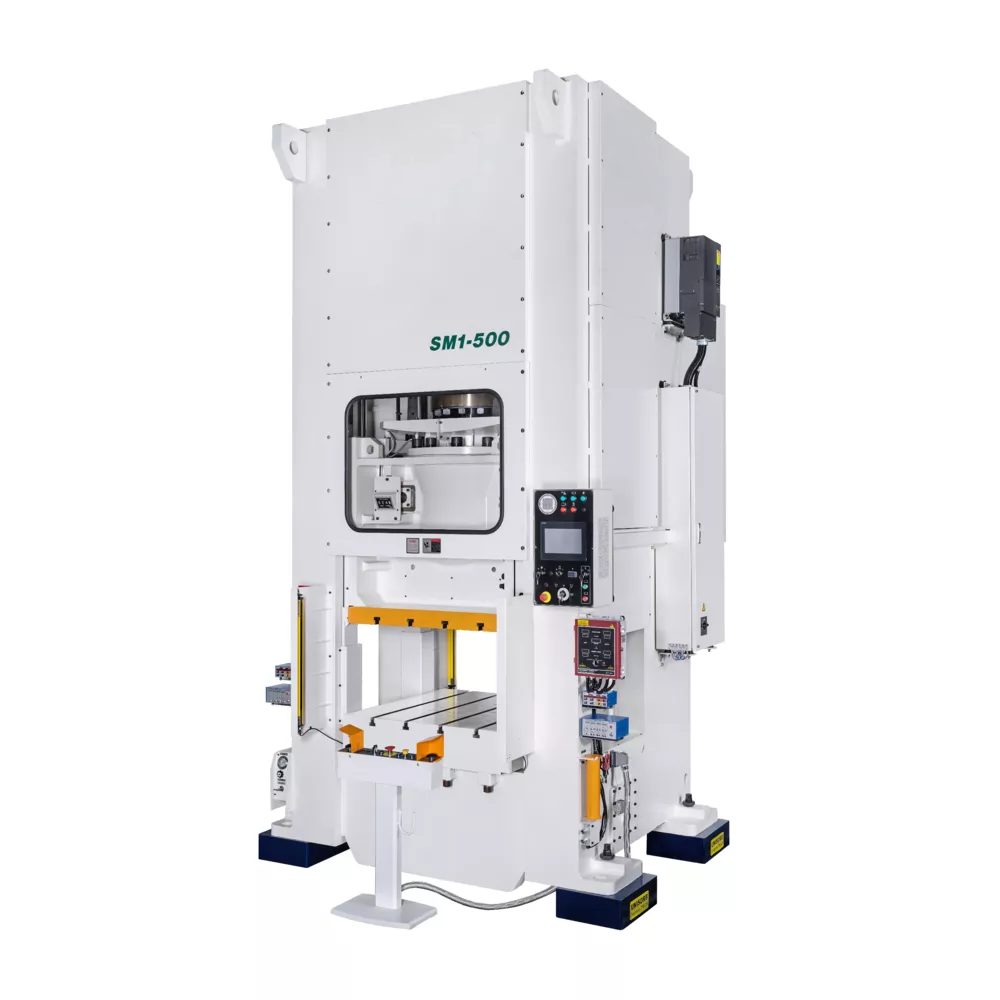
Automatic Punching Machine Overview: The Power of Automation
The automatic punching machine represents the pinnacle of efficiency in sheet metal fabrication. These machines are typically equipped with a CNC controller that manages the X and Y axes, a turret or tool changer, and an integrated feeding system. The primary advantage of an automatic system is its ability to run complex patterns across large sheets of metal with zero manual repositioning. Once the program is loaded and the material is placed on the loading rack, the machine takes over, executing hundreds of punches per minute with sub-millimeter precision.
From a technical standpoint, automatic machines utilize high-torque servo motors and precision ball screws to ensure that every hole is exactly where it needs to be. This eliminates the ‘human factor’ in measurement and alignment, which is the leading cause of wasted material in semi-automatic processes. Furthermore, modern HARSLE automatic machines often feature ‘nesting’ software, which optimizes the layout of parts on a single sheet to minimize scrap, further reducing the total cost per part.
Labor reduction in automatic systems is achieved through ‘one-to-many’ operation. A single skilled technician can often oversee three or four automatic punching machines simultaneously. Their role shifts from physical labor to system monitoring, quality control, and programming. This drastically lowers the labor cost per unit, as the machine’s high output is spread across a fraction of a worker’s hourly wage. Additionally, the reduction in physical handling minimizes the risk of workplace injuries, leading to lower insurance premiums and less downtime due to worker fatigue.
However, the complexity of these machines requires a higher level of initial training. Operators must be proficient in CNC programming or at least capable of navigating the machine’s software interface. While this may mean a higher hourly rate for the individual operator, the sheer volume of production usually justifies the expense. For industries like automotive, electronics, and HVAC, where thousands of identical or similar parts are needed daily, the automatic punching machine is the undisputed leader in labor cost efficiency.
Semi-Automatic Punching Machine Overview: Flexibility and Control
The semi-automatic punching machine serves as a bridge between traditional manual presses and fully automated CNC centers. These machines typically feature a powered punching head (hydraulic or mechanical) but rely on an operator to position the workpiece. Some semi-automatic models include digital readouts (DRO) or simple programmable stops to assist the operator in finding the correct coordinates, but the physical movement of the metal remains a manual task.
The primary appeal of the semi-automatic machine is its versatility and lower barrier to entry. For a small-to-medium enterprise (SME) that handles a wide variety of custom, low-volume jobs, an automatic machine might be overkill. The setup time for a fully automatic machine—including programming and tool configuration—can sometimes exceed the actual production time for a small batch of 10 or 20 parts. In these scenarios, a semi-automatic machine allows for quick tool changes and immediate ‘point-and-punch’ operation, making it more efficient for bespoke fabrication.
In terms of labor, the semi-automatic machine is more demanding. It requires a dedicated operator for the duration of the production run. The operator’s speed, accuracy, and stamina directly dictate the machine’s output. Because the operator is responsible for positioning the sheet, there is a higher risk of error, especially toward the end of a long shift when fatigue sets in. This means that while the machine itself is cheaper to purchase, the ‘labor cost per part’ remains relatively high and constant, regardless of the production volume.
Despite these drawbacks, semi-automatic machines are essential for certain applications. They are ideal for punching holes in pre-formed parts, large bulky frames, or materials that are difficult for automatic feeders to grip. HARSLE’s semi-automatic range focuses on ergonomic design to reduce operator strain, featuring foot-switch activation and easy-access tool holders. While it doesn’t offer the labor-saving ‘multi-machine’ oversight of its automatic counterpart, it provides a level of tactile control that is necessary for complex, non-standardized metalwork.
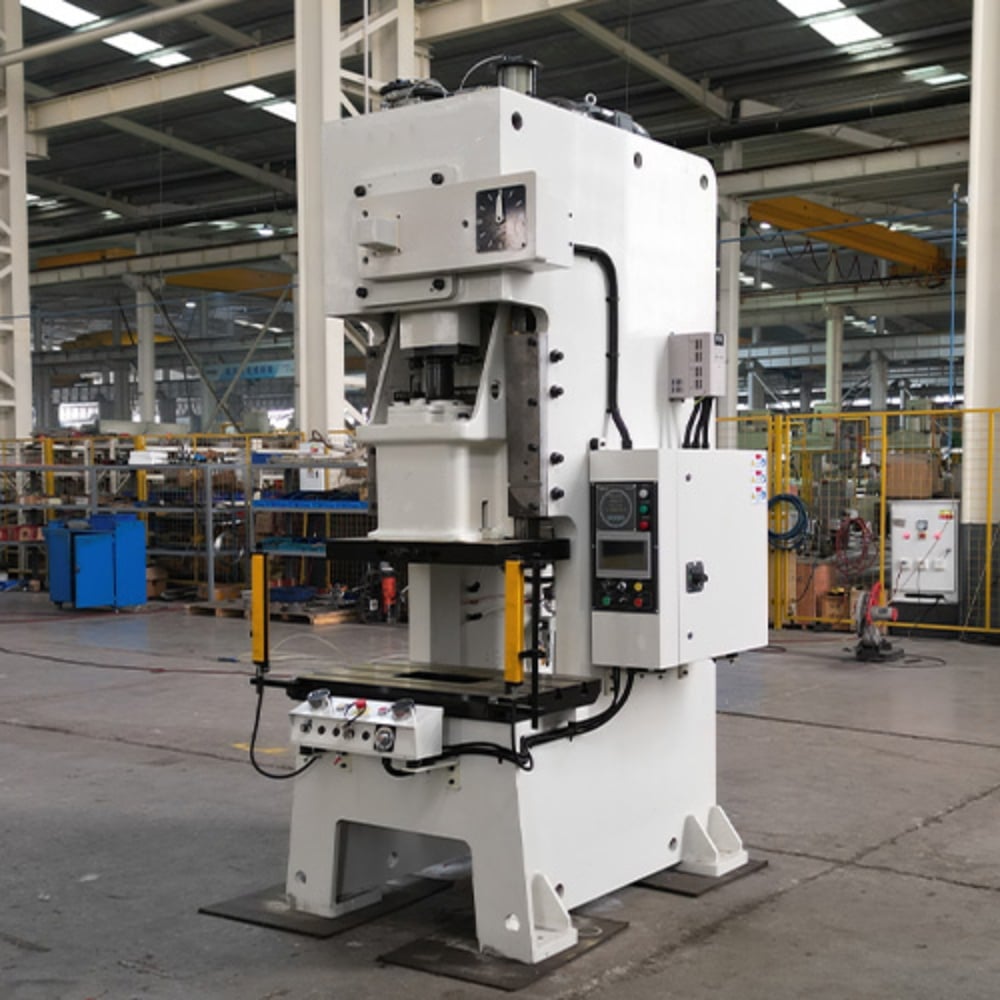
Specification Comparison Table
To better understand the trade-offs between these two machine types, the following table compares key technical and operational specifications that influence labor costs and production efficiency.
| Feature | Automatic Punching Machine | Semi-Automatic Punching Machine |
|---|---|---|
| Operation Mode | Fully CNC Controlled | Manual Positioning / Powered Punch |
| Labor Requirement | 1 Operator for 3-4 Machines | 1 Operator per Machine |
| Positioning Accuracy | +/- 0.1mm (Servo Driven) | Dependent on Operator Skill/DRO |
| Production Speed | High (Up to 600+ hits/min) | Low to Moderate (Manual pace) |
| Setup Time | Moderate (Programming required) | Low (Manual adjustment) |
| Material Handling | Automatic Feeder/Loader | Manual Loading/Unloading |
| Initial Investment | High | Low to Moderate |
| Risk of Human Error | Very Low | Moderate to High |
| Best For | Mass Production / Standardized Parts | Custom Jobs / Small Batches |
Best-fit Applications: Choosing the Right Tool for the Job
Determining which machine reduces labor costs most effectively requires an analysis of your specific product mix. If your facility produces standardized components like electrical enclosures, server racks, or perforated panels, the Automatic Punching Machine is the clear winner. In these applications, the machine can run for hours with minimal supervision. The labor cost is effectively ‘diluted’ over thousands of parts, making the cost per unit significantly lower than any manual process could achieve.
For manufacturers in the architectural metalwork or custom signage industries, the Semi-Automatic Punching Machine often proves more cost-effective. These industries frequently deal with unique dimensions and one-off designs. The time it would take to program a CNC automatic machine for a single custom panel would be longer than simply marking the panel and punching it on a semi-automatic press. In this case, the ‘labor cost’ of programming and setup outweighs the ‘labor cost’ of manual operation.
Another factor is the material type and thickness. Automatic machines are excellent for thin to medium-gauge sheet metal. However, if you are working with extremely heavy plates or irregularly shaped castings that require specific, localized punching, a semi-automatic machine provides the necessary clearance and manual maneuverability. The ability to ‘eye-ball’ a punch location on a pre-existing assembly is a human skill that semi-automatic machines leverage to save time on complex assemblies.
Finally, consider the floor space and infrastructure. Automatic machines require a larger footprint to accommodate the feeding tables and safety light curtains. They also require a stable power supply and often a compressed air system for pneumatic clamps. If your shop is limited in space or lacks the technical infrastructure to support a CNC environment, a semi-automatic machine allows you to increase production capacity without a total overhaul of your facility’s layout.
Cost and Maintenance Comparison: Long-term ROI
When we talk about reducing labor costs, we must also consider the cost of maintaining the equipment that replaces or assists that labor. Automatic punching machines are complex systems involving electronics, hydraulics, and precision mechanics. Maintenance requires a proactive approach, including regular software updates, calibration of servo motors, and lubrication of the turret mechanism. While this requires a more skilled maintenance technician, it prevents the catastrophic downtime that would halt a high-volume production line.
Semi-automatic machines are generally simpler to maintain. Their mechanical or hydraulic systems are robust and can often be serviced by general in-house maintenance staff. However, because they rely so heavily on the operator, the ‘wear and tear’ is often less predictable. Foot pedals, manual clamps, and safety guards are high-traffic components that require frequent inspection. If a semi-automatic machine breaks down, production stops entirely for that station, but since the investment is lower, many shops keep a second machine as a backup—a luxury not always possible with expensive automatic units.
The Return on Investment (ROI) calculation for an automatic machine is usually based on labor displacement. If an automatic machine can do the work of four semi-automatic machines and their four operators, the savings in wages, benefits, and taxes can pay for the machine in as little as 18 to 24 months. Furthermore, the reduction in scrap material due to CNC precision adds a ‘hidden’ ROI that is often overlooked. In contrast, the ROI for a semi-automatic machine is based on increasing the speed of a manual task rather than replacing the worker entirely.
It is also worth noting the ‘training’ cost. Training an operator for a semi-automatic machine takes hours. Training a CNC programmer/operator for an automatic machine takes weeks or months of specialized education. However, once that knowledge is in-house, the scalability of the business increases. You are no longer limited by how fast a person can move their hands, but by how fast the machine can cycle. For a growing business, the automatic machine is an investment in future-proofing against rising labor costs and labor shortages.
Recommendation: Which One Should You Choose?
The decision between an automatic and semi-automatic punching machine ultimately comes down to your production volume and the complexity of your parts. If your goal is to minimize labor costs in a high-volume environment, the Automatic Punching Machine is the only logical choice. The ability to reduce your workforce while simultaneously increasing output and precision provides a competitive advantage that manual or semi-automatic processes cannot match. HARSLE’s CNC automatic series offers the reliability and speed needed to dominate high-capacity markets.
However, if you are a smaller shop, or if your work is highly varied and custom, the Semi-Automatic Punching Machine offers a better balance of cost and flexibility. It reduces the physical labor of manual punching without the high overhead and programming requirements of a full CNC system. It is a ‘workhorse’ machine that provides consistent results for shops that aren’t ready to transition to full automation but need more power than a manual press provides.
Before making a purchase, conduct a thorough audit of your current labor spend. Calculate the total hours spent on punching tasks, the cost of errors/scrap, and the potential for new business if your capacity were to double. If your labor costs are eating into your profit margins and your order book is full, it is time to move toward an automatic solution. If you need to improve efficiency on a budget while maintaining the ability to do custom work, the semi-automatic route is your best path forward.
Frequently Asked Questions (FAQ)
1. Can a semi-automatic machine be upgraded to an automatic one later?
Generally, no. The structural and electronic differences between the two are significant. Automatic machines are built with integrated CNC controllers, servo-driven axes, and specialized frames to handle high-speed movement. It is usually more cost-effective to trade in a semi-automatic machine for a new automatic model than to attempt a retrofit.
2. How much training is required for an automatic punching machine?
An operator typically needs 2-4 weeks of training to become proficient in the CNC software, tool setup, and basic troubleshooting. However, many modern HARSLE machines feature intuitive touch-screen interfaces that simplify the learning curve compared to older G-code based systems.
3. Is the maintenance cost of an automatic machine much higher?
While the specialized parts (like servo drives or CNC boards) are more expensive, the total maintenance cost per part produced is often lower because the machine is more efficient and includes self-diagnostic features that prevent major failures. Semi-automatic machines are cheaper to fix but may require more frequent ‘small’ repairs due to manual handling stress.
4. Which machine is safer for the operator?
Automatic machines are inherently safer because the operator is physically removed from the punching area during operation. They are equipped with light curtains and emergency stops that halt the machine instantly if a person enters the work zone. Semi-automatic machines require the operator to be close to the moving parts, necessitating strict adherence to safety protocols and the use of proper guarding.
5. Does an automatic machine produce better quality parts?
In terms of consistency and repeatability, yes. A CNC-controlled automatic machine will produce the 1,000th part exactly like the 1st. A semi-automatic machine is subject to human error in positioning, which can lead to slight variations between parts, even with the use of digital readouts.