
High-Speed Punching Machine Vs Standard Punching Machine: Which Improves Output More?


Comparison Summary: Navigating the Choice Between Speed and Versatility
In the competitive landscape of metal fabrication, the quest for higher productivity often leads manufacturers to a critical crossroads: choosing between a high-speed punching machine and a standard punching machine. While both machines serve the fundamental purpose of piercing, blanking, and forming sheet metal, their operational philosophies, mechanical architectures, and output capacities differ significantly. The decision is not merely about which machine moves faster, but which one aligns with the specific production volume, material requirements, and precision standards of a given facility.
Standard punching machines, often referred to as conventional power presses, are the versatile workhorses of the industry. They are designed to handle a wide range of material thicknesses and complex tooling setups, making them ideal for small to medium batch production. On the other hand, high-speed punching machines are engineered for extreme efficiency, often operating at speeds exceeding 400 to 1,000 strokes per minute (SPM). These machines are the backbone of mass production industries, such as electronics and automotive components, where millions of identical parts are required with minimal deviation.
When evaluating which machine improves output more, one must consider the definition of ‘output.’ If output is measured purely by the number of parts produced per hour, the high-speed machine is the undisputed winner. However, if output is measured by the diversity of parts produced and the ability to handle heavy-duty materials, the standard machine may offer better overall utility. This article provides a comprehensive deep dive into the technical nuances, application strengths, and cost implications of both technologies to help you make an informed investment for your workshop.
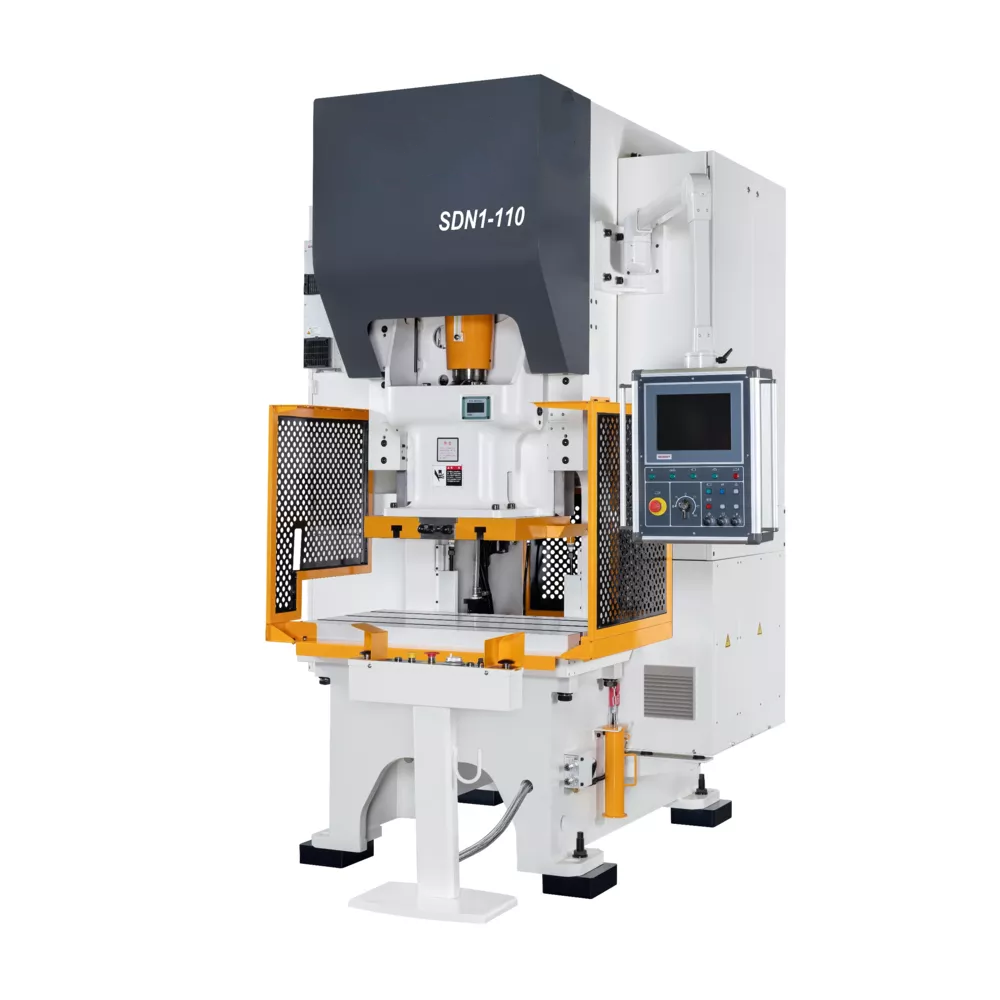
Standard Punching Machine Overview: The Versatile Industry Workhorse
Standard punching machines are typically categorized into mechanical and hydraulic types. These machines generally operate within a speed range of 30 to 150 strokes per minute. Their primary advantage lies in their robust construction and the ability to deliver high tonnage over a longer stroke. This makes them exceptionally capable of processing thicker materials that require significant force to penetrate. For a fabrication shop that handles a variety of contracts—ranging from heavy brackets to simple panels—the standard punching machine offers the flexibility needed to switch between different jobs without specialized high-speed tooling.
The mechanical design of a standard press often involves a flywheel, crankshaft, and pitman arm assembly. This setup is reliable and relatively easy to maintain. Because the stroke speed is lower, the heat generated during the punching process is manageable, which reduces the risk of thermal deformation in both the workpiece and the tool. Furthermore, standard machines are more forgiving when it comes to manual loading or semi-automated feeding systems, providing a lower barrier to entry for smaller enterprises.
In terms of output, the standard machine excels in ‘quality over quantity’ for complex geometries. It allows for more dwell time at the bottom of the stroke, which can be beneficial for certain forming operations like louvering or embossing. While it cannot compete with the sheer velocity of a high-speed unit, its ability to handle larger sheet sizes and thicker gauges means it can produce parts that a high-speed machine simply cannot touch. For many manufacturers, the standard machine is the foundational piece of equipment that ensures they can say ‘yes’ to a broad spectrum of client requests.
High-Speed Punching Machine Overview: The Precision Sprinter
High-speed punching machines are precision-engineered systems designed to maximize throughput through rapid-fire operation. Unlike standard machines, high-speed presses utilize advanced dynamic balancing systems to counteract the massive vibrations generated by operating at hundreds of strokes per minute. These machines often feature a highly rigid H-frame or gantry-style construction to ensure that the punch and die remain perfectly aligned even under the stress of continuous, high-velocity impact.
The core of a high-speed machine’s output capability is its integration with sophisticated automated feeding systems. To keep up with a machine running at 600 SPM, the material must be fed with micro-millimeter precision in fractions of a second. This requires high-end servo feeders and decoilers. The result is a production line that can produce tens of thousands of parts in a single shift with virtually no manual intervention. This level of automation is what truly drives the ‘output’ metric to heights that standard machines cannot reach.
However, high-speed punching is not just about speed; it is about consistency. These machines are built with tighter tolerances and superior cooling systems to manage the heat generated by rapid friction. The tooling used in high-speed machines is often made from premium carbide or high-speed steel (HSS) to withstand the repetitive stress. While the initial setup time for a high-speed line is longer and requires more technical expertise, the unit cost per part drops dramatically once the machine is in full production mode, making it the ultimate tool for high-volume manufacturing.
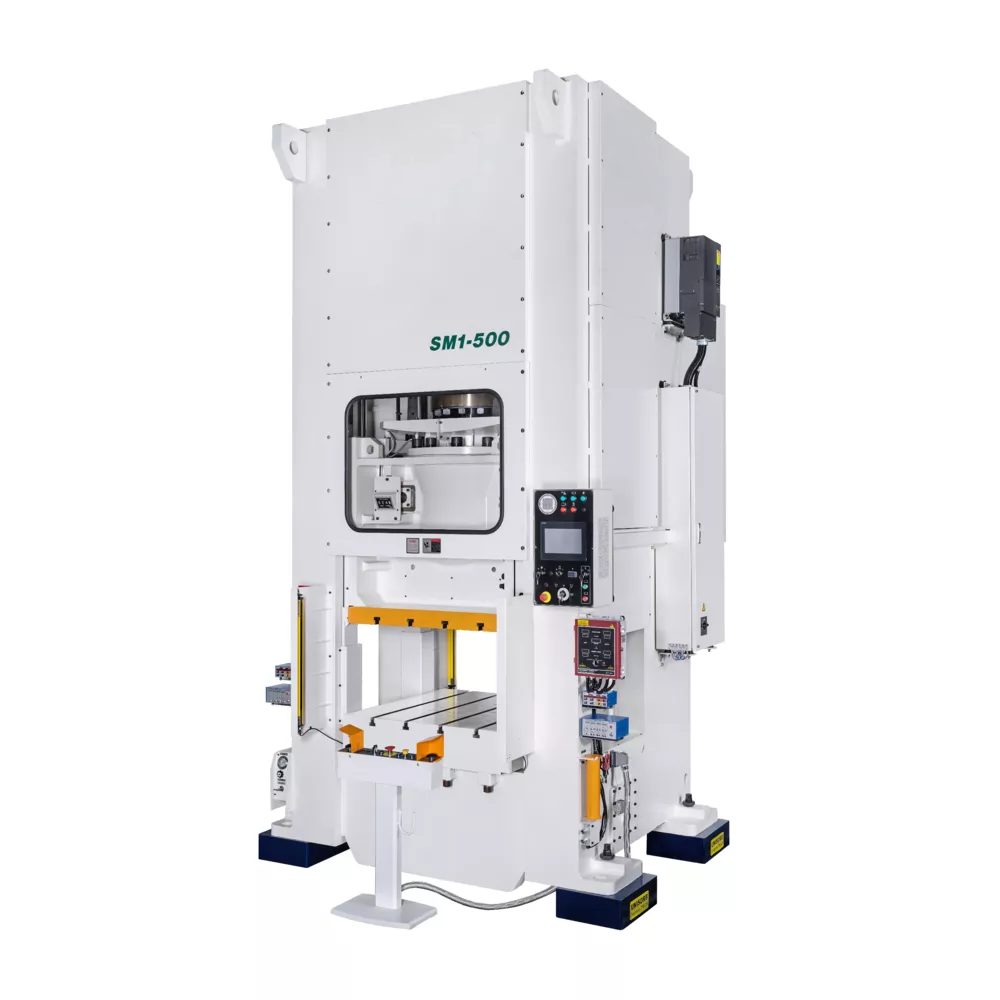
Specification Comparison Table
To better understand the technical differences, the following table compares the typical specifications of high-speed and standard punching machines used in modern metal fabrication.
| Feature | Standard Punching Machine | High-Speed Punching Machine |
|---|---|---|
| Strokes Per Minute (SPM) | 30 – 150 SPM | 200 – 1,200+ SPM |
| Material Thickness Range | 0.5mm – 20mm+ | 0.1mm – 4mm (Typical) |
| Frame Construction | C-Frame or H-Frame | High-Rigidity H-Frame / Gantry |
| Feeding System | Manual or Servo Feeder | Ultra-High-Speed Servo Feeder |
| Tooling Material | Cr12MoV / D2 Steel | Tungsten Carbide / HSS |
| Vibration Control | Standard Dampening | Active Dynamic Balancing |
| Primary Focus | Versatility & Heavy Duty | Volume & Precision |
| Cooling Requirements | Air Cooled / Minimal | Forced Oil Lubrication & Cooling |
Best-fit Applications: Choosing Based on Your Product Line
The choice between these two machines often depends on the industry you serve. High-speed punching machines are the gold standard for the electronics industry. Components such as connector pins, lead frames, and battery terminals require millions of identical units with extremely high precision. In these cases, a standard machine would be too slow to be economically viable. Similarly, in the production of motor laminations for electric vehicles, the high-speed press’s ability to handle thin silicon steel sheets at high rates is essential for meeting market demand.
Conversely, the standard punching machine is the preferred choice for structural metalwork, heavy machinery components, and custom fabrication shops. If your production involves punching 6mm thick steel plates for construction brackets, a high-speed machine would lack the necessary tonnage and stroke length. Standard machines are also better suited for ‘kit’ production, where a single sheet might require several different tool changes to produce a variety of parts for a single assembly. The flexibility of the standard CNC turret punch or single-station press is unmatched in these scenarios.
Furthermore, consider the ‘run length.’ If your typical order size is 500 pieces, the time spent setting up a high-speed machine (which might take several hours to dial in the feeder and die protection sensors) would outweigh the time saved during the actual run. For short runs, the standard machine’s quick setup and ease of operation lead to a faster ‘door-to-door’ time. However, for an order of 500,000 pieces, the high-speed machine will finish the job in a fraction of the time, even with a longer setup period.
Cost and Maintenance Comparison: The Long-Term Investment
From a financial perspective, the initial investment for a high-speed punching machine is significantly higher than that of a standard machine. This is due to the precision components, advanced control systems, and the robust frame required to handle high-frequency vibrations. Additionally, the peripheral equipment—such as high-speed decoilers, straighteners, and scrap cutters—adds to the total system cost. A standard machine is much more budget-friendly for startups or shops looking to expand their general capabilities.
Maintenance requirements also differ vastly. Standard machines require routine lubrication of the ram and gears, and periodic inspection of the clutch and brake systems. They are relatively simple to service, and many repairs can be handled by in-house maintenance teams. High-speed machines, however, require a more rigorous maintenance schedule. Because they operate at such high velocities, even a minor lubrication failure can lead to catastrophic damage within seconds. They often feature integrated sensors that monitor temperature, vibration, and oil pressure in real-time to prevent such issues.
Tooling costs are another major factor. High-speed tooling must be manufactured to much tighter tolerances and often uses more expensive materials to resist wear and heat. While the cost per hit is lower due to the long life of carbide tools, the upfront cost of the die set can be five to ten times higher than a standard steel die. Therefore, the high-speed machine requires a high-volume commitment to justify the tooling and maintenance overhead. Standard machines allow for cheaper, ‘soft’ tooling, which is better for prototyping and low-volume production.
Recommendation: Which Machine Improves Your Output?
To determine which machine will improve your output more, you must analyze your current and future production goals. If your business model relies on high-volume contracts with long-term stability, the High-Speed Punching Machine is the superior choice. It will drastically reduce your labor costs per part, improve lead times for large orders, and provide a level of precision that can open doors to high-tech industries like aerospace and telecommunications.
However, if you are a job shop that prides itself on versatility, or if you work primarily with thicker materials and smaller batch sizes, the Standard Punching Machine is the better investment. It provides the flexibility to handle a wide range of projects, requires a lower initial capital outlay, and is easier to maintain. In many cases, the ‘output’ of a standard machine is higher in terms of the variety of revenue streams it can support.
At HARSLE, we recommend a balanced approach. Many of our most successful clients utilize a mix of both. They use standard machines for their custom, low-volume work and high-speed lines for their ‘bread and butter’ high-volume products. By diversifying your floor with both technologies, you ensure that your facility is equipped to handle any challenge the market throws your way. Always consider the total cost of ownership, including energy consumption, tooling, and labor, rather than just the initial price tag.
Frequently Asked Questions (FAQ)
1. Can a high-speed punching machine handle thick materials?
Generally, no. High-speed machines are optimized for thin to medium-gauge materials (usually under 4mm). The high velocity of the stroke creates immense shock when hitting thick materials, which can damage the high-speed mechanism and the tooling. For materials thicker than 6mm, a standard mechanical or hydraulic press is much more suitable.
2. Is the energy consumption significantly higher for high-speed machines?
While high-speed machines have more powerful motors, they are often more energy-efficient on a ‘per-part’ basis. Because they produce parts so quickly, the total energy consumed to produce 10,000 parts is often lower than it would be on a standard machine running for a much longer duration. However, the peak power demand is higher, which may require electrical upgrades to your facility.
3. How do I know if my production volume justifies a high-speed machine?
A good rule of thumb is to look at your annual volume per part. If you are producing more than 100,000 units of a single component annually, a high-speed machine will likely offer a significant ROI. If your volumes are in the thousands or tens of thousands, the flexibility and lower setup costs of a standard machine are usually more beneficial.
4. Does high-speed punching affect tool life?
High-speed punching can actually extend tool life if the correct materials (like carbide) and lubrication systems are used. The consistent, rapid stroke reduces the time the tool is in contact with the material, which can minimize certain types of wear. However, if the machine is not properly balanced or if the cooling fails, tool life will decrease rapidly due to heat buildup.
5. Can I upgrade a standard machine to be high-speed?
It is generally not possible to ‘upgrade’ a standard machine to high-speed levels. High-speed machines are built from the ground up with different frame rigidities, balancing systems, and bearing types. Increasing the SPM of a standard machine beyond its rated capacity will lead to excessive vibration, poor part quality, and mechanical failure.


