How to Choose Between a 100 Ton and 200 Ton Hydraulic Press for Metal Forming

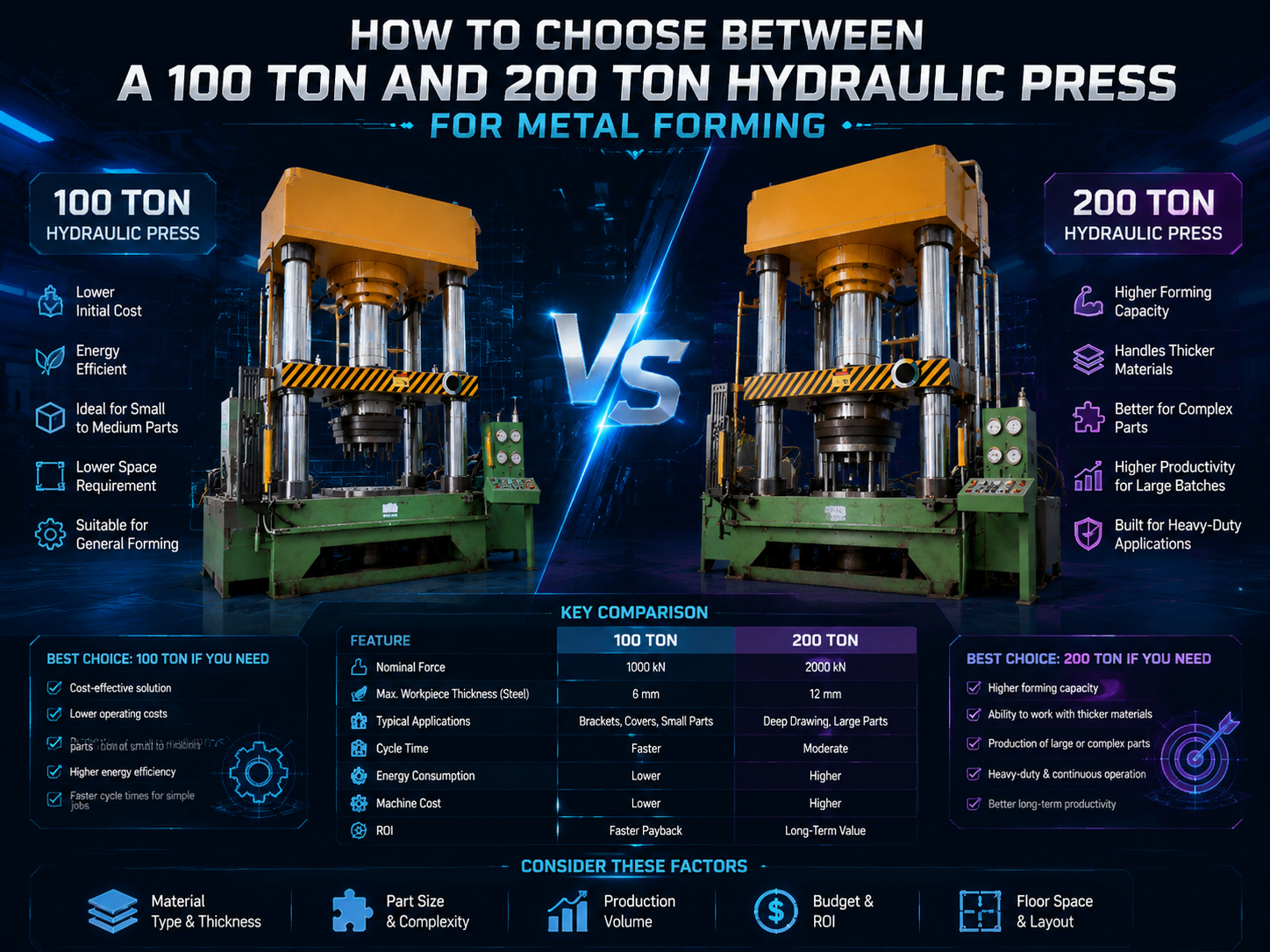
Comparison Summary: Navigating the Tonnage Dilemma
In the world of metal fabrication, selecting the right equipment is the difference between a profitable production line and a bottlenecked workshop. When it comes to hydraulic presses, the decision to Choose Between A 100 Ton 200 Ton Hydraulic Press Metal Forming is one of the most common challenges faced by facility managers and business owners. Both machines offer significant versatility, yet they cater to distinct operational scales and material requirements. A 100-ton press is often seen as the workhorse for precision components and lighter gauge materials, while the 200-ton variant provides the brute force necessary for deep drawing and heavy-duty structural forming.
The choice isn’t merely about the maximum force the machine can exert; it involves a comprehensive analysis of stroke length, bolster size, approach speeds, and long-term scalability. A machine that is underpowered for your application will lead to premature tool wear and inconsistent part quality. Conversely, an oversized machine may lead to unnecessary energy consumption and a larger-than-needed footprint. This guide aims to break down every technical and operational nuance to help you make an informed investment in HARSLE’s industry-leading hydraulic solutions.
Before diving into the specifics, it is essential to understand that ‘tonnage’ refers to the maximum pressure the hydraulic cylinder can apply to the workpiece. In metal forming, this pressure must overcome the material’s yield strength to achieve permanent deformation. Whether you are blanking, piercing, or bending, the 100-ton and 200-ton models represent two different tiers of capability that define what your shop can realistically produce.
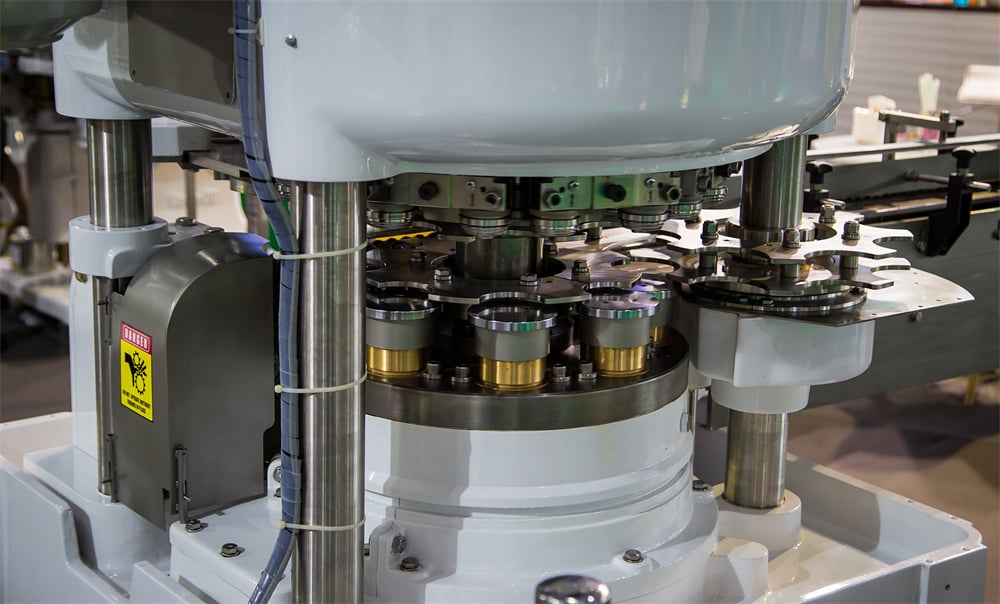
Machine A Overview: The 100-Ton Hydraulic Press
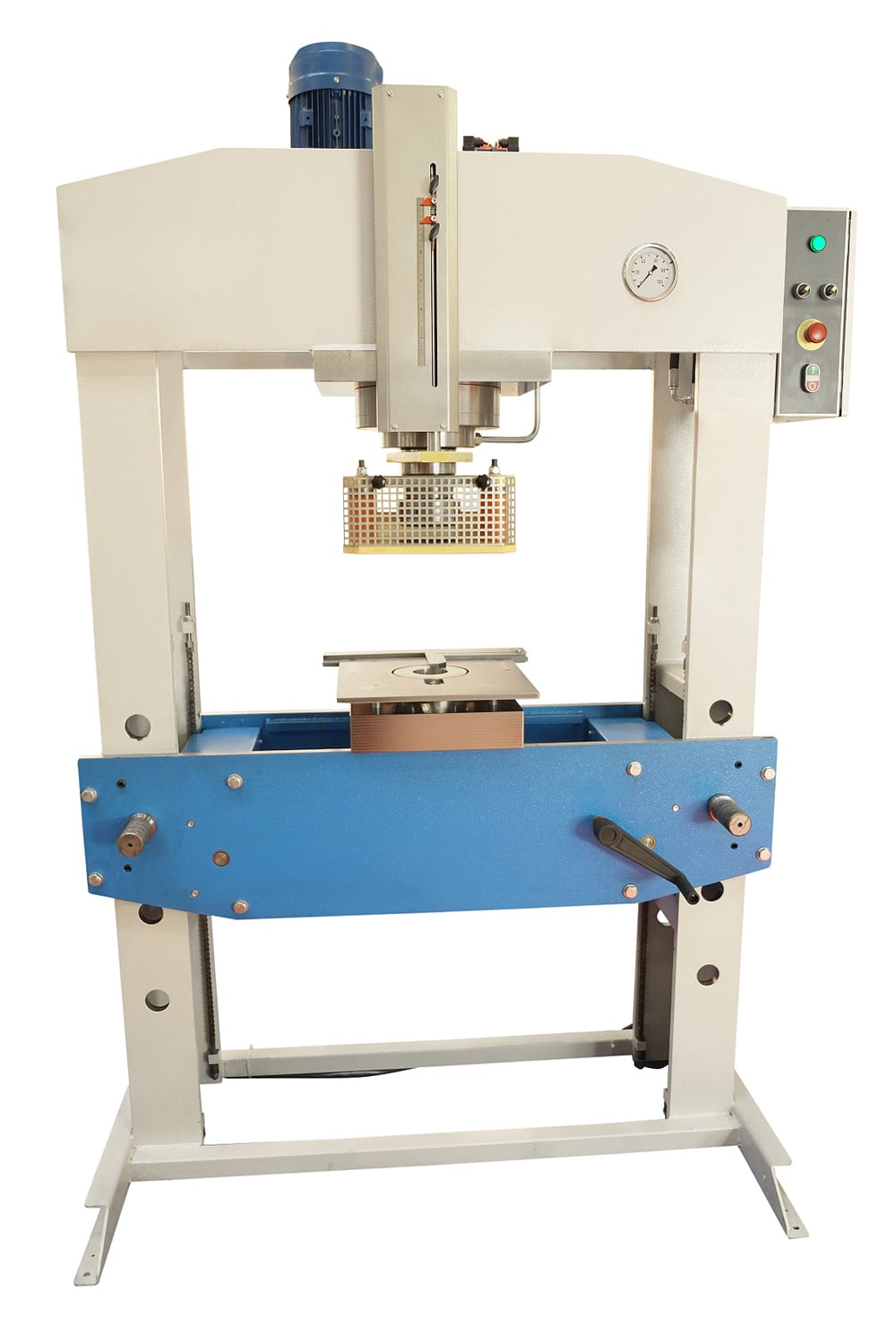
The 100-ton hydraulic press is widely regarded as the ‘sweet spot’ for many small to medium-sized fabrication shops. It offers a perfect balance of power and agility. Typically available in H-frame or C-frame configurations, the 100-ton model from HARSLE is engineered for high-precision tasks. These machines are frequently used for operations where the material thickness does not exceed 4mm to 6mm for mild steel, depending on the surface area of the bend or the complexity of the die.
One of the primary advantages of the 100-ton press is its speed. Because the hydraulic cylinders are smaller than those in a 200-ton unit, the cycle times are often faster. This makes the 100-ton press ideal for high-volume production of smaller components, such as brackets, electronic enclosures, and automotive trim. The smaller frame also means a more compact footprint, which is a critical consideration for shops with limited floor space. Furthermore, the 100-ton press usually requires less electrical power, leading to lower operational costs over time.
HARSLE’s 100-ton models often feature advanced PLC controls that allow for fine-tuning of the stroke and pressure. This level of control is vital for delicate forming processes where over-pressing could damage the material or the tooling. The rigidity of the 100-ton H-frame ensures minimal deflection, which is essential for maintaining tight tolerances in precision metal forming. For businesses focusing on intricate parts and rapid prototyping, the 100-ton press is often the most cost-effective and efficient choice.
Machine B Overview: The 200-Ton Hydraulic Press
When the limits of the 100-ton machine are reached, the 200-ton hydraulic press steps in to handle the heavy lifting. This machine is designed for high-strength alloys, thicker plates, and complex deep-drawing applications. A 200-ton press provides the necessary force to form materials that would otherwise cause a 100-ton machine to stall or bypass. It is the go-to solution for industrial-grade components, such as heavy automotive chassis parts, large appliance panels, and agricultural equipment components.
The 200-ton press is built with a significantly more robust frame to handle the increased stresses. This structural integrity is crucial because as tonnage increases, the risk of frame ‘spring’ or deflection also increases. HARSLE utilizes high-grade steel and advanced welding techniques to ensure that their 200-ton presses remain perfectly aligned even under maximum load. This stability is particularly important for deep drawing, where the material must be pulled into a die cavity without wrinkling or tearing.
Beyond just force, the 200-ton press often comes with larger bolster plates and increased daylight (the distance between the bed and the ram). This allows for the use of larger, more complex multi-stage dies. While the cycle speed might be slightly slower than a 100-ton unit due to the larger volume of hydraulic oil being moved, the 200-ton press compensates by being able to perform multiple operations in a single stroke or by forming much larger parts that would be impossible on a smaller machine. It is an investment in capability and future-proofing for shops looking to expand into heavier industrial sectors.
Specification Comparison Table
To help you Choose Between A 100 Ton 200 Ton Hydraulic Press Metal Forming, the following table outlines the typical technical differences between these two classes of machinery. Note that these are generalized specifications based on HARSLE’s standard H-frame series.
| Feature | 100-Ton Hydraulic Press | 200-Ton Hydraulic Press |
|---|---|---|
| Max Pressure | 1000 kN | 2000 kN |
| Standard Stroke | 200 mm – 400 mm | 400 mm – 800 mm |
| Bolster Size (Typical) | 800 x 600 mm | 1200 x 1000 mm |
| Approach Speed | 100 – 150 mm/s | 80 – 120 mm/s |
| Motor Power | 7.5 kW – 11 kW | 15 kW – 22 kW |
| Oil Tank Capacity | 200 – 300 Liters | 500 – 800 Liters |
| Machine Weight | ~3,500 kg | ~7,500 kg |
| Best For | Thin gauge, precision parts | Heavy plate, deep drawing |
Best-fit Applications for Each Tonnage
100-Ton Press Applications
The 100-ton press is the champion of the electronics and appliance industries. It is perfectly suited for stamping out small connectors, forming heat sinks, and creating the intricate housings for consumer electronics. In the automotive sector, it is used for interior trim clips, small brackets, and fuel system components. Because of its precision, it is also frequently used in the medical device industry for forming surgical instrument components where accuracy is measured in microns.
Another significant application for the 100-ton press is in the jewelry and decorative metalwork industry. The controlled pressure allows for high-quality embossing and coining without damaging the fine details of the dies. Additionally, many educational institutions and R&D labs prefer the 100-ton model because it is versatile enough to handle a wide range of experimental materials while being safe and manageable for operators who are still in training.
200-Ton Press Applications
The 200-ton press thrives in environments where the material resistance is high. This includes the aerospace industry, where titanium and high-strength aluminum alloys are common. These materials require significant force to form without cracking. In the construction industry, 200-ton presses are used to create heavy-duty connectors, structural plates, and reinforced brackets. The ability to handle thicker mild steel (8mm and above) makes it indispensable for manufacturing heavy machinery parts.
Deep drawing is perhaps the most critical application for the 200-ton range. Creating deep basins, stainless steel sinks, or pressurized canisters requires a steady, high-pressure stroke that can maintain force throughout the entire draw. The 200-ton press provides the ‘cushion’ pressure necessary to prevent the material from thinning too much or tearing at the corners. It is also the preferred choice for cold forging operations where the metal is shaped at room temperature, requiring immense force to flow the material into the die cavity.
Cost and Maintenance Comparison
When you Choose Between A 100 Ton 200 Ton Hydraulic Press Metal Forming, the initial purchase price is only one part of the financial equation. A 200-ton press typically costs 40% to 60% more than a 100-ton press. This price difference accounts for the larger hydraulic pumps, more robust frame steel, larger cylinders, and more complex cooling systems. However, the Return on Investment (ROI) can be higher for the 200-ton machine if it allows you to take on larger contracts that a 100-ton machine simply cannot handle.
Maintenance requirements also scale with tonnage. The 200-ton press uses significantly more hydraulic oil, which means oil changes and filtration systems are more expensive. The seals in a 200-ton cylinder are subjected to higher pressures, requiring more frequent inspections to prevent leaks. Furthermore, the electrical consumption of a 200-ton press is higher due to the larger motors required to drive the high-volume pumps. Shops must ensure their electrical infrastructure can handle the higher amperage draw of a 200-ton unit.
On the other hand, the 100-ton press is generally easier and cheaper to maintain. Its components are lighter and more accessible. However, a common mistake is overworking a 100-ton press by consistently running it at its maximum capacity. This leads to heat buildup and accelerated wear on the hydraulic valves. Regardless of the tonnage, HARSLE recommends a strict preventative maintenance schedule, including daily oil level checks, weekly lubrication of guides, and annual hydraulic fluid analysis to ensure longevity.
Recommendation: How to Make the Final Choice
To make the final decision, you must perform a ‘Tonnage Calculation’ for your most demanding part. The formula generally involves the perimeter of the cut or bend, the thickness of the material, and its shear or tensile strength. Always add a 20% safety margin to your calculation. If your most demanding part requires 85 tons of force, a 100-ton press is sufficient. However, if it requires 95 tons, you should move up to the 200-ton model to avoid running the machine at its absolute limit, which extends the life of the hydraulic system.
Consider your future growth. If you currently work with 3mm steel but plan to bid on projects involving 6mm or 8mm steel, the 200-ton press is the logical choice. It is much cheaper to buy more capacity now than to replace a machine in two years. Also, evaluate your tooling. Larger dies require larger bolster plates and more daylight, which are standard on 200-ton machines. If your parts are physically large but thin, you might still need the 200-ton press just for the bed size, even if the tonnage requirement is low.
Finally, consult with HARSLE’s technical team. By providing us with your part drawings and material specifications, we can run simulations to determine the exact force required. We can also customize the stroke and speed of either machine to match your specific production cycle. Choosing the right tonnage is about balancing today’s needs with tomorrow’s ambitions.
Frequently Asked Questions (FAQ)
1. Can I use a 200-ton press for jobs that only need 10 tons?
Yes, you can. Modern hydraulic presses from HARSLE allow you to adjust the pressure settings. However, using a large machine for very small tasks is less energy-efficient and may have slower cycle times than a dedicated smaller press. It also occupies more floor space than necessary for small tasks.
2. What happens if I try to form a part that exceeds the machine’s tonnage?
The hydraulic system is equipped with relief valves that will bypass the oil back to the tank once the maximum pressure is reached. The machine will simply stop moving. While this protects the machine from breaking, repeatedly hitting the relief limit causes the oil to overheat rapidly, which can damage seals and degrade the hydraulic fluid.
3. Is the frame type (C-frame vs. H-frame) more important than the tonnage?
Both are important. A C-frame offers better access for the operator but is prone to more deflection (opening up) at high tonnages. An H-frame is much more rigid and is generally preferred for tonnages of 200 and above to ensure the dies stay perfectly aligned during the stroke.
4. How does material type affect the choice between 100 and 200 tons?
Material type is critical. Stainless steel, for example, has a much higher yield strength than mild steel or aluminum. A part that requires 100 tons in mild steel might require 150 tons or more in stainless steel. Always calculate based on the strongest material you plan to use.
5. Does a 200-ton press require a special foundation?
Generally, yes. While a 100-ton press can often sit on a standard reinforced shop floor, a 200-ton press exerts significant vibration and concentrated weight. HARSLE provides foundation drawings for all machines to ensure they are properly anchored and leveled for long-term accuracy.