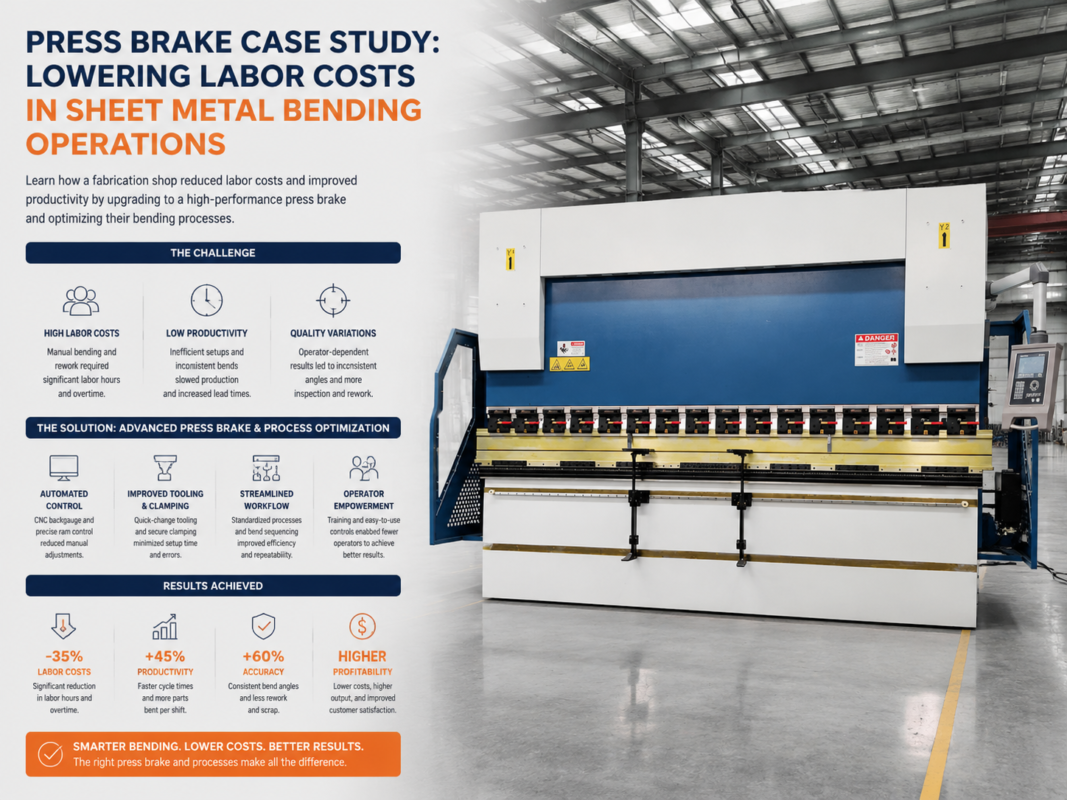
Best Hydraulic Press Types for Sheet Metal Bending and Deep Drawing: A Comprehensive Industrial Guide


Introduction to Hydraulic Press Selection for Metal Forming
In the realm of modern metal fabrication, the efficiency and precision of your production line are heavily dictated by the machinery you employ. When it comes to complex operations like sheet metal bending and deep drawing, the hydraulic press remains the undisputed workhorse of the industry. However, not all hydraulic presses are created equal. Choosing the best hydraulic press types for sheet metal bending and deep drawing requires a deep understanding of structural rigidity, force distribution, and stroke control.
HARSLE has been at the forefront of providing high-performance hydraulic solutions that cater to diverse industrial needs. Whether you are manufacturing automotive components, kitchenware, or aerospace parts, the choice between a C-frame, H-frame, or a four-column press can mean the difference between a high-quality finished product and a pile of scrap material. This guide aims to dissect the technical nuances of these machines to help you make an informed investment decision.
The fundamental principle of a hydraulic press involves Pascal’s Law, where pressure applied to a confined fluid is transmitted undiminished in every direction. In metal forming, this translates to a consistent, controllable force that can be adjusted with extreme precision. For bending, the focus is often on stroke repeatability and angle accuracy. For deep drawing, the focus shifts toward the management of material flow and the prevention of wrinkles or tears through the use of hydraulic cushions.
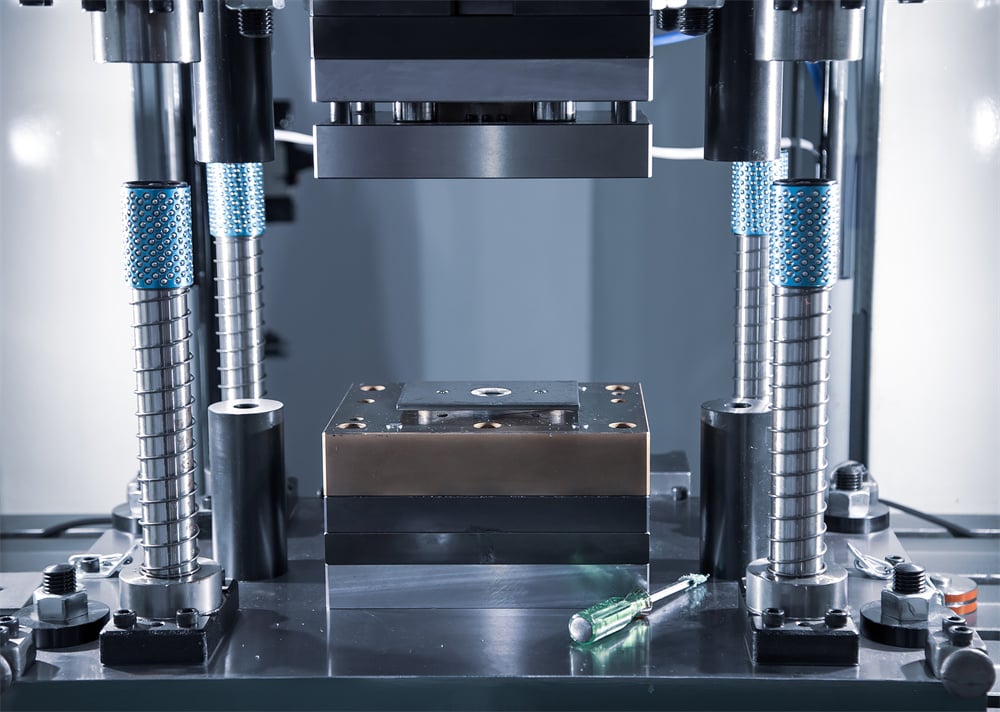
Comparison Summary: Understanding the Core Differences
Before diving into specific machine overviews, it is essential to understand the primary categories of hydraulic presses used in sheet metal work. The three most common types are the C-frame (or Gap Frame), the H-frame (or Straight-side), and the Four-Column press. Each offers unique advantages depending on the geometry of the workpiece and the required tonnage.
C-frame presses are characterized by their open-front design, providing excellent accessibility for operators and automated feeding systems. They are typically used for lower tonnage applications and simple bending or punching tasks. However, their ‘C’ shape can lead to slight frame deflection under maximum load, which may affect precision in high-tolerance deep drawing.
H-frame and Four-column presses, on the other hand, are designed for maximum rigidity. The H-frame uses a solid steel structure that encloses the work area, virtually eliminating frame yaw. Four-column presses use four precision-ground pillars to guide the moving slide (ram), ensuring perfect parallelism between the upper and lower bolsters. This parallelism is critical for deep drawing, where uneven pressure can cause lopsided wall thickness or part failure.
Machine A Overview: The C-Frame Hydraulic Press
The C-frame hydraulic press is the go-to solution for manufacturers who prioritize floor space and accessibility. Its compact footprint makes it ideal for smaller workshops or integrated production cells. In sheet metal bending, the C-frame allows for the processing of long strips of metal that can extend beyond the sides of the machine, a feature not easily replicated in enclosed frame designs.
HARSLE’s C-frame series is engineered with reinforced steel plates to minimize the ‘spring-back’ effect common in lesser-quality gap frames. These machines are often equipped with high-speed valves that allow for rapid approach and retraction, significantly increasing the strokes per minute (SPM) for high-volume bending operations. The open throat design also simplifies die changes, making it a versatile tool for shops that handle multiple small-batch projects daily.
However, when considering the best hydraulic press types for sheet metal bending and deep drawing, the C-frame has its limitations. Because the force is applied from a single cantilevered point, very high tonnage C-frames can experience ‘gaping,’ where the frame opens slightly under pressure. This makes them less suitable for deep drawing parts that require perfectly centered force and high-pressure blank holders. They are best reserved for shallow drawing, punching, and precision bending of smaller components.
Machine B Overview: The Four-Column and H-Frame Presses
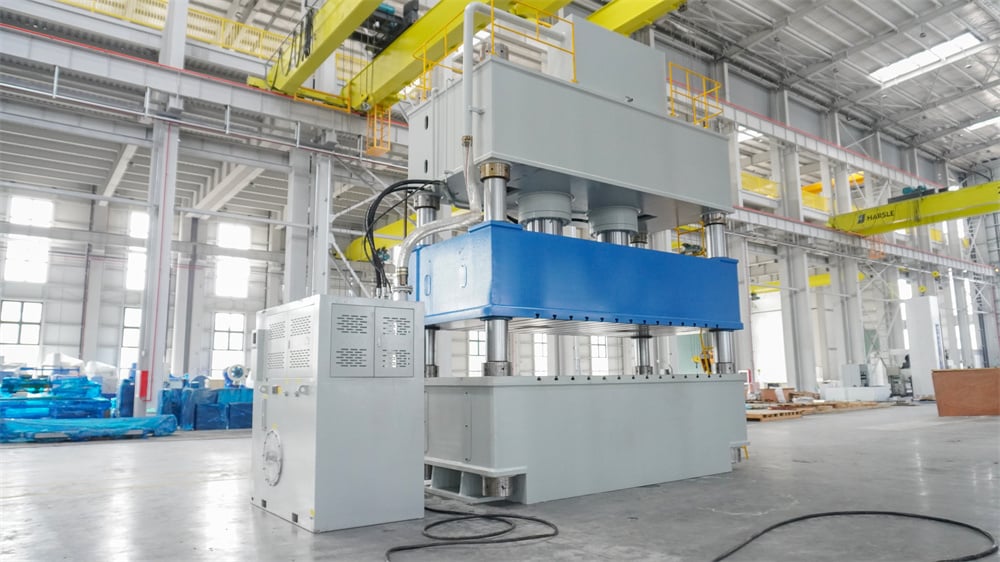
For serious deep drawing applications, the Four-Column hydraulic press is widely considered the industry standard. The design features a top crown, a bottom bed, and four vertical columns that act as the guiding mechanism for the ram. This symmetrical distribution of force ensures that the pressure is applied evenly across the entire surface of the die. This is paramount when drawing cylindrical or rectangular shapes where the material must flow into the die cavity at a uniform rate.
HARSLE’s Four-Column presses often include a critical component: the hydraulic cushion. Located beneath the lower bolster, the cushion provides a controlled resistance (blank holder force) against the sheet metal as it is drawn into the die. This prevents the metal from wrinkling. The ability to independently program the ram pressure and the cushion pressure is what makes this machine the best hydraulic press type for deep drawing complex geometries like stainless steel sinks or automotive oil pans.
The H-frame (Straight-side) press offers similar benefits in terms of rigidity but is often preferred for heavy-duty stamping and multi-stage progressive die work. The solid side housings provide a massive amount of support, allowing for extremely high tonnage (up to 5000 tons or more) without any structural deformation. While the accessibility is lower than a C-frame, the H-frame’s ability to handle eccentric (off-center) loading makes it a powerhouse for large-scale industrial manufacturing.
Specification Comparison Table
To help visualize the differences, the following table compares the typical specifications of these three press types in the context of sheet metal fabrication.
| Feature | C-Frame Press | H-Frame Press | Four-Column Press |
|---|---|---|---|
| Typical Tonnage | 10 – 250 Tons | 100 – 5000+ Tons | 50 – 3000 Tons |
| Frame Rigidity | Moderate (Potential for Gaping) | Very High | High |
| Accessibility | Excellent (3 sides open) | Limited (Front/Back) | Good (4 sides open) |
| Best Application | Bending, Punching, Assembly | Heavy Stamping, Large Bending | Deep Drawing, Forming |
| Precision | High (for small parts) | Extreme | Very High (Parallelism) |
| Cost | Lower | Higher | Moderate to High |
Best-fit Applications for Each Press Type
Choosing the best hydraulic press types for sheet metal bending and deep drawing depends heavily on your specific end-product. For instance, in the electronics industry, where small brackets and chassis components are common, the C-frame press is the most efficient choice. Its speed and ease of manual loading allow for quick turnaround on thousands of small parts.
In the automotive sector, the requirements change drastically. Body panels, structural reinforcements, and fuel tanks require deep drawing. Here, the Four-Column press shines. The four-post design allows for large die sets to be installed easily, and the hydraulic cushion ensures that the thin-gauge high-strength steel (AHSS) used in modern cars does not fracture during the forming process. The precision of the ram movement ensures that the wall thickness of the drawn part remains within tight tolerances.
For the production of heavy industrial equipment, such as large enclosures or thick-plate bending, the H-frame press is the preferred option. These machines can handle the massive resistance offered by thick carbon steel. The H-frame’s ability to resist vibration and shock also makes it suitable for applications involving heavy punching or blanking combined with bending, where the ‘breakthrough’ shock could damage less robust frames.
Cost and Maintenance Comparison
Investing in a hydraulic press is a long-term commitment, and understanding the total cost of ownership is vital. C-frame presses generally have the lowest initial purchase price and lower maintenance costs due to their simpler construction. Maintenance usually involves checking hydraulic seals, monitoring oil temperature, and ensuring the ram remains lubricated. Because they are used for lighter tasks, the wear and tear on the hydraulic pump and valves is typically less intensive.
Four-column and H-frame presses represent a larger capital investment. However, their ROI is found in their ability to produce complex, high-value parts with minimal reject rates. Maintenance for these machines is more rigorous. The four columns must be checked for alignment and wear regularly, as any deviation can lead to uneven die wear. The hydraulic cushion system also adds a layer of complexity to the hydraulic circuit, requiring regular inspections of the proportional valves and pressure sensors.
Energy efficiency is another factor. Modern HARSLE presses utilize servo-hydraulic systems. Unlike traditional motors that run constantly, servo-driven pumps only operate when the ram is in motion. This can reduce energy consumption by up to 50%, which, over the 15-20 year lifespan of a press, can result in savings that far outweigh the initial price difference between models.
Recommendation: How to Choose the Right Press
When selecting the best hydraulic press types for sheet metal bending and deep drawing, follow this checklist:
- Analyze the Draw Depth: If your part depth exceeds 50mm, prioritize a Four-Column press with a hydraulic cushion.
- Evaluate Material Thickness: For thick plates (>6mm) requiring high tonnage bending, an H-frame press provides the necessary rigidity to prevent frame deflection.
- Consider Production Volume: For high-speed, small-part bending, a C-frame press with a high-speed hydraulic package is often the most cost-effective.
- Check Die Size: Ensure the bed size and the distance between columns (or the throat depth of a C-frame) can accommodate your largest die sets.
- Safety and Automation: Look for machines that support light curtains and PLC integration for automated loading/unloading if you plan to scale production.
HARSLE recommends consulting with a technical engineer to perform a tonnage calculation. Underestimating the required force can lead to machine overload, while overestimating can lead to unnecessary energy costs and a larger-than-needed footprint.
Frequently Asked Questions (FAQ)
1. What is the difference between a hydraulic press and a press brake for bending?
While both use hydraulic power, a press brake is specifically designed for long, narrow bends using a V-die and punch. A hydraulic press is more versatile, allowing for bending, deep drawing, and punching, but it is generally limited by the bed size and is better suited for ‘forming’ rather than just ‘folding’ long sheets.
2. Why is a hydraulic cushion necessary for deep drawing?
The hydraulic cushion acts as a blank holder. It applies a specific amount of pressure to the edges of the sheet metal, allowing it to slide into the die at a controlled rate. Without this, the metal would simply be sucked into the die, resulting in wrinkles or the material tearing due to uncontrolled flow.
3. Can I use a C-frame press for deep drawing?
Yes, for shallow draws or small parts where the tonnage requirement is low and the precision of the wall thickness is not critical. However, for industrial-grade deep drawing, the potential for frame deflection in a C-frame makes it less than ideal compared to a four-column design.
4. How often should hydraulic oil be changed?
Typically, hydraulic oil should be changed every 2,000 to 4,000 hours of operation, depending on the environment and the quality of the oil. Regular oil analysis can help extend this interval by monitoring for contaminants and oxidation.
5. What safety features should I look for in a hydraulic press?
Essential safety features include dual-hand start buttons, emergency stop buttons, hydraulic overload protection, and infrared light curtains that stop the machine if an object enters the work zone during the downstroke.
6. How does PLC control improve the bending process?
PLC (Programmable Logic Controller) allows for the storage of multiple ‘recipes’ or programs. It controls the ram’s position, speed, and pressure with high precision, ensuring that every part produced is identical to the first, which is crucial for high-quality sheet metal bending.