Single-Acting vs Double-Acting Hydraulic Press: A Practical Comparison


Comparison Summary: Understanding the Core Differences
In the world of industrial metal fabrication, the hydraulic press stands as a cornerstone of production efficiency. However, when selecting a machine for a specific manufacturing process, the distinction between a single-acting and a double-acting hydraulic press is one of the most critical technical decisions an engineer or shop owner must make. At its most fundamental level, the difference lies in how the hydraulic fluid interacts with the piston to generate force and return the ram to its starting position.
A single-acting hydraulic press utilizes hydraulic pressure to move the piston in one direction—typically the downward stroke—while relying on external forces such as gravity, internal springs, or counterweights to return the ram. In contrast, a double-acting hydraulic press uses hydraulic fluid to power the piston in both directions. This dual-directional control allows for significantly more precision, faster cycle times, and the ability to perform complex operations like deep drawing where the retraction of the tool is just as important as the initial press.
Choosing between these two systems involves balancing initial capital expenditure against long-term production requirements. While single-acting presses are often praised for their simplicity and lower maintenance costs, double-acting presses are the workhorses of high-volume, high-precision industries like automotive and aerospace manufacturing. This guide provides a deep dive into the mechanics, advantages, and practical applications of both systems to help you make an informed investment for your facility.
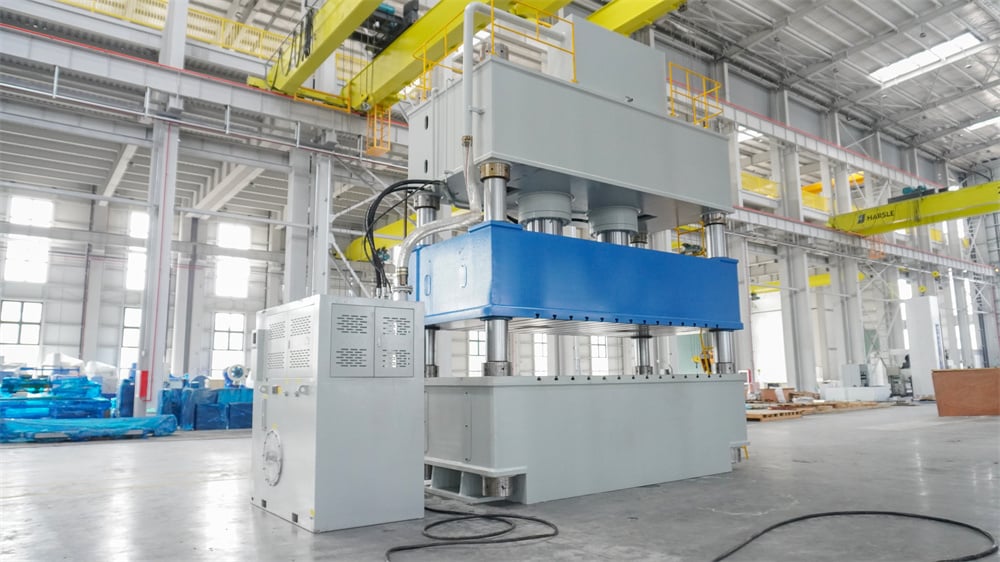
Single-Acting Hydraulic Press Overview
The Mechanics of Simplicity
The single-acting hydraulic press is designed with a focus on straightforward force application. The hydraulic cylinder in these machines features a single port where pressurized fluid enters to push the piston forward. Because the fluid only acts on one side of the piston, the machine is inherently limited to providing powered force in a single direction. Once the hydraulic pressure is released, the piston must be pushed back to its original position by a secondary mechanism.
Common return mechanisms include heavy-duty return springs located inside the cylinder or the simple use of gravity if the ram is sufficiently heavy. In some specialized industrial setups, external counterweights or auxiliary pneumatic cylinders are used to facilitate the return stroke. This design minimizes the complexity of the hydraulic circuit, requiring fewer valves, less piping, and a simpler control system compared to its double-acting counterpart.
Advantages and Limitations
The primary advantage of a single-acting press is its cost-effectiveness. With fewer moving parts and a simplified hydraulic manifold, these machines are generally less expensive to purchase and easier to maintain. For workshops performing basic tasks like punching, simple bending, or assembly (pressing bearings into housings), a single-acting press offers a high return on investment. Furthermore, the reduced number of seals and valves translates to a lower risk of hydraulic leaks over the machine’s lifespan.
However, the limitations are notable. Because the return stroke is not powered by hydraulic pressure, it is often slower and less controlled. This can lead to longer cycle times, which may not be suitable for high-speed production lines. Additionally, single-acting presses lack the “pulling” force that is sometimes required to extract a workpiece from a complex die, limiting their use in intricate forming operations.
Double-Acting Hydraulic Press Overview
Precision Through Dual-Directional Control
A double-acting hydraulic press represents a more sophisticated level of engineering. The cylinder in this system features two ports: one at the top and one at the bottom. Hydraulic fluid is pumped into the top port to drive the ram down (the power stroke) and then diverted to the bottom port to pull the ram back up (the return stroke). This ensures that the machine has full power and speed control throughout the entire cycle.
This dual-action capability is essential for applications that require the machine to perform work during both the extension and retraction of the piston. For example, in deep drawing processes, the double-acting press can control the blank holder force independently of the main punch, ensuring that the metal flows into the die without wrinkling or tearing. The ability to apply force during the return stroke also allows for the use of complex ejection systems that push the finished part out of the mold with high precision.
Enhanced Performance and Versatility
The most significant benefit of a double-acting press is its versatility. Operators can precisely control the speed, pressure, and position of the ram in both directions. This level of control is vital for modern manufacturing where tolerances are tight and material waste must be minimized. Double-acting presses also tend to have faster cycle times because the hydraulic system can rapidly retract the ram, preparing the machine for the next part much quicker than a gravity-fed system.
The trade-off for this performance is complexity. Double-acting systems require more advanced hydraulic pumps, directional control valves, and sophisticated electronic control units (PLCs). They also require more frequent maintenance of seals, as the piston is under pressure from both sides. Despite the higher initial cost, the efficiency gains in high-volume environments often justify the investment.
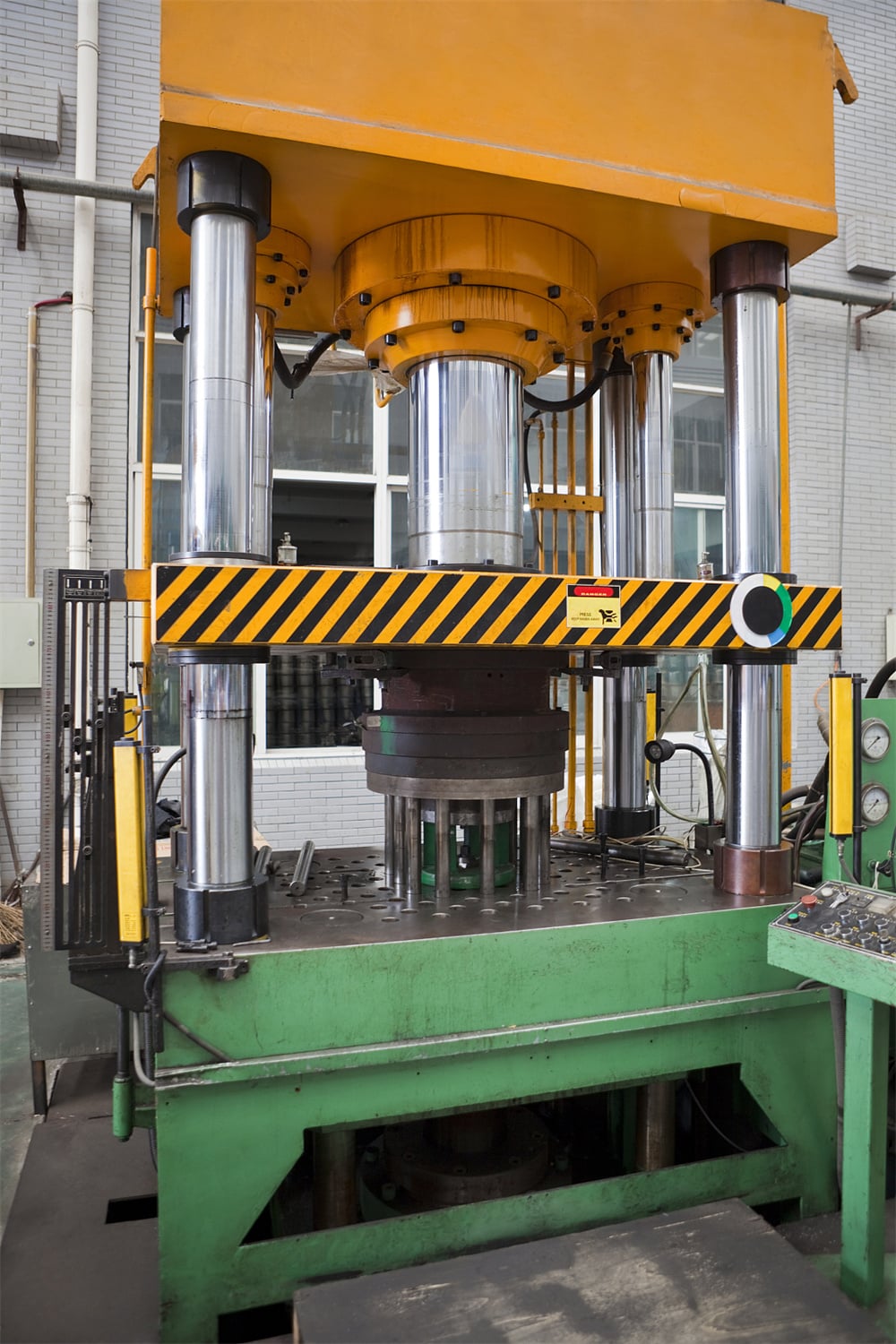
Specification Comparison Table
To better understand the technical differences, the following table compares the key specifications and performance metrics of single-acting and double-acting hydraulic presses.
| Feature | Single-Acting Press | Double-Acting Press |
|---|---|---|
| Force Direction | One direction (usually downward) | Two directions (extension and retraction) |
| Return Mechanism | Spring, Gravity, or Counterweight | Hydraulic Pressure |
| Cycle Speed | Slower (dependent on return mechanism) | Faster (hydraulically controlled) |
| Control Precision | Moderate (limited on return) | High (full control of entire stroke) |
| Hydraulic Ports | Single Port | Dual Ports |
| System Complexity | Low (Simple plumbing/valving) | High (Advanced manifolds/PLCs) |
| Initial Cost | Lower | Higher |
| Maintenance | Simple and infrequent | Requires specialized technical skill |
| Best Use Case | Punching, Bending, Assembly | Deep Drawing, Complex Forming |
Best-fit Applications: Choosing the Right Tool for the Job
When to Choose a Single-Acting Press
Single-acting presses are ideal for “set and forget” operations where the primary goal is to apply a specific amount of force to a workpiece without the need for complex retraction maneuvers. In the automotive aftermarket, they are frequently used for pressing bushings and bearings. In general fabrication, they are excellent for simple punching operations where the material is thin and the punch can easily be cleared by a spring return.
Small-scale workshops and maintenance departments often prefer single-acting presses because they are robust and can withstand environments where specialized hydraulic maintenance might not be readily available. If your production involves low-volume runs of simple parts, the single-acting press provides the necessary force without the unnecessary overhead of a complex hydraulic system.
When to Choose a Double-Acting Press
For industries involved in mass production, such as the manufacture of kitchen appliances, automotive body panels, or aerospace components, the double-acting press is indispensable. The ability to perform deep drawing—where a flat sheet of metal is transformed into a hollow vessel—requires the precise, synchronized force that only a double-acting system can provide. The secondary hydraulic action is often used to power a “blank holder” or “die cushion,” which prevents the metal from wrinkling during the draw.
Furthermore, if your manufacturing process requires the tool to be pulled out of a tight mold or if you are using heavy tooling that exceeds the capacity of a standard return spring, a double-acting press is the only viable option. The increased speed of the return stroke also makes these machines better suited for integration into automated robotic production lines where every second of cycle time counts toward the bottom line.
Cost and Maintenance Comparison
Initial Investment vs. Operational Costs
The financial profile of these two machines differs significantly. A single-acting press has a lower entry price, making it attractive for startups or smaller facilities. However, one must consider the “cost per part.” If a double-acting press can produce 20% more parts per hour due to faster cycle times, the higher initial cost may be recouped within the first year of operation. Additionally, double-acting presses are often more energy-efficient in high-speed applications because modern hydraulic systems can use regenerative circuits to save power during the return stroke.
Maintenance Requirements
Maintenance is another critical factor. Single-acting presses are simpler, but they are not maintenance-free. Return springs can fatigue and break over time, and gravity-return systems require careful lubrication of the guides to prevent sticking. Double-acting presses require a more rigorous maintenance schedule. The hydraulic fluid must be kept extremely clean to protect the complex directional valves, and the seals on both sides of the piston must be monitored for wear. A leak in a double-acting cylinder can lead to “drifting,” where the ram fails to hold its position, potentially damaging expensive dies.
Recommendation: How to Decide
Selecting the right hydraulic press depends on a clear assessment of your current and future production needs. Use the following checklist to guide your decision:
- Material and Complexity: Are you performing simple bends or complex deep drawing? Complex shapes almost always require a double-acting press.
- Production Volume: For high-volume manufacturing, the speed and automation compatibility of a double-acting press are essential. For occasional use or low-volume batches, a single-acting press is more economical.
- Tooling Weight: If your dies are exceptionally heavy, a single-acting press may struggle to return the ram efficiently. Double-acting presses handle heavy tooling with ease.
- Budget Constraints: If capital is limited and the application is simple, start with a single-acting press. HARSLE offers modular designs that allow for upgrades in some configurations.
- Precision Requirements: If you need to control the force during the retraction (for example, to prevent part deformation during ejection), choose a double-acting model.
At HARSLE, we recommend consulting with a technical expert who can analyze your specific CAD designs and production goals. Often, the “cheaper” machine becomes the more expensive one if it cannot keep up with production demands or requires frequent manual intervention.
Frequently Asked Questions (FAQ)
1. Can a single-acting press be converted to a double-acting press?
Generally, no. Converting a single-acting press to double-acting requires replacing the entire cylinder, adding a second hydraulic line, upgrading the pump, and replacing the control valves. It is almost always more cost-effective to purchase the correct machine from the start.
2. Which type of press is safer?
Both types are safe when equipped with modern safety features like light curtains, two-hand start buttons, and emergency stops. However, double-acting presses offer better control over the ram’s movement, which can prevent accidental “dropping” of the ram in the event of a minor pressure loss, provided the safety valves are functioning correctly.
3. Does a double-acting press use more electricity?
While the motor on a double-acting press may be larger to handle the increased complexity, the total energy consumption per part is often lower in high-speed environments because the machine operates more efficiently and completes cycles faster.
4. How often should I change the hydraulic oil?
For both types, oil should be checked monthly and typically changed every 2,000 to 4,000 hours of operation, depending on the environment. Double-acting presses are more sensitive to oil contamination due to their complex valving.
5. What is the most common cause of failure in these presses?
For single-acting presses, it is often spring fatigue or seal wear. For double-acting presses, the most common issues are valve blockages due to contaminated oil or seal failure on the return side of the cylinder.