
How to Optimize Press Brake Productivity in a Fabrication Workshop: A Comprehensive Technical Guide


Technical Overview of Press Brake Productivity
In the modern metal fabrication landscape, the ability to optimize press brake productivity in a fabrication workshop is often the deciding factor between a profitable operation and one that struggles with bottlenecks. A press brake is not merely a machine that bends metal; it is a complex system of hydraulics, electronics, and mechanical precision. To truly enhance throughput, one must understand the synergy between the CNC controller, the hydraulic synchronization, and the backgauge speed. HARSLE machines are engineered to minimize idle time, but the operator’s strategy plays a pivotal role in realizing the machine’s full potential.
Productivity in bending is defined by the number of accurate parts produced per hour. This involves three primary phases: setup, bending, and handling. Traditional manual machines often suffer from long setup times due to trial-and-error adjustments. Modern CNC-synchronized hydraulic press brakes eliminate this by using high-speed processors that calculate the exact depth of the punch (Y1 and Y2 axes) based on material properties. By utilizing advanced software, workshops can simulate the bending sequence offline, ensuring that when the material hits the shop floor, the machine is ready to perform without delay.
The mechanical structure of the press brake also dictates its long-term productivity. A rigid, heat-treated frame prevents deflection, which in turn ensures that the first part is as accurate as the thousandth. Furthermore, the integration of high-speed hydraulic valves allows for faster approach and return speeds. When you optimize press brake productivity in a fabrication workshop, you are essentially looking for ways to shave seconds off each cycle while maintaining a zero-defect rate. This requires a deep dive into the technical specifications and the implementation of lean manufacturing principles.
Core Parameters Influencing Productivity
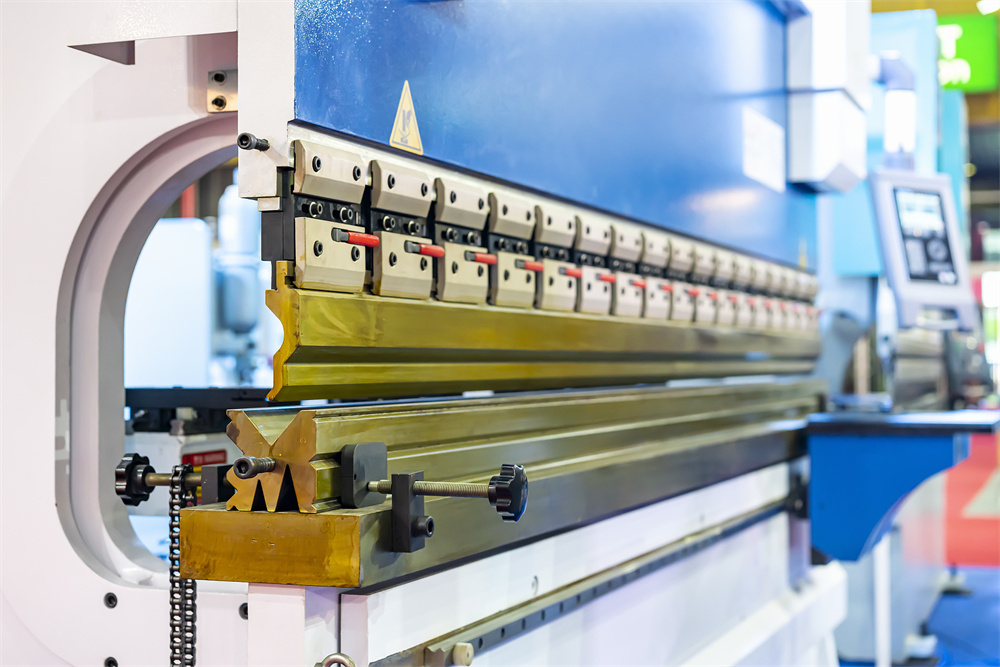
To optimize press brake productivity in a fabrication workshop, engineers must focus on several core parameters. The first is Tonnage. Selecting a machine with the correct tonnage for your thickest and hardest materials is vital. If a machine is constantly running at its maximum capacity, the hydraulic components will wear faster, leading to downtime. Conversely, using a high-tonnage machine for thin-gauge materials can be inefficient due to slower cycle speeds. HARSLE offers a range of tonnages to ensure the right fit for specific workshop needs.
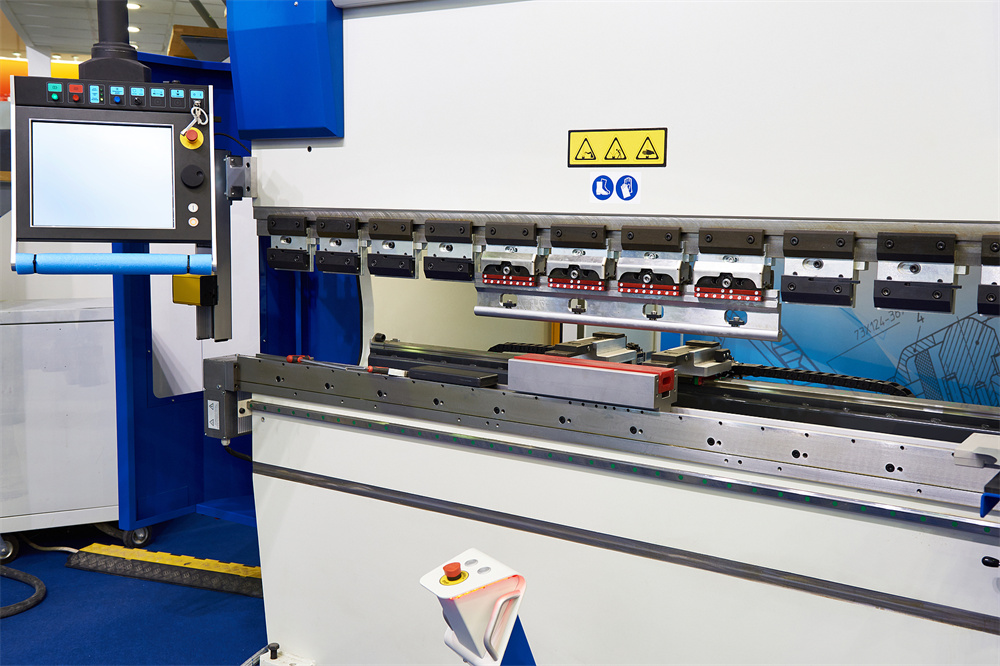
The second parameter is the Backgauge Speed and Complexity. A multi-axis backgauge (X, R, Z1, Z2) allows for the complex positioning of parts without manual intervention. If the backgauge moves slowly, the operator spends more time waiting than bending. High-speed servo motors in the backgauge system can significantly reduce the ‘air-cut’ time. Additionally, the Stroke Length and Throat Depth determine the versatility of the machine. A larger throat depth allows for deeper bends in larger sheets, reducing the need for secondary operations or specialized machinery.
Another critical factor is the Approach and Return Speed. While the actual bending speed is often limited by safety regulations and material physics (to prevent whip-up), the speed at which the ram moves to the pinch point and returns to the top of the stroke can be maximized. Modern CNC systems allow for adjustable speeds, enabling the machine to move at 100-200mm/s during non-bending phases. Finally, Crowning Systems (either hydraulic or mechanical) ensure that the bend angle remains consistent across the entire length of the workpiece, eliminating the need for time-consuming shimming of the dies.
Calculation Method for Bending Efficiency
Calculating the required force and cycle time is fundamental to optimize press brake productivity in a fabrication workshop. The standard formula for bending force (Tonnage) is: F = (k * σ * s² * L) / V. In this formula, F is the force in kilonewstons, k is a coefficient (usually 1.42 for air bending), σ is the tensile strength of the material, s is the material thickness, L is the length of the bend, and V is the V-opening of the lower die. Understanding this calculation prevents over-tonnage, which protects the tooling and the machine frame.
Beyond force, calculating the Cycle Time is essential for production planning. Total Cycle Time = Setup Time / Batch Size + (Handling Time + Approach Time + Bending Time + Return Time). To optimize this, workshops should focus on reducing the ‘Setup Time’ through the use of quick-change tooling systems and offline programming. If a batch size is small, the setup time dominates the productivity equation. For large batches, the focus shifts to the speed of the ram and the efficiency of the backgauge movement.
Furthermore, the K-Factor and Bend Allowance must be calculated accurately to ensure the flat pattern of the sheet metal is correct before it reaches the press brake. If the flat pattern is wrong, the part will be scrapped, regardless of how fast the press brake operates. Using integrated CAD/CAM software that communicates directly with the HARSLE CNC controller ensures that these calculations are automated and error-free, leading to a significant boost in workshop throughput.
Technical Parameter Table
The following table outlines the typical specifications for HARSLE CNC Press Brakes, which are designed to optimize press brake productivity in a fabrication workshop across various scales of operation.
| Model Series | Nominal Pressure (kN) | Table Length (mm) | Pole Distance (mm) | Throat Depth (mm) | Ram Stroke (mm) | Max Open Height (mm) |
|---|---|---|---|---|---|---|
| HBA-63/2500 | 630 | 2500 | 2000 | 250 | 150 | 350 |
| HBA-100/3200 | 1000 | 3200 | 2600 | 320 | 200 | 400 |
| HBA-160/4000 | 1600 | 4000 | 3200 | 400 | 200 | 450 |
| HBA-250/5000 | 2500 | 5000 | 4000 | 400 | 250 | 550 |
Common Engineering Mistakes in Press Brake Operations
One of the most frequent mistakes that hinder the goal to optimize press brake productivity in a fabrication workshop is Incorrect Tooling Selection. Using a V-opening that is too small for the material thickness increases the required tonnage exponentially and can damage both the tool and the machine. Conversely, a V-opening that is too large results in poor angle accuracy and inconsistent bends. Operators must adhere to the 8x rule (V-opening should be 8 times the material thickness) for standard mild steel bending.
Another common error is Neglecting Maintenance of the Hydraulic System. Contaminated oil or worn-out seals lead to pressure drops and inconsistent ram movement. This not only slows down the machine but also results in parts that do not meet tolerance specifications. Regularly checking the oil filters and ensuring the cooling system is functional is vital for maintaining high-speed operations. Furthermore, ignoring the calibration of the backgauge can lead to cumulative errors in multi-bend parts, resulting in high scrap rates.
Finally, many workshops fail to utilize Offline Programming. When an operator spends 30 minutes at the machine control panel trying to figure out the bend sequence, the machine is idle. This is a massive drain on productivity. By moving the programming to a dedicated office environment, the machine can continue running the previous job while the next one is being prepared. This separation of preparation and execution is a hallmark of a highly optimized fabrication workshop.
Selection Checklist for High-Productivity Press Brakes
When looking to invest in new equipment to optimize press brake productivity in a fabrication workshop, use the following checklist to ensure the machine meets your technical requirements:
- CNC Controller Capabilities: Does the controller support 2D/3D visualization and offline file importing (DXF/STEP)?
- Number of Axes: Does the backgauge have enough axes (X, R, Z1, Z2) to handle your most complex parts without manual repositioning?
- Crowning System: Is there an automatic crowning system to compensate for bed deflection during long bends?
- Safety Systems: Are laser safety guards (like DSP or FIESSLER) integrated to allow high-speed operation without compromising operator safety?
- Tooling Compatibility: Does the machine use standard European or New Standard tooling for easy replacement and versatility?
- Hydraulic Speed: What are the approach, bending, and return speeds? Are they adjustable via the CNC?
- Frame Rigidity: Is the frame a solid, welded structure that has been stress-relieved to ensure long-term accuracy?
- Energy Efficiency: Does the machine feature a servo-main motor system to reduce energy consumption and oil heating during idle times?
Frequently Asked Questions (FAQ)
How does CNC synchronization improve productivity?
CNC synchronization ensures that the two hydraulic cylinders (Y1 and Y2) are always perfectly aligned, even with off-center loading. This allows for higher precision and faster ram movement, as the system can make real-time micro-adjustments to maintain the correct angle, reducing the need for re-work.
What is the impact of backgauge speed on the overall cycle?
The backgauge often moves more than the ram during a multi-bend sequence. If the backgauge is slow, it becomes the primary bottleneck. High-speed servo-driven backgauges can move at speeds up to 500mm/s, significantly reducing the time between bends and increasing the parts-per-hour output.
Can I optimize productivity on an older press brake?
Yes, productivity can be improved through retrofitting. Adding a modern CNC controller, upgrading to a faster backgauge, or implementing quick-change tooling systems can breathe new life into an older machine. However, for maximum efficiency, the integrated systems of a new HARSLE CNC press brake are usually more cost-effective in the long run.
Why is material consistency important for productivity?
Variations in material thickness or tensile strength can cause angle deviations. To optimize press brake productivity in a fabrication workshop, it is helpful to use high-quality materials and machines equipped with angle-sensing systems that can automatically adjust the punch depth to compensate for material springback and thickness variations.
How often should I perform maintenance to ensure peak productivity?
Daily checks should include cleaning the tools and checking oil levels. Monthly maintenance should involve inspecting the backgauge alignment and lubricating the guideways. A full hydraulic system service, including oil filtration or replacement, should be performed annually to prevent unexpected downtime and maintain high-speed performance.












