
How Press Brakes Increase Productivity In Job Shop Metalworking


Introduction: The Role of Press Brakes in Modern Job Shops
In the competitive landscape of metal fabrication, job shops face a unique set of challenges. Unlike high-volume production facilities that run the same part for weeks, job shops thrive on variety, handling high-mix, low-volume orders that require frequent changeovers and diverse technical specifications. In this environment, the ability to pivot quickly and maintain high precision is the difference between profitability and loss. This is where the strategic implementation of modern press brakes becomes a game-changer. When we discuss how Press Brakes Increase Productivity In Job Shop Metalworking, we are looking at a synergy of hardware speed, software intelligence, and ergonomic design.
A press brake is no longer just a machine that bends metal; it is a sophisticated CNC-controlled hub that dictates the flow of the entire fabrication floor. For a job shop, productivity isn’t just about how many bends can be performed per minute; it’s about how quickly a technician can go from a raw CAD drawing to a finished, accurate part. Modern hydraulic and electric press brakes have evolved to minimize the “non-value-added” time—the time spent on setup, trial bends, and manual adjustments—which often accounts for more than 70% of the total processing time in traditional shops.
HARSLE has consistently focused on developing machinery that addresses these specific bottlenecks. By integrating advanced CNC controllers, precision backgauges, and automated crowning systems, modern press brakes allow job shops to take on more complex projects with tighter tolerances, all while reducing the reliance on highly specialized manual labor. In the following sections, we will explore the technical and operational ways these machines transform shop floor efficiency.
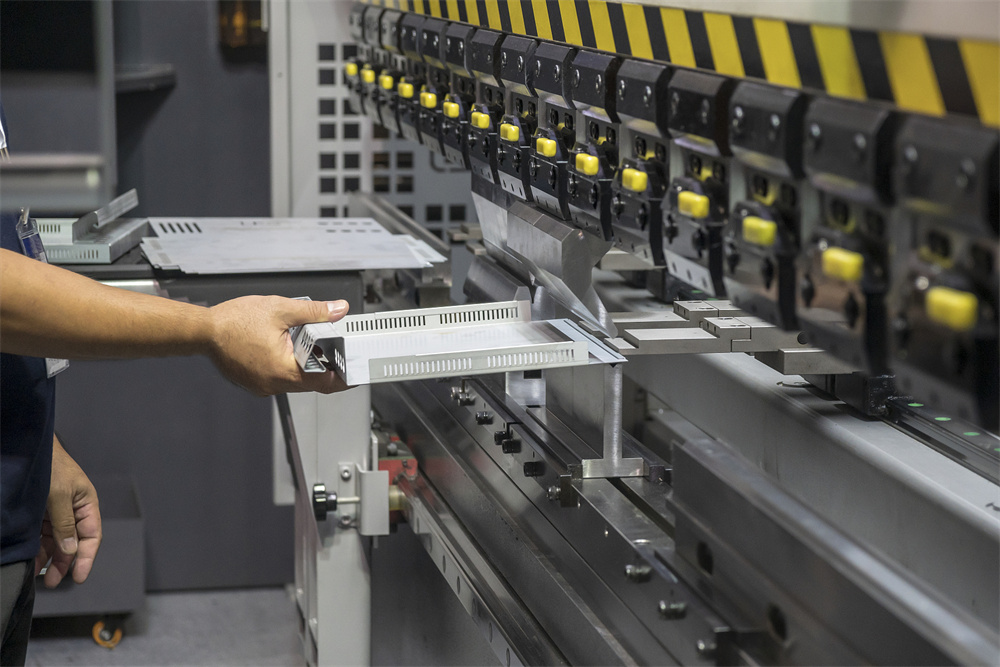
Key Considerations for Productivity in Job Shop Metalworking
1. Reducing Setup Times with CNC Technology
The primary bottleneck in any job shop is setup time. When an operator has to manually adjust backgauges, calculate bend allowances, and perform multiple test bends on scrap material, productivity plummets. Modern CNC press brakes solve this by storing thousands of programs. An operator can call up a previous job in seconds, and the machine automatically positions the backgauge and calculates the required pressure. This “first-part, right-part” capability is essential for job shops where material waste can quickly erode profit margins.
Furthermore, the integration of offline programming software allows engineers to prepare the bending sequence in the office while the machine is still running a different job. This means the press brake is rarely idle. The software can simulate the bend sequence to check for tool interference, ensuring that when the program reaches the shop floor, it is ready to run without surprises. This seamless transition from design to production is a cornerstone of how Press Brakes Increase Productivity In Job Shop Metalworking.
2. Versatility and Tooling Flexibility
Job shops never know what material or geometry will come through the door next. A productive press brake must be versatile enough to handle everything from thin aluminum to heavy-gauge stainless steel. Quick-change tooling systems are vital here. Traditional planed tooling required manual alignment and bolting, which could take an hour or more. Modern precision-ground tooling with hydraulic or pneumatic clamping allows for tool changes in minutes, or even seconds.
Additionally, the use of multi-V dies and sectionalized tooling allows operators to set up multiple “stations” across the bed of the press brake. This enables the completion of complex parts with multiple bend angles and lengths in a single handling, rather than moving the part between different machines or performing multiple setups on the same machine. Reducing part handling is one of the most effective ways to boost throughput.
3. Precision and Repeatability
In a job shop, rework is the enemy of productivity. If a part is bent incorrectly, it doesn’t just waste material; it wastes the time already spent on laser cutting or punching. Modern press brakes utilize Y1/Y2 dual-cylinder technology and sophisticated feedback loops to ensure the ram is perfectly level and reaches the exact depth required for the desired angle. High-speed backgauges with up to 6 axes (X1, X2, R1, R2, Z1, Z2) allow for the precise positioning of complex shapes, ensuring that every bend is consistent with the first.
Technical Details: Features That Drive Efficiency
Advanced CNC Controllers
The “brain” of the press brake is the CNC controller. Brands like Delem, Cybelec, and ESA provide touch-screen interfaces that are as intuitive as a tablet. These controllers offer 3D visualization of the bending process, showing the operator exactly how to orient the part for each stroke. This reduces operator error and training time, allowing less experienced workers to produce high-quality parts. The controller also manages the crowning system, which compensates for the natural deflection of the machine bed under load, ensuring a consistent angle across the entire length of the bend.
Hydraulic vs. Electric Press Brakes
| Feature | Hydraulic Press Brake | Electric Press Brake | Impact on Productivity |
|---|---|---|---|
| Speed | High approach/retraction speeds | Extremely high cycle speeds | Electric is faster for small, light parts. |
| Tonnage | Available in very high tonnages (up to 3000T+) | Typically limited to lower tonnages (up to 200T) | Hydraulic is more versatile for heavy job shops. |
| Maintenance | Requires oil changes and seal checks | Minimal maintenance (no oil) | Electric offers higher uptime due to less maintenance. |
| Energy Efficiency | Moderate (pump runs constantly) | High (only uses power when moving) | Electric reduces operational costs. |
Crowning Systems: Mechanical vs. Hydraulic
When a press brake applies pressure, the bed and the ram naturally bow outward. Without compensation, the angle in the middle of the part will be wider than at the ends. This is known as the “canoe effect.” Productivity is increased when this is corrected automatically. Hydraulic crowning uses cylinders in the lower bed to push upward, while mechanical crowning uses a series of wedges. CNC-controlled crowning ensures that the compensation is adjusted in real-time based on the material thickness, length, and tonnage required, eliminating the need for manual shimming of tools.
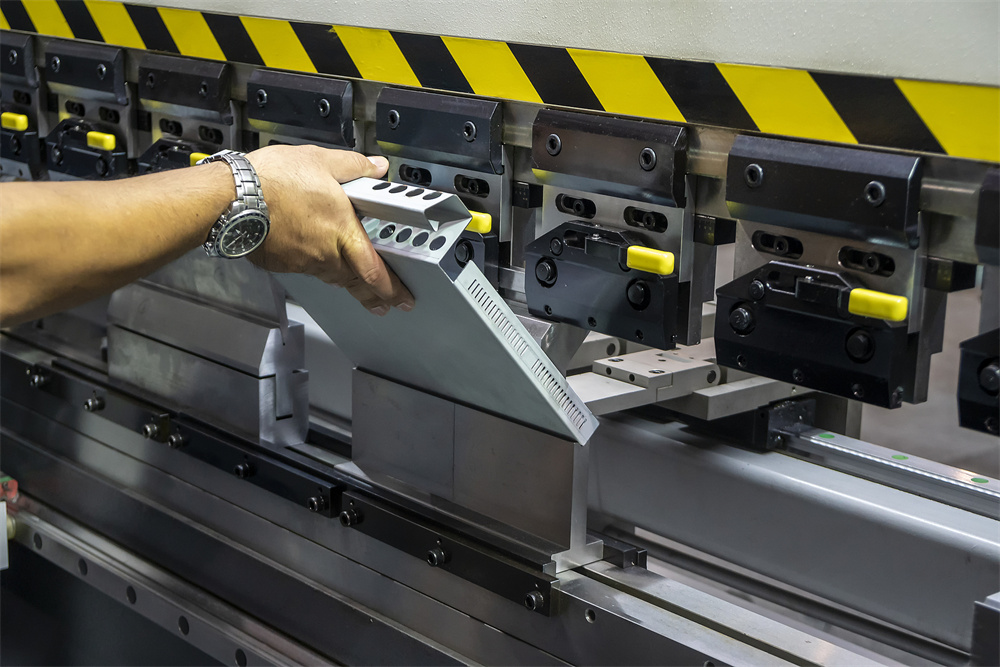
Selection Advice: Choosing the Right Press Brake for Your Shop
Selecting the right machine is the first step in ensuring Press Brakes Increase Productivity In Job Shop Metalworking. A machine that is too small will limit the jobs you can take, while one that is too large may be slower and more expensive to operate for small parts. Here is a checklist for job shop owners:
- Tonnage and Length: Analyze your current and future workload. For most job shops, a 100-ton to 200-ton machine with a 3-meter to 4-meter bed offers the best balance of versatility.
- Backgauge Complexity: If you frequently bend parts with tapered flanges or complex offsets, invest in a 4-axis or 6-axis backgauge. The time saved in positioning will pay for the upgrade within months.
- Software Integration: Ensure the machine’s controller is compatible with your CAD/CAM software. The ability to import DXF or STEP files directly into the machine is a massive productivity booster.
- Safety Systems: Don’t overlook laser guarding systems like Iris or LazerSafe. These allow the machine to operate at high speeds safely, slowing down only at the very last moment before the tool touches the metal. This maintains a fast cycle time without compromising operator safety.
- Local Support and Parts: Productivity is zero if the machine is down. Choose a manufacturer like HARSLE that provides robust technical support and readily available spare parts.
The Importance of Operator Training
Even the most advanced machine cannot reach its full potential without a skilled operator. However, modern CNC press brakes are designed to lower the learning curve. Investing in training ensures that your team knows how to use the offline programming features, how to maintain the tooling, and how to troubleshoot minor issues. A well-trained operator can often produce 30-50% more than an untrained one on the same machine.
FAQ: Common Questions About Press Brake Productivity
How much faster is a CNC press brake compared to a manual one?
In a job shop setting with frequent changeovers, a CNC press brake can be 3 to 4 times more productive than a manual machine. This is primarily due to the elimination of manual calculations, faster backgauge movement, and reduced setup times through saved programs.
Can I upgrade my old press brake to increase productivity?
While some retrofitting is possible (such as adding a new CNC controller or backgauge), it is often more cost-effective to invest in a new machine. Modern frames are designed for higher speeds and better integration with current software and safety standards that older frames cannot support.
What material handling options improve productivity?
For large or heavy sheets, sheet followers (front supports that move with the part during the bend) are invaluable. They prevent the material from “back-bending” under its own weight and reduce the physical strain on the operator, allowing for faster and safer operation throughout a shift.
How does tooling quality affect productivity?
High-quality, precision-ground tooling ensures that the angles are consistent every time. Cheap, planed tooling can have variations that require the operator to make constant adjustments, which slows down production and increases scrap rates.
Conclusion: Investing in the Future of Your Job Shop
In summary, Press Brakes Increase Productivity In Job Shop Metalworking by addressing the core needs of the high-mix, low-volume environment: speed, flexibility, and precision. By reducing setup times through advanced CNC controls and offline programming, job shops can handle more orders with less downtime. The integration of automated crowning and precision backgauges ensures that parts are made correctly the first time, eliminating costly rework and material waste.
As the industry moves toward Industry 4.0, the role of the press brake will only become more central. Machines that can communicate with shop management software, provide real-time data on production metrics, and offer intuitive interfaces for operators will be the ones that drive growth. For any job shop looking to stay competitive, upgrading to a modern HARSLE press brake is not just an equipment purchase—it is a strategic investment in the long-term efficiency and profitability of the business. By focusing on the technical features that matter most—setup reduction, tooling flexibility, and precision—you can ensure your shop is ready for whatever challenge comes next.












