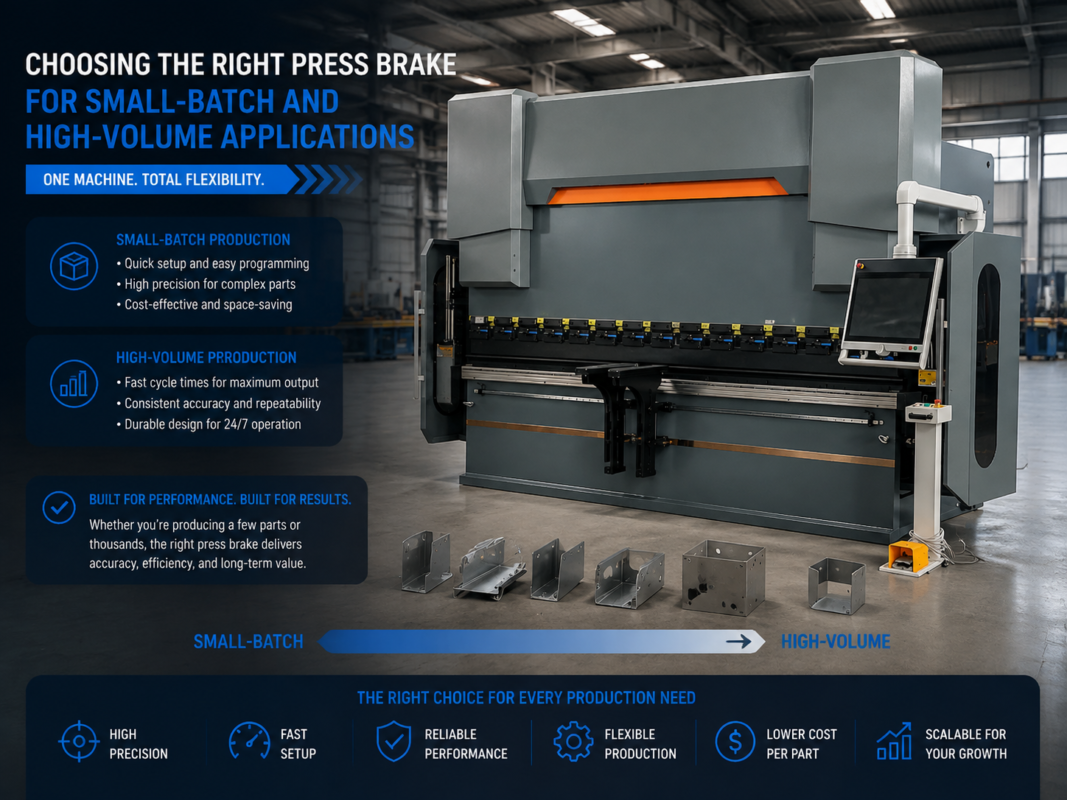
Press Brake Solutions for Custom Metal Parts and Prototype Fabrication: A Comprehensive Guide


Introduction to Press Brake Solutions for Custom Metal Parts and Prototype Fabrication
In the rapidly evolving landscape of modern manufacturing, the demand for high-precision, low-volume production has never been higher. Custom metal parts and prototype fabrication represent the vanguard of this shift, requiring machinery that offers not just power, but extreme flexibility and accuracy. Press brake solutions for custom metal parts and prototype fabrication have become the cornerstone of workshops aiming to bridge the gap between conceptual design and physical reality. Whether it is a complex aerospace component or a bespoke architectural fixture, the press brake is the primary tool used to transform flat sheet metal into intricate three-dimensional forms.
For manufacturers like HARSLE, providing the right press brake solutions means understanding the unique challenges of prototyping. Unlike mass production, where a machine might run the same program for weeks, prototype fabrication involves frequent setup changes, varying material thicknesses, and the need for immediate adjustments. This environment demands a press brake that is equipped with advanced CNC controls, precision backgauges, and versatile tooling systems. The ability to simulate a bend before the first piece of metal is even touched is no longer a luxury; it is a necessity for reducing waste and ensuring cost-effectiveness in custom projects.
As we delve deeper into the world of metal forming, it becomes clear that the choice of equipment directly influences the quality of the final product. A high-quality press brake ensures that the first prototype is as accurate as the thousandth production part. This guide explores the critical role of press brake solutions in the custom fabrication sector, detailing the technical advancements that allow fabricators to push the boundaries of what is possible with sheet metal. From hydraulic synchronization to the integration of 3D CAD software, we will examine how HARSLE machinery empowers businesses to meet the rigorous demands of today’s industrial market.
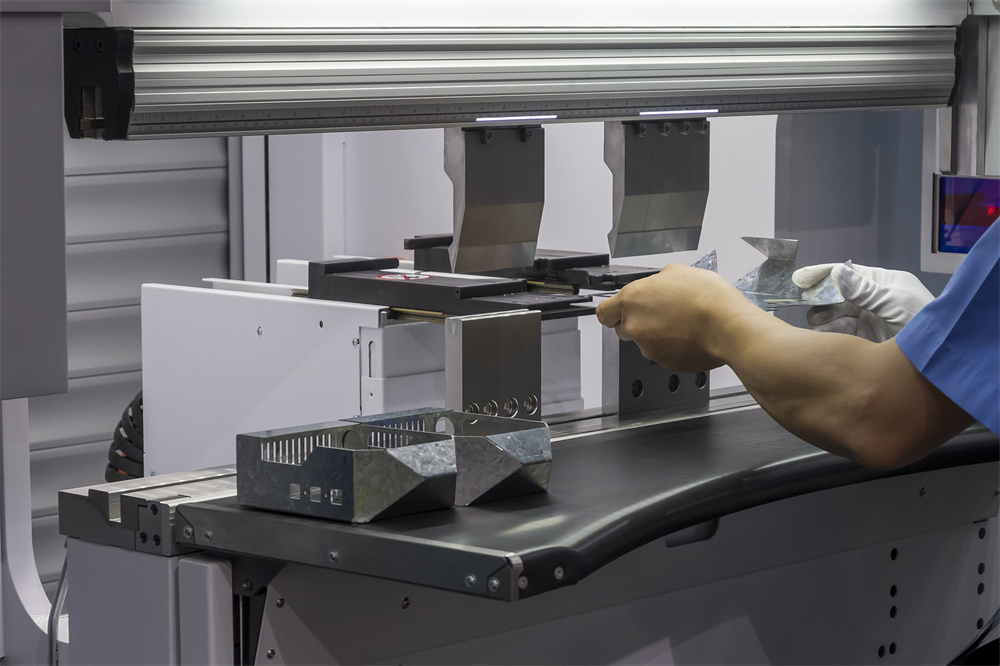
Key Considerations for Custom Metal Parts Fabrication
When dealing with custom metal parts, the primary consideration is always precision. Custom parts often have tighter tolerances than standard components because they must fit into specific, often unique, assemblies. Press brake solutions for custom metal parts and prototype fabrication must account for material variables such as grain direction, tensile strength, and thickness fluctuations. Even a minor deviation in material properties can lead to significant angular errors if the machine is not capable of real-time compensation. This is why high-end CNC systems are vital; they allow operators to input specific material data to achieve the perfect bend on the first try.
Flexibility is the second pillar of successful custom fabrication. In a prototype environment, a single machine might handle aluminum in the morning, stainless steel at noon, and heavy-duty carbon steel in the afternoon. This requires a press brake with a wide range of tonnage and a versatile stroke length. Furthermore, the tooling system must support quick changes. Systems like the Wila or Trumpf-style clamping allow operators to swap punches and dies in seconds rather than minutes, significantly reducing the downtime between different custom jobs. This agility is what allows a fabrication shop to remain competitive in a market that prizes speed and customization.
Another critical factor is the complexity of the geometries involved. Modern prototypes often feature multiple bends at varying angles, sometimes requiring specialized tooling like gooseneck punches or multi-V dies. The press brake’s backgauge system plays a pivotal role here. A multi-axis backgauge (up to 6 axes or more) allows for the precise positioning of complex parts that do not have a straight edge to reference. By supporting the part at multiple points, the machine ensures that every bend is perfectly aligned with the previous one, maintaining the integrity of the overall design.
Finally, the software integration cannot be overlooked. In the realm of prototype fabrication, the ability to import 3D files directly into the press brake’s controller is a game-changer. This allows for offline programming, where the bending sequence is determined and simulated on a computer before the operator even starts the machine. This process identifies potential collisions between the part and the machine frame or tooling, preventing costly mistakes and material waste. For HARSLE users, this level of digital integration is a standard feature that ensures every custom project starts on the right foot.
Technical Details of Modern Press Brake Solutions
CNC Control Systems and Software
The heart of any modern press brake solution for custom metal parts and prototype fabrication is the CNC (Computer Numerical Control) system. Advanced controllers from brands like Delem, Cybelec, or ESA provide a user-friendly interface that masks the complex calculations happening behind the scenes. These systems calculate the required pressure, the position of the backgauge, and the depth of the punch based on the material type and thickness. For prototyping, the graphical 2D or 3D representation of the bending process allows the operator to visualize the sequence, ensuring that the part is oriented correctly for every hit.
Hydraulic Synchronization and Crowning
Precision in long bends is often compromised by the natural deflection of the machine’s bed and ram under pressure. To counter this, high-quality press brakes utilize hydraulic or mechanical crowning systems. Crowning compensates for the “bowing” effect by slightly arching the lower bed, ensuring that the angle remains consistent across the entire length of the workpiece. In custom fabrication, where a part might be several meters long, this feature is essential for maintaining the required tolerances. Additionally, Y1 and Y2 dual-cylinder synchronization ensures that the ram stays perfectly level, even when performing off-center bending tasks.
High-Performance Backgauge Systems
The backgauge is the unsung hero of the press brake. For custom parts with non-parallel edges or complex shapes, a standard 2-axis backgauge (X and R) may not be enough. Advanced solutions offer 4-axis (X, R, Z1, Z2) or even 6-axis (X1, X2, R1, R2, Z1, Z2) configurations. This allows each gauge finger to move independently, providing a stable stop for almost any geometry. In prototype fabrication, where the design might change between iterations, having a highly adaptable backgauge system reduces the need for custom jigs and fixtures, saving both time and money.
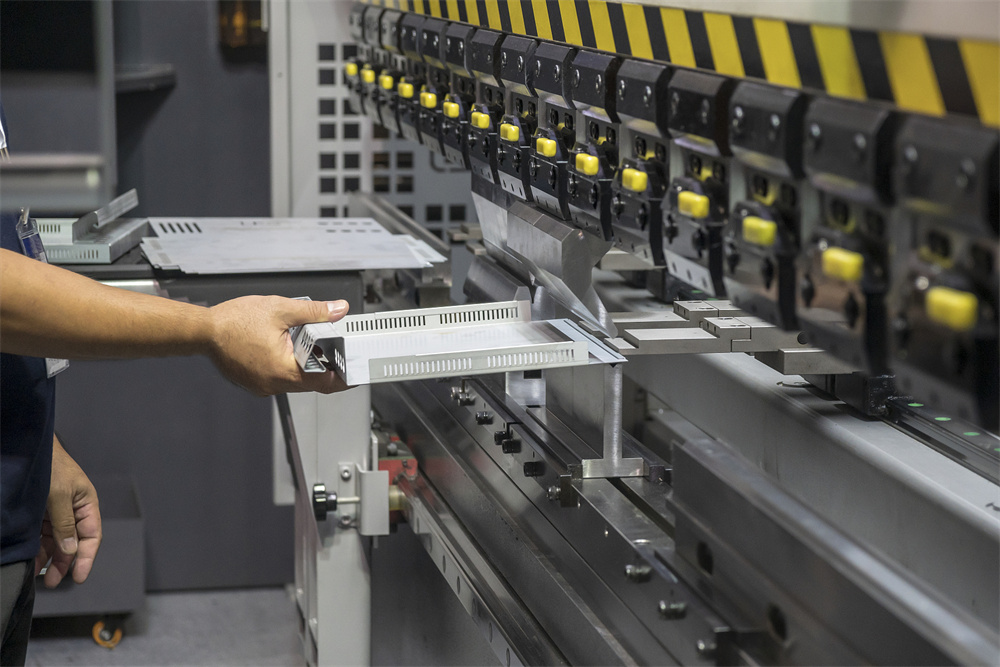
Safety and Efficiency Features
Modern press brakes are equipped with sophisticated safety systems that do not hinder productivity. Laser-based guards, such as the DSP or LazerSafe systems, monitor the area around the punch tip. They allow the machine to operate at high speeds until the punch is just millimeters above the material, at which point it slows to a safe pressing speed. This “mute point” optimization is crucial for maintaining high throughput in a custom shop. Furthermore, energy-efficient servo-hydraulic systems reduce noise and heat while lowering electricity consumption, making the fabrication process more sustainable and cost-effective.
Selection Advice for Prototype and Custom Fabrication
Choosing the right press brake for custom metal parts and prototype fabrication requires a deep dive into your specific production needs. The first step is to determine the maximum thickness and length of the materials you intend to work with. However, for prototyping, it is often wise to choose a machine with a slightly higher tonnage than your current maximum requirement. This “headroom” ensures that the machine is not constantly running at its limit, which extends its lifespan and provides the flexibility to take on heavier custom projects in the future.
Consider the “throat depth” and “open height” of the machine. Custom parts often involve deep boxes or complex returns that require significant clearance. A press brake with a large throat depth allows you to bend larger flanges without hitting the machine frame. Similarly, a high open height provides the space needed for tall punches and deep dies, which are often necessary for specialized prototype designs. If your work involves a lot of small, intricate parts, a smaller, high-speed electric press brake might be more efficient than a large hydraulic one.
Tooling compatibility is another critical factor. Ensure that the press brake you select uses a standard tooling system that is widely available. This makes it easier to source specialized punches and dies for unique custom jobs. Additionally, look for machines that offer “intelligent” tooling systems, where the CNC controller can identify the tool being used via RFID or barcodes. This prevents the operator from using the wrong tool for a program, which is a common source of errors in high-mix environments.
Finally, evaluate the after-sales support and training provided by the manufacturer. For custom and prototype work, the learning curve for advanced CNC features can be steep. Choosing a partner like HARSLE ensures that you have access to expert technicians and comprehensive training materials. A machine is only as good as the person operating it, and in the world of custom fabrication, having a well-trained team supported by a reliable manufacturer is the ultimate competitive advantage.
Comparison of Press Brake Types for Custom Work
| Feature | NC Torsion Bar Press Brake | CNC Synchro Hydraulic Press Brake | Electric Servo Press Brake |
|---|---|---|---|
| Precision | Moderate | High | Very High |
| Setup Speed | Slow (Manual) | Fast (Automated) | Very Fast |
| Energy Efficiency | Low | Moderate | High |
| Best Use Case | Simple, repetitive parts | Complex custom parts | Small, high-precision prototypes |
| Maintenance | High (Mechanical wear) | Moderate | Low |
Frequently Asked Questions (FAQ)
What is the best press brake for prototype fabrication?
The best press brake for prototype fabrication is typically a CNC Synchro Hydraulic or an Electric Servo Press Brake. These machines offer the precision, quick setup times, and software integration necessary to handle the frequent changes and complex geometries associated with prototyping. The ability to simulate bends and use multi-axis backgauges is essential for reducing waste in low-volume production.
How do I calculate the tonnage needed for custom metal parts?
Tonnage is calculated based on the material thickness, the length of the bend, and the V-opening of the die. The general formula is (1.42 x Tensile Strength x Thickness^2) / V-opening. However, for custom parts, you must also consider the material type (e.g., stainless steel requires about 50% more pressure than mild steel) and any specialized tooling that might increase the required force.
Can a press brake handle different materials without recalibration?
While the physical machine doesn’t change, the CNC controller must be updated for different materials. Modern press brake solutions for custom metal parts allow operators to select the material from a library. The controller then automatically adjusts the depth of the punch to account for the material’s specific springback characteristics. For extreme precision, some machines feature laser angle-measuring systems that adjust the bend in real-time.
What are the advantages of offline programming for custom parts?
Offline programming allows engineers to create bending sequences on a computer while the press brake is still running another job. This minimizes machine downtime. It also allows for collision detection, ensuring that the part can actually be bent with the available tooling and machine geometry. This is particularly valuable for complex prototypes where the bending sequence is not immediately obvious.
How important is crowning in custom metal fabrication?
Crowning is vital for any bend longer than about 1 meter. Without crowning, the center of the bend will have a wider angle than the ends due to machine deflection. In custom fabrication, where parts must fit together perfectly, this inconsistency can ruin a project. Automatic CNC crowning ensures that the angle is uniform across the entire length, regardless of the pressure applied.
What maintenance is required for a CNC press brake?
Regular maintenance includes checking hydraulic oil levels and quality, lubricating moving parts like the backgauge and ram guides, and inspecting the electrical connections. For CNC machines, it is also important to keep the software updated and calibrate the axes periodically to ensure continued precision. Proper maintenance is key to ensuring the longevity and reliability of your press brake solutions.
Conclusion: Investing in the Future of Fabrication
The world of custom metal parts and prototype fabrication is one of constant challenge and innovation. To succeed, fabricators must equip themselves with tools that are as versatile as they are precise. Press brake solutions for custom metal parts and prototype fabrication, particularly those offered by HARSLE, provide the technological foundation needed to tackle complex designs with confidence. By integrating advanced CNC controls, sophisticated backgauges, and efficient hydraulic systems, these machines transform the fabrication process from a series of trials and errors into a streamlined, predictable workflow.
As we have explored, the key to choosing the right press brake lies in understanding the specific needs of your projects—whether that means prioritizing setup speed, angular accuracy, or the ability to handle exotic materials. The investment in a high-quality press brake pays dividends not just in the quality of the parts produced, but in the reduction of waste, the increase in throughput, and the ability to take on more ambitious custom work. In an industry where the only constant is change, having a reliable and flexible press brake is the best way to future-proof your business.
Ultimately, the goal of any fabrication shop is to deliver a product that meets or exceeds the customer’s expectations. With the right press brake solutions, achieving that goal becomes a repeatable reality. Whether you are a small prototype shop or a large-scale custom manufacturer, the precision and power of a HARSLE press brake will empower you to turn your most complex metalworking visions into tangible, high-quality results. The future of metal fabrication is custom, and with the right equipment, that future is within your reach.