Hydraulic Press Applications for Powder Compacting and Parts Compression: A Comprehensive Guide


Introduction to Hydraulic Press Applications for Powder Compacting and Parts Compression
In the modern landscape of metal fabrication and advanced manufacturing, the precision of material densification is paramount. Hydraulic press applications for powder compacting and parts compression represent a critical intersection of metallurgy, engineering, and high-pressure physics. As industries ranging from automotive to aerospace demand components with higher structural integrity and complex geometries, the reliance on specialized hydraulic machinery has never been greater. HARSLE provides the robust engineering solutions necessary to meet these rigorous industrial standards.
Powder compacting is a process where metal or ceramic powders are compressed into a specific shape within a die cavity. This process, often referred to as powder metallurgy, allows for the creation of near-net-shape parts that require minimal secondary machining. By utilizing the immense, controlled force of a hydraulic press, manufacturers can achieve uniform density across complex parts, ensuring that the final product possesses the necessary mechanical properties to withstand operational stress.
The versatility of hydraulic presses in this sector stems from their ability to provide constant force throughout the entire stroke. Unlike mechanical presses, which rely on flywheel energy, hydraulic systems offer adjustable pressure profiles, dwell times, and precise speed control. These features are essential when dealing with materials that exhibit varying flow characteristics under pressure, such as tungsten carbide, iron-based powders, or specialized ceramic compounds.
As we delve into this guide, we will explore the technical nuances that make hydraulic presses the preferred choice for high-density parts compression. Whether you are looking to optimize your existing production line or are considering an investment in new metal fabrication equipment, understanding the synergy between hydraulic force and material behavior is the first step toward operational excellence.
Key Considerations for Powder Compacting Processes
Achieving consistent quality in powder compacting requires a deep understanding of the variables involved in the compression cycle. The primary consideration is the flowability and compressibility of the powder itself. Different materials react differently to pressure; some powders are highly ductile and compact easily, while others are brittle and require multi-stage compression to prevent cracking or internal voids. HARSLE presses are designed to handle these variations through programmable pressure settings.
Another critical factor is the design of the tooling and die set. The die must withstand extreme internal pressures without deforming, as any deviation in the die wall can lead to dimensional inaccuracies in the finished part. Furthermore, the lubrication of the die wall is essential to reduce friction during the ejection phase. If friction is too high, the part may suffer from surface defects or structural damage during removal from the press.
Density distribution is perhaps the most significant challenge in parts compression. Because powder does not behave like a liquid, pressure does not transmit uniformly through the material. This leads to density gradients where the top of the part might be denser than the bottom. Advanced hydraulic presses mitigate this by employing dual-action or multi-action pressing, where both the upper and lower punches move to compress the powder from both sides simultaneously.
Environmental control and material handling also play a role in the success of the operation. Fine metal powders can be hazardous if not managed correctly, and the moisture content of the powder can affect the final density. Modern industrial facilities must integrate dust collection systems and climate control to ensure that the raw material remains in an optimal state before it enters the press cavity.
Technical Details of Hydraulic Press Systems
The technical architecture of a hydraulic press used for powder compacting is distinct from standard stamping presses. At the heart of the system is the hydraulic power unit (HPU), which converts electrical energy into fluid power. For powder compacting, the HPU must be capable of maintaining high pressure for extended periods, a feature known as the ‘dwell time.’ This dwell time allows the powder particles to rearrange and fill the voids, resulting in a more uniform green density.
The control system is the brain of the operation. Modern HARSLE hydraulic presses utilize PLC (Programmable Logic Controller) systems that allow operators to define complex pressing cycles. These cycles can include pre-compression, main compression, and decompression phases. By controlling the rate of decompression, manufacturers can prevent the ‘spring-back’ effect, where the compressed part expands rapidly and cracks due to trapped air or internal stresses.
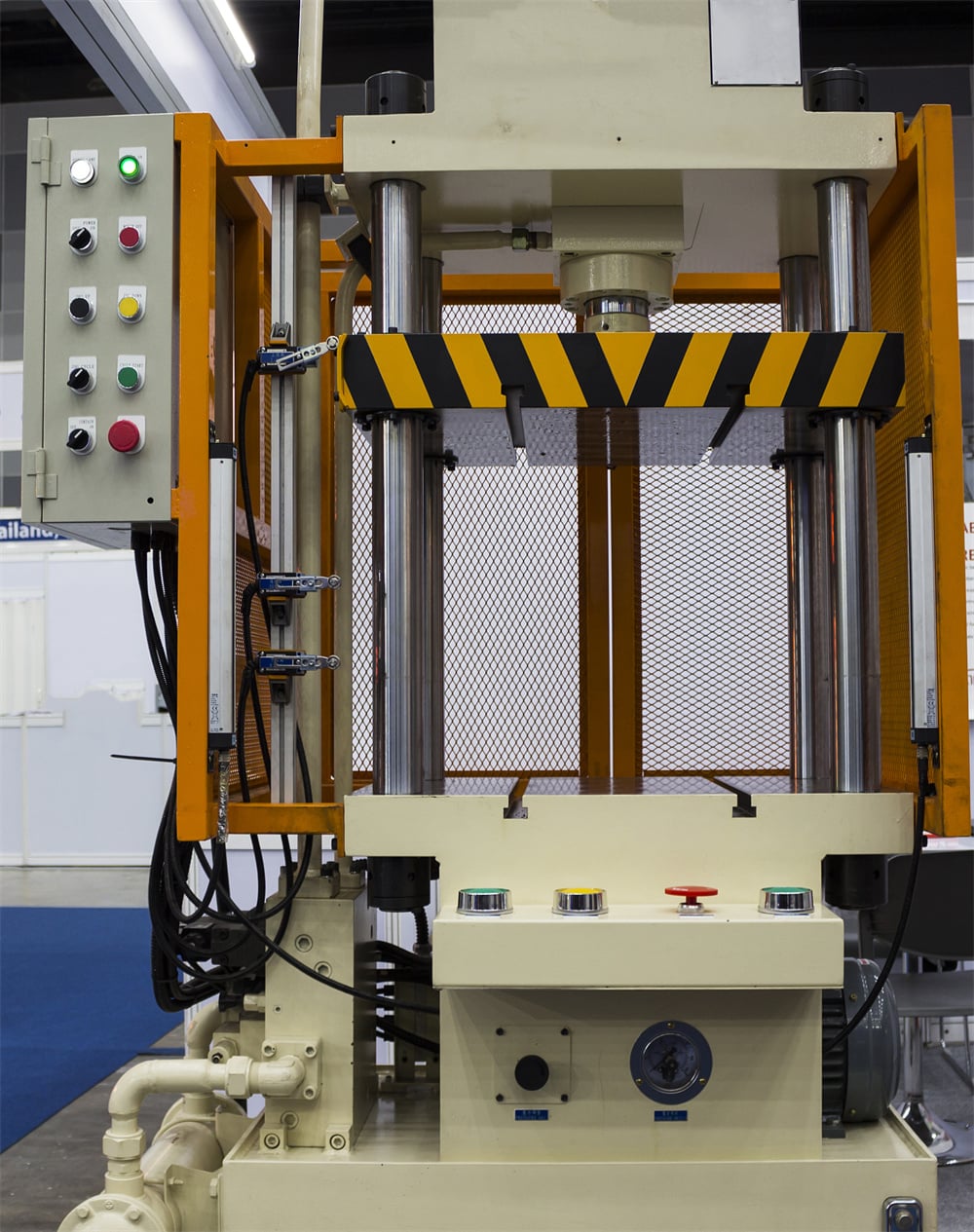
Safety and monitoring systems are non-negotiable in high-pressure environments. Integrated sensors monitor the tonnage, stroke position, and hydraulic fluid temperature in real-time. If the pressure deviates from the set parameters, the system can automatically adjust or trigger an emergency stop to prevent damage to the tooling or the machine. This level of precision is what separates industrial-grade equipment from standard workshop machinery.
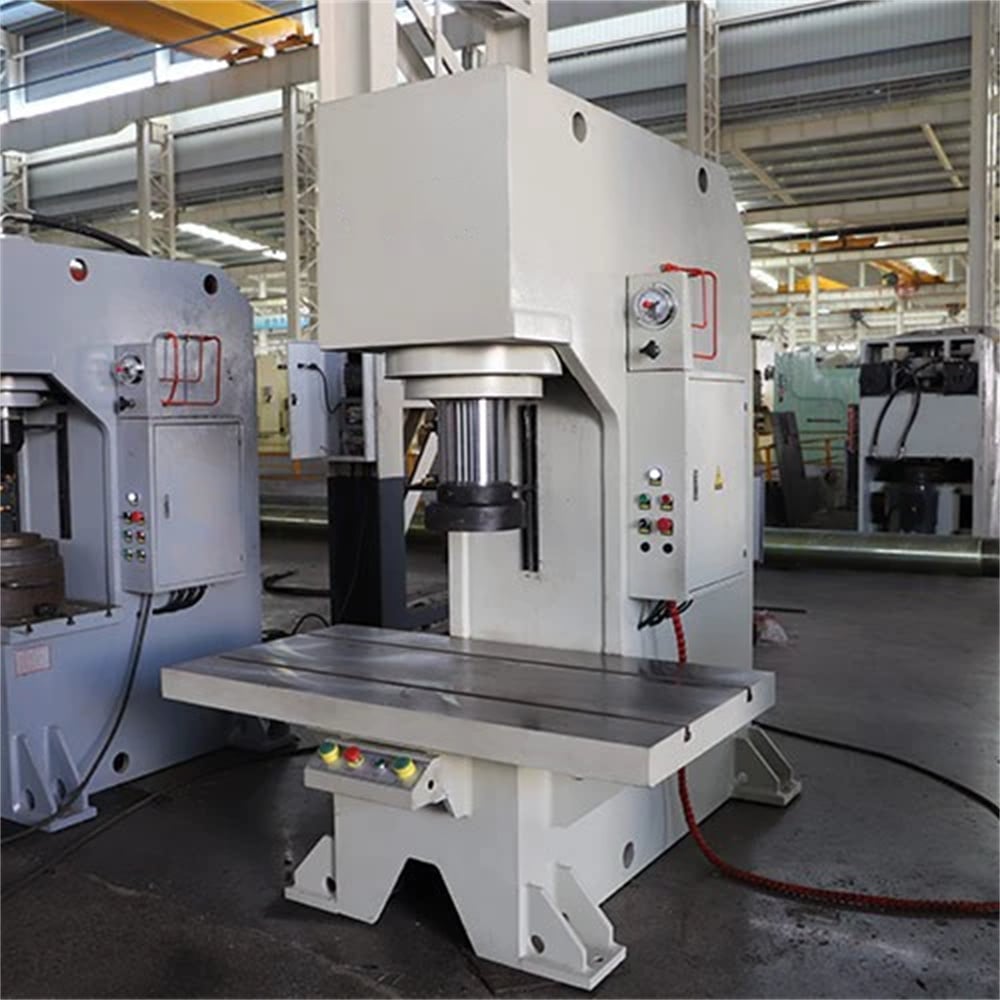
Furthermore, the structural rigidity of the press frame is vital. When compressing powder, the press frame must resist the massive forces generated without flexing. A ‘C-frame’ design is common for smaller applications, but for high-tonnage powder compacting, a ‘four-column’ or ‘H-frame’ design is preferred. These designs provide superior parallelism between the upper and lower platens, which is essential for maintaining uniform part thickness across the entire surface area.
Selection Advice for Industrial Machinery
Selecting the right hydraulic press for powder compacting involves a thorough assessment of your production requirements. The first step is to calculate the required tonnage. This is determined by the surface area of the part and the specific pressure required to reach the target density for your material. It is always advisable to select a press with a tonnage capacity 20-30% higher than your calculated maximum to ensure the machine is not running at its limit, which extends the lifespan of the hydraulic components.
Consider the stroke length and the daylight opening. The daylight opening is the distance between the platens when the press is fully open, and it must be sufficient to accommodate your die set and the powder filling mechanism. If you are using automated powder feeders, ensure that the press design allows for easy integration of these peripherals without obstructing the operator or maintenance access.
Energy efficiency is another growing concern in industrial manufacturing. Look for presses equipped with variable frequency drives (VFDs) or servo-hydraulic systems. These technologies allow the motor to adjust its speed based on the demand of the cycle, significantly reducing energy consumption compared to traditional constant-speed hydraulic pumps. HARSLE offers various configurations that prioritize both performance and operational economy.
Finally, consider the after-sales support and availability of spare parts. A hydraulic press is a long-term investment. Partnering with a manufacturer that provides comprehensive technical support, training for your operators, and a reliable supply chain for seals, valves, and filters will minimize downtime and maximize your return on investment. Always request a detailed maintenance schedule and ensure your team is trained on the specific nuances of your new equipment.
Maintenance and Operational Best Practices
Proper maintenance is the cornerstone of a long-lasting hydraulic press. The hydraulic fluid is the lifeblood of the machine; it must be kept clean and at the correct viscosity. Regular oil analysis should be performed to check for contamination or degradation. If the fluid becomes contaminated with metal particles or moisture, it can cause catastrophic failure of the hydraulic pumps and valves.
The seals and gaskets within the cylinders should be inspected periodically for leaks. Even a minor leak can lead to a loss of pressure, which in the context of powder compacting, results in inconsistent part density and rejected batches. Establish a preventative maintenance routine that includes checking the tightness of all hydraulic fittings and the condition of the electrical wiring.
Operator training is equally important. The personnel operating the press should understand the relationship between pressure, speed, and material behavior. They should be capable of interpreting the data provided by the PLC and identifying when a process is drifting outside of acceptable tolerances. Regular training sessions help ensure that safety protocols are followed and that the machine is operated within its design limits.
Keep the work area clean. Powder compacting often generates fine dust that can settle on the machine’s guide rails and moving parts. If this dust mixes with the hydraulic oil or grease, it acts as an abrasive, accelerating wear. Use appropriate dust extraction systems and perform daily cleaning of the press bed and surrounding areas to maintain optimal performance.
FAQ: Hydraulic Press Applications for Powder Compacting
- What is the main advantage of using a hydraulic press for powder compacting? The primary advantage is the ability to maintain constant, adjustable pressure and dwell time, which is essential for achieving uniform density in complex parts.
- How do I determine the required tonnage for my application? Tonnage is calculated by multiplying the cross-sectional area of the part by the required compaction pressure for the specific powder material.
- Can a hydraulic press be used for both metal and ceramic powders? Yes, hydraulic presses are highly versatile and can be configured for various materials, provided the tooling is designed for the specific abrasive or flow characteristics of the powder.
- What is ‘spring-back’ and how can it be prevented? Spring-back occurs when a part expands after compression. It is mitigated by controlling the decompression rate and ensuring the dwell time is sufficient for the material to stabilize.
- How often should I change the hydraulic oil? This depends on the usage intensity and the environment, but generally, oil should be analyzed every 2,000 to 4,000 operating hours to determine if a change is necessary.
Conclusion
Hydraulic press applications for powder compacting and parts compression are essential for modern manufacturing, enabling the production of high-precision components with exceptional structural integrity. By understanding the technical requirements—from tonnage and dwell time to die design and maintenance—manufacturers can leverage these powerful machines to achieve superior results. HARSLE remains committed to providing the industry with the robust, efficient, and technologically advanced equipment needed to succeed in this demanding field. Investing in the right hydraulic press is not just about buying a machine; it is about securing the future of your production capabilities and ensuring that your parts meet the highest standards of quality and consistency.