Solving Short-Run Production Challenges: A Flexible Press Brake Case Study


Introduction: The Evolution of Short-Run Metal Fabrication
In the modern landscape of metal fabrication, the ability to pivot quickly between diverse project requirements is no longer a luxury—it is a survival necessity. Manufacturers are increasingly moving away from massive, long-run production cycles toward high-mix, low-volume (HMLV) manufacturing. This shift presents a unique set of obstacles, particularly in the bending department, where setup times and tooling changes can quickly erode profit margins. Solving Short-Run Production Challenges A Flexible Press Brake Case Study is the focus of this article, as we explore how HARSLE technology empowers fabricators to maintain efficiency without sacrificing precision.
The traditional approach to bending often relied on dedicated tooling and long lead times for setup. However, when a shop receives an order for fifty custom brackets followed by a prototype enclosure, the downtime associated with manual adjustments becomes the primary bottleneck. By integrating advanced, flexible press brake systems, fabricators can drastically reduce the time spent on tool changes, angle corrections, and material handling. This article examines the technical and operational shifts required to master short-run production.
HARSLE has spent decades refining the synergy between hydraulic power and CNC precision. Our machines are designed to handle the volatility of modern job shops. Whether you are dealing with varying material thicknesses or complex geometries, the flexibility of a modern press brake is the cornerstone of a profitable short-run strategy. In the following sections, we will dissect the specific challenges faced by job shops and provide a roadmap for overcoming them through strategic equipment selection.
As we delve into this case study, we will look at how a mid-sized fabrication facility transitioned from legacy equipment to a high-flexibility HARSLE CNC press brake. The results were not merely incremental; they represented a fundamental change in how the shop approached its daily workflow. By understanding the technical nuances of backgauge positioning, crowning systems, and offline programming, any fabricator can replicate these successes.
Key Considerations for Short-Run Production Efficiency
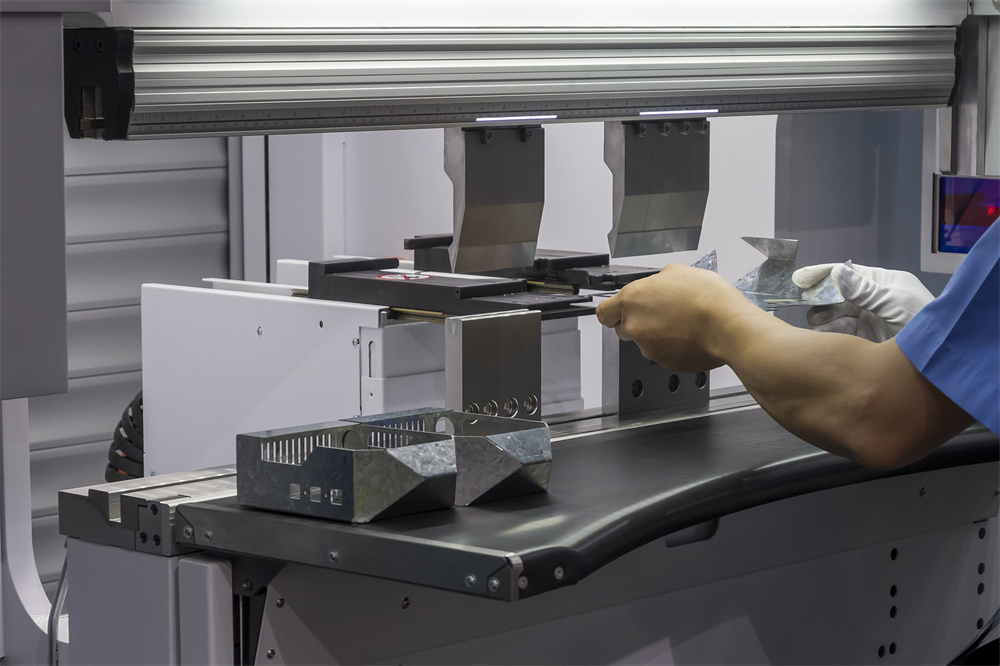
The primary challenge in short-run production is the ‘setup-to-run’ ratio. If a job takes two hours to set up and only thirty minutes to run, the cost per part becomes unsustainable. To solve this, fabricators must prioritize machines that offer rapid tool clamping and intuitive CNC interfaces. The goal is to minimize the time the machine spends idle while the operator manually adjusts the backgauge or swaps out dies.
Material variability is another significant hurdle. In short-run environments, you may be bending 14-gauge mild steel in the morning and 3mm aluminum in the afternoon. A flexible press brake must be able to handle these transitions seamlessly. This requires a robust CNC system that can store hundreds of bending programs, allowing operators to recall parameters instantly. Furthermore, the machine must have the capability to compensate for material spring-back automatically, ensuring that the first part is a good part.
Space and ergonomics also play a role in efficiency. In a shop floor environment, the layout of the press brake should facilitate quick material flow. If the operator has to walk across the shop to retrieve tooling or check a drawing, efficiency drops. Modern HARSLE press brakes incorporate ergonomic features that keep the operator focused on the bending process, reducing fatigue and increasing throughput during long shifts.
Finally, the human element cannot be ignored. Training staff to operate sophisticated CNC equipment is an investment that pays dividends in short-run scenarios. When operators understand how to utilize offline programming software, they can prepare the next job while the current one is still running. This ‘parallel processing’ approach is the secret weapon of highly efficient fabrication shops.
Technical Details: The Anatomy of a Flexible Press Brake
At the heart of Solving Short-Run Production Challenges A Flexible Press Brake Case Study is the technical capability of the machine itself. A flexible press brake is defined by its ability to adapt to changing requirements without requiring a complete overhaul of the setup. This is achieved through several key technical features, starting with the CNC controller. HARSLE’s controllers are designed for high-speed data processing, allowing for complex bending sequences to be programmed and executed with minimal latency.
The backgauge system is perhaps the most critical component for flexibility. A multi-axis backgauge (X, R, Z1, Z2) allows for complex part geometries that would otherwise require multiple handling steps. By automating the positioning of the backgauge, the machine ensures that every bend is perfectly aligned, regardless of the part’s shape. This reduces the reliance on operator skill and significantly lowers the scrap rate, which is vital when working with expensive materials in short runs.
Crowning systems are another essential technical feature. As the press brake applies force, the bed and ram can deflect, leading to inconsistent bend angles across the length of the part. A dynamic hydraulic or mechanical crowning system compensates for this deflection in real-time. For short-run production, where you cannot afford to waste time on trial-and-error bending, having a reliable crowning system is non-negotiable.
Tooling flexibility is the final piece of the puzzle. Quick-change tool clamping systems allow operators to swap out punches and dies in seconds rather than minutes. When combined with segmented tooling, these systems allow for the creation of complex box shapes and enclosures that would be impossible on a standard machine. By investing in high-quality, versatile tooling, fabricators can expand their service offerings and take on more complex projects.
Case Study: Transforming a Job Shop Workflow
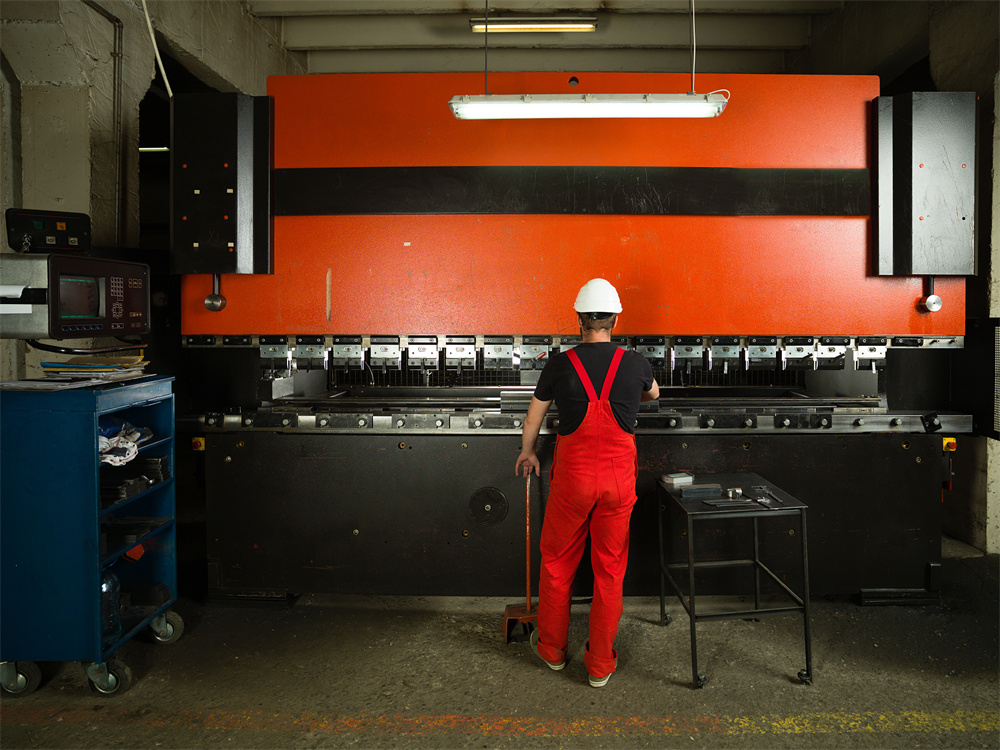
In this case study, we examine a fabrication shop that struggled with a 40% downtime rate due to frequent setup changes. The shop specialized in custom electrical enclosures, which required bending various thicknesses of stainless steel and mild steel. Their legacy press brakes were manual, requiring significant time to adjust the backgauge and calibrate the bend angles for every new job. The shop was losing money on small-batch orders and was unable to compete for high-precision contracts.
The shop decided to invest in a HARSLE high-performance CNC press brake equipped with an advanced offline programming suite. The transition began with digitizing their entire library of bending programs. By using offline software, the engineering team could simulate the bending process before the material ever reached the shop floor. This allowed them to identify potential collisions and optimize the bending sequence, reducing the actual setup time on the machine by over 60%.
The results were immediate. The shop was able to reduce their average setup time from 45 minutes to under 10 minutes. Because the CNC controller automatically adjusted the crowning and backgauge positions based on the material properties, the first-part accuracy improved significantly. This meant that the shop no longer needed to produce ‘test parts’ to verify the bend angle, saving both material costs and labor hours.
Furthermore, the increased flexibility allowed the shop to take on more complex, high-value projects. They were able to offer faster turnaround times to their clients, which in turn led to increased customer loyalty and a higher volume of repeat business. The investment in the HARSLE press brake paid for itself within 18 months, proving that for short-run production, the right technology is the most effective way to drive profitability.
Selection Advice: Choosing the Right Equipment
When selecting a press brake for short-run production, the first step is to analyze your current and projected product mix. Do not simply buy the largest machine available; instead, focus on the machine that offers the best balance of tonnage, bed length, and CNC capability for your typical part size. A machine that is too large will be inefficient for small parts, while a machine that is too small will limit your growth potential.
Consider the level of automation you truly need. While fully robotic bending cells are impressive, they are often overkill for high-mix, low-volume shops. Instead, look for ‘operator-assist’ features such as laser angle measurement systems, automatic tool changers, or intuitive touch-screen interfaces. These features provide the benefits of automation without the rigid constraints of a fully robotic system, keeping your shop floor agile.
Evaluate the support and service infrastructure of the manufacturer. A press brake is a long-term investment, and you need a partner who can provide timely maintenance, software updates, and technical training. HARSLE prides itself on comprehensive after-sales support, ensuring that our clients can maximize the uptime of their equipment. When you choose a machine, you are also choosing the team that stands behind it.
Finally, look at the total cost of ownership. This includes not just the purchase price, but also the energy consumption, maintenance requirements, and the cost of tooling. A cheaper machine might seem attractive initially, but if it requires frequent repairs or lacks the precision to produce high-quality parts, it will end up costing you more in the long run. Prioritize reliability and precision to ensure your shop remains competitive.
FAQ: Frequently Asked Questions
- Q: How does offline programming help with short-run production?
A: Offline programming allows you to simulate the bending process on a computer. You can determine the best bending sequence, check for collisions, and calculate the blank size before the job reaches the machine. This eliminates trial-and-error on the shop floor. - Q: What is the benefit of a multi-axis backgauge?
A: A multi-axis backgauge allows for more complex part geometries. It can position the material in multiple planes, enabling the production of parts with varying bend angles and complex shapes in a single handling. - Q: How often should I perform maintenance on my press brake?
A: Regular maintenance should be performed according to the manufacturer’s schedule, typically every 500 to 1,000 operating hours. This includes checking hydraulic fluid levels, inspecting seals, and cleaning the backgauge rails. - Q: Can a press brake handle different material thicknesses automatically?
A: Yes, modern CNC press brakes can store material databases. When you select the material type and thickness in the controller, the machine automatically adjusts the pressure, backgauge position, and crowning to ensure a perfect bend. - Q: Is it worth upgrading from a manual press brake to a CNC model?
A: For any shop dealing with frequent job changes, the answer is a resounding yes. The reduction in setup time, improved accuracy, and increased repeatability will almost always result in a significant return on investment.
Conclusion: Embracing the Future of Fabrication
Solving Short-Run Production Challenges A Flexible Press Brake Case Study demonstrates that the key to success in modern metal fabrication is not just working harder, but working smarter. By embracing advanced CNC technology, optimizing workflows with offline programming, and selecting equipment that offers true flexibility, fabricators can turn the challenges of short-run production into a competitive advantage. The HARSLE approach is built on the belief that every shop, regardless of size, deserves access to high-precision, reliable machinery.
As the industry continues to evolve, the demand for custom, high-quality metal components will only increase. Shops that are prepared to handle this demand with speed and precision will thrive. We encourage you to evaluate your current bending processes and consider how a flexible HARSLE press brake could transform your operations. Whether you are looking to reduce scrap, improve throughput, or expand your capabilities, the right equipment is the foundation of your future success.
Thank you for exploring this case study with us. We invite you to reach out to the HARSLE team to discuss your specific production needs and discover how our range of press brakes can help you overcome your unique manufacturing hurdles. Together, we can build a more efficient, profitable, and innovative future for the metal fabrication industry.