Choosing Between Bench Hydraulic Press and Floor-Standing Hydraulic Press: A Comprehensive Guide


Comparison Summary: Choosing Between Bench Hydraulic Press Floor-Standing Hydraulic Press
In the world of metal fabrication and industrial assembly, the hydraulic press is an indispensable tool. However, for many workshop managers and business owners, the primary dilemma often boils down to a single decision: Choosing Between Bench Hydraulic Press Floor-Standing Hydraulic Press. This choice is not merely about the physical size of the machine; it involves a deep understanding of tonnage requirements, workspace ergonomics, production volume, and the specific nature of the workpieces being processed. HARSLE, a leader in metal fabrication machinery, recognizes that selecting the wrong equipment can lead to inefficiencies, safety hazards, and unnecessary capital expenditure.
A bench hydraulic press is typically designed for lighter duties, offering precision and portability for small-scale operations. It is the go-to choice for laboratories, jewelry makers, and electronics manufacturers who require controlled force in a compact footprint. Conversely, a floor-standing hydraulic press is the workhorse of the heavy industrial sector. These machines are built to handle massive loads, often exceeding hundreds of tons, and are designed with structural rigidity to withstand the immense stresses of continuous, high-volume production. The decision-making process must account for the maximum force required, the physical dimensions of the parts, and the frequency of use.
Beyond the immediate physical differences, the choice between these two types of presses impacts the long-term scalability of a workshop. A bench press might be sufficient for a startup or a specialized repair shop, but as production needs grow, the limitations in stroke length and bed size can become significant bottlenecks. On the other hand, investing in a large floor-standing model when only small parts are being processed can lead to wasted energy and excessive floor space usage. This guide aims to provide a granular look at both options to ensure you make an informed investment for your facility.
When evaluating these machines, one must also consider the drive systems. Bench models often utilize manual or air-over-hydraulic systems, which are cost-effective but slower. Floor-standing models are almost exclusively powered by electric hydraulic pumps, providing the speed and consistency necessary for industrial cycles. Understanding these nuances is the first step in optimizing your production line. In the following sections, we will break down the technical specifications, application strengths, and maintenance requirements for each category.
Ultimately, the goal of Choosing Between Bench Hydraulic Press Floor-Standing Hydraulic Press is to find the balance between capability and cost. Whether you are performing delicate assembly work or heavy-duty metal forming, HARSLE provides the engineering excellence required to meet your demands. Let us dive deeper into the specific characteristics of each machine type to help you identify the perfect fit for your operational needs.
Bench Hydraulic Press Overview
The bench hydraulic press, often referred to as a benchtop press, is a compact powerhouse designed to be mounted on a sturdy workbench or a dedicated stand. These machines typically range in capacity from 1 ton to 20 tons. Their primary advantage lies in their space-saving design, making them ideal for smaller workshops, research facilities, and maintenance departments where floor space is at a premium. Despite their smaller stature, HARSLE bench presses are engineered with high-grade steel and precision-machined components to ensure accuracy and longevity.
One of the defining features of a bench hydraulic press is its accessibility. Because the machine sits at eye level on a bench, operators have a clear view of the workpiece, which is critical for high-precision tasks such as bearing installation, small-part stamping, or delicate assembly. The stroke length on these models is generally shorter than their floor-standing counterparts, which allows for faster cycle times on small parts. This makes them exceptionally efficient for repetitive tasks that do not require massive force.
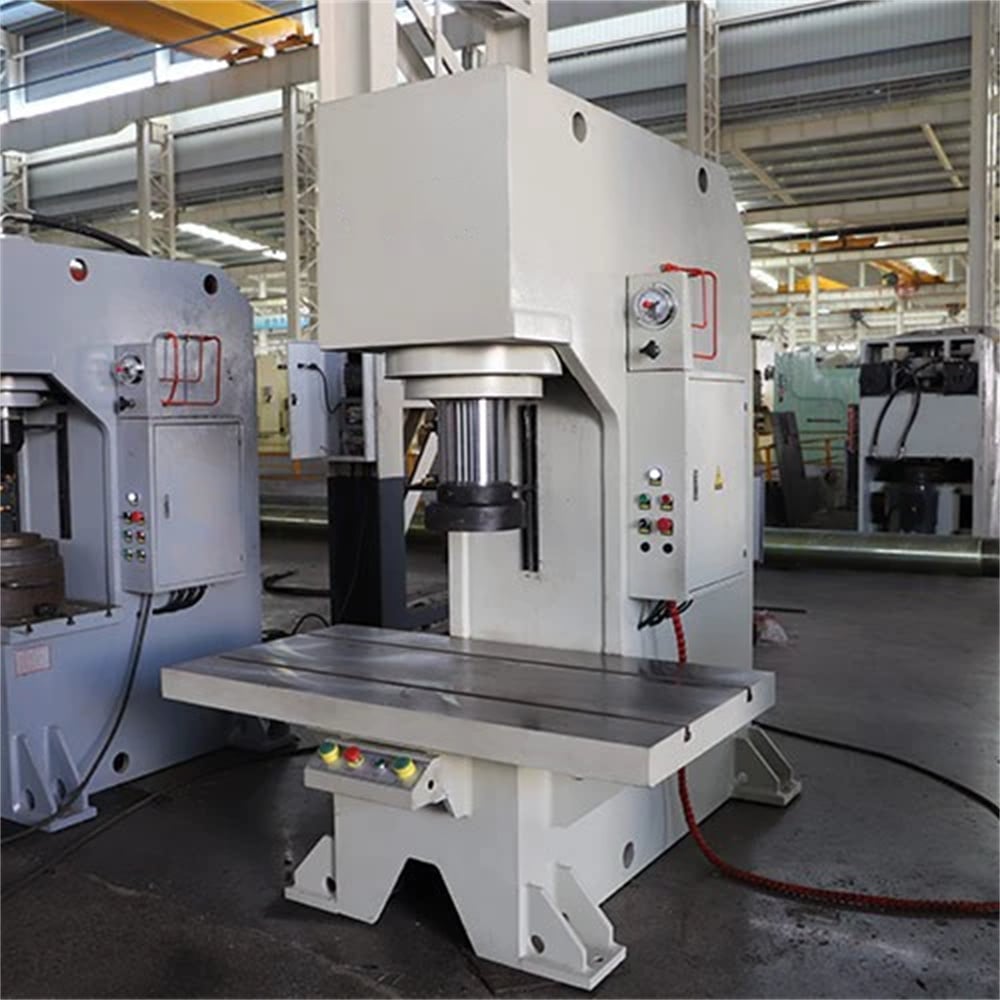
In terms of construction, bench presses often feature a C-frame (or gap frame) design. This open-front configuration allows for easy loading and unloading of parts from three sides, providing maximum flexibility for the operator. Some models may also use a four-column design for enhanced stability and even pressure distribution, though this is more common in specialized laboratory presses. The hydraulic systems in these units are designed for simplicity, often featuring a manual hand pump or a foot-operated air pump, which reduces the need for complex electrical installations.
Safety is another area where bench presses excel in specific contexts. Due to their lower tonnage and smaller moving parts, they are often perceived as less intimidating for new operators. However, HARSLE ensures that even our smallest bench models are equipped with necessary safety features, such as pressure relief valves and robust guarding, to prevent accidents. These machines are also significantly easier to relocate within a facility, allowing for a dynamic shop layout that can adapt to changing project requirements.
However, the bench press does have its limitations. The most obvious is the maximum force it can exert. If your project requires more than 20 tons of pressure, a bench model will likely fail or provide inconsistent results. Additionally, the bed size (the area where the workpiece sits) is limited. Large sheets of metal or bulky automotive components simply will not fit within the throat depth of a standard benchtop unit. Therefore, the bench press is best viewed as a specialized tool for precision and light-duty work rather than a general-purpose industrial solution.
For businesses focusing on electronics, medical device assembly, or small automotive components like bushings and seals, the bench hydraulic press offers an unbeatable ROI. It provides the necessary force without the high overhead costs associated with larger machinery. By choosing a HARSLE bench press, you are investing in a tool that combines the portability of a manual tool with the consistent power of a hydraulic system.
Floor-Standing Hydraulic Press Overview
The floor-standing hydraulic press is the backbone of heavy manufacturing. These machines are designed to stand directly on the factory floor, anchored for stability, and are capable of delivering forces ranging from 30 tons to several thousand tons. When Choosing Between Bench Hydraulic Press Floor-Standing Hydraulic Press, the floor-standing model is the clear winner for any application involving heavy-duty metal forming, deep drawing, or large-scale structural assembly. HARSLE’s floor-standing models are recognized for their massive H-frame construction, which provides the ultimate rigidity required for high-tonnage operations.
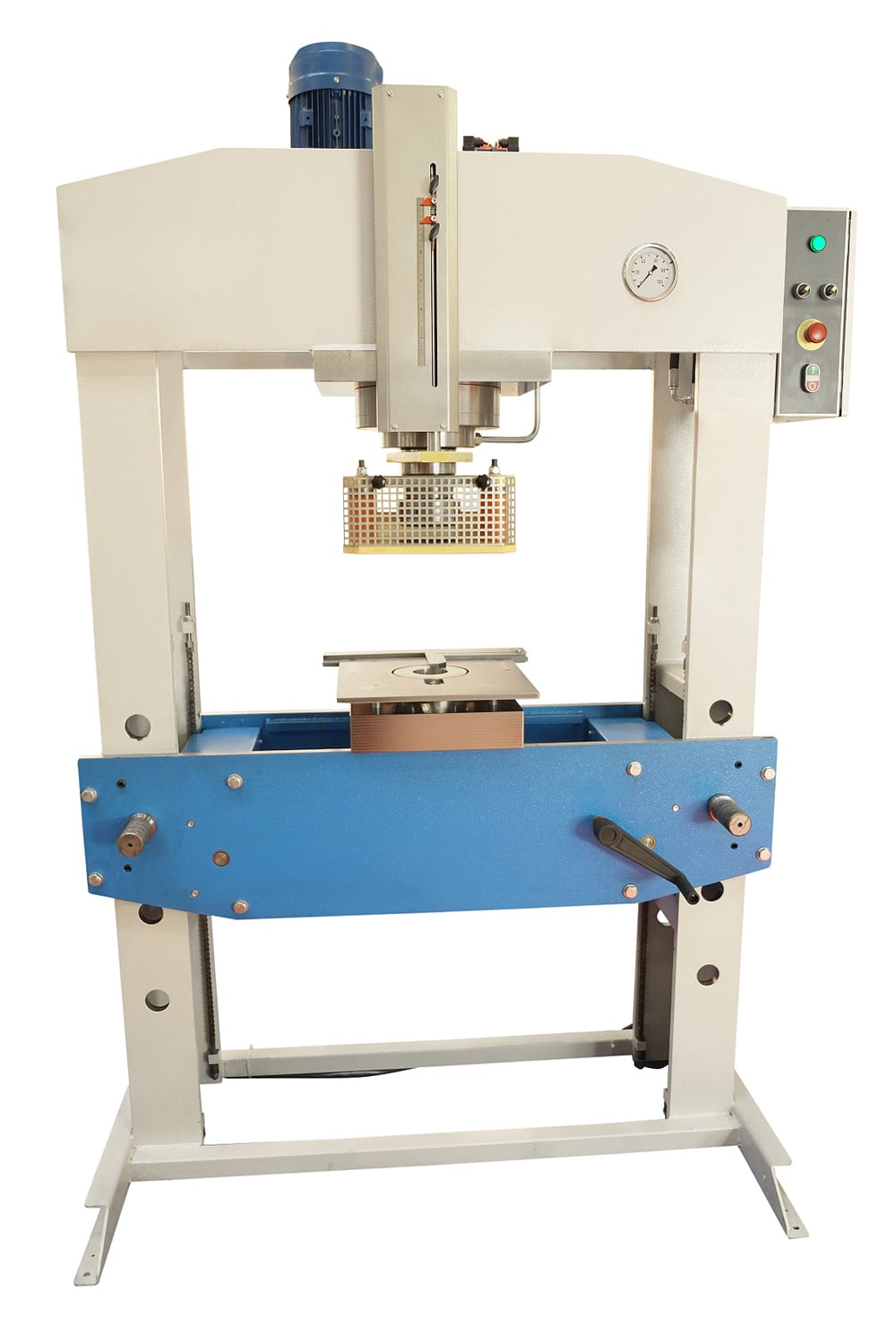
The primary characteristic of a floor-standing press is its versatility in handling large workpieces. With significantly larger bed areas and longer stroke lengths, these machines can accommodate everything from automotive body panels to large industrial gears. The H-frame design, consisting of two vertical steel columns connected by top and bottom horizontal beams, creates a closed loop that minimizes frame deflection under load. This is essential for maintaining parallelism between the ram and the bed, ensuring that the force is applied evenly across the entire surface of the part.
Unlike bench models, floor-standing presses are almost always powered by sophisticated electric hydraulic power units (HPUs). These systems allow for precise control over ram speed, pressure dwell times, and return strokes. Many HARSLE floor models come equipped with PLC (Programmable Logic Controller) systems and HMI (Human Machine Interface) touchscreens, enabling operators to program complex sequences for automated production. This level of control is vital for processes like powder compaction or composite molding, where the rate of pressure application is just as important as the total force.
Durability is a hallmark of the floor-standing variety. These machines are built to run multiple shifts a day, year after year. The hydraulic cylinders are larger, the seals are more robust, and the cooling systems are designed to handle the heat generated by continuous high-pressure operation. While a bench press might overheat or experience seal wear under constant use, a floor-standing press is in its element. This makes them the preferred choice for Tier 1 automotive suppliers, aerospace manufacturers, and heavy equipment builders.
However, the power and size of a floor-standing press come with increased requirements. They occupy a significant amount of floor space and often require a dedicated electrical circuit with high voltage. Installation is also a more complex affair, often requiring forklifts or cranes to position the machine and anchor it to a reinforced concrete floor. Furthermore, the initial investment is considerably higher than a benchtop model. However, for businesses that need to process large volumes or heavy materials, the cost per part produced is significantly lower on a floor-standing machine due to its speed and capability.
Safety protocols for floor-standing presses are also more stringent. Given the immense forces involved, HARSLE integrates advanced safety systems such as light curtains, two-hand tie-down controls, and interlocking guards. These features are designed to protect the operator from the high-energy environment of the press. When you choose a floor-standing model, you are choosing a machine that can grow with your business, handling the toughest jobs with ease and providing a level of industrial capability that bench models simply cannot match.
Specification Comparison Table
To assist in Choosing Between Bench Hydraulic Press Floor-Standing Hydraulic Press, the following table highlights the typical technical differences between the two categories. Note that these are general ranges and HARSLE can provide custom configurations for specific industrial needs.
| Feature | Bench Hydraulic Press | Floor-Standing Hydraulic Press |
|---|---|---|
| Tonnage Range | 1 – 20 Tons | 30 – 1,000+ Tons |
| Frame Type | C-Frame / Small H-Frame | Heavy-Duty H-Frame / Four-Column |
| Power Source | Manual, Air, or Small Electric | High-Performance Electric HPU |
| Stroke Length | Typically 4″ – 8″ | 10″ – 40″+ (Customizable) |
| Bed Size | Small (e.g., 12″ x 12″) | Large (e.g., 48″ x 48″ and up) |
| Weight | 50 – 500 lbs | 1,500 – 50,000+ lbs |
| Primary Use | Precision, Assembly, Lab Work | Stamping, Forming, Heavy Assembly |
| Footprint | Minimal (Desktop) | Substantial (Floor Space) |
| Control System | Manual Valve / Simple Switch | PLC / HMI / CNC Integration |
As seen in the table, the divergence in specifications is significant. The bench press is optimized for accessibility and speed on a small scale, while the floor-standing press is optimized for power and capacity. When reviewing these specs, consider not just your current projects but the maximum size and weight of projects you anticipate taking on in the next three to five years.
Best-fit Applications
The application is the ultimate deciding factor when Choosing Between Bench Hydraulic Press Floor-Standing Hydraulic Press. Each machine excels in different industrial environments. Let’s explore where each type of press truly shines to help you align the machine’s capabilities with your production goals.
Bench Hydraulic Press Applications
- Electronics and Micro-Assembly: For pressing small connectors, circuit board components, or delicate sensors, the controlled low-tonnage of a bench press prevents damage to sensitive materials.
- Jewelry and Watchmaking: Precision is paramount in these fields. Bench presses are used for die-striking, coin embossing, and forming precious metals where every millimeter counts.
- Laboratory Testing: Research facilities use benchtop presses for preparing samples, such as KBr pellets for spectroscopy or testing the compressive strength of new composite materials.
- Small Automotive Repairs: Ideal for pressing out small bearings, bushings, and u-joints in a garage or small repair shop setting where space is limited.
- Prototyping: Engineers often use bench presses to create quick prototypes of small metal parts before moving to full-scale production on larger machines.
Floor-Standing Hydraulic Press Applications
- Automotive Manufacturing: From stamping body panels to assembling heavy engine components and chassis parts, the floor-standing press is essential for the automotive assembly line.
- Metal Forging and Extrusion: The high tonnage required to deform thick steel or aluminum billets necessitates the structural integrity of a floor-standing H-frame press.
- Deep Drawing: Creating deep, hollow shapes like kitchen sinks, canisters, or automotive tanks requires a long stroke and consistent high pressure that only floor models can provide.
- Appliance Production: The large panels used in refrigerators, washing machines, and ovens are formed using massive floor-standing presses with large bed areas.
- Waste Compaction and Recycling: Industrial-scale balers and compactors are essentially specialized floor-standing hydraulic presses used to process scrap metal and other materials.
- Aerospace Components: Forming high-strength alloys for aircraft wings, fuselage sections, and engine housings requires the extreme precision and power of CNC-controlled floor presses.
By identifying which of these categories your work falls into, you can immediately narrow down your search. If you are a job shop that takes on a wide variety of work, you might even find that having one of each provides the most flexibility, allowing you to move small jobs to the bench press and keep the floor-standing machine open for high-value industrial contracts.
Cost and Maintenance Comparison
The financial implications of Choosing Between Bench Hydraulic Press Floor-Standing Hydraulic Press extend far beyond the initial purchase price. Total Cost of Ownership (TCO) includes installation, energy consumption, maintenance, and the cost of floor space. Understanding these factors is crucial for a healthy bottom line.
Initial Investment: A bench hydraulic press is significantly more affordable. You can often acquire a high-quality HARSLE bench press for a fraction of the cost of a floor-standing unit. This makes it an attractive option for small businesses or departments with limited capital budgets. Floor-standing presses, due to their size, material volume, and complex hydraulic and electronic systems, represent a major capital investment. However, they are also assets that retain their value and provide a much higher production capacity.
Installation and Setup: Bench presses are virtually “plug-and-play.” They can be moved by one or two people and require little more than a stable surface. Floor-standing presses require professional installation. This includes freight costs for heavy machinery, the use of rigging equipment, and potentially the pouring of a reinforced concrete pad to handle the vibration and weight. Electrical work to provide 220V or 440V three-phase power is also a common requirement for floor models.
Maintenance Requirements: Both machines require regular maintenance to ensure safety and performance, but the scale differs. For a bench press, maintenance usually involves checking hydraulic fluid levels, inspecting seals for leaks, and lubricating moving parts. Because they are often manual or air-powered, there are fewer electrical components to fail. Floor-standing presses require a more rigorous schedule. This includes monitoring hydraulic oil temperature, changing large-volume oil filters, checking the alignment of the H-frame, and servicing the electric motor and PLC system. HARSLE recommends a monthly inspection for floor-standing units to prevent costly downtime.
Energy Consumption: Bench presses, especially manual or air-powered ones, have negligible energy costs. Even electric bench models use standard 110V power and consume very little. Floor-standing presses are significant energy consumers. The large electric motors required to drive high-pressure pumps can impact monthly utility bills. However, modern HARSLE presses utilize energy-efficient motors and variable speed drives to minimize waste during idle times, significantly improving the ROI compared to older, less efficient models.
Recommendation: How to Choose
Making the final decision in Choosing Between Bench Hydraulic Press Floor-Standing Hydraulic Press requires a systematic approach. At HARSLE, we suggest our clients use the following checklist to determine which machine will serve them best:
- Determine Your Maximum Tonnage: Calculate the maximum force required for your toughest job. If it’s under 15 tons, a bench press is likely sufficient. If it’s over 25 tons, you must go with a floor-standing model for safety and performance.
- Measure Your Largest Workpiece: Consider the physical dimensions. Will the part fit between the columns? Is the stroke length sufficient to clear the part after it’s formed? Floor-standing presses offer the clearance needed for bulky items.
- Evaluate Your Workspace: Do you have the square footage for a floor-standing unit? Remember to account for the “safety zone” around the machine. If space is tight and your parts are small, the bench press is the logical choice.
- Assess Production Volume: For occasional use or low-volume prototyping, a manual bench press is cost-effective. For continuous, multi-shift production, the speed and automation of an electric floor-standing press are essential.
- Consider Future Growth: If you plan to expand into heavier fabrication, investing in a floor-standing press now may save you from having to upgrade and retrain staff in a year or two.
In summary, the bench hydraulic press is the champion of precision, portability, and economy for small-scale tasks. The floor-standing hydraulic press is the titan of power, versatility, and industrial throughput. Most high-capacity fabrication shops eventually find a need for both, using the bench press for secondary operations and the floor-standing press for primary forming. By choosing HARSLE, you ensure that regardless of the size, you are getting a machine built to the highest standards of industrial excellence.
FAQ
1. Can I convert a bench press into a floor press?
While you can place a bench press on a tall stand, it does not change the machine’s inherent tonnage or bed size. It remains a bench press in terms of capability. You cannot safely increase the tonnage of a bench press frame beyond its rated capacity.
2. Which type of press is safer for beginners?
Bench presses are often considered safer due to lower forces and simpler operation. However, any hydraulic press can be dangerous if used improperly. HARSLE provides comprehensive safety manuals and training for both types of machinery.
3. How often should I change the hydraulic oil?
For most industrial applications, HARSLE recommends checking the oil every 1,000 hours of operation and performing a full change every 2,000 to 4,000 hours, depending on the environment and intensity of use. Always use the oil grade specified in your manual.
4. Are floor-standing presses always more expensive to operate?
In terms of raw electricity, yes. However, because they can process parts much faster and handle larger batches, the *cost per part* is often lower on a floor-standing press when used in a high-volume production environment.
5. Can a floor-standing press handle delicate, low-tonnage work?
Yes, many modern HARSLE floor presses feature adjustable pressure regulators that allow them to operate at a fraction of their maximum tonnage. However, the large bed and slower ram speeds might make it less ergonomic for very small parts compared to a bench press.
6. What is the lead time for a HARSLE hydraulic press?
Standard bench models are often in stock and ready for immediate shipment. Custom floor-standing presses or high-tonnage models typically have a lead time of 4 to 8 weeks, depending on the specific requirements and control systems requested.