What’s the Difference Between Small Hydraulic Press and Heavy-Duty Hydraulic Press?


Comparison Summary: Understanding the Scale of Force
In the world of metal fabrication, the hydraulic press is an indispensable tool, utilizing Pascal’s Law to generate massive amounts of compressive force. However, not all presses are created equal. The primary distinction in the industry lies between the small hydraulic press and the heavy-duty hydraulic press. While both operate on the same fundamental principles of fluid mechanics, their engineering, structural integrity, and intended applications vary significantly. Understanding the ’s Difference Between Small Hydraulic Press Heavy-Duty Hydraulic Press? is crucial for manufacturers to optimize their production lines, ensure safety, and maximize return on investment.
A small hydraulic press is typically characterized by its compact footprint and lower tonnage, usually ranging from 1 to 100 tons. These machines are designed for precision, speed, and versatility in light-duty environments. Conversely, a heavy-duty hydraulic press is a titan of industry, often exceeding 500 tons and reaching up to several thousand tons of force. These machines are built to handle thick plates, large-scale automotive components, and high-volume industrial forging. The choice between the two isn’t just about size; it’s about the physics of the task at hand, the required cycle times, and the structural demands of the material being processed.
When evaluating these machines, one must look beyond the price tag. Factors such as bolster size, stroke length, approach speed, and the complexity of the hydraulic circuit play pivotal roles. A small press might excel in a laboratory or a jewelry workshop, while a heavy-duty press is the backbone of an aerospace manufacturing facility. This guide provides a deep dive into the technical nuances that separate these two categories of machinery, helping you make an informed decision for your specific fabrication needs.
Small Hydraulic Press Overview: Precision and Versatility
The small hydraulic press is the workhorse of small-scale manufacturing and specialized workshops. These machines are often found in C-frame (gap frame) or small H-frame configurations. Their primary advantage is their ability to deliver consistent pressure with high precision in a relatively small area. Because they handle lower tonnages, the frames do not require the massive steel reinforcements found in their larger counterparts, allowing for a more ergonomic and space-saving design. This makes them ideal for facilities where floor space is at a premium.
Technically, small hydraulic presses are often optimized for speed. Because the volume of hydraulic fluid required to move the ram is smaller, these machines can achieve faster cycle times for tasks like assembly, punching, and light stamping. Many modern small presses, such as those offered by HARSLE, incorporate advanced PLC controls and touch-screen interfaces, allowing operators to fine-tune the stroke and pressure settings for delicate operations. This level of control is essential for applications like electronic component assembly or medical device manufacturing, where even a slight over-pressurization could result in catastrophic part failure.
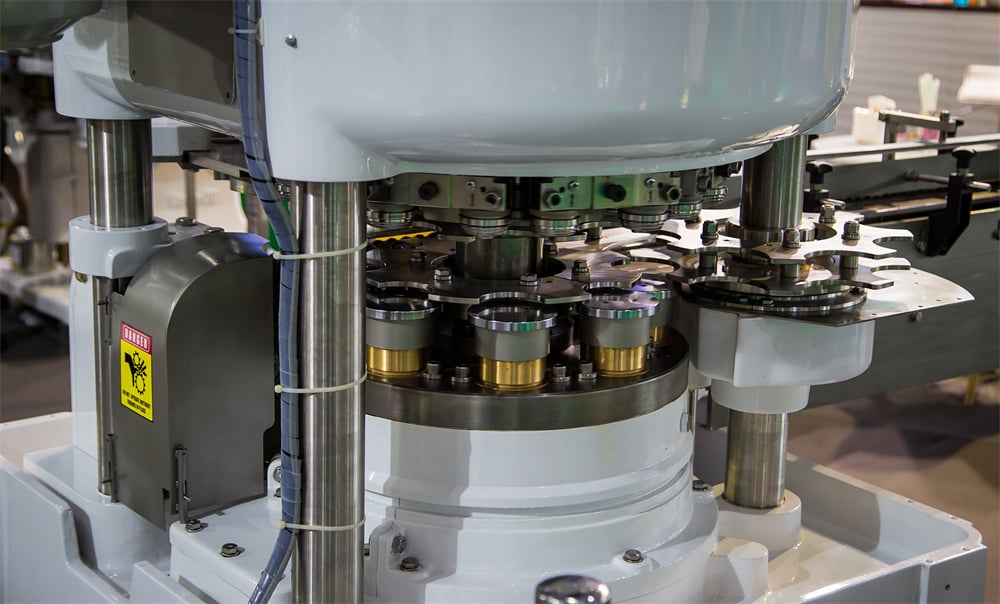
Furthermore, the maintenance of a small hydraulic press is generally more straightforward. The hydraulic systems are less complex, featuring smaller pumps and fewer valves. This translates to lower operational costs and easier troubleshooting. For businesses that focus on prototyping or low-to-medium volume production of small parts, the small hydraulic press offers an unbeatable combination of affordability and performance. It provides the necessary force without the overhead of a massive industrial installation.
Heavy-Duty Hydraulic Press Overview: The Powerhouse of Industry
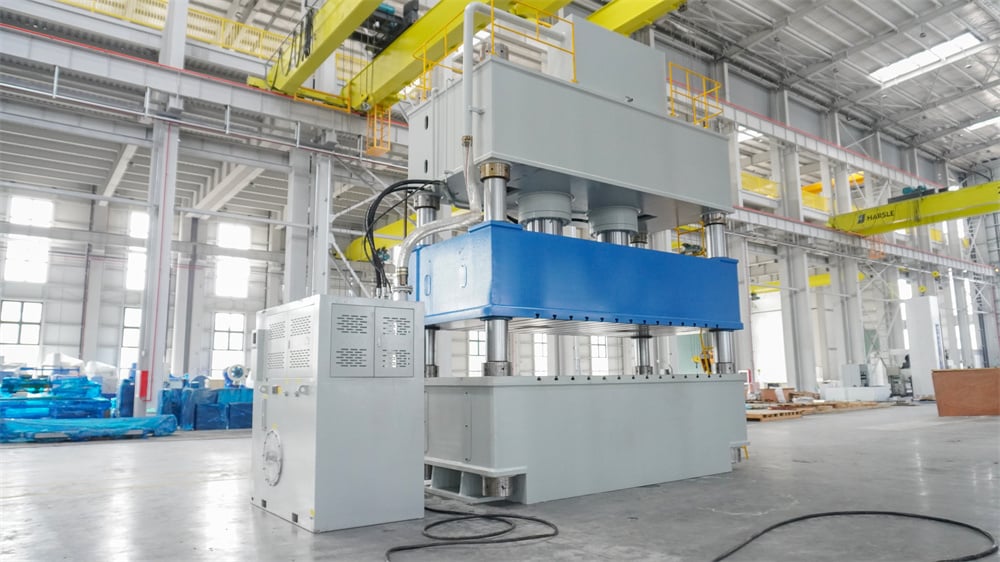
When the task involves deforming thick steel plates, deep drawing large automotive panels, or forging heavy industrial components, only a heavy-duty hydraulic press will suffice. These machines are engineered with massive structural rigidity to withstand the immense internal pressures generated during operation. A heavy-duty press often utilizes a four-column or a heavy-duty H-frame design to ensure that the bolster and ram remain perfectly parallel, even under off-center loading conditions. This structural integrity is the defining characteristic of the ’s Difference Between Small Hydraulic Press Heavy-Duty Hydraulic Press?.
The hydraulic systems in heavy-duty presses are significantly more sophisticated. They often employ multiple high-capacity pumps, large-diameter cylinders, and complex manifold blocks to manage the flow of hundreds of gallons of hydraulic oil. To handle the heat generated by such high-pressure work, these machines are equipped with advanced cooling systems. Additionally, heavy-duty presses are frequently integrated into fully automated production lines, featuring robotic loaders and unloaders, as the parts they produce are often too heavy for manual handling.
Safety is another area where heavy-duty presses differ. Due to the extreme forces involved, these machines require robust safety enclosures, light curtains, and redundant hydraulic locking systems to protect operators. The engineering focus is on durability and long-term reliability under grueling 24/7 production schedules. While the initial investment is substantial, the ability of a heavy-duty press to produce large, complex parts with high repeatability makes it an essential asset for industries like shipbuilding, heavy machinery manufacturing, and renewable energy infrastructure.
Specification Comparison Table
To better understand the technical divergence, the following table compares the typical specifications of small versus heavy-duty hydraulic presses.
| Feature | Small Hydraulic Press | Heavy-Duty Hydraulic Press |
|---|---|---|
| Tonnage Range | 1 – 100 Tons | 500 – 10,000+ Tons |
| Frame Construction | C-Frame or Light H-Frame | Heavy H-Frame or 4-Column |
| Stroke Length | Short to Medium (50mm – 300mm) | Long (500mm – 2000mm+) |
| Approach Speed | High (Fast cycling) | Variable (Controlled high-force) |
| Hydraulic Fluid Volume | 10 – 50 Gallons | 200 – 2,000+ Gallons |
| Control System | Basic PLC or Manual | Advanced CNC / Multi-axis PLC |
| Typical Footprint | 1 – 4 Square Meters | 15 – 100+ Square Meters |
| Power Consumption | Low (2kW – 15kW) | High (50kW – 500kW+) |
Best-fit Applications: Choosing the Right Tool for the Job
The application is the ultimate deciding factor when considering the ’s Difference Between Small Hydraulic Press Heavy-Duty Hydraulic Press?. Small hydraulic presses are the go-to choice for precision-oriented tasks. In the electronics industry, they are used for pressing connectors and assembling delicate housings. In the jewelry and watchmaking sectors, they provide the controlled force needed for embossing and coin striking. Laboratories also utilize small presses for preparing samples, such as KBr pellets for FTIR spectroscopy, where precise pressure control is more important than raw power.
On the other end of the spectrum, heavy-duty hydraulic presses dominate the heavy manufacturing landscape. In the automotive industry, they are used for stamping body panels, chassis components, and engine parts. The aerospace sector relies on them for forming large wing skins and structural bulkheads from high-strength alloys. Additionally, the energy sector uses heavy-duty presses to manufacture components for wind turbines and nuclear reactors. These applications require not just force, but the ability to maintain that force over a long stroke, which is a hallmark of heavy-duty engineering.
There is also a middle ground, often referred to as medium-duty presses (100-500 tons), which bridge the gap. However, the distinction remains clear: if your process involves thin materials, high speed, and small parts, go small. If you are dealing with structural steel, deep draws, or massive surface areas, heavy-duty is the only viable path. Choosing the wrong machine can lead to either under-utilization of a massive asset or the structural failure of a machine pushed beyond its limits.
Cost and Maintenance Comparison: Long-term Considerations
The financial implications of choosing between a small and heavy-duty press extend far beyond the initial purchase price. A small hydraulic press is relatively inexpensive to acquire and operate. Its energy consumption is low, and replacement parts like seals and filters are affordable and easy to source. Maintenance usually involves routine oil changes and checking for leaks, which can often be handled by in-house staff without specialized training.
In contrast, a heavy-duty hydraulic press represents a major capital expenditure. Beyond the machine itself, there are significant costs associated with site preparation, including reinforced concrete foundations to support the massive weight and vibration. Operational costs are also much higher due to the electricity required to run large hydraulic pumps. Maintenance for heavy-duty machines is a specialized field. It requires periodic ultrasonic testing of the frame to check for fatigue cracks, sophisticated oil analysis to prevent pump failure, and the maintenance of complex cooling and filtration systems. Downtime on a heavy-duty press can cost a company thousands of dollars per hour, making a proactive maintenance schedule essential.
When calculating the Total Cost of Ownership (TCO), manufacturers must also consider the lifespan of the machine. A well-maintained heavy-duty press can last for decades, often outliving the products it was originally bought to manufacture. Small presses, while also durable, are more likely to be replaced as technology evolves or production needs shift toward different part geometries. Therefore, the investment in a heavy-duty press is often viewed as a long-term strategic asset, whereas a small press is a flexible tactical tool.
Recommendation: How to Make the Final Decision
Deciding between a small and heavy-duty hydraulic press requires a comprehensive analysis of your current and future production goals. Start by defining the maximum force required for your toughest material. Always include a safety margin of at least 20-30% to ensure the machine isn’t constantly running at its peak capacity. If your required force is under 100 tons, a small press is likely the most efficient choice. However, if you anticipate moving into thicker materials or larger part sizes, investing in a larger capacity machine now may save you from needing an upgrade in the near future.
Consider the following checklist before making your purchase:
- Material Thickness and Type: High-strength steel and thick plates necessitate heavy-duty tonnage.
- Part Dimensions: Ensure the bolster size and daylight (the space between the ram and bolster) can accommodate your largest dies.
- Production Volume: High-speed, small-part production favors the agility of a small press.
- Facility Constraints: Do you have the floor space and power infrastructure for a heavy-duty machine?
- Budget: Factor in not just the purchase price, but installation, training, and long-term maintenance.
At HARSLE, we recommend consulting with a technical expert who can perform a simulation of your pressing process. This ensures that the machine you choose—whether small or heavy-duty—is perfectly matched to your operational requirements, ensuring both safety and profitability.
FAQ: Common Questions About Hydraulic Press Selection
1. Can a small hydraulic press be modified to handle more tonnage?
Generally, no. The frame of a small hydraulic press is engineered specifically for its rated capacity. Attempting to increase the tonnage by installing a larger cylinder or increasing hydraulic pressure can lead to catastrophic frame failure, posing a severe safety risk. Always use a machine within its rated specifications.
2. What is the most common cause of failure in heavy-duty presses?
The most common issues are hydraulic fluid contamination and seal wear. Because heavy-duty presses move large volumes of oil at high pressure, even small particles can cause significant damage to pumps and valves. Regular oil filtration and monitoring are critical to preventing these failures.
3. Is a four-column press always better than a C-frame press?
Not necessarily. A four-column press offers superior rigidity and parallelism, which is vital for heavy-duty and high-precision work. However, a C-frame press provides better access to the work area from three sides, which is often more convenient for manual loading and unloading in small-scale operations.
4. How often should I change the hydraulic oil?
For small presses, oil changes are typically recommended every 2,000 to 4,000 hours of operation. For heavy-duty presses, it is more common to perform regular oil analysis and only change the oil when the analysis indicates degradation or high contamination levels, as the volume of oil involved is much larger.
5. Does HARSLE provide custom solutions for both small and heavy-duty presses?
Yes, HARSLE specializes in tailoring hydraulic presses to specific customer needs, whether it’s adding specialized controls to a small precision press or engineering a massive heavy-duty system for specialized industrial forming. Custom bolster sizes, stroke lengths, and automation integration are all available options.