Fiber Laser vs YAG Laser Cutting Machine: Key Differences for Manufacturers


Comparison Summary: The Evolution of Industrial Laser Cutting
In the rapidly evolving landscape of metal fabrication, choosing the right thermal cutting technology is a pivotal decision for any manufacturing facility. For decades, the industry has seen a transition from traditional mechanical cutting to CO2 lasers, then to YAG (Yttrium Aluminum Garnet) lasers, and finally to the current industry standard: Fiber lasers. Understanding the Fiber Laser Vs Yag Laser Cutting Machine: Key Differences Manufacturers must consider is essential for optimizing production throughput and minimizing operational costs.
At its core, the debate between Fiber and YAG lasers centers on efficiency, beam quality, and maintenance requirements. YAG lasers were once the go-to solution for high-precision metal cutting and marking, particularly for reflective materials. However, the advent of fiber laser technology has revolutionized the market by offering significantly higher wall-plug efficiency and a much lower cost of ownership. While both technologies utilize a solid-state medium, the way the laser light is generated and delivered to the workpiece differs fundamentally, leading to vast differences in performance.
For modern manufacturers, the choice often boils down to the specific thickness of the material, the required cutting speed, and the available budget for long-term maintenance. Fiber lasers excel in high-speed processing of thin to medium-thickness sheets, while YAG lasers are increasingly relegated to niche applications or older production lines where pulse-control is prioritized over raw speed. This guide provides a deep dive into these two technologies to help you make an informed investment for your workshop.
Fiber Laser Overview: The Modern Industry Standard
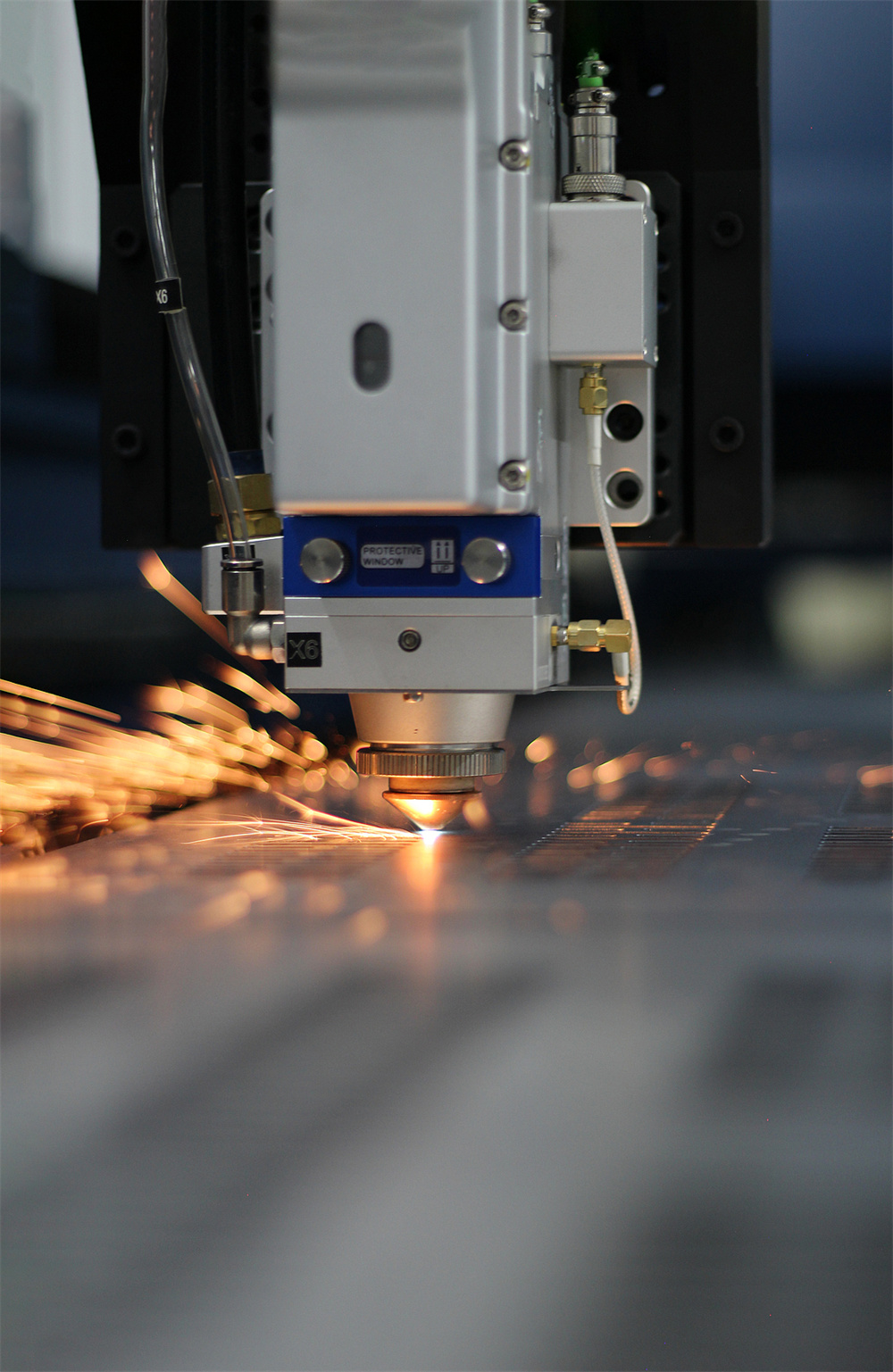
Fiber laser technology represents the pinnacle of current industrial laser cutting. A fiber laser uses an optical fiber cable doped with rare-earth elements, typically ytterbium, as its active gain medium. Unlike other lasers that require complex mirror alignments, the laser light in a fiber system is generated within the fiber itself and delivered via a flexible armored cable directly to the cutting head. This “solid-state” design eliminates the need for sensitive internal optics in the resonator, making the machine incredibly robust.
One of the primary reasons manufacturers prefer fiber lasers is their exceptional beam quality. The laser beam produced has a very small spot size and a high power density, which allows for incredibly narrow kerf widths and high-speed cutting. In materials like stainless steel and carbon steel under 6mm, a fiber laser can often cut two to three times faster than a YAG laser of equivalent power. Furthermore, the wavelength of a fiber laser (typically around 1.064 micrometers) is highly absorbable by metals, including highly reflective ones like brass and copper, which were historically difficult to process with CO2 lasers.
From an operational standpoint, fiber lasers are renowned for their energy efficiency. They boast a wall-plug efficiency of 30% to 40%, meaning they convert a significant portion of electrical input into usable laser power. This efficiency translates directly into lower utility bills and a smaller carbon footprint for the manufacturing facility. Additionally, because the laser is contained within the fiber, there are no mirrors to clean or align, and no flash lamps to replace, leading to a drastically reduced maintenance schedule compared to older technologies.
YAG Laser Overview: The Traditional Solid-State Choice
YAG lasers, specifically Nd:YAG (Neodymium-doped Yttrium Aluminum Garnet), were the first solid-state lasers to gain widespread traction in metalworking. In a YAG system, the laser medium is a synthetic crystal. This crystal is excited (pumped) by either high-intensity flash lamps or laser diodes. The resulting laser light is then directed through a series of mirrors and lenses to the cutting head. While YAG lasers share the same 1.064-micrometer wavelength as fiber lasers, the delivery system is fundamentally different.
Historically, YAG lasers were favored for their ability to deliver high-peak-power pulses. This makes them effective for certain types of precision drilling and deep-engraving applications where heat-affected zones (HAZ) need to be strictly controlled. However, the use of flash lamps as a pumping source comes with significant drawbacks. Flash lamps have a relatively short lifespan (typically 500 to 1,000 hours) and require frequent replacement, which increases downtime and consumable costs. Furthermore, the thermal management of a YAG crystal is complex; as the crystal heats up, it can suffer from “thermal lensing,” which distorts the beam quality and affects cutting consistency.
In today’s market, YAG cutting machines are less common for high-volume sheet metal fabrication. They are often seen as a lower-cost entry point for small shops that do not require the extreme speeds of fiber lasers or for specialized applications involving very specific pulse-width requirements. However, when analyzing the Fiber Laser Vs Yag Laser Cutting Machine: Key Differences Manufacturers encounter, the high maintenance and low energy efficiency (often less than 3-5%) of lamp-pumped YAG systems make them difficult to justify for modern competitive production.

Specification Comparison Table
To better understand the technical disparities, the following table outlines the key performance metrics between Fiber and YAG laser systems.
| Feature | Fiber Laser Cutting Machine | YAG Laser Cutting Machine |
|---|---|---|
| Gain Medium | Doped Optical Fiber (Ytterbium) | Nd:YAG Crystal |
| Wavelength | 1.064 μm | 1.064 μm |
| Wall-Plug Efficiency | 30% – 40% | 2% – 5% (Lamp-pumped) |
| Maintenance Requirement | Very Low (No mirrors/lamps) | High (Lamp/Mirror replacement) |
| Cooling Requirement | Moderate (Air or Water) | High (Heavy-duty Water Chiller) |
| Cutting Speed (Thin Metal) | Very High | Moderate to Low |
| Expected Source Lifespan | Up to 100,000 Hours | 10,000 – 20,000 Hours |
| Reflective Metal Handling | Excellent (Copper, Brass, Alum) | Good (but slower) |
Best-fit Applications for Each Technology
Fiber Laser Applications
Fiber lasers are the workhorses of the modern sheet metal industry. Their high power density makes them ideal for high-speed cutting of thin to medium-gauge materials. Manufacturers in the automotive, aerospace, and electronics sectors rely on fiber lasers for producing intricate components with high repeatability. Because fiber lasers can handle reflective materials without the risk of back-reflection damaging the resonator, they are the primary choice for cutting copper busbars, brass decorative panels, and aluminum housings.
Furthermore, fiber lasers are increasingly used in heavy industry. With power levels now reaching 20kW, 30kW, and even 60kW, fiber lasers are challenging plasma and waterjet cutting for thick plate processing (up to 50mm or more). The ability to switch between high-speed nitrogen cutting for clean edges and oxygen cutting for thick carbon steel makes the fiber laser an incredibly versatile tool for job shops that handle a wide variety of projects.
YAG Laser Applications
While their dominance has waned, YAG lasers still find a home in specific micro-machining and medical device manufacturing. Their pulse characteristics allow for very fine control over energy delivery, which is useful for welding dissimilar metals or cutting extremely thin foils where thermal distortion must be minimized. In some jewelry manufacturing and specialized engraving tasks, the specific pulse shape of a YAG laser is preferred for achieving certain aesthetic finishes.
However, for the vast majority of industrial “cutting” tasks—defined as separating metal sheets into parts—the YAG laser is no longer the first choice. Most manufacturers who previously used YAG have transitioned to fiber to stay competitive in terms of lead times and part cost. If a shop is currently using a YAG system, it is often for legacy parts or because the initial capital expenditure for a fiber upgrade has not yet been allocated.
Cost and Maintenance Comparison
When evaluating Fiber Laser Vs Yag Laser Cutting Machine: Key Differences Manufacturers must look beyond the initial sticker price. The Total Cost of Ownership (TCO) is where the fiber laser truly shines. A YAG laser requires the replacement of flash lamps every few hundred hours. Each replacement involves not just the cost of the lamp, but also the labor and the subsequent recalibration of the optical path. Over a few years, these costs can exceed the original price of the machine.
In contrast, a fiber laser is virtually maintenance-free regarding the laser source. There are no mirrors to align and no lamps to change. The primary consumables for a fiber laser are the cutting nozzles, protective windows (lenses), and the assist gases (Nitrogen, Oxygen, or Compressed Air). Because the fiber laser is so much more energy-efficient, the electricity savings alone can often pay for the machine’s financing costs in high-production environments. A 2kW fiber laser will consume significantly less power than a 500W YAG laser while producing significantly more output.
Cooling is another cost factor. YAG lasers generate a massive amount of waste heat due to their low efficiency, requiring large, power-hungry industrial chillers. Fiber lasers, being more efficient, generate less heat per watt of laser power, allowing for smaller, more efficient cooling systems. This reduces both the electrical load and the floor space required for the installation.
Recommendation: Which Should You Choose?
For 95% of modern manufacturing scenarios, the Fiber Laser is the clear winner. The combination of high speed, low maintenance, and superior energy efficiency provides a Return on Investment (ROI) that YAG lasers simply cannot match. If your business involves cutting sheet metal, stainless steel, aluminum, or brass, a fiber laser from a reputable manufacturer like HARSLE will provide the precision and throughput needed to compete in today’s market.
You should consider a Fiber Laser if:
- You need to process large volumes of sheet metal quickly.
- You want to minimize downtime and maintenance costs.
- You are looking to reduce your factory’s energy consumption.
- You work with reflective materials like copper or brass.
- You require a machine with a long operational lifespan (10+ years).
A YAG laser might only be considered if you are operating on an extremely tight initial budget and only need to perform occasional, low-volume precision tasks, or if you have a very specific micro-welding application that specifically calls for YAG pulse characteristics. However, even in these cases, modern pulsed fiber lasers are quickly closing the gap, making the YAG laser a technology of the past.
Frequently Asked Questions (FAQ)
1. Is a fiber laser more expensive than a YAG laser?
Initially, the purchase price of a fiber laser may be higher than a low-end YAG system. However, when you factor in the costs of replacement lamps, electricity, and maintenance, the fiber laser is significantly cheaper to operate and offers a much faster ROI.
2. Can fiber lasers cut non-metallic materials?
Fiber lasers are specifically optimized for metals. While they can cut some plastics or composites, they are not suitable for wood or organic materials because the 1.064-micrometer wavelength is not well-absorbed by these substances. For non-metals, a CO2 laser is generally the better choice.
3. How long does a fiber laser source last?
Most high-quality fiber laser sources (such as those from IPG, Raycus, or Max) are rated for approximately 100,000 hours of operation. This is significantly longer than the 10,000 to 20,000 hours expected from a YAG system’s components.
4. Does a fiber laser require a specialized operator?
While all CNC machinery requires training, fiber lasers are generally easier to maintain than YAG lasers because there is no need for complex optical alignment. Modern CNC software makes the operation of fiber lasers very intuitive for technicians familiar with CAD/CAM processes.
5. Why is fiber laser better for reflective metals?
The wavelength of a fiber laser is more readily absorbed by metals like brass and aluminum. Additionally, the delivery through a fiber cable and the use of isolators protect the laser source from “back-reflection,” which can destroy the mirrors in a YAG or CO2 system.