
How Press Brakes Improve Precision in Metal Bending Applications: A Comprehensive Guide


Introduction
In the modern landscape of metal fabrication, the demand for tighter tolerances and complex geometries has never been higher. As industries ranging from aerospace to automotive manufacturing push the boundaries of design, the role of high-precision machinery becomes paramount. This is where the question of how press brakes improve precision in metal bending applications becomes a critical focal point for shop owners and engineers alike.
A press brake is more than just a tool for folding metal; it is a sophisticated piece of industrial machinery designed to apply controlled force to a workpiece, resulting in precise, repeatable bends. By integrating advanced CNC (Computer Numerical Control) systems, modern press brakes have transformed from manual labor-intensive tools into highly automated, error-reducing powerhouses. Understanding the mechanics behind this precision is essential for any fabricator looking to optimize their production line.
At HARSLE, we recognize that precision is the cornerstone of quality. Whether you are dealing with thin-gauge aluminum or heavy-duty structural steel, the ability to maintain consistent angles and dimensions across hundreds of parts is what separates a high-quality product from scrap metal. This article explores the technical advancements and operational strategies that allow press brakes to achieve unparalleled accuracy in today’s competitive market.
Key Considerations for Precision Bending
Achieving precision in metal bending is not solely dependent on the machine itself; it requires a holistic approach that considers material properties, tooling quality, and operator expertise. One of the primary factors is material springback. When a metal sheet is bent, the internal stresses cause it to attempt to return to its original shape once the pressure is released. High-end press brakes account for this by using advanced algorithms to calculate the necessary over-bend, ensuring the final angle is exactly as specified.
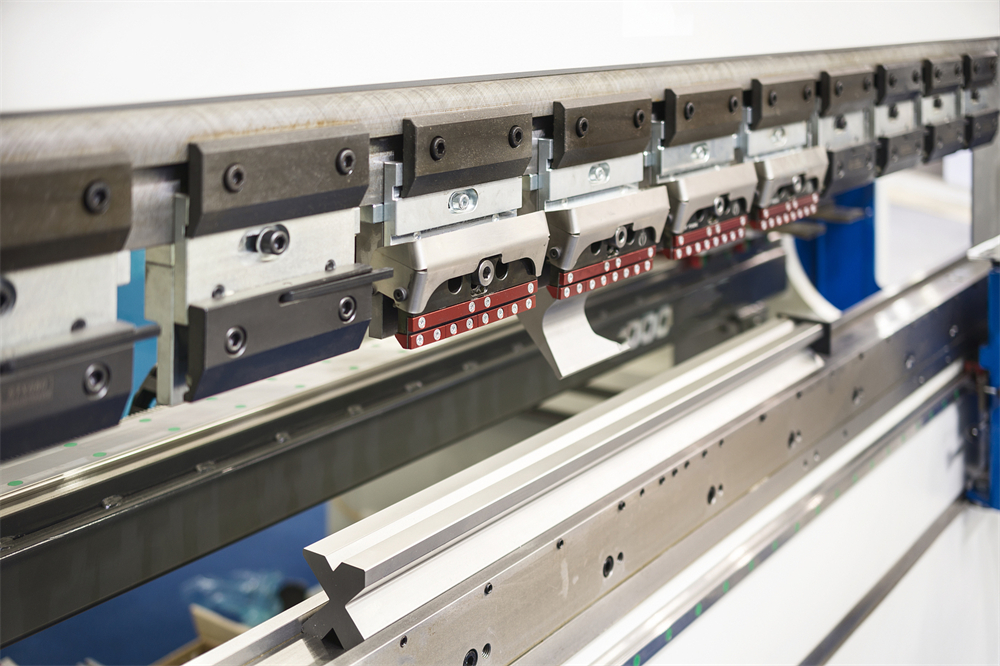
Another critical consideration is the consistency of the material thickness. Even slight variations in the gauge of the sheet metal can lead to significant deviations in the bend angle. Modern press brakes are equipped with real-time thickness sensors and dynamic crowning systems that adjust the bed’s deflection in real-time. This ensures that the pressure is distributed evenly across the entire length of the bend, preventing the “canoe effect” where the center of the bend is less accurate than the ends.
Tooling selection also plays a vital role in the precision equation. Using worn, mismatched, or low-quality punches and dies will inevitably lead to inconsistent results. Precision-ground tooling is essential for maintaining tight tolerances. Furthermore, the alignment of the punch and die must be calibrated with micron-level accuracy. If the tooling is misaligned, the force distribution becomes uneven, leading to twisted parts and inconsistent bend radii.
Finally, the environment in which the press brake operates cannot be ignored. Temperature fluctuations can affect both the machine’s hydraulic fluid viscosity and the material’s ductility. Maintaining a stable shop environment and ensuring that the machine is properly leveled and anchored are fundamental steps in achieving the high-precision results that modern manufacturing demands. By addressing these variables, fabricators can significantly enhance the reliability of their bending processes.
Technical Details: How Press Brakes Improve Precision in Metal Bending Applications
The evolution of the press brake has been driven by the integration of CNC technology. Modern systems allow operators to input complex CAD files directly into the machine’s controller. The controller then calculates the optimal bending sequence, backgauge position, and ram depth. This automation removes the element of human error, which was historically the leading cause of inconsistencies in metal bending.
Hydraulic systems have also seen massive improvements. Proportional valve technology allows for extremely fine control over the ram’s movement. By modulating the flow of hydraulic fluid, the machine can achieve precise positioning down to the thousandth of an inch. This level of control is essential for multi-stage bending, where a single part may require several different angles and radii to be formed in a specific sequence.
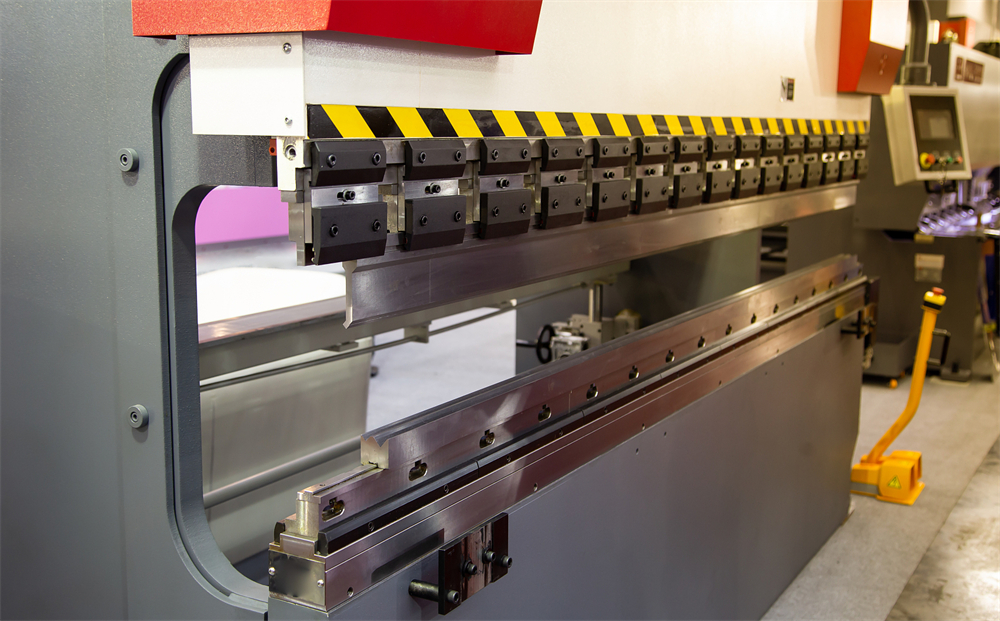
The backgauge system is perhaps the most critical component for dimensional accuracy. A multi-axis backgauge (often 4, 6, or even 8 axes) allows the machine to position the workpiece precisely in three-dimensional space. This ensures that the bend line is perfectly parallel to the edge of the sheet. Advanced backgauges can even move independently, allowing for tapered bends or complex shapes that would be impossible to achieve with a standard single-axis backgauge.
Dynamic crowning is another technological marvel that enhances precision. As the press brake applies force, the frame and the bed naturally deflect under the load. If left uncorrected, this deflection would cause the bend angle to vary along the length of the part. A dynamic crowning system uses hydraulic cylinders or mechanical wedges to compensate for this deflection, ensuring that the ram and the bed remain perfectly parallel throughout the entire bending cycle.
Lastly, laser angle measurement systems have revolutionized the industry. These sensors monitor the bend angle in real-time as the ram descends. If the sensor detects that the material is not reaching the target angle due to variations in material strength or thickness, the controller automatically adjusts the ram depth mid-stroke. This closed-loop feedback system is the pinnacle of precision in modern metal fabrication.
Selection Advice: Choosing the Right Equipment
When selecting a press brake, the first step is to define your specific production requirements. Are you bending thin-gauge stainless steel for medical devices, or are you forming thick structural plates for construction? The tonnage and bed length must be matched to your heaviest and longest parts, but over-specifying can lead to unnecessary costs and reduced efficiency. A machine that is too large for your typical work will be slower and less energy-efficient.
Consider the level of automation you require. If you are producing high-volume, repetitive parts, a robotic press brake cell might be the best investment. These systems offer unmatched consistency and can operate 24/7 without fatigue. However, for job shops that handle a wide variety of custom parts, a versatile CNC press brake with a quick-change tooling system is usually a more practical and cost-effective choice.
Evaluate the software capabilities of the machine. The ease of programming is just as important as the hardware. Look for controllers that support offline programming, allowing your engineers to prepare bending sequences on a computer while the machine is still running a previous job. This minimizes downtime and maximizes the utilization of your equipment.
Don’t overlook the importance of after-sales support and maintenance. A press brake is a long-term investment. Choose a manufacturer like HARSLE that provides comprehensive training, readily available spare parts, and responsive technical support. Regular maintenance, such as hydraulic fluid analysis and calibration checks, is essential to keep the machine performing at its peak precision over its entire service life.
FAQ
- What is the most important factor for precision in press brakes? The most important factor is the combination of a rigid machine frame and a high-quality CNC control system that can compensate for material springback and machine deflection.
- How does a CNC controller improve bending accuracy? CNC controllers automate the ram depth and backgauge positioning, eliminating manual measurement errors and ensuring that every part is bent to the exact same specifications.
- What is dynamic crowning? Dynamic crowning is a system that adjusts the bed of the press brake to compensate for deflection under load, ensuring a uniform bend angle across the entire length of the workpiece.
- How often should a press brake be calibrated? Calibration should be performed at least once a year, or more frequently if the machine is used in a high-volume, high-precision environment.
- Can I use old tooling on a new CNC press brake? While possible, it is highly discouraged. Using worn or mismatched tooling will compromise the precision of your new machine and may lead to uneven wear on the ram and bed.
Conclusion
In conclusion, the question of how press brakes improve precision in metal bending applications is answered by the seamless integration of mechanical rigidity, advanced hydraulic control, and intelligent software. By leveraging technologies like dynamic crowning, multi-axis backgauges, and real-time laser angle measurement, modern fabricators can achieve levels of accuracy that were once considered impossible. Investing in the right equipment and maintaining it with care is the surest path to success in the competitive world of metal fabrication.
At HARSLE, we are committed to providing the industry with the tools necessary to excel. Our range of CNC press brakes is designed with precision, reliability, and ease of use at the forefront. By understanding the technical nuances of your bending processes and selecting the right machinery, you can ensure that your shop remains at the cutting edge of quality and efficiency. Whether you are a small job shop or a large-scale manufacturer, the right press brake is the foundation upon which your reputation for excellence is built.

