
How Hydraulic Press Capacity Affects Performance in Punching and Pressing Applications


Comparison Summary: Understanding Capacity in Hydraulic Pressing
In the world of metal fabrication, the term ‘capacity’ is often used interchangeably with ‘tonnage,’ but it encompasses far more than just raw force. When evaluating how hydraulic press capacity affects performance in punching and pressing applications, one must consider the synergy between pressure, stroke length, frame rigidity, and cycle speed. A machine with insufficient capacity will fail to shear or deform the material cleanly, leading to tool wear and structural fatigue. Conversely, an oversized machine may lead to unnecessary energy consumption and slower cycle times for delicate operations.
The fundamental relationship between capacity and performance lies in the machine’s ability to maintain constant pressure throughout the work stroke. Unlike mechanical presses, which deliver peak force at the bottom of the stroke, hydraulic presses provide full tonnage at any point. This characteristic makes capacity management critical for deep drawing, heavy-duty punching, and complex forming. In this guide, we compare two distinct classes of HARSLE hydraulic machinery to illustrate how capacity dictates operational success in different industrial contexts.
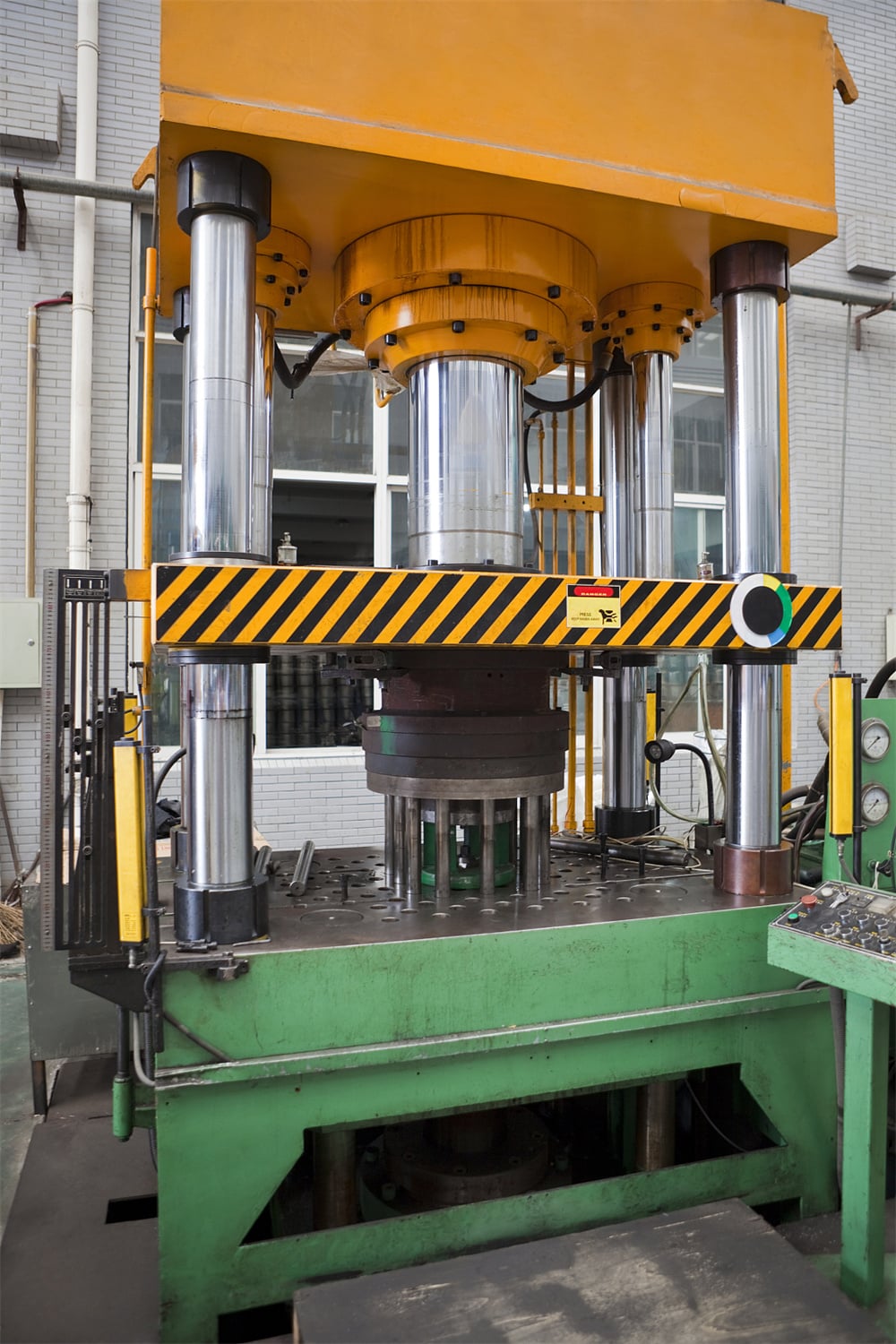
Machine A Overview: High-Capacity H-Frame Hydraulic Press (500T – 1000T)
High-capacity H-frame presses, such as the HARSLE Y32 series, are the workhorses of heavy industry. These machines are engineered for applications requiring massive force over a large surface area. The ‘H’ frame design provides exceptional rigidity, minimizing frame deflection even when the press is operating at its maximum rated capacity. This stability is crucial for maintaining the alignment of large, multi-stage dies used in automotive body panel pressing or heavy plate punching.
When discussing how hydraulic press capacity affects performance in punching and pressing applications for these heavy-duty machines, the focus is on ‘reserve capacity.’ Operating a 1000-ton press at 700 tons ensures that the hydraulic system is not constantly stressed, which extends the life of the seals, pumps, and valves. Furthermore, high-capacity machines often feature advanced regenerative circuits that allow for rapid approach speeds followed by a controlled, high-pressure pressing phase, optimizing the balance between power and productivity.
The performance of a high-capacity press is also measured by its ability to handle off-center loading. In large-scale punching operations, the resistance may not be perfectly centered. A high-capacity H-frame machine utilizes heavy-duty guiding systems and robust cylinders to counteract these forces, ensuring that the punch enters the die with micron-level precision. This prevents ‘die kick’ and ensures a clean shear edge on thick materials like stainless steel or high-tensile alloys.
Machine B Overview: Precision C-Frame Hydraulic Press (20T – 200T)
On the other end of the spectrum, precision C-frame (or gap-frame) presses are designed for speed, accessibility, and versatility. These machines are typically used for smaller components, such as electronic brackets, appliance parts, and hardware. While they lack the massive tonnage of H-frame models, their capacity is optimized for high-frequency punching and shallow pressing. The C-frame design allows operators easy access from three sides, making it ideal for manual feeding or integration with automated strip feeders.
In these applications, the way hydraulic press capacity affects performance is seen in the ‘ram speed’ and ‘reversal precision.’ Because the tonnage requirements are lower, the hydraulic cylinders can be smaller and more responsive. This allows for faster cycle times, which is the primary performance metric for high-volume production. A 100-ton HARSLE C-frame press can often outperform a larger machine in small-part production simply because it can complete more strokes per minute without sacrificing the accuracy of the punch.
However, the limitation of the C-frame design is ‘angular deflection.’ As the press reaches its maximum capacity, the open throat of the ‘C’ tends to open slightly. High-quality HARSLE C-frame presses are built with reinforced steel plates to mitigate this, but understanding the capacity limit is vital. Pushing a C-frame press to its absolute limit can lead to uneven tool wear. Therefore, for precision punching, selecting a machine where the required force is roughly 60-80% of the rated capacity is the industry standard for maintaining peak performance.
Specification Comparison Table
| Feature | High-Capacity H-Frame (Y32-500T) | Precision C-Frame (Y41-100T) |
|---|---|---|
| Nominal Force | 5000 kN | 1000 kN |
| Frame Construction | Four-Column / H-Frame | C-Frame / Gap-Frame |
| Max Stroke | 800 mm | 400 mm |
| Approach Speed | 120 mm/s | 200 mm/s |
| Working Speed | 5-15 mm/s | 10-25 mm/s |
| Table Size | 1500 x 1200 mm | 800 x 600 mm |
| Primary Application | Deep Drawing, Heavy Punching | Small Part Assembly, Fast Punching |
| Deflection Resistance | Excellent (Symmetrical) | Moderate (Angular) |
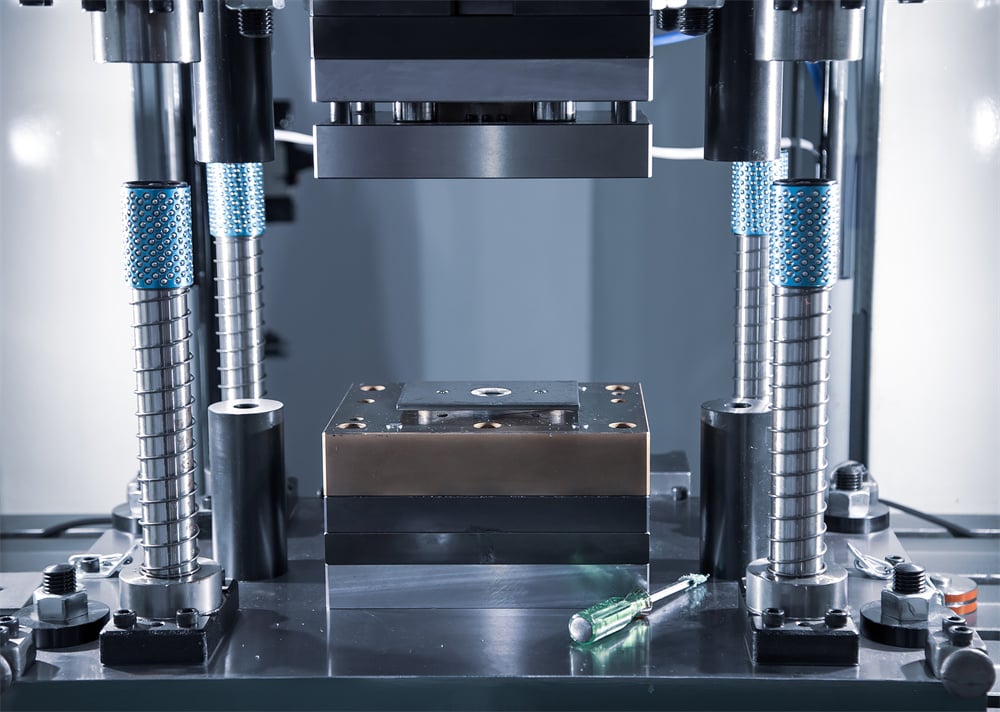
Best-fit Applications: Matching Capacity to Task
Understanding how hydraulic press capacity affects performance in punching and pressing applications requires a deep dive into specific material behaviors. For instance, in punching applications, the required tonnage is calculated based on the shear strength of the material, the perimeter of the cut, and the thickness. If the press capacity is too close to the calculated shear force, the ‘breakthrough’ shock can be violent, damaging the hydraulic valves over time. A higher capacity press absorbs this shock more effectively through its mass and hydraulic damping.
In pressing and deep drawing, capacity affects the ‘flow’ of the metal. If the press lacks sufficient tonnage to maintain the blank holder pressure, the material will wrinkle. Conversely, if the capacity is used incorrectly, it can cause the material to thin or tear. High-capacity machines with programmable logic controllers (PLCs) allow for ‘tonnage profiling,’ where the pressure is adjusted dynamically during the stroke. This is a prime example of how capacity, when managed correctly, directly improves the quality of the finished part.
Furthermore, the automotive industry relies on high-capacity presses for structural components like chassis rails, where the material is both thick and high-strength. In contrast, the electronics industry utilizes lower-capacity, high-speed presses for delicate connectors. In both cases, the performance is defined by the machine’s ability to deliver its rated capacity consistently. A mismatch—using a high-capacity machine for tiny parts—results in poor tactile feedback and higher energy costs, while using a low-capacity machine for heavy tasks results in catastrophic equipment failure.
Cost and Maintenance Comparison
The financial implications of hydraulic press capacity are significant. High-capacity machines represent a larger initial capital investment, not just for the machine itself, but for the foundation and electrical infrastructure required to support it. A 1000-ton press requires a reinforced concrete pit to manage the vibrations and weight, whereas a 100-ton C-frame press can often be bolted directly to a standard factory floor. This ‘hidden’ cost of capacity must be factored into the ROI calculation.
From a maintenance perspective, how hydraulic press capacity affects performance is linked to the complexity of the hydraulic circuit. High-capacity machines utilize larger volumes of hydraulic oil, requiring more substantial filtration systems and cooling units to prevent thermal degradation. The seals in a high-tonnage cylinder are under immense pressure; if the machine is constantly run at 100% capacity, these seals will require more frequent replacement. In contrast, lower-capacity machines have simpler systems that are easier and cheaper to maintain, but they are more susceptible to damage from overloading because their frames have less ‘meat’ to absorb mistakes.
Energy efficiency is another critical factor. Modern HARSLE presses utilize servo-motor driven pumps. In high-capacity applications, these servo systems can save up to 50% in energy costs by only providing the necessary flow and pressure when required. However, the cost of replacing a high-torque servo motor for a 500-ton press is significantly higher than the standard induction motor found in older or smaller models. Therefore, the ‘performance’ of a press also includes its long-term economic viability relative to its capacity usage.
Technical Deep Dive: The Physics of Capacity
To truly grasp how hydraulic press capacity affects performance in punching and pressing applications, one must look at the formula: Force = Pressure × Area. In a hydraulic press, the ‘Area’ is the surface of the piston. To increase capacity, a manufacturer must either increase the hydraulic pressure (which puts more stress on hoses and fittings) or increase the cylinder size (which makes the machine larger and slower). HARSLE engineers balance these factors to ensure that the capacity is delivered efficiently.
Another technical aspect is the ‘Pressure Build-up Time.’ In high-capacity punching, the time it takes for the hydraulic system to reach the required tonnage can affect the ‘cleanliness’ of the punch. If the pressure builds too slowly, the metal may undergo unwanted plastic deformation before the actual shear occurs. High-performance presses use pre-fill valves and high-flow pumps to ensure that the capacity is available almost instantaneously upon contact with the workpiece. This responsiveness is a key performance indicator that separates industrial-grade machinery from entry-level equipment.
Finally, consider the role of ‘Stroke Control.’ Capacity is useless without precision. In pressing applications like powder metallurgy or coin minting, the press must reach a specific tonnage and then hold it for a ‘dwell time.’ The ability of a high-capacity press to maintain a steady pressure within a 1% margin of error is a testament to the quality of its hydraulic manifold and control system. This level of performance ensures that every part produced is identical, reducing scrap rates and increasing overall equipment effectiveness (OEE).
Recommendation: Choosing the Right Capacity
When selecting a machine, the recommendation is always to perform a thorough ‘Tonnage Calculation’ for your most demanding part and then add a 20-25% safety margin. This margin ensures that you are not constantly redlining the machine, which is the most common cause of hydraulic failure. If your primary application is punching thick plate, prioritize an H-frame design for its rigidity. If you are performing high-speed assembly or light punching, a C-frame press will offer better ergonomics and faster throughput.
For businesses looking to future-proof their operations, a mid-to-high capacity press with a variable frequency drive (VFD) or servo-hydraulic system is the best investment. This allows the machine to perform ‘small’ tasks efficiently while still having the ‘muscle’ available for larger projects. HARSLE offers a range of customizable options that allow buyers to specify table sizes and stroke lengths that match their specific capacity needs, ensuring that the performance is tailored to the production line.
Frequently Asked Questions (FAQ)
1. How do I calculate the required capacity for a punching application?
The formula is: Tonnage = (Perimeter of Cut × Material Thickness × Shear Strength) / 2000 (for US tons). It is essential to use the maximum shear strength of the material to ensure the press has enough capacity to complete the cut without stalling.
2. Can I use a high-capacity press for very light pressing tasks?
Yes, but it may not be efficient. High-capacity presses move slower and consume more power. Additionally, the ‘resolution’ of the pressure control might not be fine enough for very delicate tasks, potentially leading to over-pressing if not equipped with precision servo controls.
3. What happens if I exceed the rated capacity of my hydraulic press?
Exceeding the capacity can lead to several issues: hydraulic seal failure, cracked frames, bent platens, or motor burnout. Most modern HARSLE presses include hydraulic relief valves to prevent this, but repeated overloading will still cause structural fatigue over time.
4. Does stroke length affect the capacity of a hydraulic press?
No, the tonnage capacity remains constant throughout the entire stroke in a hydraulic press. This is a major advantage over mechanical presses, where the available force varies depending on the position of the crankshaft.
5. How does hydraulic oil temperature affect press performance?
As oil heats up, its viscosity decreases, which can lead to internal leakage in the pumps and valves. This effectively reduces the ‘usable’ capacity and speed of the press. High-capacity machines often include oil coolers to maintain a consistent operating temperature and performance level.