
Hydraulic Press vs Power Press: Which Offers Better Flexibility in Manufacturing?


Comparison Summary: Understanding the Core Differences
In the modern metalworking landscape, the debate between the Hydraulic Press Vs Power Press: Which Offers Better Flexibility In Manufacturing? is central to optimizing production lines. Both machines are stalwarts of the factory floor, yet they operate on fundamentally different physical principles. A hydraulic press utilizes fluid pressure (Pascal’s Law) to generate force, offering a controlled, consistent squeeze throughout the entire stroke. In contrast, a power press (often referred to as a mechanical press) uses a flywheel, crankshaft, and clutch system to deliver a sudden, high-energy impact. While the power press is the undisputed king of high-speed, high-volume repetition, the hydraulic press is often lauded for its versatility and adaptability to complex geometries.
Flexibility in manufacturing refers to a machine’s ability to handle various materials, part designs, and production volumes with minimal downtime and tooling changes. As manufacturers move toward ‘Industry 4.0’ and ‘Just-In-Time’ production, the need for machines that can pivot between different tasks is higher than ever. This article provides an exhaustive deep dive into how these two machine types compare across technical specifications, operational flexibility, and long-term ROI, helping you determine which HARSLE solution fits your specific shop requirements.
Hydraulic Press Overview: The Versatile Workhorse
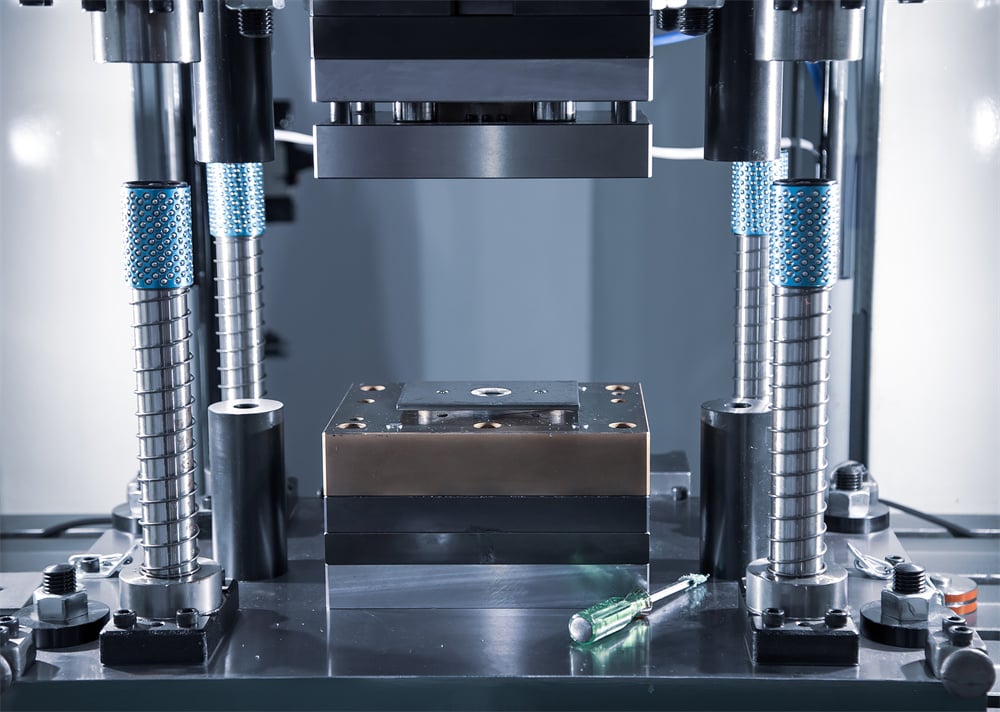
The hydraulic press is defined by its ability to deliver full rated tonnage at any point in the stroke. Unlike mechanical systems that rely on the position of the crankshaft, a hydraulic system uses a pump to force oil into a cylinder, moving the ram downward with precise control. This fundamental characteristic allows operators to adjust the stroke length, pressure, and speed with extreme granularity. For manufacturers dealing with diverse product lines, this means a single hydraulic press can perform deep drawing, blanking, straightening, and assembly tasks by simply adjusting the PLC settings.
HARSLE hydraulic presses are engineered with advanced manifold blocks and proportional valves that allow for ‘dwell time’—the ability to hold a specific pressure at the bottom of the stroke. This is critical for applications like plastic molding or composite bonding where the material needs time to set under heat and pressure. Furthermore, hydraulic presses are inherently safer against overloading. If the machine encounters an obstruction or the part is too thick, the relief valve simply opens, preventing the catastrophic frame damage that can occur in a mechanical press.
Key Advantages of Hydraulic Systems
- Full Power Throughout the Stroke: You don’t have to worry about the ‘bottom of the stroke’ limitation found in mechanical presses.
- Adjustable Stroke and Pressure: Easily limit the ram travel to exactly what is needed, reducing cycle times for smaller parts.
- Built-in Overload Protection: The system cannot exceed its rated tonnage, protecting your expensive dies and the machine frame.
- Lower Noise Levels: Hydraulic systems operate with a consistent hum rather than the loud ‘thud’ of a mechanical flywheel engagement.
Power Press Overview: The Speed Demon
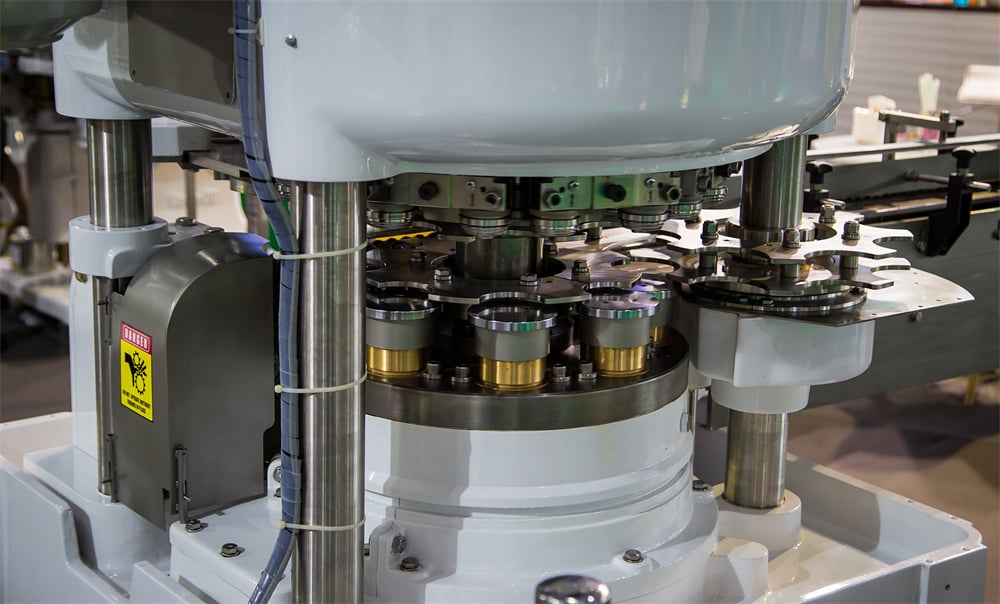
The power press, or mechanical press, is built for one primary purpose: speed. By utilizing a massive flywheel that stores rotational energy, the machine converts that energy into a linear downward force through a crankshaft or eccentric gear. Because the energy is mechanical, the speed of the ram is much higher than that of a hydraulic press. This makes the power press the ideal choice for high-volume blanking, piercing, and simple stamping operations where thousands of parts are needed per hour.
However, this speed comes at the cost of flexibility. The stroke of a mechanical press is fixed by the throw of the crankshaft. While some high-end models offer adjustable strokes, they are generally limited in range compared to hydraulic counterparts. Additionally, the maximum force is only available near the bottom of the stroke (Bottom Dead Center). If a part requires high force at the beginning of the stroke, a mechanical press may stall or break. Despite these limitations, for industries like automotive components or hardware manufacturing, the sheer throughput of a HARSLE power press is unmatched.
Key Advantages of Mechanical Power Presses
- High Production Rates: Capable of hundreds of strokes per minute (SPM), far exceeding hydraulic capabilities.
- Energy Efficiency for Short Strokes: Once the flywheel is at speed, it requires relatively little energy to maintain momentum for repetitive tasks.
- Precision in Repetition: The mechanical linkage ensures that every stroke is identical in depth, which is excellent for high-precision blanking.
- Simplified Controls for Dedicated Lines: Ideal for ‘set and forget’ production lines where the same part is made for months at a time.
Specification Comparison Table
To better understand the Hydraulic Press Vs Power Press: Which Offers Better Flexibility In Manufacturing?, let’s look at the technical breakdown:
| Feature | Hydraulic Press | Power Press (Mechanical) |
|---|---|---|
| Stroke Control | Fully adjustable at any point | Fixed or limited adjustment |
| Tonnage Delivery | Full tonnage throughout the stroke | Full tonnage only at the bottom |
| Speed | Slower, but variable | Very fast, fixed cycle |
| Overload Protection | Hydraulic relief valves (Excellent) | Shear pins or hydraulic links (Limited) |
| Setup Time | Fast (Digital settings) | Moderate to Slow (Mechanical timing) |
| Maintenance | Focus on seals, oil, and valves | Focus on bearings, clutch, and brakes |
| Best For | Deep drawing, complex forming | High-speed blanking, punching |
Flexibility Analysis: Why Hydraulic Often Wins for Custom Jobs
When we talk about flexibility, we are looking at how the machine handles change. In a modern job shop, you might be forming a 10-inch deep stainless steel bowl in the morning and punching small aluminum brackets in the afternoon. The hydraulic press handles this transition with ease. Because you can control the ram speed, you can slow down the draw to prevent the metal from tearing—a feature known as ‘sensitive’ forming. You can also program the press to stop at a specific pressure rather than a specific distance, which accounts for variations in material thickness.
The power press, while flexible in terms of the dies it can hold, is rigid in its movement. If you try to deep draw on a mechanical press that isn’t specifically designed for it (like a link-motion press), you risk ‘spring back’ or fracturing the material because the ram speed is too high at the point of impact. For manufacturers who prioritize the ability to take on diverse contracts, the hydraulic press offers a ‘Swiss Army Knife’ utility that the mechanical press lacks.
Best-fit Applications for Each Machine
When to Choose a Hydraulic Press
Hydraulic presses are the gold standard for Deep Drawing. Because the metal needs to flow into the die without thinning or cracking, the constant pressure and controllable speed of a hydraulic system are essential. They are also preferred for Powder Compacting, where a specific dwell time is needed to ensure the density of the part. In the aerospace and automotive industries, hydraulic presses are used for heavy-plate forming and large body panels where precision and force control are more important than cycle speed.
When to Choose a Power Press
If your manufacturing goal is High-Volume Stamping, the power press is the only logical choice. Think of items like electrical connectors, washers, or simple brackets. These parts require millions of cycles. A power press can be integrated with automatic coil feeders and scrap removal systems to create a fully autonomous production cell. For Progressive Die Work, where a strip of metal moves through multiple stages of punching and bending in milliseconds, the mechanical press’s timing and speed are irreplaceable.
Cost and Maintenance Comparison
The initial purchase price of a hydraulic press is often lower than a high-speed mechanical press of the same tonnage. However, the long-term cost of ownership involves more than just the sticker price. Hydraulic presses require regular oil changes, seal replacements, and monitoring of the cooling system. If a hydraulic leak occurs, it can be messy and require immediate attention to prevent contamination of the workspace.
Power presses have fewer ‘fluid’ issues but have complex mechanical components. The clutch and brake systems are high-wear items that require precise adjustment. If a mechanical press is operated improperly and ‘locks’ at the bottom of the stroke (stuck on center), it can be a nightmare to release, often requiring heating the tie rods or using heavy-duty jacks. In terms of energy, the power press is more efficient for high-speed work, while the hydraulic press can be more energy-intensive due to the pump running continuously (though modern HARSLE servo-hydraulic models have significantly reduced this gap).
Recommendation: Making the Right Choice for Your Facility
So, in the battle of Hydraulic Press Vs Power Press: Which Offers Better Flexibility In Manufacturing?, the answer depends on your definition of flexibility. If flexibility means the ability to do many different types of jobs (drawing, forming, assembly, punching) on one machine, the Hydraulic Press is the winner. Its ability to adapt to different material thicknesses and complex shapes makes it the ultimate tool for R&D and custom fabrication.
If flexibility means the ability to scale production rapidly for simple parts, the Power Press is your best bet. For most growing shops, a combination of both is ideal. Use the hydraulic press for your complex, low-to-medium volume work, and reserve the power press for your high-volume ‘bread and butter’ products. HARSLE offers a wide range of both machine types, equipped with the latest CNC controllers to ensure that whichever you choose, your setup times are minimized and your precision is maximized.
Frequently Asked Questions (FAQ)
1. Can a hydraulic press be as fast as a power press?
Generally, no. While ‘high-speed’ hydraulic presses exist, they rarely match the strokes-per-minute of a mechanical flywheel press. However, for many applications, the difference in speed is offset by the hydraulic press’s faster setup and reduced scrap rate on complex parts.
2. Which machine is safer for the operator?
Both machines require strict adherence to safety protocols, including light curtains and two-hand controls. However, hydraulic presses are often considered ‘safer’ for the tooling because they cannot be overloaded. A mechanical press can exert forces far beyond its rating if it encounters an obstruction near the bottom of the stroke, leading to flying debris or frame failure.
3. Is maintenance more expensive for hydraulic presses?
It depends on the environment. Hydraulic maintenance is often more frequent (oil and seals) but can be less technically demanding than rebuilding a massive mechanical clutch or crankshaft assembly. Modern HARSLE machines feature self-diagnostic tools that alert operators to maintenance needs before they become costly repairs.
4. Can I use a power press for deep drawing?
Only if it is a specialized type, such as a link-motion mechanical press, which is designed to slow the ram down during the working portion of the stroke. A standard crank press is usually unsuitable for deep drawing because the impact speed is too high, causing the metal to tear.
5. How do I choose the right tonnage?
Tonnage calculation depends on the material type, thickness, and the perimeter of the cut or the surface area of the draw. HARSLE provides technical consulting to help you calculate the exact tonnage required for your specific dies to ensure you don’t under-power your production line.












