Manual Hydraulic Press vs Automatic Hydraulic Press: Which One Should You Buy?


Comparison Summary: Navigating the Hydraulic Press Landscape
In the world of metal fabrication and industrial manufacturing, the hydraulic press stands as a cornerstone of power and versatility. Based on Pascal’s Law, these machines exert massive force to shape, mold, punch, and assemble metal components. However, when a workshop or factory decides to invest in new equipment, the most critical question often arises: Manual Hydraulic Press Vs Automatic Hydraulic Press: Which One Should You Buy? This decision is not merely about the initial price tag; it involves a complex evaluation of production volume, precision requirements, labor costs, and long-term scalability.
A manual hydraulic press relies on human physical effort—typically through a hand pump or a foot pedal—to actuate the hydraulic cylinder. It offers a high degree of ‘feel’ and control for delicate tasks but is limited by the operator’s speed and stamina. Conversely, an automatic hydraulic press utilizes electric motors, sophisticated hydraulic power units (HPUs), and often Programmable Logic Controllers (PLCs) to automate the pressing cycle. While the automatic version promises high throughput and consistency, it requires a higher capital investment and more specialized maintenance. This guide provides a deep dive into both technologies to help you determine which HARSLE solution aligns with your operational goals.
Manual Hydraulic Press Overview: Simplicity and Control
The manual hydraulic press is the traditional workhorse of small repair shops, educational laboratories, and R&D facilities. Its design is elegantly simple: a sturdy frame (usually H-frame or C-frame), a hydraulic cylinder, a reservoir, and a manual pump. The operator manually pumps a lever to move the ram downward, building pressure gradually. This manual intervention allows the operator to stop, start, or adjust the pressure at any micro-second, making it ideal for tasks where precision and tactile feedback are more important than speed.
One of the primary advantages of a manual press is its cost-effectiveness. Without the need for complex electrical systems, sensors, or high-end motors, the initial purchase price is significantly lower than its automatic counterparts. Furthermore, manual presses are often more compact and portable. Since they do not always require a constant power source (unless equipped with a basic electric pump for auxiliary functions), they can be used in remote locations or areas of a shop where electrical infrastructure is limited. For low-volume production or one-off custom jobs, the manual press offers an unbeatable return on investment.
However, the limitations of manual presses become apparent in a high-demand environment. The most obvious drawback is operator fatigue. Pumping a lever to reach 50 or 100 tons of pressure is physically demanding. This leads to slower cycle times and a higher risk of human error as the workday progresses. Additionally, achieving perfect consistency across hundreds of parts is nearly impossible with a manual system, as the pressure and dwell time are subject to the operator’s individual technique and attention level.
Automatic Hydraulic Press Overview: Efficiency and Precision
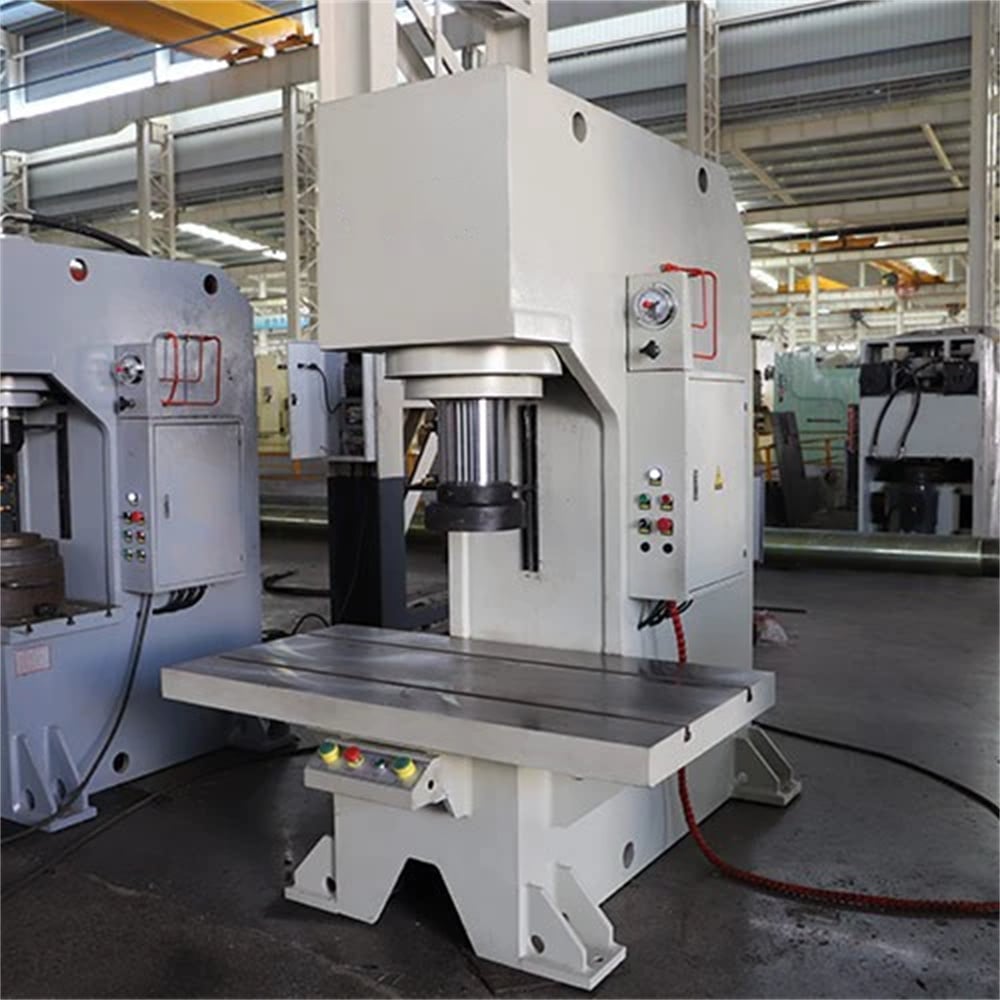
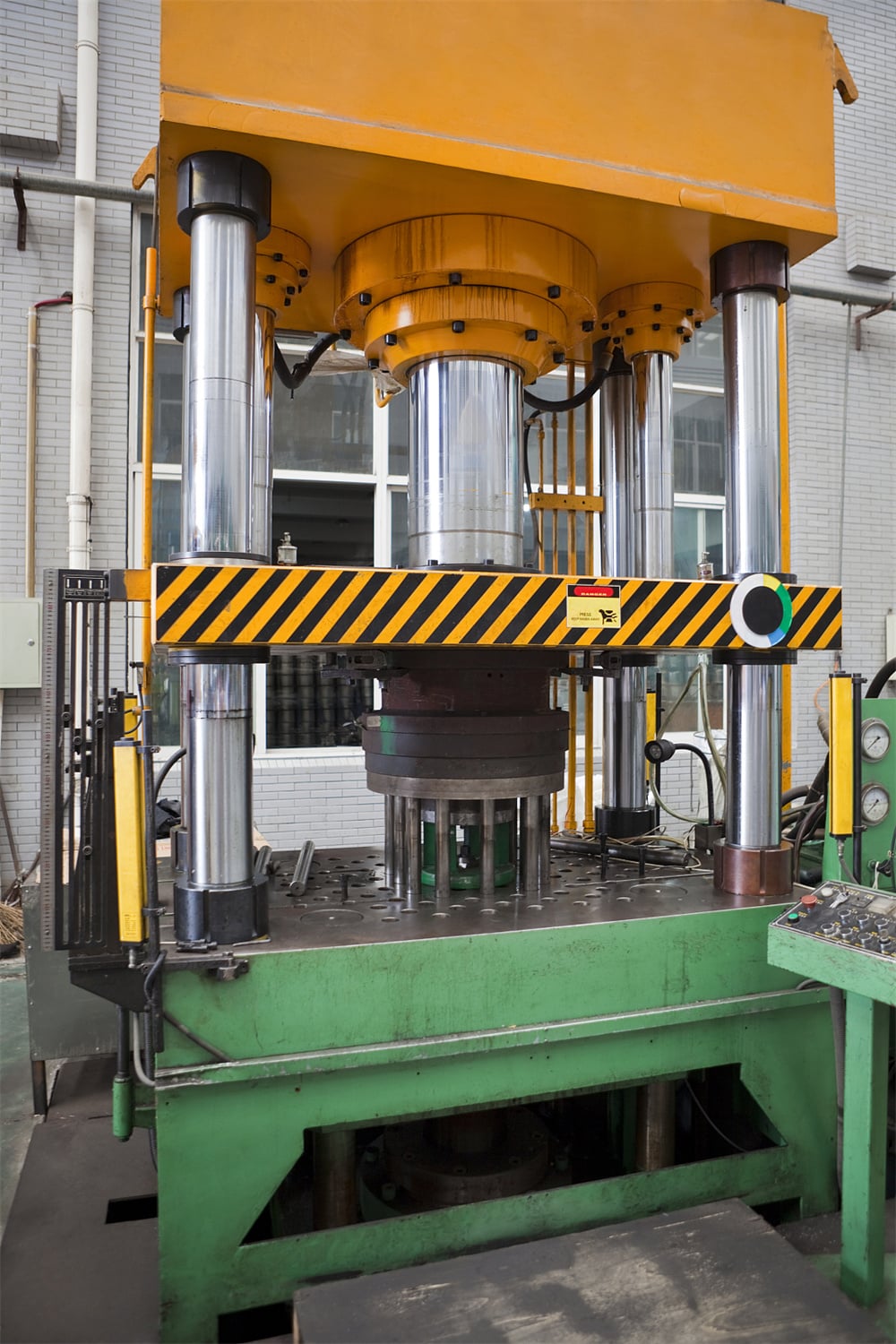
The automatic hydraulic press represents the evolution of metalworking technology. These machines are designed for high-speed, high-volume production where consistency is non-negotiable. At the heart of an automatic press is an electric motor-driven pump that provides a continuous flow of hydraulic fluid. Controlled by solenoid valves and monitored by pressure transducers, the ram moves with precise speed and force, often reaching speeds that a manual operator could never replicate. Modern HARSLE automatic presses feature advanced HMI (Human Machine Interface) touchscreens, allowing operators to program specific stroke lengths, pressure limits, and dwell times.
Automation brings a level of safety and ergonomics that manual presses lack. Most automatic systems are equipped with light curtains, dual-hand start buttons, and emergency stop circuits that comply with strict OSHA and CE safety standards. Because the machine handles the heavy lifting, the operator’s role shifts from physical labor to process monitoring. This significantly reduces the risk of repetitive strain injuries and workplace accidents. In industries like automotive manufacturing or electronics assembly, where thousands of identical parts are produced daily, the automatic hydraulic press is the only viable option.
The trade-off for this efficiency is complexity and cost. An automatic press involves a sophisticated network of electrical components, hydraulic manifolds, and cooling systems. This means the initial investment is higher, and the facility must have the electrical capacity to support the machine’s power requirements. Maintenance also requires a higher skill level; while a manual press might only need occasional oil checks and seal replacements, an automatic press requires technicians who understand both hydraulics and electronic control systems. Despite these factors, the reduction in labor costs per part often justifies the expense for growing businesses.
Specification Comparison Table
To better understand the technical differences, the following table compares the typical attributes of manual and automatic hydraulic presses across several key performance indicators.
| Feature | Manual Hydraulic Press | Automatic Hydraulic Press |
|---|---|---|
| Power Source | Human Effort (Hand/Foot Pump) | Electric Motor / Hydraulic Power Unit |
| Cycle Speed | Slow (Dependent on Operator) | Fast (Programmable & Constant) |
| Precision/Repeatability | Moderate (Subject to Human Error) | High (PLC Controlled) |
| Initial Cost | Low to Moderate | High |
| Safety Features | Basic (Pressure Relief Valves) | Advanced (Light Curtains, Interlocks) |
| Labor Intensity | High | Low |
| Best For | Prototyping, Repairs, Low Volume | Mass Production, Deep Drawing, Stamping |
| Maintenance | Simple (Mechanical/Hydraulic) | Complex (Hydraulic/Electric/Software) |
Best-fit Applications: Choosing Based on Your Industry
Determining which press to buy often comes down to the specific applications within your facility. For instance, in a jewelry making or small-scale craft workshop, a manual hydraulic press is often preferred. The ability to slowly apply pressure while watching the metal deform allows for artistic precision that an automated cycle might crush. Similarly, in automotive repair shops, manual presses are used for pressing bearings or bushings—tasks that require a “feel” for when the component is properly seated.
In contrast, the automotive and aerospace industries rely almost exclusively on automatic hydraulic presses. These sectors require the deep drawing of large body panels or the precision stamping of engine components. The automatic press can be integrated into a larger production line, working in tandem with robotic arms and conveyor belts. The consistency of an automatic press ensures that every part meets the stringent tolerances required for safety-critical applications.
Research and Development (R&D) labs often find themselves in a middle ground. While they may start with a manual press for initial material testing, they often transition to a small-scale automatic press to simulate production conditions. If your business involves powder metallurgy or composite molding, the automatic press is superior because it can maintain a specific pressure (dwell time) for an exact duration, which is critical for the chemical bonding or sintering process. Manual presses struggle to maintain perfectly constant pressure over long periods without constant operator adjustment.
Cost and Maintenance Comparison: The Long-term View
When analyzing the cost of a hydraulic press, one must look beyond the invoice. The Total Cost of Ownership (TCO) includes energy consumption, labor, and maintenance. A manual press has a very low TCO. It consumes no electricity (or very little) and has fewer parts that can fail. Maintenance usually involves checking for leaks, ensuring the hydraulic fluid is clean, and occasionally replacing O-rings or seals. For a small business, this predictability is a major advantage.
The automatic press has a higher TCO but offers a lower cost-per-part in high-volume scenarios. The electricity required to run a 10HP or 20HP motor can be significant, but when spread across 10,000 parts, it becomes negligible. Maintenance for automatic presses is proactive. It involves monitoring filter indicators, checking the heat exchanger (cooling system), and ensuring the PLC battery is functional. If an automatic press goes down, the loss in production can be expensive, which is why many factories invest in preventative maintenance contracts. However, the savings in labor—where one operator can oversee multiple automatic machines—often far outweigh the maintenance and energy costs.
Recommendation: Which One Should You Buy?
The final decision between a manual and automatic hydraulic press should be guided by your production volume and growth trajectory. If you are a startup, a hobbyist, or a specialized repair shop handling fewer than 20-30 pressing cycles per day, the Manual Hydraulic Press is the logical choice. It provides the necessary force without the overhead of complex electronics, and it allows you to master the nuances of your material.
If your production requirements exceed 50 cycles per day, or if you require documented consistency for quality control (ISO standards), you should invest in an Automatic Hydraulic Press. The increase in throughput and the reduction in physical labor will allow your business to scale. Furthermore, if you are performing complex operations like deep drawing or multi-stage stamping, the programmable nature of an automatic press is essential. At HARSLE, we recommend evaluating your 3-year production forecast; if you expect to grow, buying an automatic press now may prevent the need for a costly equipment upgrade in the near future.
Frequently Asked Questions (FAQ)
1. Can I convert a manual hydraulic press to an automatic one later?
While it is technically possible to add an electric pump and solenoid valves to a manual frame, it is often not cost-effective. The frames of automatic presses are designed to handle the continuous vibration and heat generated by rapid cycles. Retrofitting a manual press often results in a machine that lacks the safety features and integrated controls of a purpose-built automatic system.
2. How long do hydraulic presses typically last?
With proper maintenance, a high-quality hydraulic press from a reputable manufacturer like HARSLE can last 20 to 30 years. Manual presses tend to last longer due to their simplicity, whereas automatic presses may require electronic component updates or PLC replacements every 10-15 years to stay current with technology.
3. Is an automatic press much more dangerous than a manual one?
Actually, modern automatic presses are often safer. Because they are designed for industrial environments, they come standard with advanced safety systems like light curtains that stop the machine instantly if a hand enters the work zone. Manual presses rely more heavily on the operator’s caution and the use of basic physical guards.
4. What kind of hydraulic oil should I use?
Most hydraulic presses use standard anti-wear hydraulic oil (such as ISO VG 32, 46, or 68). The specific grade depends on your environment’s temperature and the machine’s requirements. Always consult the HARSLE user manual for the specific oil recommendations for your model to ensure longevity of the seals and pump.
5. Does an automatic press require a special foundation?
Small to medium automatic presses (up to 100 tons) usually do not require a special foundation beyond a standard reinforced concrete factory floor. However, very large, high-speed automatic presses may require a dedicated pit or reinforced pad to manage the vibrations and the weight of the machine. Always check the floor loading specifications before installation.