Comprehensive Guide to Hydraulic Press Frame or Bed Deflection: Signs and Solutions


Introduction to Hydraulic Press Frame and Bed Deflection
In the world of heavy-duty metal fabrication, precision is the cornerstone of quality. However, even the most robust industrial machinery is subject to the laws of physics. One of the most critical yet often misunderstood phenomena in metal forming is Hydraulic Press Frame Or Bed Deflection: Signs Solutions. Deflection refers to the temporary or permanent bending of the press frame or bed when subjected to high tonnage loads. While all presses experience some degree of elastic deflection, excessive or uneven flexing can lead to catastrophic failures in part accuracy and machine longevity.
At HARSLE, we understand that a hydraulic press is a significant investment. Whether you are operating a C-frame, H-frame, or four-column press, the structural integrity of the bed and frame determines the success of your production line. When a press exerts hundreds or thousands of tons of force, the reaction force is pushed back into the machine’s structure. If the frame is not rigid enough or if the load is improperly distributed, the bed will bow, and the uprights will stretch. This guide aims to provide a deep dive into identifying these issues and implementing professional solutions to maintain peak performance.
Understanding deflection is not just about preventing machine damage; it is about ensuring the consistency of every part that leaves your facility. In high-precision industries like aerospace, automotive, and appliance manufacturing, a deflection of even a few thousandths of an inch can result in rejected batches and wasted material. By mastering the signs and solutions of frame deflection, operators and maintenance managers can extend the life of their tooling and ensure that their HARSLE machinery continues to deliver world-class results.
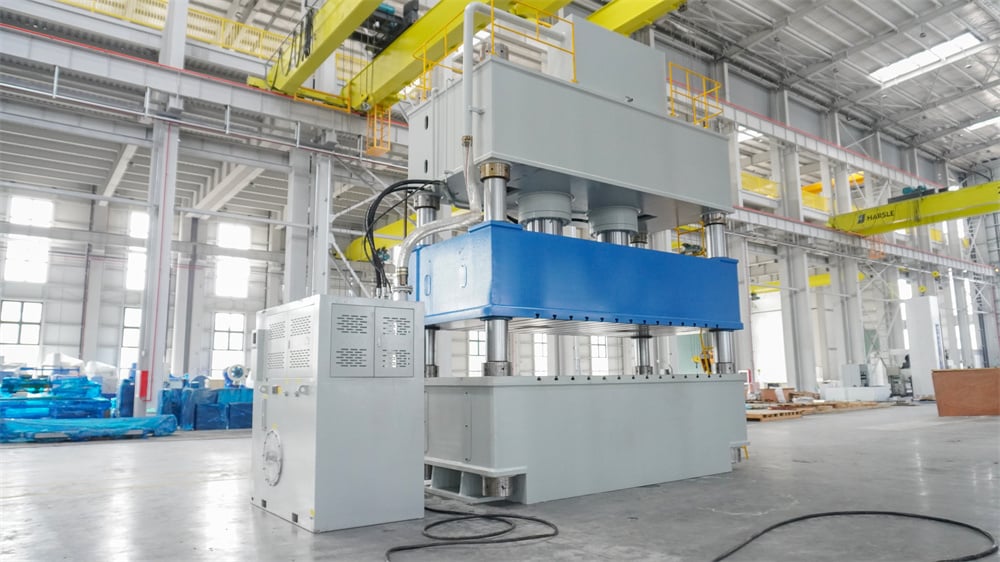
Key Considerations in Understanding Press Deflection
Before addressing the solutions, it is essential to consider the factors that contribute to deflection. The first consideration is the Press Design and Geometry. C-frame presses, for example, are inherently more prone to “yawning” or opening up at the throat because of their open-front design. In contrast, H-frame or straight-side presses offer much higher rigidity because the load is contained within a closed loop of steel. When selecting a machine, the intended application must dictate the frame style to minimize inherent deflection risks.
Another key consideration is Material Science and Construction. Not all steel is created equal. High-tensile, heavy-plate steel that has been stress-relieved through heat treatment or vibratory methods will resist deflection far better than lower-grade alternatives. The thickness of the bed and the bolster plate also plays a vital role. A thicker bed increases the moment of inertia, which is a mathematical representation of a beam’s resistance to bending. At HARSLE, we utilize advanced Finite Element Analysis (FEA) to ensure that our frames are over-engineered for their rated tonnage.
Load distribution is perhaps the most critical operational consideration. Off-Center Loading is the primary cause of uneven deflection. If the workpiece or die is not centered under the ram, the force is applied asymmetrically. This causes one side of the frame to stretch more than the other, leading to a tilted ram and uneven pressure. Over time, this doesn’t just deflect the bed; it wears out the bushings, seals, and gibs, leading to expensive hydraulic leaks and mechanical failures. Operators must be trained to understand the “center of pressure” for every die set used.
Technical Details: The Physics of Frame Flexing
To truly grasp Hydraulic Press Frame Or Bed Deflection: Signs Solutions, one must look at the technical mechanics involved. Deflection is governed by Hooke’s Law within the elastic limit of the material. This means that as long as the stress applied does not exceed the yield strength of the steel, the frame will return to its original shape once the pressure is released. This is known as elastic deflection. However, if the press is overloaded, it enters the realm of plastic deformation, where the frame is permanently warped.
The formula for calculating the deflection (δ) of a simply supported beam (which a press bed often mimics) is δ = (F * L^3) / (48 * E * I), where F is the force, L is the length of the bed, E is the Modulus of Elasticity, and I is the Moment of Inertia. From this equation, we can see that the length of the bed has a cubic relationship with deflection. This means that doubling the length of the press bed increases the potential for deflection by eight times, assuming all other factors remain constant. This is why long-bed presses require significantly more reinforcement and sophisticated crowning systems.
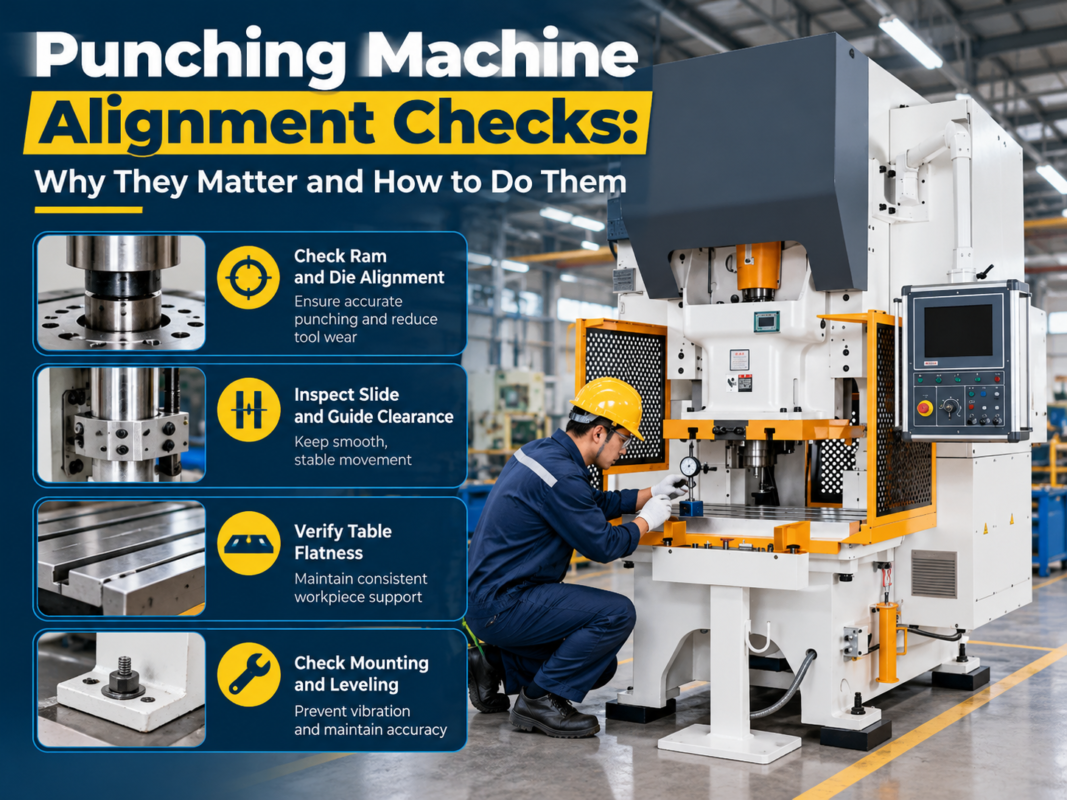
Furthermore, the Gib Alignment and Guidance System plays a technical role in how deflection manifests. In a well-designed HARSLE press, the gibs are adjustable to maintain the parallelism of the slide (ram) to the bed. When the frame deflects, the gibs must be able to handle the slight shift without binding. If the frame flexes too much, the slide can “cock,” causing extreme friction and heat. Technical monitoring of these clearances using feeler gauges or laser alignment tools is a standard part of high-level industrial maintenance.
Identifying the Signs of Excessive Deflection
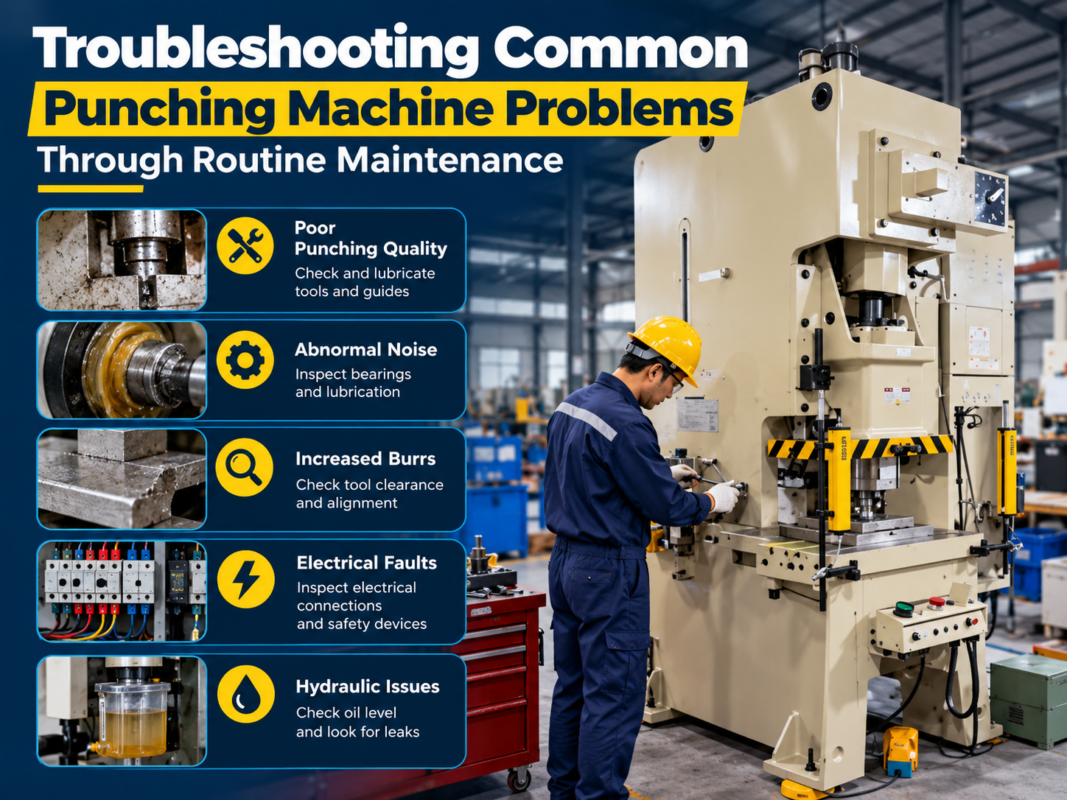
How do you know if your press is suffering from excessive deflection? The signs are often subtle at first but become glaringly obvious as the problem worsens. One of the most common signs is Uneven Part Thickness or Quality. If you are performing a blanking or forming operation and notice that the parts are thicker on one side or have inconsistent burr heights, the bed is likely bowing under pressure. This is particularly noticeable in large-surface-area parts where the center of the part receives less pressure than the edges due to bed flex.
Another red flag is Premature Tooling Wear. Dies are designed to meet perfectly parallel. When the press bed or frame deflects, the upper and lower die halves no longer align correctly. This leads to “side-loading” of the punches and dies, causing them to chip, dull, or break much faster than expected. If you find yourself sharpening your dies more frequently than the manufacturer’s recommendations, it is time to inspect your press’s structural rigidity.
Visual and auditory cues also provide valuable information. Visible Bowing can sometimes be seen during the peak of the stroke if the deflection is severe. More commonly, operators might hear a “groaning” or “popping” sound as the steel frame reaches its elastic limit. Additionally, look for Hydraulic Fluid Leaks around the main cylinder or the ram seals. Excessive frame flex puts lateral pressure on the cylinder rods, which can distort the seals and lead to weeping or spraying of hydraulic oil. Finally, check the foundation bolts; if they are frequently loosening, it may be due to the frame vibrating and flexing excessively during each cycle.
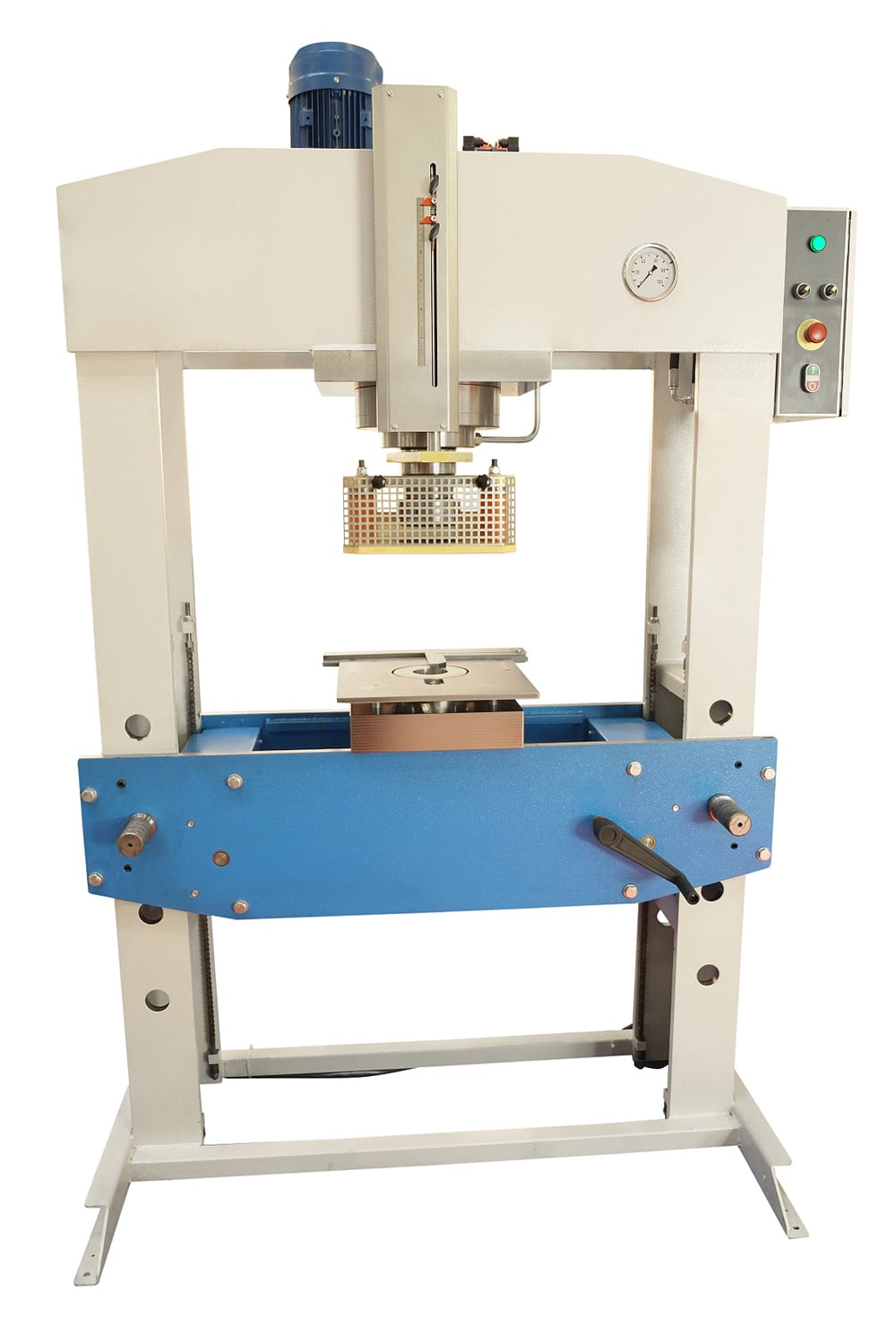
Solutions and Mitigation Strategies
Once deflection is identified, several solutions can be implemented, ranging from operational changes to mechanical upgrades. The most effective mechanical solution for bed deflection is Hydraulic or Mechanical Crowning. Crowning systems work by introducing a counter-curve into the bed or the ram. In a hydraulic crowning system, several small cylinders are placed within the bed. As the main ram applies downward pressure, these cylinders apply upward pressure, effectively “pre-bending” the bed so that it becomes perfectly flat under load.
Another solution is the use of Shimming and Bolster Adjustments. For older machines or specific die sets, technicians can place precision metal shims under the center of the die to compensate for the expected bow in the bed. While this is a more manual process, it is highly effective for long-run production where the load characteristics remain constant. Additionally, upgrading to a thicker or more rigid bolster plate can distribute the load more evenly across the bed, reducing localized deflection points.
Operational solutions are equally important. Load Centering should be a mandatory part of every setup. Using load cells or tonnage monitors can help operators ensure that the force is being applied exactly where the machine is strongest. If off-center loading is unavoidable, the press should be derated—meaning it should only be used at a fraction of its total capacity to prevent frame twisting. Regular maintenance, including the tightening of tie-rods in H-frame presses, ensures that the frame remains a pre-stressed, rigid unit capable of handling its rated tonnage without shifting.
Selection Advice for High-Precision Hydraulic Presses
When purchasing a new machine, preventing deflection starts with the selection process. Buyers should look for manufacturers like HARSLE that emphasize Frame Rigidity Specifications. Don’t just look at the tonnage; look at the weight of the machine. A heavier machine often indicates more steel in the frame and bed, which translates to higher stiffness. Ask for the deflection rating, usually expressed as inches of deflection per foot of bed length at full capacity (e.g., 0.001″ per foot).
Consider the Type of Guidance System. Eight-point square gibbing provides much better resistance to lateral forces and frame-flex-induced misalignment than simple round-post guidance. If your application involves heavy eccentric loading (like multi-stage progressive dies), a straight-side press with a wide tie-rod spacing is almost always the better choice over a C-frame. Furthermore, ensure the machine is equipped with a modern Tonnage Monitor. These systems provide real-time feedback on the forces being applied to each side of the frame, allowing operators to stop the cycle if deflection limits are exceeded.
Finally, evaluate the Foundation Requirements. A hydraulic press is only as stable as the floor it sits on. High-tonnage presses require reinforced concrete foundations that are isolated from the rest of the factory floor. A sinking or uneven foundation can actually induce stress into the press frame, causing it to deflect even before the ram makes contact with the workpiece. Always follow the manufacturer’s foundation drawings to the letter to ensure the long-term accuracy of your equipment.
Frequently Asked Questions (FAQ)
1. Is some deflection normal in a hydraulic press?
Yes, all hydraulic presses experience some degree of elastic deflection. Steel is an elastic material, and under hundreds of tons of pressure, it will flex. The key is to ensure that this deflection is within the manufacturer’s tolerances and that it is uniform across the bed to prevent part distortion.
2. How does bed deflection affect die life?
Bed deflection causes the upper and lower dies to become misaligned during the stroke. This results in uneven clearance between the punch and die, leading to rapid dulling of cutting edges, increased friction, and potential breakage of fragile die components.
3. Can I fix a permanently warped press bed?
A permanently warped bed (plastic deformation) is a serious structural issue. In some cases, the bed can be re-machined or ground flat, but this reduces the thickness and strength of the bed. If the frame itself is twisted, it may require professional structural repair or, in extreme cases, replacement of the machine.
4. What is the difference between a C-frame and H-frame regarding deflection?
C-frame presses have an open front, which allows for easier access but makes them prone to “yawning” (the top and bottom of the ‘C’ spreading apart). H-frame presses are closed-loop systems, making them significantly more rigid and better suited for high-tonnage applications where minimal deflection is required.
5. How often should I check my press for deflection?
Deflection should be monitored indirectly through part quality checks during every shift. A formal inspection of frame alignment and bed parallelism should be conducted at least annually, or more frequently if the press is consistently operated near its maximum tonnage capacity.
Conclusion
Managing Hydraulic Press Frame Or Bed Deflection: Signs Solutions is a vital skill for any modern metal fabrication facility. By understanding the physics of how a press reacts under load, identifying the early warning signs of excessive flex, and implementing robust solutions like crowning and proper load centering, you can ensure that your production remains precise and efficient. A well-maintained press with minimal deflection not only produces better parts but also protects your expensive tooling and extends the operational lifespan of the machine itself.
At HARSLE, we are committed to engineering hydraulic presses that set the industry standard for rigidity and precision. Our machines are built with high-grade materials and advanced design technologies to minimize deflection even in the most demanding environments. Whether you are looking for a new high-precision press or need advice on optimizing your current setup, our team of experts is here to help. Invest in quality, monitor your performance, and let HARSLE provide the structural integrity your business deserves.