
Manual Press Brake vs CNC Press Brake: Which One Should You Choose?


Comparison Summary: Navigating the Bending Landscape
In the world of metal fabrication, the press brake stands as a cornerstone of production. Whether you are a small custom shop or a high-volume industrial facility, the choice between a manual press brake and a CNC (Computer Numerical Control) press brake is one of the most significant investments you will make. At HARSLE, we understand that this decision impacts not only your initial capital expenditure but also your long-term operational efficiency, labor costs, and product quality.
A manual press brake, often referred to as a conventional or torsion bar press brake, relies heavily on the operator’s skill and physical adjustments. It is a robust, straightforward machine that has served the industry for decades. On the other hand, a CNC press brake introduces high-level automation, where a computer controls the movement of the ram and the backgauge with micron-level precision. While both machines perform the same fundamental task—bending sheet metal—the methodology, speed, and accuracy they offer are worlds apart.
Choosing the right machine requires a deep dive into your specific production requirements. Are you bending simple 90-degree angles in thick plate, or are you creating complex, multi-bend components for the aerospace or electronics industry? This guide will break down every technical and financial aspect of the Manual Press Brake vs CNC Press Brake debate to help you make an informed decision for your business growth.
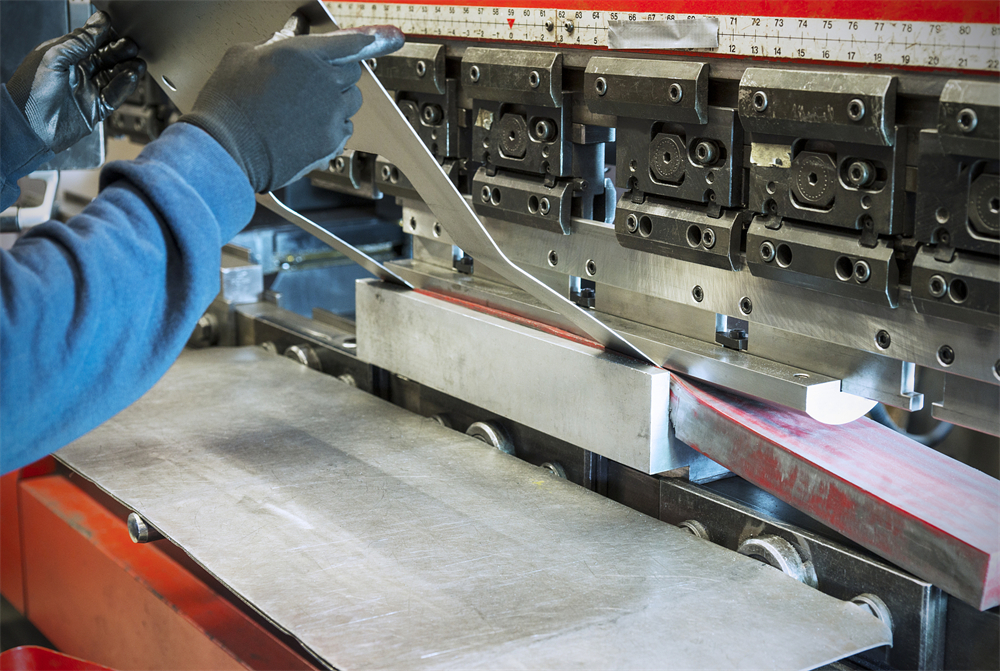
Manual Press Brake Overview: The Craftsman’s Tool
The manual press brake is the traditional workhorse of the metalworking world. In these machines, the synchronization of the cylinders is typically managed by a mechanical torsion bar. This physical bar connects both sides of the ram to ensure they move down together. While modern manual machines often include a simple digital readout (DRO) for the backgauge (X-axis) and the stroke adjustment (Y-axis), the actual positioning is often done via handwheels or simple motorized buttons without a programmable logic controller managing the entire sequence.
One of the primary characteristics of a manual press brake is its simplicity. Because there are fewer electronic components and no complex software interfaces, these machines are incredibly durable and easy to maintain. For a technician familiar with basic hydraulics and mechanics, troubleshooting a manual press brake is straightforward. There are no software glitches to worry about, and the mechanical nature of the machine makes it resilient in harsh workshop environments where dust and temperature fluctuations might affect sensitive electronics.
However, the manual press brake places a heavy burden on the operator. To achieve an accurate bend, the operator must manually set the backgauge for every different bend in a sequence. If a part requires four different bends, the operator may need to stop and readjust the machine four times. This leads to longer cycle times and a higher risk of human error. Furthermore, manual machines lack automatic crowning systems, meaning the operator must use shims or manual wedge systems to compensate for the natural deflection of the machine bed during heavy bends.
Despite these limitations, the manual press brake remains a favorite for workshops that handle heavy-duty, simple fabrication. If you are primarily bending thick base plates, simple brackets, or performing one-off repairs, the manual machine offers a cost-effective solution. It provides a tactile experience where a skilled operator can “feel” the material, making it a reliable choice for non-repetitive, low-precision tasks.
CNC Press Brake Overview: The Precision Powerhouse
The CNC press brake represents the pinnacle of modern bending technology. Unlike its manual counterpart, a CNC machine uses sophisticated software and closed-loop hydraulic systems to control every aspect of the bending process. The “CNC” refers to the controller—often a high-end unit from manufacturers like Delem, Cybelec, or ESA—which acts as the brain of the machine. This controller manages multiple axes, commonly ranging from 3 axes (Y1, Y2, X) to 8 or more axes (including R, Z1, Z2, and CNC crowning).
The defining feature of a CNC press brake is its ability to handle complex sequences automatically. An operator can load a 3D drawing or program a sequence of ten different bends into the controller. Once the cycle starts, the backgauge moves instantly to the correct position for each bend, and the ram depth is adjusted automatically to account for material thickness and springback. This eliminates the need for manual adjustments between steps, drastically reducing setup time and increasing throughput.
Accuracy is where the CNC press brake truly shines. By using linear encoders on both sides of the machine, the CNC controller monitors the position of the ram in real-time. If one side is slightly lower than the other, the hydraulics adjust instantly to correct the tilt. This is known as Y1/Y2 synchronization. Additionally, CNC machines feature automatic crowning systems. These systems detect the pressure being applied and automatically adjust the bed’s curvature to ensure the bend angle is consistent across the entire length of the workpiece, even on very long sheets.
While the initial investment for a CNC press brake is higher, the return on investment (ROI) is often realized through labor savings and waste reduction. Because the machine handles the calculations and positioning, even a less experienced operator can produce high-quality parts once the program is set. This mitigates the industry-wide challenge of finding highly skilled manual brake operators. For industries like medical equipment, telecommunications, and high-end automotive, the CNC press brake is not just an option; it is a necessity for meeting tight tolerances.
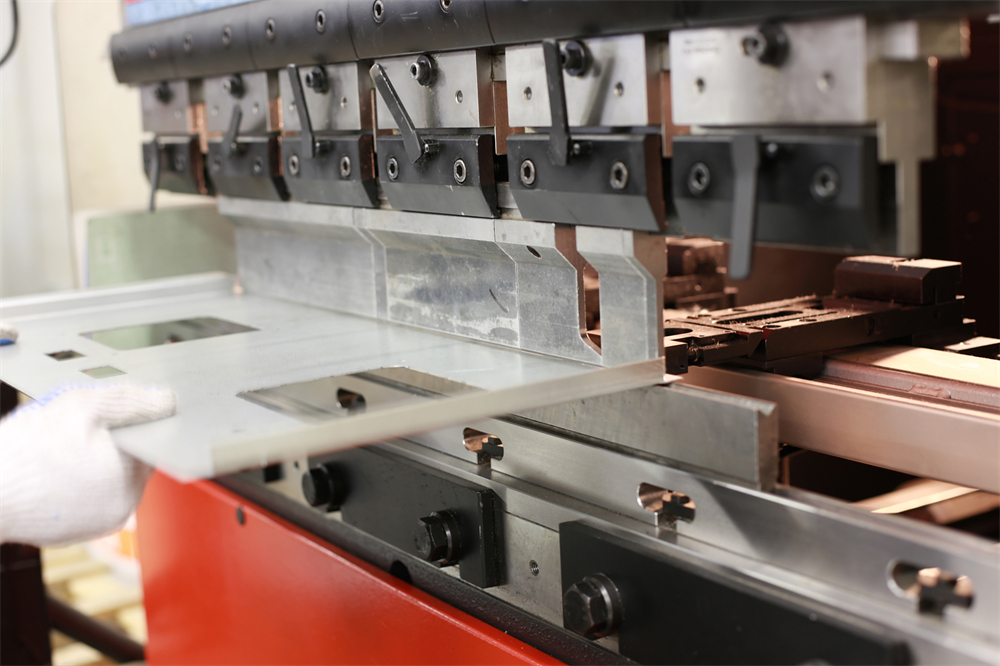
Specification Comparison Table
To better understand the technical differences, let’s look at how these two types of machines compare across key performance metrics.
| Feature | Manual (Torsion Bar) Press Brake | CNC (Synchro) Press Brake |
|---|---|---|
| Synchronization | Mechanical Torsion Bar | Electronic Hydraulic (Y1, Y2) |
| Accuracy | +/- 0.1mm to 0.5mm | +/- 0.01mm |
| Setup Time | High (Manual adjustments required) | Low (Program loading & auto-positioning) |
| Backgauge Control | Manual or Simple Motorized (E21) | Multi-axis CNC (X, R, Z1, Z2, etc.) |
| Crowning System | Manual Shimming / Manual Wedges | Automatic CNC Hydraulic/Mechanical |
| Operator Skill | Requires highly skilled veteran | Requires programming knowledge |
| Production Speed | Slow for complex parts | Very fast for complex/repetitive parts |
| Flexibility | Limited to simple geometries | Capable of complex, multi-stage bends |
Best-fit Applications: Matching the Machine to the Job
Determining which machine is right for you often comes down to the type of work you do. A manual press brake is ideally suited for job shops that focus on “heavy and simple.” For example, if your daily tasks involve bending 10mm steel plates into simple L-channels for construction frames, a manual machine is more than sufficient. It provides the necessary tonnage without the complexity of software that you wouldn’t use for such basic tasks. It is also excellent for maintenance departments within larger factories where a machine is needed only occasionally for quick fixes.
Conversely, the CNC press brake is the king of the “complex and high-volume” sector. Consider a manufacturer of stainless steel kitchen equipment. These products often require multiple bends in a single sheet to create integrated sinks, counters, and cabinets. Using a manual brake for this would be a nightmare of constant measurement and high scrap rates. A CNC machine allows the operator to follow a visual 3D guide on the screen, ensuring every bend is in the right direction and at the right angle, every single time.
Another critical application for CNC machines is in precision electronics enclosures. When parts need to fit together perfectly for assembly, a variation of even half a degree in a bend can ruin the entire batch. The CNC’s ability to compensate for material variations (like slight differences in sheet thickness within a batch) ensures that the first part is identical to the thousandth part. If your business model relies on subcontracting for high-tech industries, a CNC press brake is a prerequisite for passing quality audits.
Cost and Maintenance Comparison
The financial aspect of this choice involves more than just the sticker price. A manual press brake is significantly cheaper upfront—often 40% to 60% less than a CNC machine of the same tonnage. For a startup on a tight budget, this lower entry point is attractive. Maintenance costs are also lower; because there are no expensive controllers or delicate linear scales, the long-term upkeep involves mostly oil changes, seal replacements, and basic mechanical lubrication.
However, the “cost of operation” for a manual machine is much higher. Because it takes longer to set up and execute bends, your labor cost per part increases. Additionally, the reliance on operator skill means that if your lead operator leaves, your production quality and speed may plummet. There is also the cost of scrap; manual setups often require a few “test pieces” to get the angle right, which wastes material.
A CNC press brake requires a larger initial investment and may involve higher maintenance costs related to software updates and electronic sensor calibration. However, it drastically reduces labor costs. One operator can produce three to four times as many parts on a CNC machine compared to a manual one. Furthermore, modern CNC machines are designed with energy efficiency in mind. Many HARSLE CNC models feature servo-hybrid drives that only run the motor when the machine is actually bending, leading to significant electricity savings compared to the constant-run motors found on older manual designs.
Recommendation: Which One Should You Choose?
So, which one should you choose? The answer depends on your business goals. You should choose a Manual Press Brake if:
- Your budget is strictly limited and you are just starting out.
- You primarily perform simple, single-bend operations on thick materials.
- You have a highly skilled operator who prefers mechanical control.
- Your production volume is low, and you don’t mind longer setup times.
You should choose a CNC Press Brake if:
- You need to produce complex parts with multiple bends in one handling.
- High precision and repeatability are non-negotiable for your customers.
- You want to reduce your reliance on highly specialized manual labor.
- You are looking to scale your production and reduce the cost per part.
- You want to minimize material waste through “first-part-right” technology.
At HARSLE, we recommend looking at your projected workload for the next three to five years. While a manual machine might solve today’s budget constraint, a CNC machine is an investment in your company’s future competitiveness. Many of our clients find that the increased productivity of a CNC machine allows them to take on more complex contracts that they previously had to turn down.
Frequently Asked Questions (FAQ)
1. Can a manual press brake be upgraded to a CNC?
While you can add a simple CNC backgauge (like an E21 or E300 controller) to a manual torsion bar machine, it will never truly be a “Full CNC” machine. A true CNC press brake has a different hydraulic structure (Synchro) that allows for independent cylinder control. Upgrading a manual machine improves backgauge speed but does not provide the automatic angle correction or Y1/Y2 synchronization of a true CNC.
2. Is a CNC press brake harder to learn than a manual one?
Actually, for a new operator, a CNC press brake is often easier to learn. Modern controllers use graphical interfaces that show exactly how to hold the metal. Manual machines require a “feel” for the metal and manual calculations that can take years to master. Programming a CNC does require some training, but it is generally more intuitive for the modern workforce.
3. How much more accurate is a CNC press brake?
A manual press brake usually has a repeatability of about 0.1mm to 0.5mm, depending on the operator. A CNC press brake, using linear encoders and servo-hydraulics, can achieve repeatability of 0.01mm. This difference is critical for parts that must be welded by robots or assembled into tight-fitting enclosures.
4. Does a CNC press brake require special tooling?
While CNC machines can use standard tooling, they often benefit from precision-ground tooling. To get the most out of a CNC’s accuracy, using high-quality, hardened tools is recommended. Manual machines often use more traditional, less expensive tooling because the machine’s own tolerances are wider.
5. What is ‘Crowning’ and why does it matter in this comparison?
Crowning is the method used to compensate for the deflection (bowing) of the machine under pressure. On a manual machine, you must manually adjust the bed or use shims to prevent the center of your bend from being “canoed” (wider angle in the middle). A CNC machine does this automatically, ensuring a perfectly straight bend across the entire length of the sheet.
6. Which machine has a better resale value?
Generally, CNC press brakes hold their value better in the modern market because most fabrication shops are moving toward automation. However, a well-maintained manual HARSLE press brake remains a liquid asset because there is always a demand for simple, reliable machines in smaller workshops and maintenance departments.












