Press Brake vs CNC Bending Machine: Key Differences Explained


Comparison Summary: Understanding the Terminology
In the world of metal fabrication, the terms “Press Brake” and “CNC Bending Machine” are often used interchangeably, yet they represent different levels of technological evolution and operational capability. At its core, a press brake is a machine tool designed for bending sheet and plate material, most commonly sheet metal. It forms predetermined bends by clamping the workpiece between a matching punch and die. While all CNC bending machines are press brakes, not all press brakes are CNC-controlled. The primary distinction lies in the control system, the level of automation, and the precision of the output.
A traditional press brake might rely on manual adjustments or simple NC (Numerical Control) systems to set the backgauge and the stroke depth. In contrast, a CNC (Computer Numerical Control) bending machine utilizes advanced software and high-precision sensors to automate every aspect of the bending process. This includes the synchronization of hydraulic cylinders, the positioning of the backgauge across multiple axes, and the compensation for material deflection. For modern manufacturers, understanding these nuances is critical for optimizing production efficiency and ensuring the highest quality standards in finished components.
This guide provides an in-depth analysis of both machine types, exploring their mechanical foundations, technological features, and the specific scenarios where one might outperform the other. Whether you are a small workshop looking for your first machine or a large-scale industrial facility upgrading your production line, this comparison will clarify which technology aligns with your operational goals. We will examine the mechanics of hydraulic systems, the role of sophisticated controllers, and the long-term cost implications of each investment.
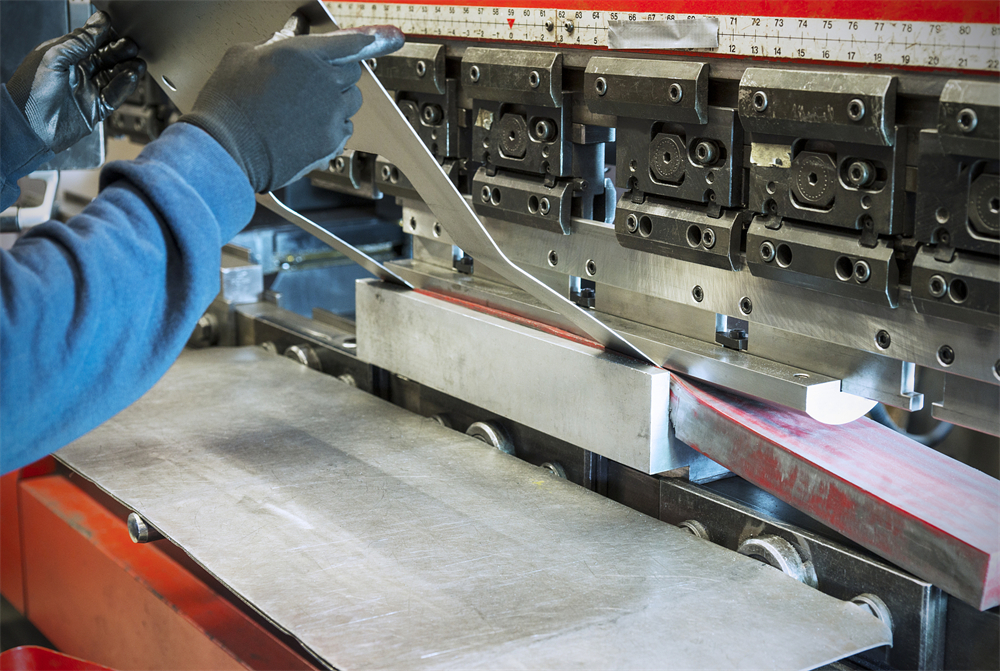
Machine A Overview: The Traditional Press Brake
The traditional press brake, often referred to as a manual or NC press brake, has been the workhorse of the metalworking industry for decades. These machines typically utilize a hydraulic or mechanical drive system to move the upper ram downward into a V-shaped die. In a manual setup, the operator is responsible for setting the bend angle by adjusting the stroke depth and positioning the workpiece against a manual backgauge. While these machines require a high level of operator skill, they are incredibly robust and capable of handling heavy-duty bending tasks with ease.
NC press brakes introduced a layer of automation by allowing operators to program simple sequences for the backgauge (X-axis) and the ram stroke (Y-axis). However, these machines often lack the real-time feedback loops found in CNC systems. For instance, if the hydraulic pressure fluctuates or the material thickness varies slightly, an NC machine may not automatically compensate, leading to inconsistencies in the bend angle. Despite this, they remain popular for simple, repetitive tasks where high-speed precision is less critical than raw power and durability.
One of the defining characteristics of traditional press brakes is their simplicity. With fewer electronic components and sensors, they are often easier to maintain and repair in-house. They are ideal for fabrication shops that focus on heavy plates, structural steel, or simple profiles where a tolerance of a few millimeters is acceptable. Furthermore, the lower initial investment cost makes them an attractive option for startups or businesses with limited capital who still need to perform basic metal forming operations.
However, the reliance on operator expertise is a double-edged sword. A skilled operator can produce high-quality parts on a manual press brake, but the setup time is significantly longer compared to automated systems. Each new job requires manual tool changes, test bends, and fine-tuning, which can lead to significant material waste and downtime. As the industry moves toward “Industry 4.0” and higher automation, the limitations of traditional press brakes become more apparent in high-volume, high-precision environments.
Machine B Overview: The CNC Bending Machine
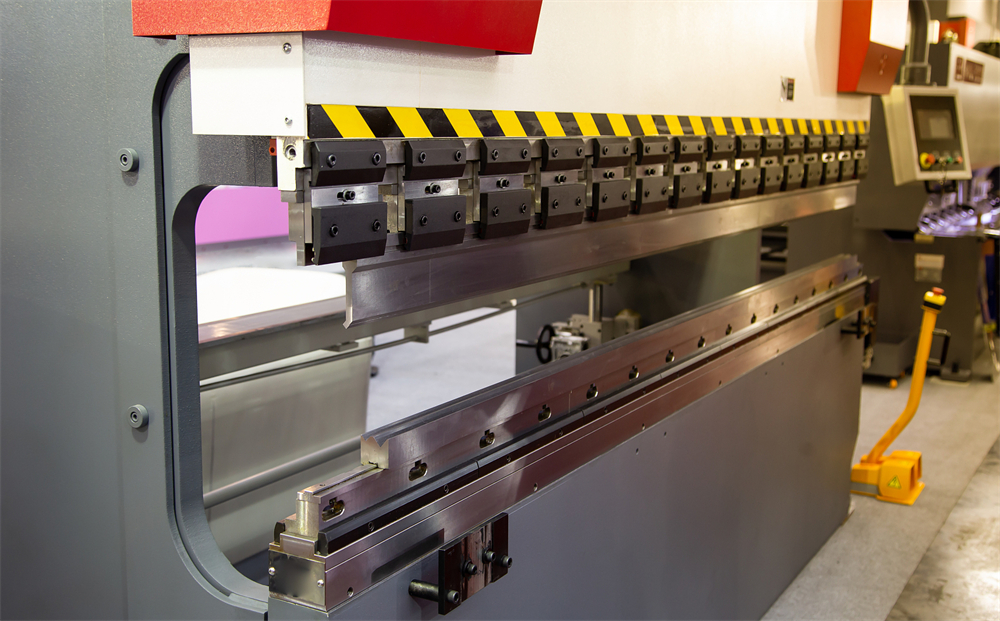
The CNC bending machine represents the pinnacle of modern sheet metal forming technology. Unlike its manual predecessors, a CNC press brake is governed by a sophisticated computer controller (such as those from Delem, Cybelec, or ESA) that manages every movement of the machine with micron-level accuracy. The “CNC” designation implies that the machine can control multiple axes simultaneously—often ranging from 3 to 8 or more axes (Y1, Y2, X, R, Z1, Z2, and crowning).
One of the most significant advantages of a CNC bending machine is the Y1/Y2 dual-cylinder synchronization. Using linear encoders and high-speed hydraulic valves, the controller monitors the position of both ends of the ram in real-time. If one side lags by even a fraction of a millimeter, the system adjusts the hydraulic flow instantly to ensure the ram remains perfectly parallel to the bed. This level of control is essential for producing long, accurate bends across the entire length of the machine.
Furthermore, CNC bending machines feature advanced backgauge systems. While a manual machine might only move forward and backward, a CNC backgauge can move up and down (R-axis) and side-to-side (Z-axis), allowing for the fabrication of complex, multi-bend parts in a single setup. The software also includes a library of tooling and material properties, enabling the machine to calculate the exact force and stroke depth required to achieve a specific angle, accounting for the “springback” effect inherent in different metals.
Another critical feature is the automatic crowning system. When a press brake applies pressure, the bed and ram naturally deflect slightly in the center. A CNC machine compensates for this by using either hydraulic cylinders in the lower bed or a mechanical wedge system to “crown” the bed upward, ensuring a consistent bend angle from one end of the workpiece to the other. This eliminates the need for manual shimming, which is a time-consuming process on older machines. The result is a machine that offers unparalleled speed, repeatability, and ease of use, even for less experienced operators.
Specification Comparison Table
To better understand the technical differences, the following table compares the key specifications of a standard NC Press Brake versus a high-end CNC Bending Machine.
| Feature | Standard NC Press Brake | CNC Bending Machine |
|---|---|---|
| Control System | Simple NC (E21/E300) | Advanced CNC (Delem DA53T/DA66T) |
| Number of Axes | Typically 2 (X, Y) | 3 to 8+ (Y1, Y2, X, R, Z1, Z2, etc.) |
| Synchronization | Mechanical Torsion Bar | Electro-hydraulic Proportional Valves |
| Crowning System | Manual Shimming | Automatic Hydraulic or Mechanical |
| Accuracy | ± 0.1mm to 0.5mm | ± 0.01mm to 0.05mm |
| Setup Time | High (Manual adjustments) | Low (Program loading & Auto-setup) |
| Operator Skill | High (Expertise required) | Moderate (Software-driven) |
| Production Speed | Moderate | High (Rapid approach & return) |
Best-fit Applications: Choosing the Right Tool for the Job
Choosing between a press brake and a CNC bending machine depends heavily on your specific production requirements. For workshops that specialize in heavy-duty structural work, such as building frames, large tanks, or simple brackets, a traditional hydraulic press brake is often the most cost-effective solution. These applications usually involve thick materials where the tolerances are relatively loose, and the primary goal is to achieve a 90-degree bend with maximum force. The simplicity of the machine allows it to withstand the rigors of heavy industrial environments without the sensitivity of high-end electronics.
On the other hand, industries such as aerospace, medical device manufacturing, and high-end electronics cabinetry require the extreme precision that only a CNC bending machine can provide. When working with thin-gauge stainless steel or aluminum, even a slight variation in bend angle can render a part useless. The CNC machine’s ability to store thousands of programs means that complex parts with multiple bends can be produced consistently, day after day, with minimal scrap. This is particularly important for “just-in-time” manufacturing where small batches of different parts are produced frequently.
Automotive manufacturing also relies heavily on CNC technology. The complex geometries of modern vehicle components require multi-axis backgauges to support the part during the bending sequence. Additionally, the integration of robotic arm loading and unloading is much simpler with a CNC interface, allowing for fully automated production cells. If your business model involves high-volume production of complex parts, the increased throughput and reduced labor costs of a CNC machine will quickly justify its higher price tag.
Finally, consider the variety of materials you process. If you frequently switch between different grades of steel, aluminum, and copper, a CNC machine’s material library and automatic springback calculation are invaluable. A manual operator would spend hours performing test bends for each material change, whereas a CNC operator can simply select the material from a touchscreen menu and begin production immediately. This flexibility is a key competitive advantage in the modern fabrication market.
Cost and Maintenance Comparison
The financial investment in a press brake involves more than just the initial purchase price. A standard NC press brake is significantly cheaper upfront, often costing 40% to 60% less than a comparable CNC model. For a small business, this lower barrier to entry is significant. Maintenance for these machines is also relatively straightforward, focusing on hydraulic oil changes, seal replacements, and mechanical lubrication. Because there are fewer sensors and no complex software, the risk of expensive electronic failure is minimized.
However, the “hidden costs” of a manual machine include higher labor costs and increased material waste. Because setup takes longer, the cost per part is higher. Furthermore, the reliance on a highly skilled operator means that if that person leaves the company, production may suffer until a suitable replacement is found and trained. In contrast, a CNC bending machine requires a higher initial investment but offers a much lower cost per part in the long run. The automation reduces the need for highly specialized labor, and the precision reduces scrap rates to nearly zero.
Maintenance for a CNC bending machine is more specialized. It requires keeping the electronic components clean and cool, ensuring the linear encoders are free of dust, and periodically updating the control software. The hydraulic system is also more complex, utilizing proportional valves that require clean, high-quality hydraulic oil to function correctly. While the components are more expensive, modern CNC machines often include self-diagnostic tools that can alert the operator to a problem before it causes a breakdown, allowing for proactive rather than reactive maintenance.
When calculating the Return on Investment (ROI), businesses should look at the total lifecycle of the machine. A CNC machine might pay for itself within two years through increased efficiency and reduced waste, whereas a manual machine might take longer to generate the same profit despite its lower cost. For shops running multiple shifts or handling high-value materials, the CNC option is almost always the more financially sound decision in the long term.
Recommendation: Which Machine Should You Buy?
The decision to purchase a press brake versus a CNC bending machine should be based on a clear assessment of your current needs and future growth. If your shop primarily handles simple, low-tolerance jobs with heavy materials, and budget is a primary concern, a high-quality NC hydraulic press brake from a reputable manufacturer like HARSLE will serve you well for many years. It provides the necessary power and reliability without the complexity of high-end electronics that you may not actually need.
However, if you aim to compete in the modern fabrication landscape, where precision, speed, and the ability to handle complex geometries are paramount, a CNC bending machine is the only logical choice. The ability to automate the bending process, reduce setup times from hours to minutes, and ensure perfect repeatability is essential for maintaining profitability in a high-cost labor market. Even for smaller shops, a 3-axis or 4-axis CNC machine can provide a significant boost in capability that opens doors to higher-paying contracts in industries like electronics or specialized machinery.
Before making a final decision, we recommend performing a “part analysis.” Take your most common or most difficult parts and determine how much time is currently spent on setup and test bends. If that time exceeds 20% of your production day, the transition to CNC will likely provide an immediate and substantial boost to your bottom line. Additionally, consider the availability of skilled labor in your area; if experienced manual operators are hard to find, the user-friendly interface of a CNC machine becomes an even more critical asset.
Frequently Asked Questions (FAQ)
1. Can a manual press brake be upgraded to CNC?
While it is technically possible to retrofit some manual press brakes with CNC backgauges and controllers, it is often not cost-effective. The mechanical structure of a manual machine (like the torsion bar) may not be designed for the high-speed, high-precision movements of a true CNC system. It is usually better to invest in a purpose-built CNC machine.
2. How many axes do I really need for a CNC bending machine?
For most standard applications, a 4-axis machine (Y1, Y2, X, R) is sufficient. Y1 and Y2 control the ram, X controls the backgauge depth, and R controls the backgauge height. If you are doing very complex parts with varying widths, adding Z1 and Z2 axes (side-to-side movement of the backgauge fingers) can further increase efficiency.
3. What is the lifespan of a HARSLE CNC bending machine?
With proper maintenance, a high-quality CNC bending machine can last 15 to 20 years or more. The mechanical frame is built to last, while the hydraulic and electronic components may require servicing or updates over time. Regular oil changes and keeping the machine in a clean environment are key to longevity.
4. Is CNC software difficult to learn for new operators?
Modern CNC controllers, like the Delem DA-series, feature intuitive touchscreens and 2D/3D graphical interfaces. Most operators can learn the basics of programming and operation within a few days of training. The software handles the complex calculations, making the operator’s job much simpler than on a manual machine.
5. Does a CNC machine require a special foundation?
Larger press brakes and CNC bending machines (typically those over 100 tons or 3 meters in length) usually require a reinforced concrete foundation to ensure the machine remains level and stable during high-pressure operations. Always consult the manufacturer’s installation manual for specific requirements.