Press Brake Alignment Problems: Symptoms, Diagnostics, and Correction Methods


Introduction to Press Brake Alignment and Precision
In the world of precision metal fabrication, the press brake stands as a cornerstone of production. Whether you are working with thin-gauge aluminum or heavy-duty structural steel, the accuracy of your bends is directly proportional to the alignment of your machine. Press brake alignment problems are not merely inconveniences; they are critical issues that can lead to wasted material, damaged tooling, and significant downtime. For manufacturers using HARSLE equipment or any high-end industrial machinery, maintaining perfect synchronization between the ram and the bed is essential for achieving the tight tolerances required in modern engineering.
Alignment refers to the geometric relationship between the upper ram (which holds the punch) and the lower bed (which holds the die). When these components are perfectly parallel and centered, the force is distributed evenly across the workpiece. However, over time, mechanical wear, hydraulic imbalances, or improper setup can lead to misalignment. This guide explores the intricate details of press brake alignment problems, providing a roadmap for symptoms, diagnostics, and correction methods to ensure your shop remains productive and precise.
Key Considerations for Press Brake Alignment
Before diving into the technical diagnostics, it is important to understand the factors that influence alignment. A press brake is a complex system of hydraulics, electronics, and heavy-duty mechanical frames. Even a deviation of a few thousandths of an inch can result in a bend angle that is off by several degrees, especially over long workpieces. Understanding the root causes of misalignment is the first step toward effective maintenance.
The Impact of Foundation and Installation
One of the most overlooked factors in press brake alignment is the machine’s foundation. Industrial press brakes exert massive amounts of tonnage. If the floor beneath the machine is not perfectly level or if the foundation is not thick enough to support the concentrated weight, the frame of the machine can twist. This “frame twist” is a primary cause of chronic alignment problems. During installation, it is vital to use precision leveling tools and ensure the machine is anchored according to the manufacturer’s specifications.
Hydraulic vs. Mechanical Synchronization
The method by which a press brake maintains alignment depends on its design. Older mechanical press brakes often used a torsion bar to keep the two sides of the ram in sync. Modern CNC hydraulic press brakes, such as those produced by HARSLE, utilize independent hydraulic cylinders (Y1 and Y2 axes) controlled by high-precision linear encoders. While hydraulic systems are more accurate, they are also susceptible to electronic sensor failures or valve imbalances, which can lead to one side of the ram traveling faster or further than the other.
Tooling Condition and Its Role
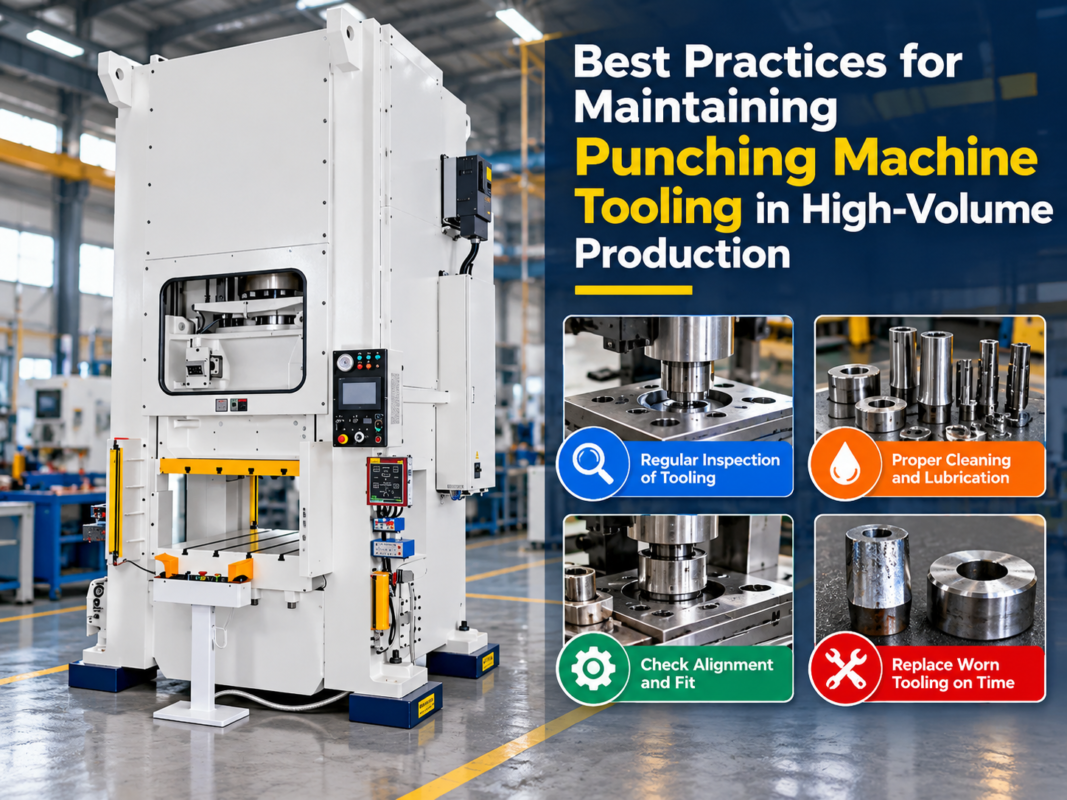
Sometimes, what appears to be a machine alignment problem is actually a tooling issue. Worn punches or dies, or tools that are not properly seated in their holders, can mimic the symptoms of a misaligned ram. It is essential to distinguish between the machine’s structural alignment and the alignment of the tools themselves. Regular inspection of the tool tangs and the bed’s mounting surfaces is a prerequisite for any diagnostic procedure.

Technical Details: Identifying Symptoms of Misalignment
Identifying press brake alignment problems early can save thousands of dollars in scrap. Operators should be trained to recognize the subtle signs that the machine is no longer performing within its calibrated parameters. Here are the most common symptoms of a misaligned press brake.
Uneven Bend Angles Across the Length
The most frequent symptom of misalignment is a variation in the bend angle from one end of the workpiece to the other. For example, if a 10-foot sheet of metal is bent to 90 degrees on the left side but only 88 degrees on the right side, the ram is likely out of parallel with the bed. This is often referred to as “tapering.” While crowning systems are designed to handle center-deflection, they cannot correct a linear tilt in the ram without proper calibration of the Y1 and Y2 axes.
The “Dog-Ear” Effect
When the ram is not centered correctly over the die (front-to-back alignment), the material may experience uneven drawing into the die opening. This can cause the corners of the flange to pull in or push out, creating a shape that resembles a dog’s ear. This symptom indicates that the punch is not entering the center of the V-die, which can be caused by shifted bed rails or loose ram guides (gibs).
Excessive Tool Wear and Noise
Misalignment causes lateral forces that the machine was not designed to handle. If you notice that one side of your punch is wearing down significantly faster than the other, or if you hear grinding or clicking sounds during the stroke, the ram may be rubbing against the gibs. This friction not only ruins the tools but also places undue stress on the hydraulic seals and the machine frame.
Diagnostics: How to Test for Press Brake Alignment Problems
Once symptoms are identified, a systematic diagnostic approach is required to pinpoint the cause. Diagnostics should always move from the simplest possibilities to the most complex mechanical adjustments.
The Four-Corner Test
This is a standard diagnostic procedure in the industry. Place four identical small test pieces of the same material at the far left, far right, and two center positions of the bed. Execute a bend. Measure the resulting angles with a precision protractor. If the left and right pieces differ, the ram parallelism is out. If the center pieces differ from the ends, the crowning system or bed deflection is the issue.
Using Dial Indicators and Laser Levels
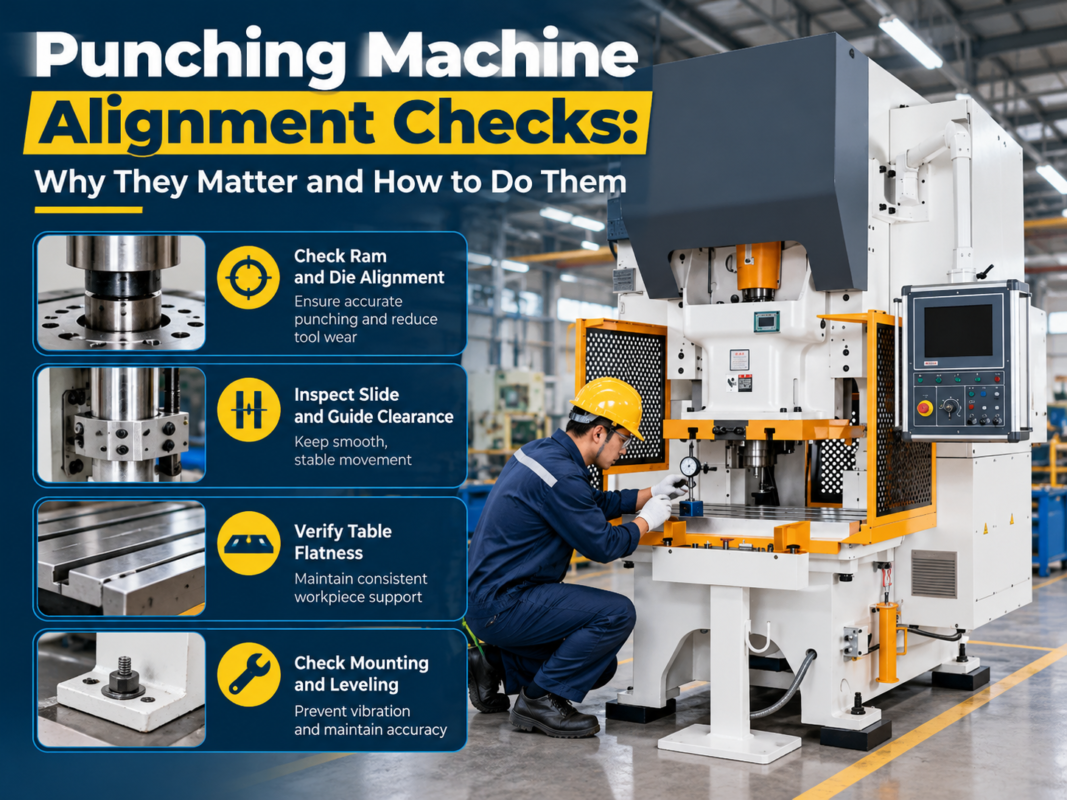
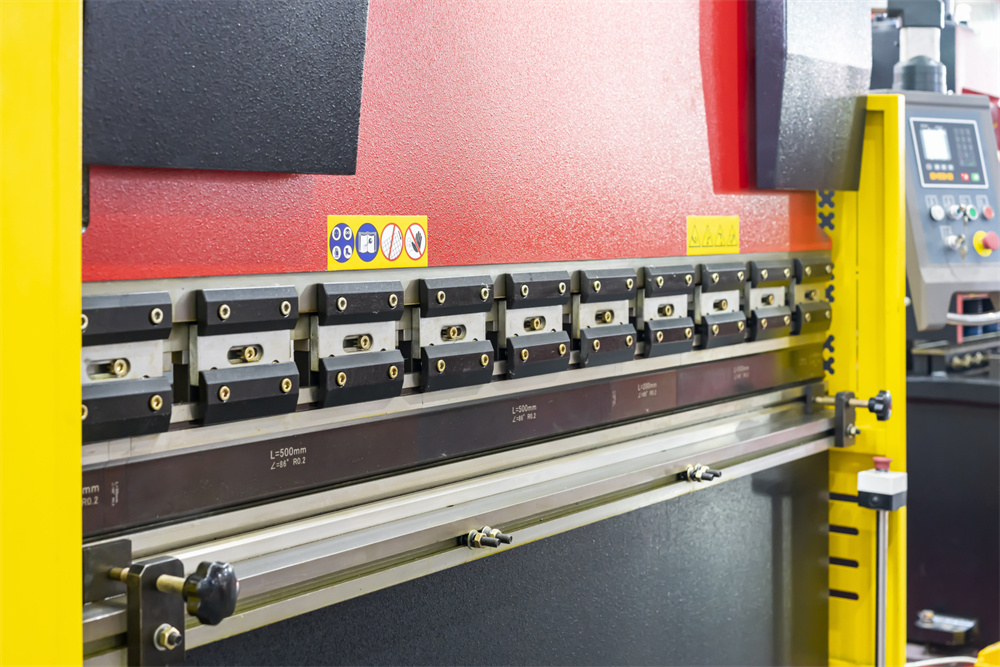
For a more technical assessment, technicians use dial indicators mounted to the ram. By moving the ram slowly through its stroke and measuring against a precision-ground parallel block on the bed, you can see exactly where the deviation occurs. Laser alignment tools are also increasingly common, providing a visual reference line across the entire length of the machine to check for bed sag or frame twist.
Checking the Backgauge Parallelism
Sometimes the bend is straight, but the flange length is inconsistent. This points to a backgauge alignment problem rather than a ram problem. Use a caliper to measure the distance from the center of the V-die to the backgauge fingers at multiple points along the X-axis. If these measurements are not identical, the backgauge bar is not parallel to the bending line.
Correction Methods for Press Brake Alignment
Correcting alignment problems requires a blend of software calibration and mechanical adjustment. Depending on the age and type of your press brake, the methods will vary.
Adjusting the Y1/Y2 Parameters
On modern CNC press brakes like HARSLE’s high-end models, the first step is often a software adjustment. The CNC controller allows the operator or technician to input an offset for the Y1 or Y2 axis. If the right side is under-bending, a small numerical offset can be added to the Y2 axis to make it travel slightly deeper. This is the most common correction for minor parallelism issues.
Gib Adjustment and Lubrication
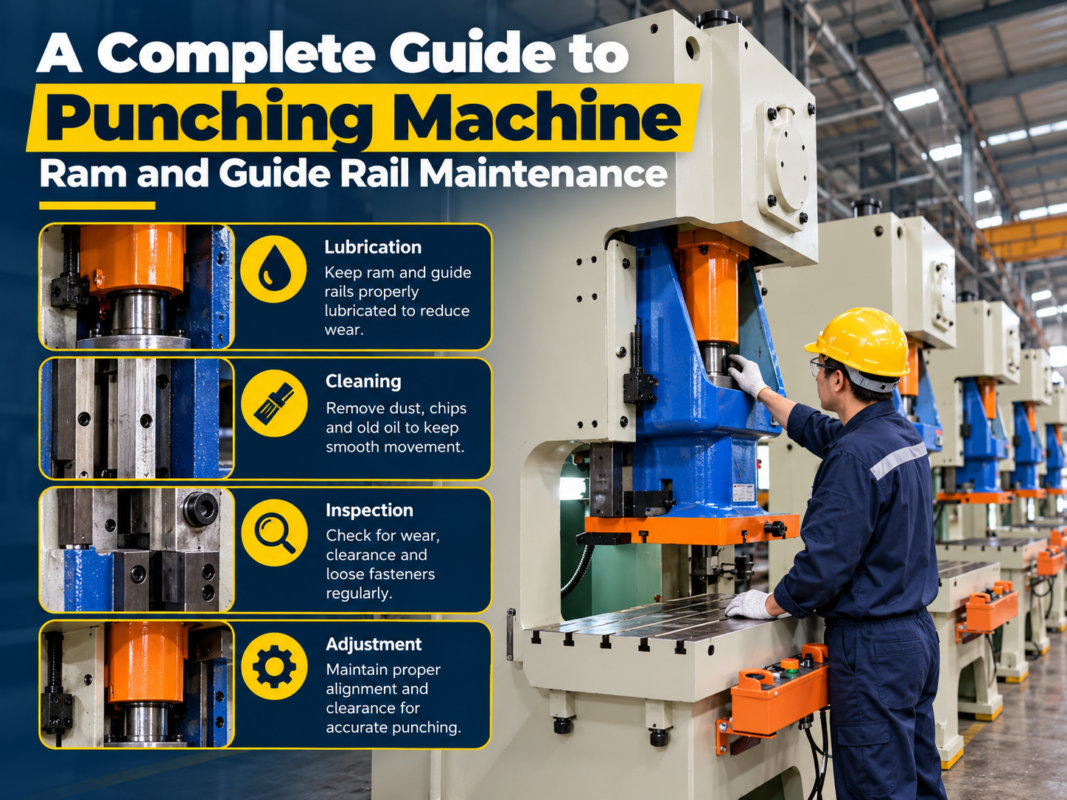
The gibs are the sacrificial wear plates that guide the ram’s vertical movement. Over years of use, these plates wear down, creating “play” in the ram. Adjusting the gib bolts to the manufacturer’s torque specifications can eliminate lateral movement. It is also vital to ensure the automatic lubrication system is functioning, as dry gibs will quickly lead to misalignment and heat-related expansion.
Mechanical Shimming and Bed Leveling
In cases where the bed itself has developed a slight bow or the foundation has shifted, mechanical shimming may be necessary. This involves placing thin metal shims under the die holder or the bed itself to restore a perfectly flat plane. While this is a “manual” fix, it is often the only way to correct for permanent structural changes in older machines.
Hydraulic Valve Calibration
If the ram moves unevenly or “stutters,” the problem may lie in the proportional valves. These valves control the flow of oil to each cylinder. If one valve is clogged or failing, it won’t respond as quickly as the other. Cleaning the hydraulic manifold and recalibrating the valve response times through the controller can restore smooth, aligned movement.
Selection Advice: Choosing a Press Brake with Superior Alignment Features
When purchasing a new press brake, it is wise to look for features that simplify alignment and prevent problems before they start. Not all machines are created equal in their ability to maintain long-term precision.
- O-Frame vs. C-Frame: While C-frame machines are common, large-tonnage machines often benefit from O-frame designs which suffer less from “throat expansion” under load, keeping the tools better aligned.
- High-Resolution Linear Encoders: Ensure the machine uses high-quality encoders (such as Heidenhain or Givi) with a resolution of at least 0.001mm. This allows the CNC to detect and correct misalignment in real-time.
- Automatic Crowning Systems: Look for CNC-controlled hydraulic or mechanical crowning. These systems automatically compensate for the natural deflection of the bed, ensuring the bend angle is consistent from end to end without manual shimming.
- Robust Backgauge Systems: A 4-axis or 6-axis backgauge with independent movement allows for complex parts and ensures that even if the part is angled, the bend line remains precise.
HARSLE offers a range of press brakes equipped with these advanced features, designed to minimize the frequency of alignment checks and maximize the accuracy of every stroke. Investing in a machine with a rigid frame and intelligent control systems is the best way to avoid the headaches of chronic misalignment.
Frequently Asked Questions (FAQ)
How often should I check my press brake alignment?
For high-precision shops, a quick parallelism check (the four-corner test) should be performed weekly. A full diagnostic calibration using dial indicators should be done every six months or whenever the machine is moved or undergoes major repairs.
Can I fix a twisted frame?
A truly twisted frame is a serious structural issue. While minor twists can sometimes be compensated for by leveling the machine’s feet or shimming the bed, a severely warped frame usually requires professional machining of the bed and ram surfaces or, in extreme cases, machine replacement.
Why does my press brake lose alignment when it gets hot?
Hydraulic oil thins as it heats up, and metal components expand. If your cooling system is inadequate, the Y1 and Y2 valves may behave differently at high temperatures. Ensure your hydraulic oil is kept at a stable temperature and that the machine is not positioned in direct sunlight or near a heat-intensive process like a furnace.
Does the type of material affect alignment?
While the material doesn’t change the machine’s physical alignment, high-strength materials (like stainless steel or Hardox) exert much higher forces. These forces can exaggerate existing minor misalignments that might not be noticeable when bending soft aluminum.
Conclusion
Press brake alignment is the foundation of quality in metal fabrication. By understanding the symptoms of misalignment—such as uneven angles and tool wear—and employing rigorous diagnostic methods, manufacturers can maintain the high standards their customers expect. Whether through software offsets in a CNC controller or mechanical adjustments to the gibs and foundation, keeping a press brake in perfect alignment is an ongoing commitment to excellence.
For those looking to upgrade their capabilities, choosing a machine like those offered by HARSLE, which features advanced synchronization and crowning technologies, can significantly reduce the burden of maintenance. Remember, a well-aligned machine is not just about accuracy; it’s about the safety of your operators, the longevity of your tools, and the profitability of your business. Regular attention to these alignment principles will ensure your press brake remains a reliable asset for years to come.