How to Solve Press Brake Depth Stop Errors and Inconsistent Stroke Length


Introduction to Press Brake Precision Challenges
In the world of precision metal fabrication, the accuracy of a bend is the difference between a high-quality component and a piece of scrap metal. One of the most frustrating issues operators face is the inability to maintain a consistent bending angle, often caused by depth stop errors or an inconsistent stroke length. When you aim to solve press brake depth stop errors inconsistent stroke length, you are essentially looking at the heart of the machine’s repeatability and hydraulic synchronization.
A press brake operates by driving a punch into a die to a very specific depth. Even a deviation of 0.01mm can result in a significant angular error, especially when working with high-tensile materials or tight-tolerance aerospace parts. Inconsistent stroke length means that the ram does not return to the same position or, more critically, does not reach the same bottom dead center (BDC) consistently. This guide explores the root causes of these issues, ranging from mechanical wear to hydraulic fluctuations and control system glitches, providing actionable solutions for modern fabrication shops.
HARSLE understands that downtime is costly. By identifying whether the error is mechanical, hydraulic, or electronic, maintenance teams can implement targeted fixes that restore the machine to its factory specifications. Whether you are operating a traditional torsion bar machine or a high-end electro-hydraulic CNC press brake, the principles of depth control remain the foundation of your production quality.
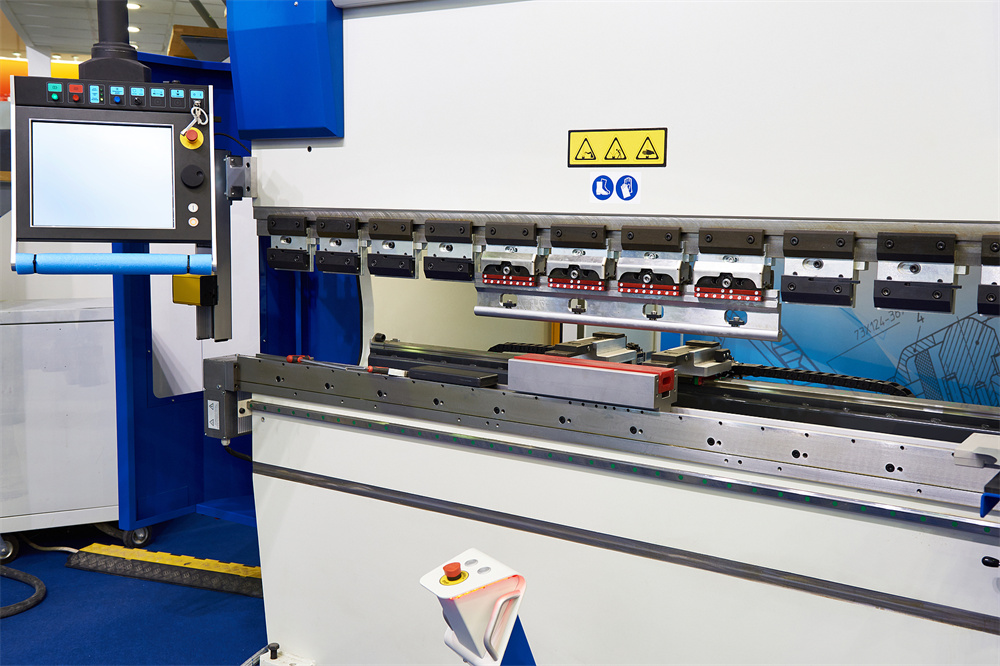
Key Considerations for Depth Accuracy
1. Material Variability and Springback
Before blaming the machine, it is essential to consider the material. Variations in sheet thickness, grain direction, and hardness can mimic depth stop errors. If the material thickness varies by even 0.05mm, the resulting bend angle will change if the machine is set to a fixed depth. To solve press brake depth stop errors inconsistent stroke length, operators must first ensure that the material being fed into the machine is consistent or that the machine is equipped with thickness-sensing technology.
Springback is another critical factor. Different batches of steel have different elastic properties. If the ram reaches the exact same depth every time but the material springs back differently, the result is an inconsistent final angle. This is often mistaken for a stroke length error when it is actually a material property issue.
2. Hydraulic Oil Temperature and Viscosity
Hydraulic systems are sensitive to temperature. As the machine runs throughout the day, the oil heats up, reducing its viscosity. Thinner oil can leak past seals more easily or flow through valves differently than cold, thick oil. This change in fluid dynamics can lead to the ram “drifting” or failing to reach the precise BDC, causing inconsistent stroke lengths. Maintaining a stable operating temperature through oil coolers or heaters is a primary step in ensuring long-term repeatability.
3. Machine Frame Deflection
Every press brake frame deflects under load. This is known as “yawing” or “breathing.” If the machine is not properly compensated for this deflection, the center of the bend will be shallower than the ends. While this is often addressed by crowning systems, an unevenly stressed frame or loose foundation bolts can lead to unpredictable stroke behavior, making it difficult to maintain a consistent depth stop across the entire length of the workpiece.
Technical Details: Root Causes and Solutions
Mechanical Synchronization vs. Electro-Hydraulic Control
To effectively solve press brake depth stop errors inconsistent stroke length, one must understand how the machine synchronizes its cylinders. In older or economy models, a mechanical torsion bar connects the two sides of the ram. If the bearings in this bar wear out or the linkage becomes loose, one side of the ram may lag behind the other, leading to uneven depth stops. Regular lubrication and checking for mechanical play are vital for these machines.
In modern CNC machines, synchronization is handled electro-hydraulically. Linear encoders (scales) on each side of the frame measure the exact position of the ram and send feedback to the CNC controller. If these scales are dirty, loose, or misaligned, the controller receives false data, leading to stroke inconsistencies. Cleaning the glass scales with specialized solutions and ensuring the mounting brackets are vibration-free can often resolve “ghost” errors in depth.
The Role of Proportional Valves
The heart of a CNC press brake’s depth control is the proportional valve. These valves regulate the flow of oil to the cylinders with extreme precision. Over time, contaminants in the hydraulic oil can cause these valves to stick or respond sluggishly. If one valve responds slower than the other, the ram will tilt or overshoot its target. Regular oil filtration and periodic valve spool cleaning are necessary to maintain the millisecond-level response times required for consistent stroke lengths.
Encoder Feedback and PID Tuning
The CNC controller uses a PID (Proportional, Integral, Derivative) loop to manage the ram’s movement. If the parameters are not tuned correctly, the ram might “hunt” for its position, causing it to jitter or stop at slightly different heights. This is particularly common after a software update or a component replacement. Re-calibrating the Y1 and Y2 axes through the controller’s service menu is a technical but necessary step to solve press brake depth stop errors inconsistent stroke length.

Troubleshooting Checklist for Inconsistent Stroke
| Component | Potential Issue | Recommended Action |
|---|---|---|
| Linear Encoders | Dust or oil on the scale | Clean with alcohol and lint-free cloth |
| Hydraulic Seals | Internal bypass leakage | Inspect for pressure drops and replace seals |
| Cylinder Mounting | Loose bolts or worn bushings | Tighten to torque specs and check for play |
| CNC Software | Incorrect offset values | Reset reference points and re-calibrate Y-axis |
| Proportional Valves | Solenoid failure or clogging | Test voltage and flush hydraulic system |
Selection Advice: Choosing a Machine for Maximum Repeatability
When purchasing a new press brake, the ability to avoid future depth stop errors starts with the machine’s design. If your work requires high precision, opting for a machine with a rigid O-frame rather than a C-frame can reduce deflection. Furthermore, look for machines that utilize high-end components from reputable brands like Rexroth or Hoerbiger for hydraulics, and Heidenhain or Givi Misura for linear scales.
Another critical feature is the “Auto-Crowning” system. While manual crowning requires the operator to guess the amount of deflection, hydraulic or motorized mechanical crowning systems use the CNC’s calculations to adjust the bed in real-time. This ensures that the depth stop is consistent not just in terms of the ram’s position, but in terms of the actual penetration into the die across the entire length of the machine.
Finally, consider the controller’s user interface. A system that provides clear diagnostic data regarding the Y1 and Y2 positions makes it much easier to solve press brake depth stop errors inconsistent stroke length before they result in significant scrap. HARSLE machines are designed with these high-precision components to ensure that even after years of heavy industrial use, the stroke remains consistent within microns.
Maintenance Strategies to Prevent Depth Errors
Preventative maintenance is the most effective way to solve press brake depth stop errors inconsistent stroke length. A daily check should include inspecting the ram guides for proper lubrication. If the guides are dry, the resulting friction can cause the ram to “stutter,” leading to inconsistent BDC positions. Use the manufacturer-recommended grease and ensure the automatic lubrication system (if equipped) is functioning correctly.
Weekly, operators should check the hydraulic oil levels and the condition of the filters. Air in the hydraulic lines is a common cause of inconsistent stroke length. If the pump is sucking in air due to low oil levels or a leak in the suction line, the oil becomes compressible (aerated). This “sponginess” makes it impossible for the CNC to maintain a precise depth stop. Bleeding the system and ensuring all fittings are airtight is a simple yet often overlooked solution.
Annually, a professional calibration is recommended. Using a laser interferometer or high-precision dial indicators, a technician can map the entire stroke of the ram and update the CNC’s compensation tables. This accounts for any minor structural settling or wear in the mechanical linkages that has occurred over the year.
Frequently Asked Questions (FAQ)
Why does my press brake bend deeper on one side?
This is usually a synchronization issue. In CNC machines, it often points to a dirty or faulty linear encoder on one side. In manual/torsion bar machines, it usually indicates that the torsion bar linkage is uneven or that the mechanical stop nuts are out of sync. Check the Y1/Y2 readings on your controller to identify which side is deviating.
Can temperature really affect my bending accuracy?
Yes, significantly. As hydraulic oil heats up, its volume and viscosity change. This affects the speed and pressure of the ram. High-end machines often have temperature sensors that allow the CNC to compensate for these changes, but in older machines, you may need to allow the machine to reach a stable operating temperature before performing precision work.
How often should I calibrate the depth stop?
For high-precision shops, a quick daily check with a test piece is standard. A full system calibration should be performed every 6 to 12 months, or whenever a major hydraulic or electronic component is replaced. If you notice a trend of increasing scrap, calibration should be your first troubleshooting step.
What is the difference between a mechanical stop and an electronic stop?
A mechanical stop (common in NC machines) uses a physical nut or block inside the cylinder to stop the ram. An electronic stop (CNC) uses a feedback loop to stop the ram at a programmed coordinate. Electronic stops are much more versatile but require functional sensors and software to remain accurate.
Conclusion
To solve press brake depth stop errors inconsistent stroke length, one must adopt a holistic approach that covers mechanical integrity, hydraulic health, and electronic precision. By understanding that the depth stop is a result of multiple systems working in perfect harmony, operators and maintenance teams can more effectively diagnose and fix issues as they arise.
Investing in high-quality machinery from HARSLE ensures that you start with a foundation of precision. However, even the best machines require regular care, clean oil, and proper calibration to maintain their performance. By following the troubleshooting and maintenance steps outlined in this guide, you can minimize downtime, reduce material waste, and ensure that every bend meets the highest standards of accuracy. Precision is not just a goal; it is a repeatable process that defines the success of your fabrication business.