Press Brake Backgauge Maintenance Guide for Better Positioning Accuracy


The Critical Role of Press Brake Backgauge Maintenance for Better Positioning Accuracy
In the world of precision metal fabrication, the backgauge is often referred to as the ‘soul’ of the press brake. While the hydraulic system provides the force and the tooling defines the shape, it is the backgauge that determines the dimensional accuracy of every bend. For operators and facility managers, understanding that Press Brake Backgauge Maintenance Better Positioning Accuracy is not just a suggestion but a necessity is the first step toward operational excellence. A backgauge that is neglected will eventually lead to cumulative errors, increased scrap rates, and costly downtime.
HARSLE machines are engineered for high precision, but even the most advanced CNC systems rely on the physical integrity of the mechanical components. The backgauge system typically consists of multiple axes—X, R, Z1, Z2, and sometimes additional auxiliary axes. Each of these movements relies on ball screws, linear guides, and servo motors working in perfect harmony. When dust, metal shavings, or lack of lubrication interfere with these components, the positioning accuracy begins to drift. This guide provides a deep dive into the protocols required to keep your backgauge performing at its peak.
Maintaining positioning accuracy is directly tied to the profitability of a fabrication shop. In modern manufacturing, tolerances are tighter than ever. A deviation of even 0.1mm can result in a part that fails quality control or does not fit into a larger assembly. By following a rigorous maintenance schedule, you ensure that the ‘Press Brake Backgauge Maintenance Better Positioning Accuracy’ remains a constant reality rather than a variable. This proactive approach extends the lifespan of the machine and ensures a higher return on investment for your HARSLE equipment.
Daily Inspection: The First Line of Defense
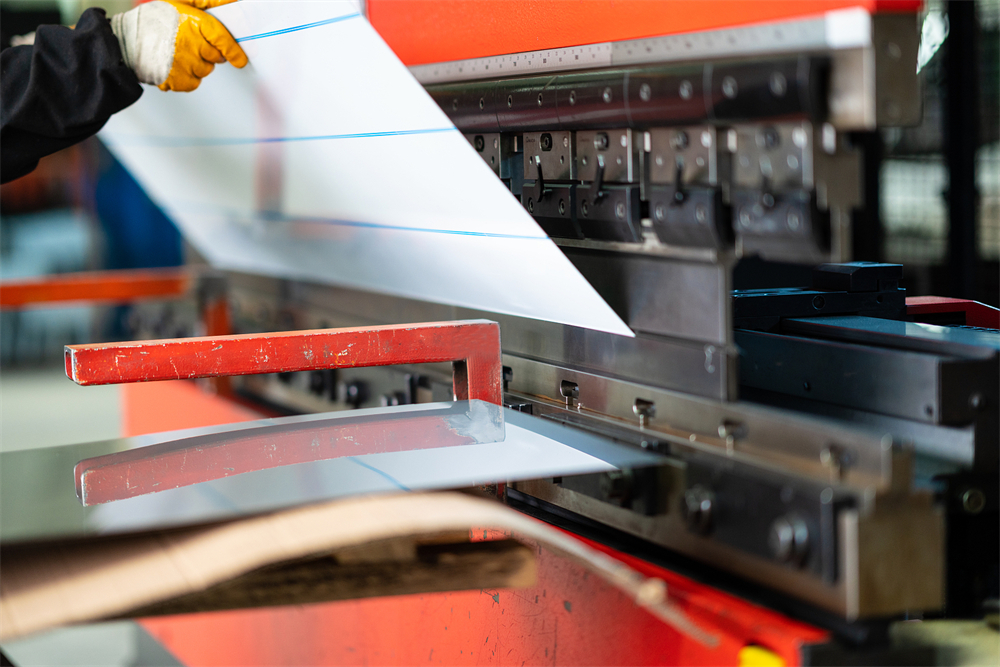
The daily inspection is the most effective way to catch minor issues before they escalate into major mechanical failures. Every shift should begin with a visual and functional check of the backgauge system. Start by cleaning the work area. Metal dust and small offcuts are the primary enemies of linear guides and ball screws. If these particles enter the bearing blocks, they act as abrasives, wearing down the precision-ground surfaces and leading to ‘play’ or backlash in the system.
Operators should check for any visible obstructions along the travel paths of the X and R axes. It is common for small pieces of scrap to fall behind the machine and lodge themselves in the bellows or near the limit switches. Furthermore, check the tightness of the finger stops. If the fingers are loose or slightly tilted, the contact point with the workpiece will be inconsistent, rendering the CNC’s precision useless. A quick manual check of the finger stop bolts can save hours of troubleshooting later in the day.
Listen to the machine during its homing sequence. A healthy backgauge should move smoothly with a consistent hum from the servo motors. Any grinding, clicking, or stuttering sounds are immediate red flags. These sounds often indicate a lack of lubrication or a foreign object trapped in the drive mechanism. Addressing these sounds immediately prevents the servo motors from overworking and potentially burning out due to excessive torque requirements.
Mechanical Component Integrity and Calibration
The mechanical backbone of the backgauge consists of ball screws and linear motion guides. These components convert the rotational energy of the servo motors into precise linear positioning. Over time, the constant vibration of the bending process can cause fasteners to loosen. Periodically, maintenance personnel should inspect the mounting bolts of the linear rails and the ball screw supports. Any movement in these foundations will directly translate to positioning errors.
Parallelism is another critical factor. The backgauge bar must remain perfectly parallel to the center line of the bottom die. If the backgauge is skewed, the flange lengths on a long part will vary from left to right. To check this, use a precision dial indicator or a master gauge block. Move the backgauge to a specific position and measure the distance to the die at multiple points along the length of the machine. If discrepancies are found, the mechanical coupling or the CNC parameters may need adjustment.
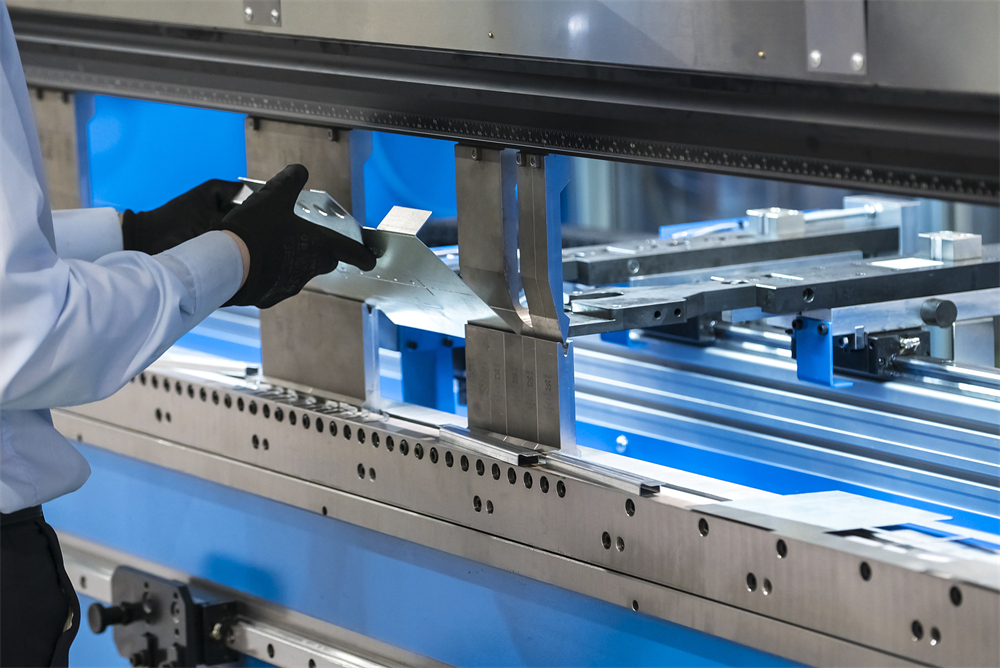
The finger stops themselves are subject to wear and tear. Since they are the direct contact point with the metal, they can become burred or dented over time. Inspect the faces of the fingers for any damage that might prevent the sheet from sitting flat. Additionally, ensure that the height adjustment (R-axis) is functioning correctly. If the R-axis does not return to the exact programmed height, the material may slide under or over the finger, leading to dangerous ‘slip’ conditions during the bend.
Electrical and Control System Checks
While the mechanical parts do the heavy lifting, the electrical system provides the intelligence. The CNC controller communicates with servo drives via high-speed data cables. One of the most common causes of positioning errors is electrical interference or ‘noise.’ Ensure that all shielded cables are properly grounded and that there are no loose connections at the drive terminals. Vibration from the press brake can occasionally loosen these connections, leading to intermittent signal loss.
The encoders attached to the servo motors are responsible for reporting the exact position of the backgauge back to the controller. If an encoder becomes dirty or if its coupling to the motor shaft slips, the machine will lose its ‘sense of place.’ This often manifests as an ‘over-travel’ error or a positioning deviation that grows larger the further the gauge moves. Cleaning the exterior of the motor housings and ensuring they are free from oil mist helps maintain the integrity of these sensitive electronic components.
Software calibration should also be part of your long-term maintenance strategy. Most HARSLE press brakes allow for ‘backlash compensation’ within the CNC settings. As the machine ages and natural wear occurs in the ball screws, a small amount of play is inevitable. By measuring the actual physical position versus the programmed position, technicians can input compensation values into the controller to maintain high accuracy even as the mechanical components age.
Comprehensive Lubrication Plan
Lubrication is the lifeblood of Press Brake Backgauge Maintenance Better Positioning Accuracy. Without a consistent film of grease, the friction between the ball bearings and the raceways will generate heat, leading to thermal expansion and premature wear. Most modern backgauges require a high-quality lithium-based grease. Avoid using thin oils or WD-40, as these do not provide the necessary load-bearing film and can actually wash away existing grease.
For machines equipped with manual lubrication points, a weekly schedule is usually sufficient for single-shift operations. However, in high-production environments, daily lubrication may be required. Focus on the ball screw nut and the linear guide trucks. When applying grease, move the backgauge through its full range of motion to ensure the lubricant is distributed evenly across the entire length of the screw and rail. This also helps to push out any contaminants that may have worked their way into the seals.
If your HARSLE press brake features an automatic lubrication system, your primary task is to monitor the reservoir level and ensure the pump is functioning. Check the delivery lines for any kinks or leaks. A common failure point in auto-lube systems is a blocked distribution manifold, where one axis receives plenty of grease while another runs dry. Periodically verify that a fresh bead of grease is visible on all rails to confirm the system is working as intended.
Troubleshooting Common Positioning Signals
Recognizing the early warning signs of backgauge failure can save thousands of dollars in repairs. One of the most common signals is a ‘thumping’ sound during high-speed movement. This usually indicates a flat spot on a bearing or a damaged thread in the ball screw. If you notice this, stop the machine and inspect the drive train immediately. Continuing to operate will only cause further damage to the motor and drive electronics.
Another signal is inconsistent flange lengths. If the first part is correct but subsequent parts are off, the backgauge may be ‘drifting.’ This is often caused by a loose coupling between the servo motor and the ball screw. The motor turns, but the screw doesn’t move the exact same amount every time. Check the set screws or clamping collars on the couplings to ensure they are torqued to the manufacturer’s specifications.
Error codes on the CNC screen are the most direct way the machine communicates problems. Codes related to ‘Positioning Deviation’ or ‘Servo Alarm’ should never be ignored. Often, these are triggered when the force required to move the backgauge exceeds a safety threshold. This is a clear indicator of mechanical binding or a lack of lubrication. Refer to your HARSLE manual to decode these signals and perform the recommended corrective actions.
Backgauge Maintenance Schedule Table
| Frequency | Task Description | Component Focus |
|---|---|---|
| Daily | Clean dust, debris, and metal shavings from rails and screws. | Linear Guides / Ball Screws |
| Daily | Check finger stop tightness and alignment. | Backgauge Fingers |
| Weekly | Apply lithium grease to all manual lubrication points. | Drive System |
| Weekly | Inspect bellows and covers for tears or damage. | Protective Covers |
| Monthly | Verify parallelism with a dial indicator. | Backgauge Bar |
| Monthly | Check electrical connections and motor cables for wear. | Electrical Cabinet / Motors |
| Quarterly | Perform a full CNC calibration and backlash check. | CNC Controller |
| Yearly | Deep clean and replace worn bearings or finger inserts. | Full System Overhaul |
Frequently Asked Questions (FAQ)
1. Why is my backgauge losing accuracy even after lubrication?
If lubrication doesn’t solve the issue, the problem may be mechanical wear (backlash) in the ball screw or a loose coupling between the motor and the screw. It is also possible that the CNC’s reference point (homing position) is shifting due to a faulty limit switch or encoder error. Perform a physical measurement check to see if the error is consistent or random.
2. How often should I calibrate the backgauge?
For standard production, a monthly check of the parallelism and a quarterly full calibration are recommended. However, if you move the machine or if it experiences a ‘crash’ (where the ram or tool hits the backgauge), you must recalibrate immediately before resuming production.
3. Can I use compressed air to clean the backgauge?
While compressed air is fast, it can be dangerous for backgauges. High-pressure air can blow fine metal dust past the seals and into the bearing blocks or ball nuts. It is better to use a vacuum or a soft cloth to wipe away debris. If you must use air, keep the pressure low and point it away from sensitive bearing areas.
4. What type of grease is best for HARSLE backgauges?
We generally recommend a high-quality Lithium-based grease (NLGI Grade 2). Always check your specific machine manual, as some high-speed backgauges may require a specific synthetic lubricant to handle the thermal loads without breaking down.
5. My backgauge makes a loud ‘clunk’ when it starts moving. What is wrong?
A ‘clunk’ or ‘jerk’ at the start of movement often indicates a loose mechanical connection or a servo tuning issue. Check the motor mounts and the ball screw support bearings. If those are tight, the servo drive may need to be tuned to handle the inertia of the backgauge bar more smoothly.
6. Does temperature affect backgauge accuracy?
Yes, extreme temperature fluctuations in a workshop can cause the metal components of the backgauge to expand or contract. In very cold environments, grease can become too viscous, causing the motors to strain. In very hot environments, thermal expansion can lead to slight positioning drifts. Maintaining a stable shop temperature helps ensure consistent accuracy.
Conclusion: Investing in Precision
The commitment to Press Brake Backgauge Maintenance Better Positioning Accuracy is a commitment to quality. By treating the backgauge as a precision instrument rather than just a heavy piece of steel, you ensure that your HARSLE press brake continues to deliver the world-class performance it was designed for. Regular cleaning, diligent lubrication, and proactive inspections are the hallmarks of a professional fabrication operation. Remember, the cost of maintenance is always lower than the cost of a failed part or a broken machine. Keep your backgauge in top condition, and it will reward you with years of accurate, reliable service.