
Press Brake Stainless Steel Vs Mild Steel: Comparison Of Bending Challenges Solutions


Comparison Summary: The Fundamental Differences in Metal Bending
In the world of metal fabrication, the choice between stainless steel and mild steel dictates almost every parameter of the bending process. While both materials are staples in industrial manufacturing, their physical properties necessitate vastly different approaches when using a press brake. Mild steel, often referred to as carbon steel, is known for its ductility and relatively low yield strength, making it the ‘standard’ for most bending operations. In contrast, stainless steel—particularly the 300 and 400 series—presents a much stiffer challenge due to its high tensile strength and rapid work-hardening characteristics.
The primary comparison point between these two materials lies in the tonnage requirement. As a general rule of thumb, stainless steel requires approximately 50% to 100% more pressure (tonnage) than mild steel of the same thickness. This is because the alloying elements in stainless steel, such as chromium and nickel, create a tighter molecular structure that resists deformation. Furthermore, springback—the tendency of the metal to return to its original shape after the pressure is released—is significantly more pronounced in stainless steel, often requiring 5 to 10 degrees of over-bending compared to the 1 to 2 degrees typical of mild steel.
Another critical summary point is surface integrity. Mild steel is often painted or powder-coated post-fabrication, meaning minor surface scratches from the die are acceptable. Stainless steel, however, is frequently used for its aesthetic and hygienic properties in food, medical, and architectural applications. This necessitates specialized tooling and protective measures to prevent ‘carbon contamination’ and unsightly tool marks. Understanding these fundamental differences is the first step in selecting the right HARSLE press brake for your facility.
Finally, the choice of machinery must reflect these material realities. A shop primarily working with mild steel might prioritize speed and stroke frequency, whereas a shop specializing in stainless steel must prioritize frame rigidity, precision crowning systems, and high-tonnage capacity. HARSLE provides solutions for both ends of the spectrum, ensuring that whether you are bending 10-gauge mild steel or 6mm stainless plate, the results remain consistent and accurate.
Machine A Overview: The Versatile Workhorse for Mild Steel
For operations focused primarily on mild steel, the HARSLE Hydraulic Press Brake series offers an ideal balance of efficiency and cost-effectiveness. Mild steel bending is characterized by its predictability. Because the material has a lower yield point, the press brake frame undergoes less deflection during the stroke. This allows for the use of standard hydraulic systems that provide steady, reliable pressure without the need for the extreme reinforcement required for tougher alloys.
HARSLE’s mild steel optimized machines often feature robust torsion bar synchronization. This mechanical link ensures that both ends of the ram move in unison, providing sufficient accuracy for general construction, automotive parts, and HVAC ductwork. Since mild steel is less prone to cracking when bent at tight radii, these machines can utilize standard V-dies with a width of 8 times the material thickness (8T) without excessive wear on the tooling.
Productivity is the name of the game with mild steel. Because the material is easier to manipulate, operators can achieve higher cycle speeds. HARSLE integrates intuitive NC or entry-level CNC controllers that allow for rapid programming of multi-step bends. Since springback is minimal, the ‘trial and error’ phase of setup is greatly reduced, allowing for high-volume throughput in busy fabrication shops.
Maintenance for a mild steel-focused machine is also generally lower. The tooling (punches and dies) does not face the same abrasive forces as it would with stainless steel. Standard heat-treated steel tooling can last for years when processing mild steel, provided basic lubrication and alignment protocols are followed. This makes the HARSLE standard hydraulic series a favorite for startups and established shops looking to expand their general fabrication capacity.
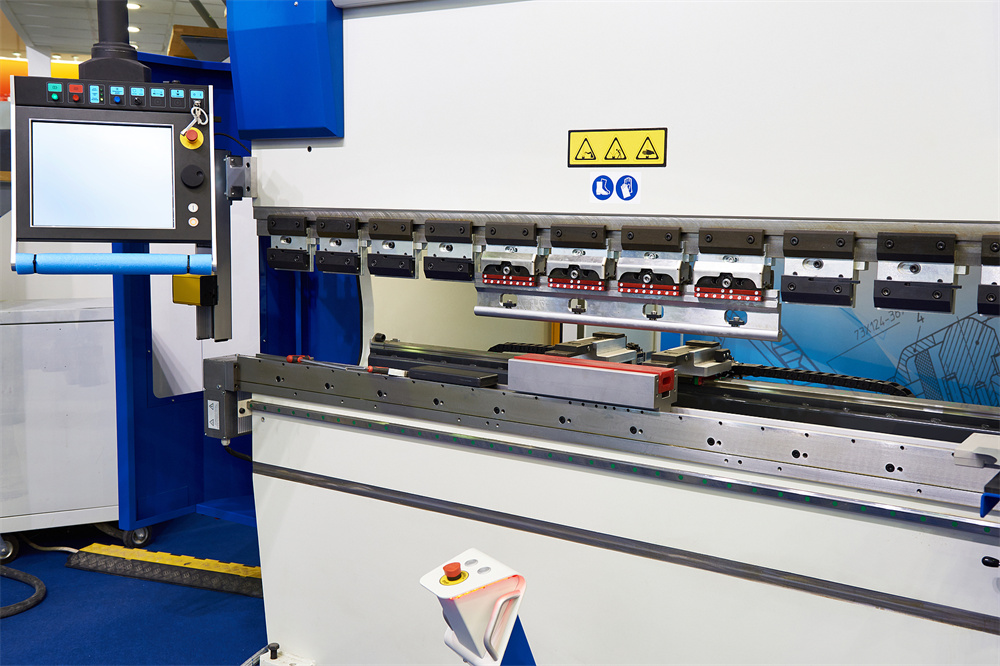
Machine B Overview: The Precision Powerhouse for Stainless Steel
When the material shifts to stainless steel, the requirements for the press brake become significantly more stringent. HARSLE’s WE67K Series CNC Synchronized Press Brake is the definitive solution for these challenges. Stainless steel requires a machine with exceptional frame rigidity to counteract the high forces involved. Any frame deflection during a bend will result in an inconsistent angle across the length of the workpiece, a problem that is magnified by the high yield strength of stainless steel.
The WE67K series utilizes advanced electro-hydraulic proportional valves to control the ram’s position with micron-level accuracy. This is crucial for managing the significant springback associated with stainless steel. The CNC controller (such as the Delem DA-53T or DA-66T) automatically calculates the necessary over-bend based on the material’s properties, ensuring that the final angle is perfect on the first hit. This reduces scrap, which is vital given the higher cost of stainless steel raw materials.
Another essential feature for stainless steel bending is the integrated crowning system. HARSLE employs both hydraulic and mechanical crowning methods to compensate for the natural ‘bowing’ of the machine under high pressure. By slightly lifting the center of the lower table, the machine ensures that the bend angle at the center of the sheet matches the angles at the ends. This is particularly important for long stainless steel panels used in commercial kitchens or architectural facades.
Furthermore, HARSLE recommends specialized tooling for stainless steel applications. To prevent the material from galling or scratching, and to withstand the increased pressure, the tooling is often made from high-grade alloys with specialized hardening treatments. The use of larger V-die openings (10T to 12T) is also common to distribute the pressure and reduce the risk of cracking the material or damaging the machine’s ram.
Specification Comparison Table
| Feature / Parameter | Mild Steel (Standard) | Stainless Steel (High-Performance) |
|---|---|---|
| Tonnage Requirement | Baseline (e.g., 100 Tons) | 1.5x to 2x Baseline (150-200 Tons) |
| Springback Allowance | 1° – 2° | 5° – 10° (Requires CNC Compensation) |
| V-Die Opening | 8x Material Thickness (8T) | 10x to 12x Material Thickness (10T-12T) |
| Crowning System | Optional / Manual | Essential (CNC Hydraulic/Mechanical) |
| Tooling Hardness | Standard HRC 42-45 | Premium HRC 50-55 + Specialized Coating |
| Surface Protection | Minimal (Standard Dies) | High (Nylon Inserts / Protective Tape) |
| Synchronization | Torsion Bar (Mechanical) | Electro-Hydraulic (CNC Proportional) |
Best-fit Applications: Choosing the Right Path
The application determines the material, and the material determines the machine. Mild steel is the backbone of the global infrastructure. It is used extensively in the production of structural beams, brackets, and enclosures where cost-efficiency is paramount. In the automotive industry, mild steel’s ability to be easily formed and welded makes it the go-to for chassis components and body panels. For these high-volume, cost-sensitive projects, a HARSLE hydraulic press brake provides the necessary speed and reliability without the overhead of ultra-high-precision features that the material doesn’t strictly require.
Stainless steel applications, conversely, are found where environment and aesthetics are critical. The food and beverage industry relies on stainless steel for its corrosion resistance and ease of cleaning. In medical environments, the non-reactive nature of stainless steel is non-negotiable. These industries require parts with perfect finishes and precise dimensions. A HARSLE CNC synchronized machine is best-fit here because it can handle the high-pressure demands of stainless while maintaining the delicate surface finish required for surgical equipment or food processing vats.
Aerospace and chemical processing also lean heavily toward stainless steel and other high-strength alloys. In these sectors, a single failed bend can result in thousands of dollars in lost material. The precision of a high-end HARSLE press brake, equipped with laser angle measuring systems, ensures that every part meets the rigorous safety standards of the aerospace industry. The ability to store complex bending sequences in the CNC memory allows for the production of intricate components with minimal operator intervention.
Finally, architectural metalwork often bridges the gap. While some structural elements may be mild steel, the visible ‘skin’ of a building is often stainless steel. Fabricators serving this market need a versatile machine—or a fleet of machines—that can switch between materials seamlessly. HARSLE’s multi-axis backgauge systems allow for the complex geometry often found in modern architecture, providing the flexibility to handle both the brute force needed for thick mild steel and the delicate precision needed for thin, polished stainless sheets.

Cost and Maintenance Comparison
When evaluating the total cost of ownership, mild steel bending is generally more economical. The initial investment in a torsion-bar hydraulic press brake is lower, and the ongoing costs for electricity and tooling are modest. Because the material is softer, the hydraulic pumps and valves operate under less stress, leading to longer intervals between major seal replacements. However, the trade-off is often in labor costs; without advanced CNC features, setup times for complex parts can be longer.
Stainless steel bending involves a higher upfront cost for the machinery. A CNC synchronized press brake with a high-tonnage rating and crowning system represents a significant investment. Furthermore, the tooling for stainless steel is more expensive. Hardened and ground punches and dies are necessary to prevent the material from ‘imprinting’ on the tool and to ensure the tool doesn’t deform under the extreme pressure. Operators must also account for the cost of consumables like protective films or specialized lubricants used to prevent galling.
Maintenance for stainless steel operations is more intensive. The fine dust generated during the handling of stainless steel can be more abrasive than mild steel scale. This requires more frequent cleaning of the backgauge guideways and the ram slides. Additionally, because the machine is operating closer to its maximum tonnage capacity more often, regular inspections of the hydraulic fluid and filter systems are critical to prevent overheating and component fatigue. HARSLE recommends a proactive maintenance schedule for all high-tonnage machines to ensure long-term accuracy.
Energy consumption is another factor. Bending stainless steel requires more power to generate the necessary hydraulic pressure. Modern HARSLE machines mitigate this through the use of servo-main motor systems (Hybrid technology), which only consume significant power during the actual bending stroke. While the hybrid system adds to the initial cost, the energy savings over the life of the machine—especially when processing tough materials like stainless steel—can be substantial, leading to a faster return on investment.
Recommendation: Selecting Your HARSLE Solution
Choosing between a machine optimized for mild steel or one built for stainless steel depends on your current production mix and your future growth plans. If your shop handles a variety of general fabrication tasks where tolerances are standard (±0.5mm to 1mm) and the material is primarily carbon steel, the HARSLE Hydraulic Press Brake with an E21 or TP10S controller is a highly cost-effective choice. It provides the power you need with a simplified interface that is easy for new operators to learn.
However, if you are moving into high-end markets like medical, food service, or precision electronics, or if you find yourself bending stainless steel more than 30% of the time, the investment in a HARSLE WE67K CNC Synchronized Press Brake is essential. The precision offered by the electro-hydraulic system and the time saved by the CNC-calculated springback compensation will pay for itself in reduced scrap and faster setup times. The ability to handle the higher tonnage requirements of stainless steel without straining the machine ensures a much longer service life for your equipment.
For shops that must do it all, we recommend a ‘high-spec’ CNC machine. While it may seem like overkill for simple mild steel bends, the versatility it offers is unmatched. A high-tonnage CNC machine can bend mild steel with extreme speed and ease, and then switch to a complex stainless steel job with just a few taps on the touchscreen. This flexibility allows your business to bid on a wider range of contracts, knowing that your HARSLE machinery can handle whatever material the client specifies.
Before making a final decision, consider the maximum thickness and length of the stainless steel you plan to bend. Always calculate your tonnage requirements based on the toughest material you will use. HARSLE’s technical team is available to help you perform these calculations and select a machine that provides a safe ‘buffer’ of tonnage, ensuring you never have to push your equipment to its absolute breaking point.
FAQ: Common Questions on Bending Stainless vs Mild Steel
1. Why does my stainless steel crack when I bend it to the same radius as mild steel?
Stainless steel has lower ductility and work-hardens quickly. If the inside bend radius is too tight, the outer fibers of the material will stretch beyond their limit and crack. To solve this, use a larger top punch radius and a wider V-die opening (10T-12T) to distribute the stress over a larger area.
2. Can I use the same tooling for both materials?
Technically yes, but it is not recommended. Mild steel can leave carbon deposits on the tools, which can then be pressed into your stainless steel workpieces, causing ‘tea staining’ or localized rusting. If you must use the same tools, they must be meticulously cleaned between material changes. Ideally, dedicated sets of hardened tooling should be used for stainless steel.
3. How do I calculate the tonnage for stainless steel?
A reliable method is to calculate the tonnage required for mild steel and then multiply it by a factor of 1.5 to 2.0, depending on the specific grade of stainless (e.g., 304 vs 316). HARSLE CNC controllers have these material constants pre-programmed to make this calculation automatic for the operator.
4. What is the best way to prevent scratches on polished stainless steel?
There are several solutions: using stainless steel with a protective PVC film, placing a thin layer of urethane or ‘bending tape’ over the die, or using specialized dies with nylon inserts. These methods prevent direct metal-to-metal contact between the workpiece and the hard edges of the die.
5. Does the thickness of the material change the springback behavior?
Yes. Generally, thinner materials exhibit more springback as a percentage of the bend angle than thicker materials. However, because stainless steel is much stiffer, even thick plates will show significant springback compared to mild steel. This is why a CNC-controlled crowning and angle compensation system is so valuable for stainless steel work.