
Large Press Brake vs Small Press Brake: How to Choose the Right Machine Size


Comparison Summary: Navigating the Scale of Metal Fabrication
In the world of metal fabrication, selecting the right equipment is a pivotal decision that impacts production efficiency, part quality, and long-term profitability. The debate between a Large Press Brake vs Small Press Brake is not merely about the physical footprint of the machine; it encompasses tonnage capacity, bending length, precision requirements, and the specific nature of the projects your shop handles. Choosing the right machine size requires a deep understanding of your current workflow and a strategic vision for future growth.
Small press brakes are typically characterized by their agility, high-speed operation, and precision. They are the workhorses of shops producing intricate components, electronic enclosures, and small brackets. Conversely, large press brakes are designed for heavy-duty applications, capable of handling thick plates and long workpieces used in industries like shipbuilding, construction, and heavy transport. The fundamental difference lies in the balance between force and flexibility.
When we talk about ‘size’ in the context of a press brake, we are referring to two primary dimensions: the bending length (the width of the bed) and the tonnage (the pressure the machine can exert). A small machine might offer 30 to 100 tons of pressure over a 1-meter to 2-meter bed, while a large machine can exceed 1000 tons and span 6 meters or more. Understanding where your production needs fall on this spectrum is the first step toward a successful investment.
HARSLE provides a wide range of solutions across both categories, ensuring that whether you are a boutique precision shop or a massive industrial plant, there is a machine tailored to your specifications. This guide will break down the technical nuances, application strengths, and cost implications of both small and large press brakes to help you make an informed decision.
Small Press Brake Overview: Precision and Speed
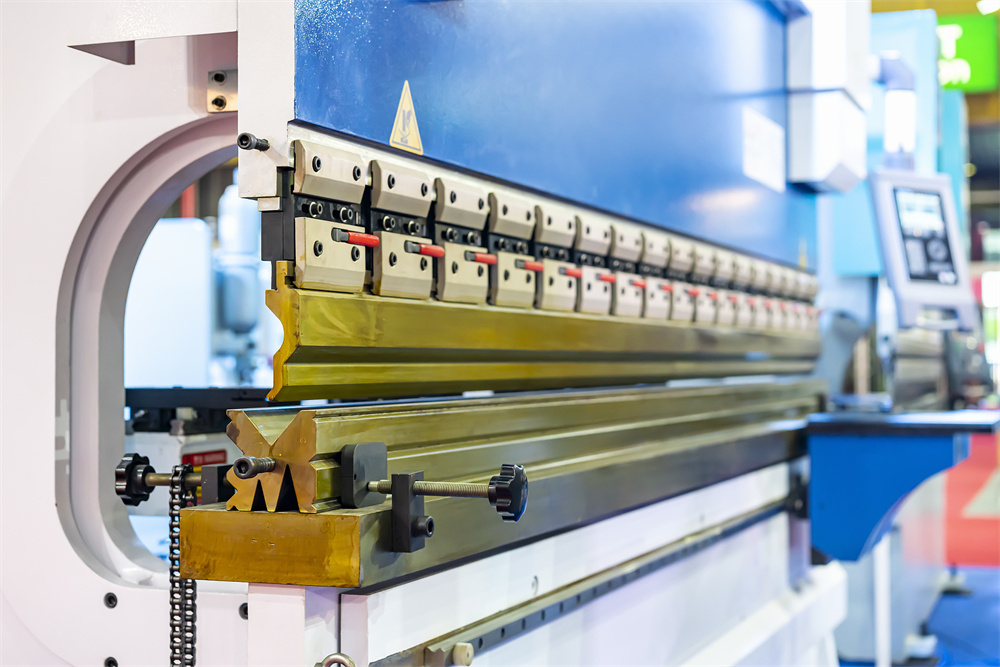
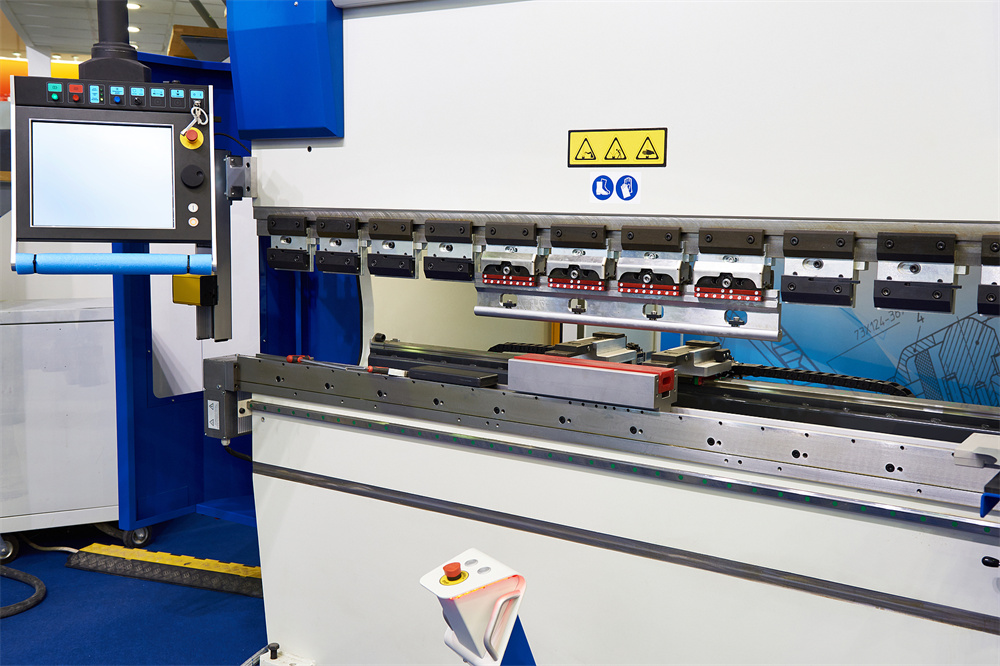
Small press brakes, often referred to as ‘precision press brakes,’ are designed for high-speed, high-accuracy bending of smaller parts. These machines are essential for workshops that prioritize cycle time and repeatability. Because the moving parts are lighter and the hydraulic systems are more compact, small press brakes can achieve much faster approach and return speeds compared to their larger counterparts. This makes them ideal for high-volume production of small components.
One of the primary advantages of a small press brake is its ergonomic design. Operators can often work closer to the machine, and the smaller bed size makes it easier to handle small workpieces without the need for heavy lifting equipment. Furthermore, small press brakes often feature advanced CNC controllers that allow for rapid setup and tool changes, which is critical for shops that handle a diverse range of small-batch orders.
Energy efficiency is another significant factor. Small press brakes require less power to operate, and many modern versions utilize servo-electric or hybrid drive systems. These systems only consume energy when the machine is actively bending, significantly reducing utility costs over time. For a business focused on sustainability and low overhead, a small, efficient press brake is often the superior choice.
However, the limitations of a small press brake are clear: they cannot handle long sheets or thick materials that require high tonnage. If your project involves a 3-meter stainless steel panel, a 1.5-meter small press brake simply won’t suffice, regardless of its precision. Therefore, small machines are best viewed as specialized tools for precision work rather than general-purpose heavy hitters.
Large Press Brake Overview: Power and Capacity
Large press brakes are the giants of the fabrication floor. These machines are built to withstand immense pressure and provide the structural rigidity necessary to bend thick, high-strength materials. When you are dealing with structural steel, large-scale infrastructure components, or heavy machinery parts, a large press brake is non-negotiable. The sheer tonnage—often ranging from 400 to over 2000 tons—allows for the deformation of thick plates that smaller machines couldn’t even dent.
Beyond tonnage, the primary benefit of a large press brake is its bed length. Large machines allow for the bending of long workpieces in a single hit, which ensures consistency across the entire length of the part. This is crucial for applications like utility poles, truck chassis, and large architectural elements. Without a large press brake, fabricators would have to weld multiple smaller pieces together, which increases labor costs and introduces potential points of failure in the structure.
Large press brakes also offer greater throat depth and stroke length. This ‘open space’ within the machine frame allows for the creation of complex, deep-box shapes and large flanges that would be physically impossible to maneuver on a smaller machine. Many large HARSLE press brakes also come with ‘Tandem’ capabilities, where two large machines are linked together to work as one, providing even greater length and tonnage for specialized projects.
The trade-off for this power is speed and footprint. Large machines move more slowly due to the massive volume of hydraulic oil required and the weight of the ram. They also require significant floor space and often specialized foundations to support their weight. Maintenance on these machines is more intensive, involving larger volumes of oil, heavier tooling, and more complex structural inspections.
Specification Comparison Table
To better visualize the differences, let’s compare the typical specifications of a small vs. a large press brake. Note that these are general ranges and can vary based on specific HARSLE models.
| Feature | Small Press Brake (e.g., 40T/1600mm) | Large Press Brake (e.g., 600T/6000mm) |
|---|---|---|
| Tonnage Range | 30 – 100 Tons | 400 – 2000+ Tons |
| Bending Length | 1000mm – 2500mm | 4000mm – 8000mm+ |
| Approach Speed | 150 – 200 mm/s | 60 – 100 mm/s |
| Bending Speed | 10 – 15 mm/s | 5 – 8 mm/s |
| Typical Material Thickness | 0.5mm – 4mm | 6mm – 25mm+ |
| Drive System | Servo-Electric / Hybrid / Hydraulic | Heavy-duty Hydraulic / Tandem |
| Floor Space Requirement | Minimal (approx. 4-6 m²) | Substantial (approx. 20-50 m²) |
| Primary Focus | Speed, Precision, Small Parts | Power, Length, Heavy Plate |
Best-fit Applications: Matching Machine to Task
When to Choose a Small Press Brake
Small press brakes excel in industries where precision is paramount and parts are relatively small. For example, the electronics industry relies heavily on small press brakes to create intricate chassis and heat sinks. The medical device industry also utilizes these machines for high-precision stainless steel components. If your shop primarily works with materials thinner than 4mm and parts shorter than 2 meters, a small press brake will offer the best ROI through faster cycle times and lower energy consumption.
Additionally, small press brakes are excellent for ‘cell-based’ manufacturing. In a lean manufacturing environment, having several small press brakes dedicated to specific product lines can be more efficient than having one large machine that creates a bottleneck. They are also ideal for prototype shops where quick setup and flexibility are more important than raw power.
When to Choose a Large Press Brake
Large press brakes are the backbone of heavy industry. In the construction sector, they are used to bend structural beams and large facade panels. The energy sector uses them to create components for wind turbines and oil rigs. If your business involves heavy-duty transport, such as manufacturing trailers, rail cars, or ship hulls, a large press brake is essential. These machines are designed to handle the high-tensile strength of modern alloys and the extreme lengths required for industrial-scale projects.
Furthermore, if you frequently perform ‘multi-stage’ bending on large plates, the extra throat depth and bed length of a large machine provide the necessary clearance. Large machines are also better suited for ‘heavy-duty tooling,’ which can be quite bulky and requires a robust ram and bed to support the weight and the resulting forces.
Cost and Maintenance Comparison
The financial commitment for a press brake extends far beyond the initial purchase price. A Small Press Brake generally has a lower entry price, lower installation costs, and lower daily operating expenses. Maintenance is typically straightforward, involving routine checks of the hydraulic fluid (if not fully electric), lubrication of the backgauge, and inspection of the tooling. Because the parts are smaller and lighter, replacement components are usually more affordable and easier to install.
In contrast, a Large Press Brake represents a significant capital investment. Beyond the machine itself, you must account for the cost of a reinforced concrete foundation, heavy-duty rigging for installation, and a much larger inventory of expensive tooling. Operating costs are higher due to increased electricity consumption and the large volume of hydraulic oil required (sometimes hundreds of gallons).
Maintenance for large machines is a specialized task. It requires periodic ultrasonic testing of the frame for stress fractures, regular calibration of the massive hydraulic cylinders, and meticulous care of the crowning system (which compensates for bed deflection). However, the earning potential of a large press brake is also significantly higher, as it allows you to take on high-value industrial contracts that smaller shops cannot bid on.
Recommendation: How to Choose the Right Machine Size
Choosing between a large and small press brake comes down to a few critical questions. Use this checklist to guide your decision-making process:
- What is your maximum material thickness? Use a tonnage chart to determine the force required for your thickest material at its smallest V-die opening. If you need more than 150 tons, you are moving into the medium-to-large category.
- What is your maximum part length? Always choose a machine with a bed length at least 20% longer than your longest part to allow for maneuvering and specialized tooling.
- What are your precision requirements? If you are working with tolerances of +/- 0.1mm on small parts, a high-speed small CNC press brake is superior.
- What is your available floor space? Measure your shop carefully. Remember to include ‘swing space’ for the material being bent.
- What is your future growth plan? If you currently bend 2-meter parts but plan to expand into 4-meter architectural panels, investing in a larger machine now may save you from having to replace equipment in two years.
For many growing shops, the ideal solution is a ‘staggered’ approach: maintaining a small, fast press brake for high-volume precision work and a large, powerful machine for heavy-duty projects. HARSLE’s experts can help you analyze your production data to determine which size will provide the fastest return on investment for your specific needs.
Frequently Asked Questions (FAQ)
1. Can I bend small parts on a large press brake?
Yes, you can, but it is often inefficient. Large machines have slower cycle times, and the massive ram may not provide the same level of ‘feel’ or precision for tiny parts. Additionally, using a large machine for small parts increases your cost-per-part due to higher energy and maintenance overhead.
2. What is ‘Crowning’ and why is it more important on large machines?
Crowning is a system that compensates for the natural deflection (bowing) of the machine’s bed and ram under heavy loads. Because large machines have longer beds and exert more force, they are more prone to deflection. A high-quality crowning system is essential on large press brakes to ensure the bend angle is consistent across the entire length of the workpiece.
3. Are electric press brakes only available in small sizes?
While electric press brakes started in the small-to-medium range (up to 100 tons), technology is advancing. There are now larger electric and hybrid models available, though the extremely high-tonnage applications (1000+ tons) still rely primarily on hydraulic power for its sheer force density.
4. How do I calculate the tonnage I need?
Tonnage depends on material type, thickness, and the V-opening of the die. The standard formula is (1.42 x Tensile Strength x Thickness²) / V-opening. Most manufacturers, including HARSLE, provide tonnage calculators or charts to make this process easier for operators and buyers.
5. Is it better to buy one large machine or two small ones?
This depends on your workflow. If you have a high volume of small parts, two small machines will provide more throughput and redundancy. However, if you have even one project that requires a 4-meter bend, no number of small machines can replace the capability of a single large press brake.












