Punching Machine Price vs Performance: How to Choose the Best Value


Introduction to Punching Machine Price Vs Performance: Choose Best Value
In the competitive landscape of metal fabrication, the decision to invest in a new punching machine is often fraught with complexity. Business owners and production managers frequently find themselves at a crossroads: should they opt for a budget-friendly entry-level machine or invest heavily in a high-performance CNC turret punch press? Understanding the relationship between Punching Machine Price Vs Performance: Choose Best Value is critical for ensuring long-term profitability and operational efficiency. A machine that is too cheap may lead to frequent downtime and poor precision, while an over-engineered machine might never see a full return on investment (ROI) due to underutilization.
HARSLE understands that value is not merely the lowest price tag; it is the intersection of capability, reliability, and cost-effectiveness. This guide aims to deconstruct the various factors that influence the price of punching machines and how those factors translate into real-world performance. By the end of this article, you will have a clear framework for evaluating your production needs against the available technology in the market, allowing you to make an informed purchase that aligns with your business goals.
Price Range Overview: From Manual to High-End CNC
The market for punching machines is vast, spanning from simple manual units to fully automated robotic cells. To understand the price landscape, we must first categorize these machines based on their technology and intended application. Generally, the price of a punching machine can range from as little as $2,000 for a basic manual ironworker to over $250,000 for a high-speed, large-format CNC turret punch press with auto-loading capabilities.
Entry-level machines, often mechanical or simple hydraulic single-station punches, typically fall in the $5,000 to $15,000 range. These are ideal for small workshops or maintenance departments where punching is an occasional task rather than a primary production process. While the initial investment is low, these machines offer limited speed and require significant manual labor for positioning and tool changes. In the context of Punching Machine Price Vs Performance: Choose Best Value, these machines offer high value only for low-volume, low-complexity work.
Mid-range machines, including NC (Numerical Control) hydraulic punches and basic CNC turret presses, usually cost between $30,000 and $80,000. These machines introduce automation in sheet positioning and sometimes tool selection. They represent a significant step up in productivity, allowing for consistent results across medium-sized batches. For many growing fabrication shops, this category offers the ‘sweet spot’ of value, providing modern features without the astronomical price of high-end industrial systems.
High-end CNC turret punching machines start at $100,000 and can go much higher depending on the number of stations, hit rate, and integration with CAD/CAM software. These machines are designed for 24/7 operation, high-speed precision, and complex nesting. While the price is high, the performance—measured in parts per hour and material utilization—is unmatched. For high-volume manufacturers, the high price is justified by the drastic reduction in per-part cost.
Main Cost Drivers in Punching Machinery
Several technical specifications directly influence the manufacturing cost and, consequently, the retail price of a punching machine. The first and most obvious is tonnage. A 30-ton machine is significantly cheaper than a 50-ton or 100-ton machine because it requires less structural steel, smaller hydraulic cylinders, and less robust frame components. However, tonnage dictates the thickness and type of material you can process. Choosing a machine with insufficient tonnage to save money will ultimately limit your market reach.
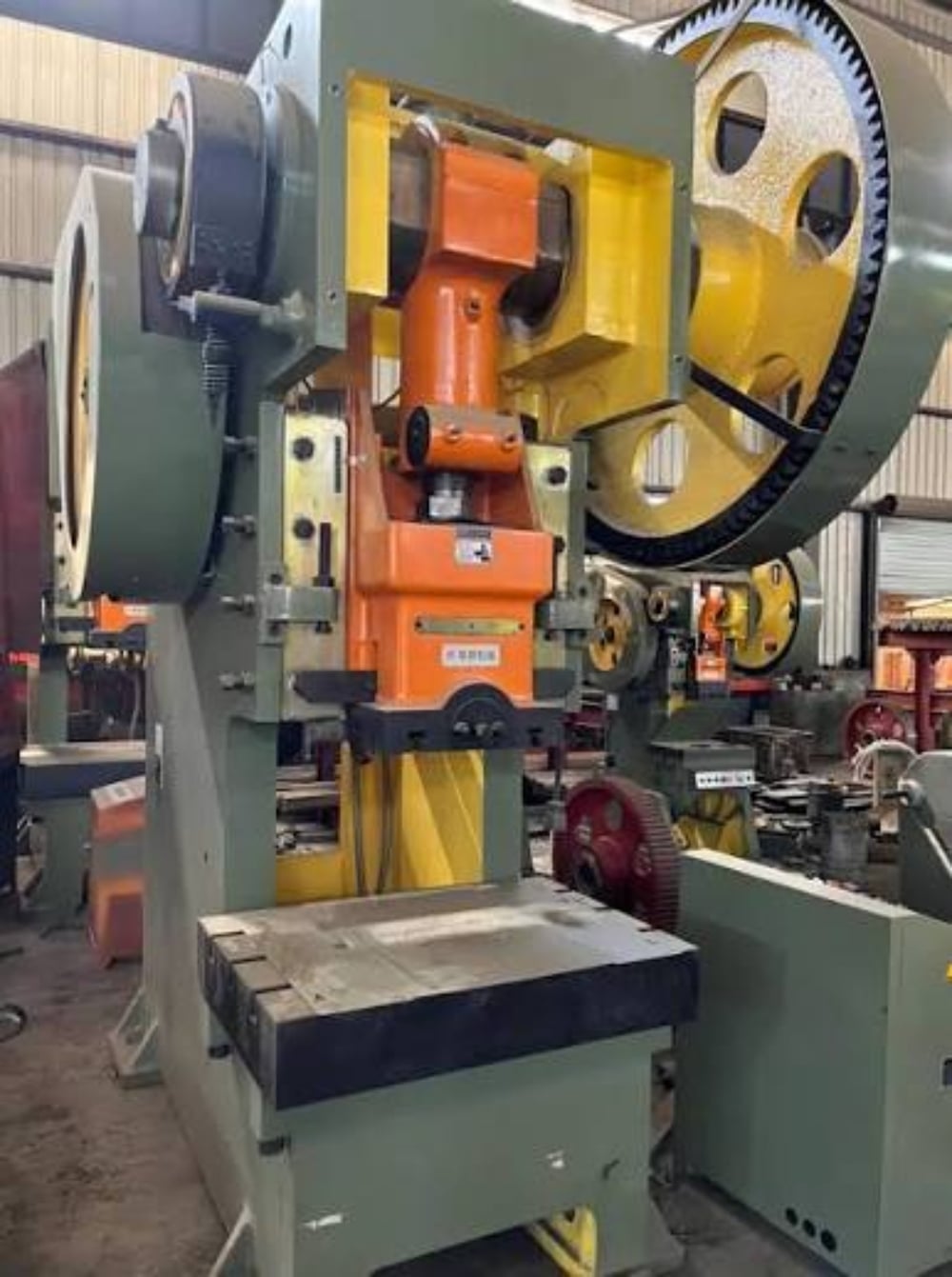
The frame design itself is another major cost driver. There are two primary types: C-frame and O-frame (bridge frame). C-frame machines are generally more affordable and offer easier access to the work area, but they are prone to ‘yawing’ or deflection under high pressure. O-frame machines are more expensive to manufacture but provide superior rigidity, which translates to better tool alignment and longer tool life. When considering Punching Machine Price Vs Performance: Choose Best Value, the O-frame often wins in the long run due to reduced maintenance and higher precision.
The ‘brain’ of the machine—the control system—also plays a huge role. Proprietary controllers or high-end systems from brands like Fanuc or Siemens add several thousand dollars to the price. These systems offer better user interfaces, faster processing speeds, and better compatibility with modern nesting software. A cheaper, generic controller might save money upfront but can lead to frustration during setup and difficulty in finding replacement parts or technical support years down the line.
Configuration Impact: Features That Define Performance
Beyond the basic frame and tonnage, the specific configuration of the machine determines its performance ceiling. One of the most impactful features is the turret capacity. A machine with 12 stations will be cheaper than one with 32 or 50 stations. However, more stations mean fewer manual tool changes, which directly impacts machine uptime. If your parts require multiple hole sizes or shapes, a larger turret is a performance necessity that justifies its cost.
Auto-index stations are another premium feature that significantly boosts performance. These stations allow the tool to rotate to any angle, meaning a single rectangular tool can punch at 0, 45, or 90 degrees. Without auto-index, you would need three separate tools and three separate stations to achieve the same result. While auto-index adds to the initial Punching Machine Price Vs Performance: Choose Best Value calculation, it reduces the total number of tools you need to buy and maintain, often paying for itself within the first year of operation.
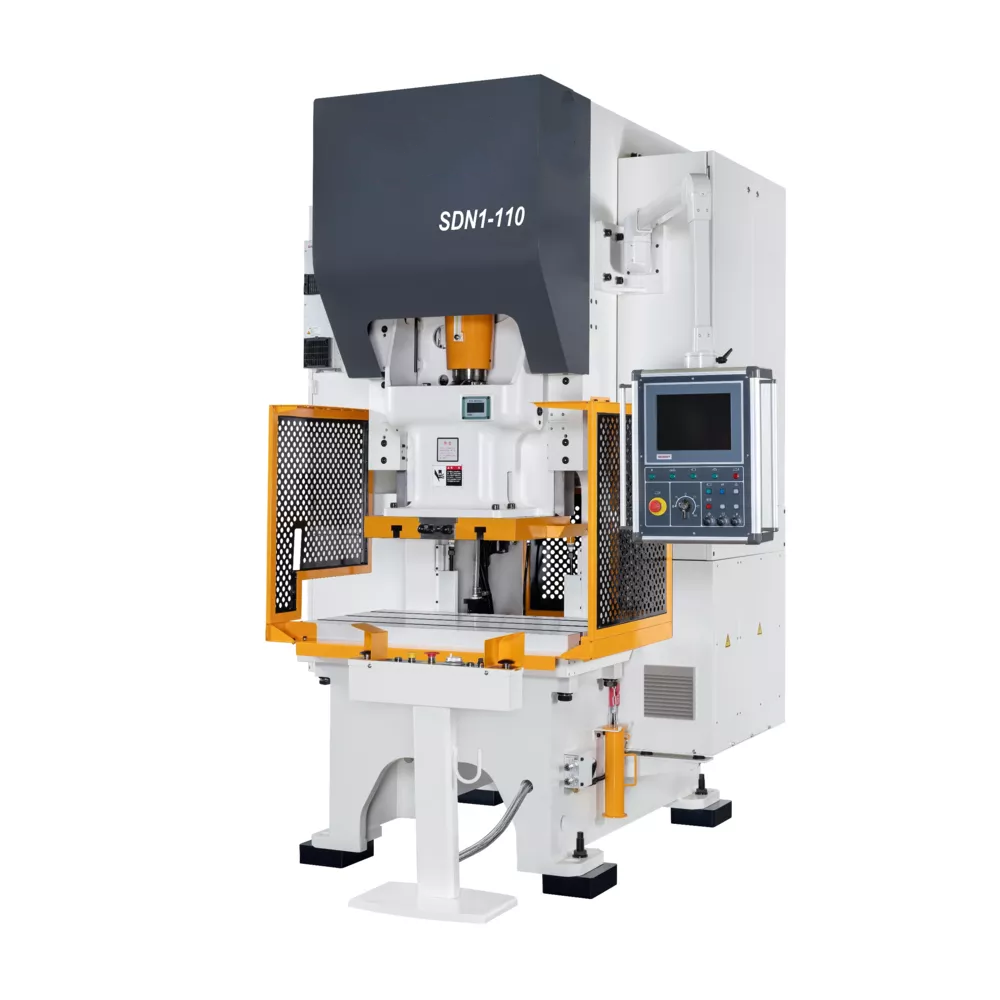
The drive system—hydraulic vs. servo-electric—is a modern debate in the industry. Traditional hydraulic systems are powerful and reliable but can be noisy and energy-intensive. Servo-electric systems are faster, quieter, and much more energy-efficient, but they come with a higher price tag. For shops with high electricity costs or those requiring extreme hit rates (up to 1000 hits per minute), the servo-electric configuration offers the best long-term value despite the higher entry price.
Hidden Costs: What the Sticker Price Doesn’t Tell You
When evaluating Punching Machine Price Vs Performance: Choose Best Value, many buyers fail to account for the ‘hidden’ costs of ownership. The first is installation and foundation work. A high-tonnage CNC punch press cannot simply be placed on a standard factory floor; it often requires a reinforced concrete pad to dampen vibrations. This can cost thousands of dollars in site preparation before the machine even arrives.
Tooling is another significant ongoing expense. A turret punch press is useless without a comprehensive set of punches and dies. Depending on the complexity of your work, a starter set of tooling can cost between $5,000 and $20,000. Furthermore, different machines use different tooling styles (e.g., Thick Turret vs. Thin Turret). Choosing a machine that uses a non-standard or proprietary tooling system can lock you into high prices for the life of the machine.
Software and training are often overlooked. To get the most out of a CNC punching machine, you need sophisticated nesting software that optimizes material usage. These licenses often come with annual maintenance fees. Additionally, your operators will need training to use the software and the machine safely and efficiently. HARSLE recommends budgeting at least 10-15% of the machine’s price for these essential ‘soft’ costs to ensure a smooth transition into production.
ROI Calculation: Measuring Value Over Time
To truly understand Punching Machine Price Vs Performance: Choose Best Value, you must perform a Return on Investment (ROI) calculation. This involves looking past the purchase price and focusing on the ‘cost per part.’ A machine that costs $50,000 more but produces parts 30% faster and uses 10% less material will often pay for that $50,000 difference in less than two years through labor and material savings.
Consider the following formula for a basic ROI estimate: (Annual Savings from Increased Productivity + Annual Savings in Labor – Annual Maintenance Costs) / Total Investment Cost. If the resulting ‘payback period’ is under three years, the investment is generally considered excellent in the industrial machinery sector. High-performance machines also tend to have better resale value, which should be factored into the long-term financial model.
Furthermore, consider the cost of scrap. High-performance CNC machines with precision sensors can detect sheet slippage or tool breakage, stopping the machine before a whole sheet of expensive material is ruined. In contrast, a cheaper machine might continue punching, leading to significant material waste. Over a year, the reduction in scrap alone can contribute thousands of dollars toward the machine’s value proposition.
Buying Advice: How to Choose the Best Value for Your Shop
Choosing the best value requires a deep dive into your current and future production needs. Start by analyzing your most common jobs. What is the maximum material thickness? What is the largest sheet size? How many unique holes are in your most complex part? If 90% of your work is 2mm mild steel, buying a 50-ton machine is a waste of money. A 30-ton machine would be the better value.
Don’t buy for today; buy for three years from now. If your business is growing, an entry-level machine might be obsolete within 12 months, forcing you to go through the buying process all over again. It is often better to stretch the budget slightly for a machine with more stations or a larger throat depth than you currently need, providing room for growth without the need for a secondary machine purchase.
Finally, evaluate the manufacturer’s reputation and support network. A machine is only valuable when it is running. HARSLE prides itself on providing robust after-sales support, which is a critical component of the ‘value’ equation. A slightly cheaper machine from a company with no local technicians or spare parts inventory can become the most expensive mistake your business ever makes when it sits idle for three weeks waiting for a $50 sensor.
Frequently Asked Questions (FAQ)
1. Is a used punching machine a better value than a new one?
Used machines can offer a lower entry price, but they come with risks. Older CNC systems may be difficult to repair, and the mechanical components may have hidden wear. For a primary production machine, a new HARSLE machine with a warranty and modern software is usually a better long-term value.
2. How much should I budget for annual maintenance?
Generally, you should budget 3-5% of the machine’s purchase price for annual maintenance, including lubricants, filters, and minor wear parts. Regular maintenance is essential to maintaining the performance side of the value equation.
3. What is the difference between NC and CNC in punching machines?
NC (Numerical Control) usually refers to simpler systems where you input coordinates for a single task. CNC (Computer Numerical Control) allows for complex programming, nesting, and multi-tool operations. For most modern fabrication, CNC offers much better value due to its versatility.
4. Can a punching machine replace a laser cutter?
In many cases, yes. For parts with many holes or formed features (like louvers or ribs), a punching machine is much faster and cheaper than a laser. However, for complex external contours in thick plate, a laser is superior. Many shops find the best value in having both.
5. Does the type of tooling affect the machine’s performance?
Absolutely. High-quality, coated tooling lasts longer and produces cleaner hits. While it costs more upfront, it reduces the frequency of tool sharpening and replacement, improving the overall ROI of the machine.
6. Why is throat depth important for price?
Throat depth determines the maximum width of the sheet the machine can handle without flipping it. A larger throat depth requires a much larger and heavier frame to maintain rigidity, which is why it significantly increases the price. Choose a depth that fits your standard sheet sizes.
7. How does energy efficiency impact the value?
With rising energy costs, a servo-electric punch press can save thousands of dollars per year compared to a hydraulic model. If you run multiple shifts, the energy savings can make the more expensive servo-electric machine the ‘best value’ option over a 5-year period.