How to Evaluate Press Brake Accuracy, Repeatability, and Control Systems: A Comprehensive Guide


Introduction to Press Brake Precision and Control
In the world of precision metal fabrication, the difference between a high-quality finished product and a pile of scrap metal often comes down to a few microns. When investing in a press brake, whether it is a standard hydraulic model or a high-end servo-electric system, understanding how to evaluate press brake accuracy, repeatability, and control systems is paramount. These three factors form the foundation of machine performance, determining not only the quality of the parts produced but also the long-term profitability of the fabrication shop.
Accuracy refers to the machine’s ability to reach a specific target position or angle. Repeatability, perhaps even more critical in high-volume production, is the machine’s ability to return to that exact same position consistently over thousands of cycles. Finally, the control system acts as the brain of the operation, translating complex geometric requirements into mechanical movements. For brands like HARSLE, integrating advanced technology into these areas ensures that operators can achieve complex bends with minimal setup time. This guide provides an in-depth look at how to measure these metrics and what to look for when purchasing new equipment.
Price Range Overview: What to Expect at Different Tiers
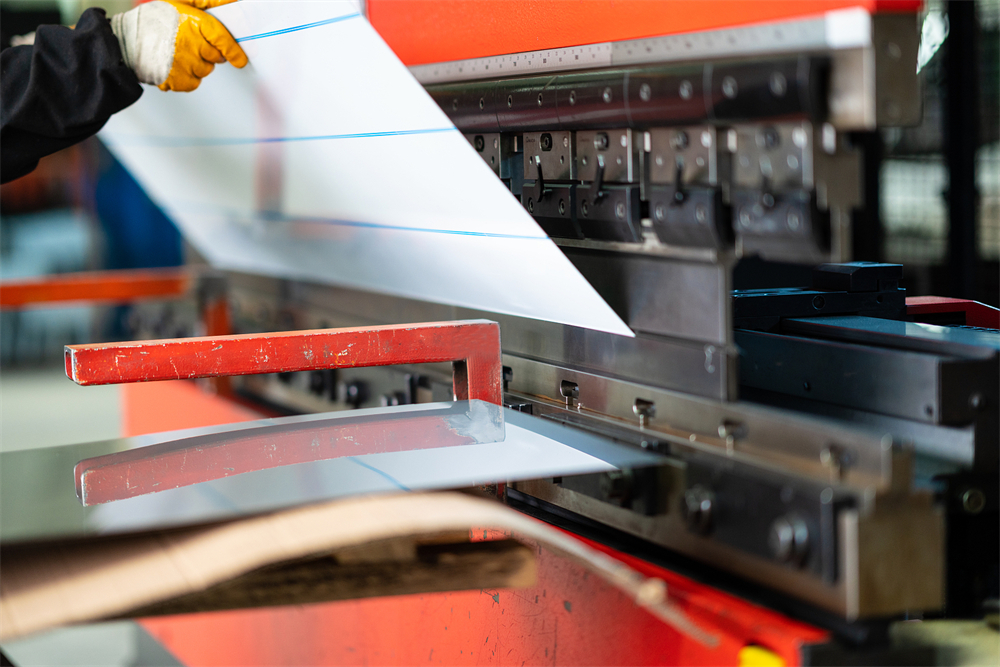
The price of a press brake is directly correlated with its precision capabilities and the sophistication of its control system. Understanding the market tiers helps buyers align their budget with their technical requirements. Entry-level machines, often categorized as NC (Numerical Control) or basic CNC (Computer Numerical Control) machines, typically range from $15,000 to $35,000. These machines are suitable for simple bending tasks where tolerances are relatively loose (e.g., +/- 0.5 degrees). They often feature torsion bar synchronization, which is reliable but lacks the fine-tuned control of higher-end models.
Mid-range CNC press brakes, which are the workhorses of the industry, generally fall between $40,000 and $90,000. These machines utilize electro-hydraulic synchronization (Y1 and Y2 axes) and high-quality linear encoders. At this price point, you can expect repeatability in the range of +/- 0.01mm. These machines are often equipped with 4 to 6 axes of movement and sophisticated controllers from brands like Delem or Cybelec, allowing for 2D graphical programming and automatic bend sequencing.
High-end and specialized press brakes, including full servo-electric models or large-tonnage tandem systems, can exceed $150,000. These machines offer the pinnacle of accuracy and repeatability, often featuring advanced angle measurement systems that adjust the bend in real-time. The control systems at this level are essentially high-powered computers capable of 3D visualization, remote diagnostics, and integration into Industry 4.0 factory networks. When you evaluate press brake accuracy, repeatability, and control systems at this level, you are looking for near-perfect consistency and maximum automation.
Main Cost Drivers in Precision Machinery
Several technical components drive the cost of a press brake. The first is the frame construction. A high-precision machine requires a heavy, stress-relieved steel frame to minimize deflection under load. If the frame flexes inconsistently, accuracy is lost. HARSLE utilizes advanced welding and machining techniques to ensure frame rigidity, which is a significant factor in the machine’s base price. The quality of the steel and the precision of the machining on the bed and ram surfaces are critical cost drivers.
The second major driver is the hydraulic and electronic synchronization system. In a high-precision CNC press brake, the Y1 and Y2 cylinders are controlled independently via proportional valves and linear encoders. These components, often sourced from premium manufacturers like Rexroth or Hoerbiger, are expensive but necessary for achieving sub-micron positioning. The linear encoders themselves must have high resolution to provide accurate feedback to the controller regarding the ram’s position.
Thirdly, the backgauge system significantly impacts the price. A basic 2-axis backgauge (X and R) is standard, but as you add axes (Z1, Z2, X-prime, Delta-X), the complexity and cost increase. High-speed, high-accuracy backgauges use precision ball screws and servo motors to ensure that the workpiece is positioned perfectly for every bend. Finally, the control system software and hardware represent a substantial portion of the investment. A Delem DA-66T or DA-69T controller, with its touch-screen interface and complex algorithms, adds several thousand dollars to the machine’s cost compared to a basic NC controller.
Configuration Impact: How Specs Affect Performance
The configuration of a press brake determines its versatility and its ability to maintain accuracy across different materials. One of the most important configurations is the crowning system. When a press brake bends a long sheet of metal, the center of the machine tends to deflect upward, resulting in a “canoe effect” where the angle in the middle of the part is wider than at the ends. A crowning system (either hydraulic or mechanical) compensates for this by pushing the center of the table up. Mechanical crowning is often preferred for its precision and consistency across varying temperatures.
The choice between hydraulic and servo-electric drives also impacts performance. Hydraulic systems are powerful and cost-effective for high-tonnage applications. However, servo-electric press brakes offer superior repeatability and energy efficiency. Because they do not rely on oil, they are less affected by thermal expansion, which can cause slight shifts in accuracy as a hydraulic machine warms up during a shift. For shops requiring extreme precision in thin-gauge materials, a servo-electric configuration is often the best choice.
Furthermore, the number of axes configured on the machine dictates the complexity of the parts you can produce. A 3-axis machine (Y1, Y2, X) is sufficient for simple boxes, but complex, multi-bend parts require R-axis (height adjustment of the backgauge) and Z1/Z2 axes (lateral movement of the fingers). Evaluating these configurations is essential; buying a machine with too few axes will limit your production capabilities, while too many may result in an unnecessary expenditure if your part geometry is simple.
Hidden Costs of Ownership
When evaluating the purchase of a press brake, the sticker price is only one part of the equation. Tooling is a major hidden cost. High-precision machines require high-precision ground tooling. Using cheap, inaccurate tools on a $100,000 machine is counterproductive, as the machine’s accuracy will be limited by the variations in the tool’s geometry. A full set of precision-ground punches and dies can easily cost $5,000 to $15,000 depending on the variety of bends required.
Maintenance and calibration are also ongoing costs. To maintain accuracy and repeatability, the machine must be leveled and calibrated periodically. This involves checking the parallelism of the ram and the bed and ensuring the backgauge is square. Hydraulic oil changes, filter replacements, and seal maintenance are necessary for hydraulic models. For CNC systems, software updates and potential electronic repairs must be factored into the long-term budget. A machine that is easy to service and has readily available parts, like those from HARSLE, will have lower hidden costs over its lifespan.
Energy consumption is another factor. Traditional hydraulic press brakes run the pump motor continuously, even when the machine is idling. Modern “Green” hydraulic systems or servo-electric machines only use power during the bending cycle, which can lead to significant savings on utility bills. Finally, training costs should not be overlooked. A sophisticated control system requires a skilled operator. Investing in training ensures that your staff can utilize the full potential of the machine’s accuracy and control features, reducing scrap and improving throughput.
ROI Calculation: Precision as a Profit Center
Calculating the Return on Investment (ROI) for a high-precision press brake involves more than just looking at the monthly lease payment. The primary driver of ROI is the reduction in scrap and rework. In a shop with a low-accuracy machine, it is common to spend time “dialing in” a bend or scrapping the first few pieces of a run. With a high-precision CNC machine, the first part is often a good part. If you can reduce scrap by even 5%, the savings over a year can be substantial, especially when working with expensive materials like stainless steel or aluminum.
Labor efficiency is the second pillar of ROI. Advanced control systems with graphical interfaces and automatic bend sequencing allow operators to set up jobs much faster. A job that takes 30 minutes to set up on a manual machine might take only 5 minutes on a modern CNC press brake. This increased throughput allows the shop to take on more work without increasing headcount. Additionally, the ability to perform complex bends in a single handling (thanks to multi-axis backgauges) further reduces labor time per part.
Finally, consider the marketability of your services. Many OEM customers require documented tolerances and high levels of consistency. Owning a machine that can demonstrably meet these standards allows a fabrication shop to bid on higher-value contracts that are out of reach for competitors with older, less accurate equipment. When you evaluate press brake accuracy, repeatability, and control systems, you are essentially evaluating your shop’s future competitive advantage.
Buying Advice: How to Test and Select
When you are ready to purchase, do not rely solely on the spec sheet. Request a live demonstration or a sample part run. To test accuracy, ask the manufacturer to bend a long piece of material and measure the angle at multiple points along the length. This will reveal the effectiveness of the crowning system. To test repeatability, have the machine perform the same bend 20 times and use a digital protractor to check for variations. A high-quality machine should show virtually zero deviation.
Regarding the control system, evaluate the user interface. Is it intuitive? Can your operators learn it quickly? Check if the controller supports the file formats your engineering team uses (such as DXF or STEP files). Offline programming software is also a huge plus, as it allows the office to prepare programs while the machine is busy running another job. This maximizes the “green light” time of the machine. Brands like HARSLE often offer various controller options, so choose the one that best fits your workflow.
Lastly, consider the manufacturer’s reputation for support. Accuracy and repeatability are only useful if the machine stays running. Ask about the warranty, the availability of local technicians, and the cost of replacement parts. A slightly more expensive machine from a reputable manufacturer with excellent support is often a better investment than a “bargain” machine that leaves you stranded when a sensor fails or the controller glitches.
Frequently Asked Questions (FAQ)
What is the difference between accuracy and repeatability in a press brake?
Accuracy is how close the machine gets to the intended target (e.g., a 90-degree bend). Repeatability is how consistently the machine can hit that same result over multiple cycles. A machine can be inaccurate but highly repeatable (meaning it consistently makes the same mistake), which can often be corrected through offsets in the control system. However, a machine with poor repeatability is difficult to work with because the results are unpredictable.
How does the control system improve accuracy?
The control system manages the synchronization of the hydraulic cylinders and the positioning of the backgauge. It uses complex algorithms to calculate springback (the tendency of metal to return to its original shape after bending) and adjusts the ram depth accordingly. High-end controls also interface with angle-measuring sensors to provide real-time corrections during the bending process.
Is mechanical crowning better than hydraulic crowning?
Both have their merits. Hydraulic crowning is integrated into the machine’s hydraulic system and is easy to control via the CNC. However, it can be affected by oil temperature. Mechanical crowning uses a series of wedges in the table to create a curve. It is generally considered more precise and stable over long periods, making it the preferred choice for high-precision applications.
How often should a press brake be calibrated?
For high-precision work, a press brake should have its leveling and basic calibration checked every six months. A full professional calibration, including the linear encoders and backgauge alignment, should be performed annually. If the machine is moved or undergoes a major repair, it must be recalibrated immediately.
Can I upgrade the control system on an older press brake?
In many cases, yes. This is known as a retrofit. While it can improve the ease of use and add features like graphical programming, a new controller cannot fix mechanical issues like a worn frame or leaking cylinders. If the underlying mechanical structure is sound, a control system upgrade can be a cost-effective way to extend the life of the machine.
What role does the backgauge play in overall part accuracy?
While the ram (Y-axis) determines the bend angle, the backgauge (X-axis) determines the flange length. If the backgauge is not accurate or repeatable, the dimensions of the finished part will be incorrect, even if the angles are perfect. High-quality backgauges use precision components to ensure the part is stopped at the exact same location every time.