
Shearing Machine Price Guide for Export Buyers: Shipping, Taxes, and Setup Costs


Price Range Overview: Understanding the Investment
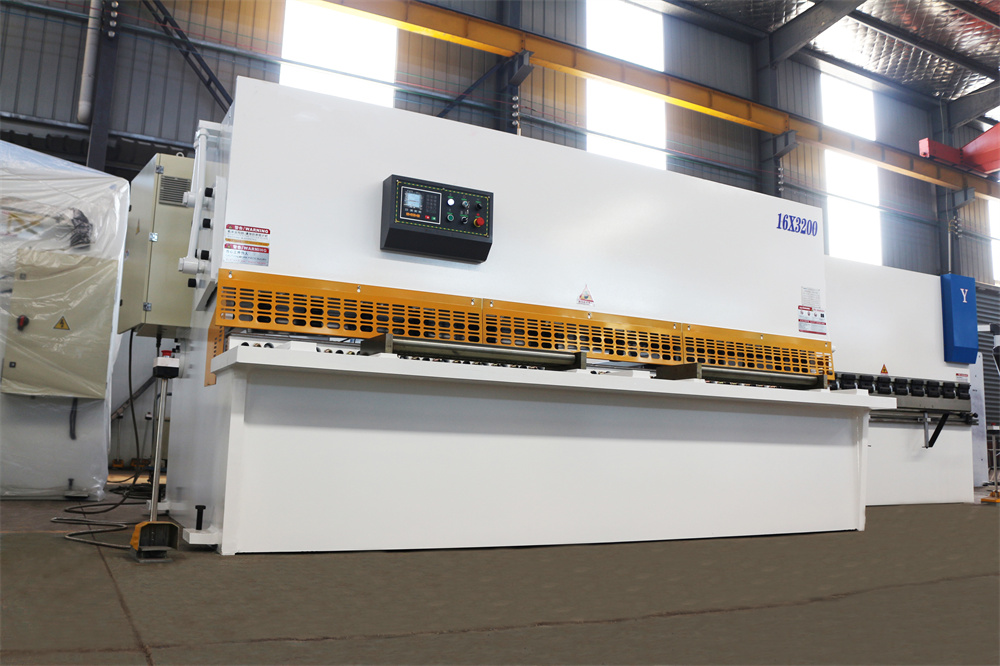
For international buyers, the shearing machine price is rarely just the sticker price on a manufacturer’s quote. When sourcing industrial metal fabrication equipment, the total cost of ownership involves a complex interplay of base machine costs, logistics, and regulatory fees. Generally, entry-level hydraulic swing beam shearing machines can range from $8,000 to $15,000, while high-precision CNC variable rake shearing machines designed for heavy-duty industrial applications can exceed $50,000 to $100,000 depending on capacity and automation levels.
The market for shearing machines is segmented by cutting capacity, material thickness, and automation features. A standard 6mm x 3200mm hydraulic shear is a staple in most fabrication shops, offering a balance between cost and utility. However, as you scale up to 20mm or 30mm plate capacity, the structural requirements of the machine frame increase significantly, leading to higher manufacturing costs and, consequently, higher export prices.
Buyers must distinguish between “Ex-Works” (EXW) pricing and “Cost, Insurance, and Freight” (CIF) pricing. EXW pricing covers only the machine at the factory gate, leaving the buyer responsible for all inland transport, port handling, and ocean freight. CIF pricing includes the cost of the machine, insurance, and freight to the destination port. Understanding this distinction is the first step in accurate budgeting for your metal fabrication equipment procurement.
Furthermore, the brand reputation and the quality of components—such as Bosch-Rexroth hydraulics, Schneider electrics, or Estun CNC controllers—play a pivotal role in the price. HARSLE emphasizes that investing in premium components reduces long-term maintenance costs, which is a critical factor for export buyers who cannot easily access local spare parts in some regions. When evaluating the price, always consider the cost-per-cut over the machine’s ten-year lifespan rather than just the initial capital expenditure.

Main Cost Drivers in Shearing Machine Procurement
The primary driver of the shearing machine price is the machine’s physical capacity. This includes the maximum cutting thickness and the cutting length. A machine designed to cut 20mm mild steel requires a much heavier, more rigid frame than one designed for 6mm sheets. The weight of the machine often correlates directly with the price, as steel content and structural integrity are the most significant material costs for manufacturers.
Automation and control systems represent the second major cost driver. A basic manual backgauge machine is significantly cheaper than a CNC-controlled system with automatic blade gap adjustment and rake angle adjustment. These features are not just luxuries; they are essential for shops that handle diverse materials and thicknesses, as they minimize setup time and human error, thereby increasing the overall throughput of the fabrication facility.
The quality of the cutting blades is another critical factor. High-carbon, high-chromium alloy steel blades are standard for most industrial applications, but specialized blades for stainless steel or high-tensile materials add to the cost. Export buyers should always inquire about the material grade of the blades provided, as cheaper blades will require more frequent sharpening or replacement, leading to hidden operational costs that quickly erode the savings from a lower initial purchase price.
Finally, the hydraulic and electrical systems define the machine’s reliability. HARSLE utilizes internationally recognized brands for these components to ensure that export buyers can source replacements locally if necessary. While a machine with generic, unbranded hydraulics might be cheaper upfront, the risk of downtime and the difficulty of finding compatible seals or valves in a foreign market make it a poor long-term investment for serious industrial operations.
Configuration Impact: Customization and Efficiency
Customization is a double-edged sword for export buyers. While adding features like pneumatic sheet supports, laser cutting lines, or extended backgauges can significantly improve productivity, each addition increases the machine’s price and shipping complexity. Pneumatic sheet supports, for instance, are vital for preventing thin sheets from sagging during the cut, ensuring high precision, but they add weight and volume to the shipping crate.
The choice between a swing beam shear and a variable rake shear is a fundamental configuration decision. Swing beam shears are generally more affordable and easier to maintain, making them ideal for general-purpose fabrication. Variable rake shears, however, allow the operator to adjust the rake angle to minimize distortion when cutting thin sheets or to increase capacity for thicker plates. The added mechanical complexity of the variable rake system naturally commands a higher price point.
Integration with other metal fabrication equipment is another configuration consideration. If your facility uses a centralized material handling system, you may need specific loading or unloading interfaces. HARSLE offers modular designs that allow for future upgrades, which can be a cost-effective strategy for growing businesses. By purchasing a base machine now and adding automation modules later, you can manage your capital expenditure more effectively.
Consider the power requirements of your facility. Export buyers must ensure the machine’s voltage and frequency match their local grid. While most manufacturers can adapt the electrical cabinet to local standards, significant deviations from standard configurations may incur engineering surcharges. Always verify these technical specifications during the quoting phase to avoid costly modifications upon arrival.
Hidden Costs: Shipping, Taxes, and Logistics
The “hidden” costs of importing a shearing machine are often where buyers find their budgets stretched. Shipping costs are highly volatile and depend on the machine’s dimensions and weight. Because shearing machines are heavy and bulky, they typically require flat-rack containers or break-bulk shipping rather than standard 20ft or 40ft containers. This significantly increases the freight cost, especially for long-distance international routes.
Import duties and taxes are perhaps the most significant variable cost. Every country has its own tariff schedule for industrial machinery. Some regions offer tax exemptions or lower duty rates for capital equipment intended for manufacturing, while others may impose anti-dumping duties on specific types of machinery from certain countries. It is imperative to consult with a local customs broker before finalizing your purchase to understand the total landed cost, including VAT, customs clearance fees, and port handling charges.
Insurance is a non-negotiable expense for international shipping. While the freight forwarder may offer basic coverage, it is often insufficient for high-value industrial machinery. Investing in comprehensive “all-risk” marine insurance protects your investment against damage during transit, which is a real risk given the heavy nature of these machines and the potential for improper handling at ports.
Finally, consider the cost of inland transportation from the port to your facility. A shearing machine is not a standard palletized item; it requires specialized heavy-lift equipment, such as cranes or forklifts with high weight capacities, to unload and position. If your facility does not have the necessary infrastructure, you will need to hire a rigging company, which can add thousands of dollars to your setup costs.
ROI Calculation: Justifying the Investment
To calculate the Return on Investment (ROI) for a new shearing machine, you must look beyond the purchase price. Start by calculating the labor savings. A modern, automated shearing machine can reduce the time required for material handling and setup by 30-50%. If you are currently using manual methods or older, less efficient equipment, the labor cost savings alone can often justify the investment within 24 to 36 months.
Material waste reduction is another key ROI factor. Precision shearing machines with high-quality blades and accurate backgauges minimize scrap rates. In industries where raw material costs are high, such as stainless steel or aluminum fabrication, even a 2% reduction in material waste can result in significant annual savings. Factor these savings into your ROI model to get a more accurate picture of the machine’s value.
Increased production capacity and the ability to take on more complex jobs also contribute to ROI. A machine that can handle a wider range of thicknesses and materials allows you to diversify your service offerings. If your current equipment limits you to 6mm plate, but you frequently turn away 10mm jobs, upgrading to a higher-capacity shear directly increases your revenue potential.
Finally, consider the maintenance and downtime costs. A reliable, high-quality machine from a reputable manufacturer like HARSLE will have lower maintenance requirements and fewer unexpected breakdowns. When calculating ROI, subtract the projected annual maintenance costs from the expected revenue gains. A machine that runs reliably for 20 years is far more profitable than a cheaper alternative that requires constant repairs and frequent blade replacements.
Buying Advice: A Checklist for Export Buyers
When selecting a supplier, prioritize transparency and technical support. A good manufacturer will provide detailed technical drawings, foundation requirements, and a clear list of included accessories. Ask for references from other export buyers in your region to gauge the manufacturer’s reliability and the quality of their after-sales support. HARSLE prides itself on providing comprehensive documentation and remote technical assistance to ensure a smooth installation process.
Before signing the contract, verify the warranty terms. A standard one-year warranty is common, but look for manufacturers that offer extended warranties or comprehensive support packages. Ensure that the warranty covers critical components like the hydraulic pump and the CNC controller. Also, clarify the process for obtaining spare parts—does the manufacturer maintain a stock of common parts, and how quickly can they be shipped to your location?
Prepare your facility for the arrival of the machine. This includes pouring a concrete foundation according to the manufacturer’s specifications, ensuring the electrical supply is stable and compatible, and having the necessary lifting equipment on-site. Many buyers make the mistake of waiting until the machine arrives to start these preparations, leading to expensive storage fees at the port or delays in commissioning.
Finally, invest in operator training. Even the most advanced shearing machine is only as effective as the person operating it. Ensure that your team is trained on the machine’s safety features, maintenance requirements, and programming capabilities. Many manufacturers offer virtual training sessions or provide detailed video tutorials that can be invaluable for international teams.
FAQ: Common Questions from Export Buyers
- Q: How do I calculate the total landed cost of a shearing machine?
A: The total landed cost includes the machine price (EXW), inland freight to the port, ocean freight, marine insurance, port handling fees, customs duties, local taxes (VAT), and inland transport to your facility. Always work with a professional customs broker to get an accurate estimate. - Q: What is the difference between a swing beam and a variable rake shear?
A: A swing beam shear uses a fixed rake angle and is generally more economical, while a variable rake shear allows for adjustable angles, providing better cut quality and less distortion on a wider range of material thicknesses. - Q: How often do shearing machine blades need to be sharpened?
A: The frequency depends on the material type, thickness, and volume of cuts. Generally, blades should be inspected every 3-6 months. Using high-quality, properly adjusted blades significantly extends the time between sharpenings. - Q: Can I install the machine myself?
A: While some experienced shops can handle the installation, it is highly recommended to have a certified technician oversee the process, especially for leveling and electrical commissioning, to ensure the machine operates within its precision tolerances. - Q: What should I look for in a shearing machine warranty?
A: Look for coverage on major mechanical and electrical components, a clear process for remote technical support, and a commitment to providing spare parts within a reasonable timeframe.












