
Shearing Machine vs Laser Cutting Machine: Which Is More Cost-Effective for Metal Processing?


Comparison Summary: Navigating the Choice Between Shearing and Laser Cutting
In the modern metal fabrication landscape, choosing the right equipment is a pivotal decision that directly impacts a company’s bottom line, production efficiency, and market competitiveness. The debate often centers on Shearing Machine Vs Laser Cutting Machine: Which Is More Cost-Effective Metal Processing? While both machines serve the fundamental purpose of cutting metal, they operate on vastly different physical principles and offer distinct advantages depending on the specific requirements of the project. A shearing machine uses mechanical force to slice through metal sheets in straight lines, much like a giant pair of industrial scissors. In contrast, a laser cutting machine utilizes a high-powered, concentrated beam of light to melt or vaporize material along a programmed path, allowing for intricate shapes and high precision.
For high-volume production of simple, rectangular parts, the shearing machine remains an undisputed champion of speed and low operational cost. However, as consumer demand shifts toward more complex designs and tighter tolerances, the fiber laser cutting machine has gained significant ground. The “cost-effectiveness” of these machines is not merely a reflection of their purchase price; it involves a complex calculation of energy consumption, labor costs, material waste, maintenance requirements, and the versatility of the machine to handle diverse tasks. HARSLE, a leader in metal processing technology, provides both solutions, ensuring that fabricators can find the exact tool that fits their operational scale and budget.

This comprehensive guide will dissect the technical specifications, financial implications, and practical applications of both shearing and laser cutting technologies. By the end of this analysis, you will have a clear understanding of which machine offers the best Return on Investment (ROI) for your specific fabrication needs, whether you are a small job shop or a large-scale industrial manufacturer.
Shearing Machine Overview: The Workhorse of Straight-Line Cutting
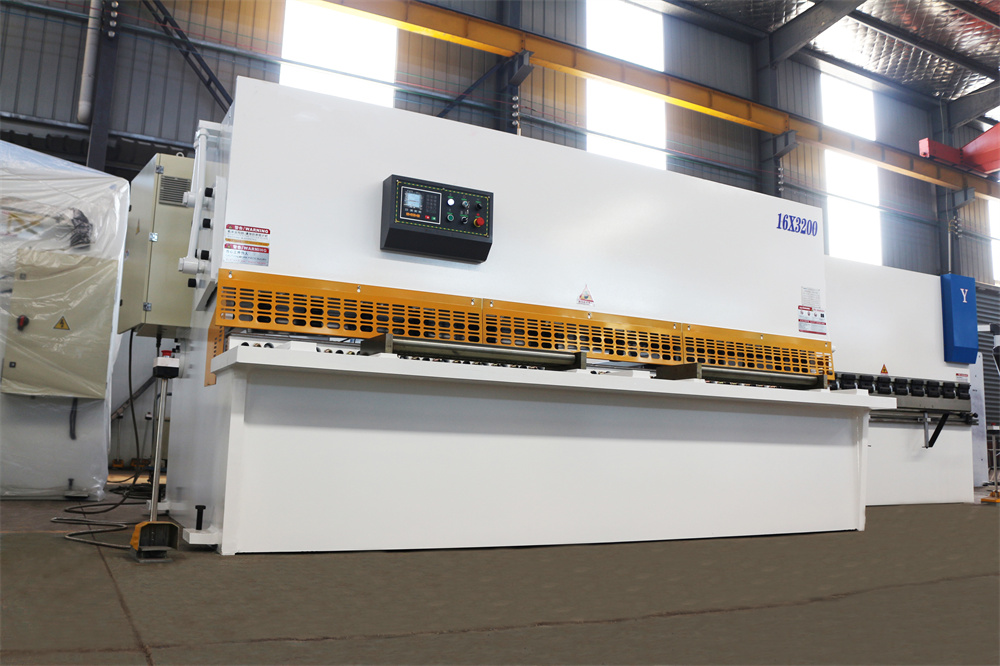
The shearing machine is a staple in any metalworking shop that deals with sheet metal. Its primary function is to cut large sheets of metal into smaller, manageable pieces using a straight-line cutting action. This process, known as shearing, involves the application of a high-pressure force through an upper blade and a lower blade. The upper blade descends, creating a fracture in the metal that propagates through the thickness of the material, resulting in a clean separation. HARSLE’s range of shearing machines, including hydraulic swing beam and guillotine models, are designed for durability and consistent performance under heavy workloads.
One of the most significant advantages of a shearing machine is its sheer speed for straight cuts. When a project requires hundreds of identical rectangular strips, a shearing machine can process them in a fraction of the time it would take a laser. Furthermore, the setup time for a shearing machine is minimal. There is no complex software programming required for basic cuts; the operator simply sets the backgauge and initiates the stroke. This simplicity makes it an ideal choice for shops that prioritize throughput for standard components like HVAC ducting, roofing panels, and simple brackets.
However, shearing machines are limited by their geometry. They are strictly designed for straight-line cuts. If a part requires a curve, a hole, or an intricate internal cutout, the shearing machine cannot perform the task. Additionally, while modern hydraulic shears offer adjustable blade gaps to minimize burrs and distortion, they cannot match the edge quality of a laser on thinner materials or complex alloys. Despite these limitations, the low initial investment and minimal maintenance requirements make the shearing machine a highly cost-effective solution for specific industrial niches.
Maintenance for shearing machines is relatively straightforward. It primarily involves the periodic sharpening or rotation of the blades, ensuring the hydraulic system is free of leaks, and lubricating moving parts. Because the technology is mechanical and hydraulic rather than optoelectronic, the skill set required for maintenance is often already present in most industrial environments. This contributes to a lower Total Cost of Ownership (TCO) over the machine’s lifespan, especially in environments where high-tech support might be difficult to access.
Laser Cutting Machine Overview: Precision and Versatility Redefined
The advent of fiber laser technology has revolutionized the metal processing industry. A laser cutting machine works by directing the output of a high-power laser through optics. The CNC (Computer Numerical Control) system guides the laser beam to follow a programmed path, melting, burning, or vaporizing the material. A jet of gas (usually oxygen, nitrogen, or compressed air) then blows the molten material away, leaving a high-quality edge finish. HARSLE’s fiber laser machines are engineered to provide extreme precision, often within tolerances of ±0.05mm, which is unattainable for traditional shearing methods.
The primary draw of the laser cutting machine is its incredible versatility. It can cut virtually any shape, from simple squares to complex artistic patterns and high-precision mechanical gears. This eliminates the need for secondary processes like drilling or milling, as the laser can cut holes and slots simultaneously with the outer profile. For businesses that handle custom orders or prototype development, the laser cutting machine is indispensable. It allows for rapid changes in design without the need for physical tooling or blade adjustments, significantly reducing lead times.
While the initial capital expenditure (CAPEX) for a laser cutting machine is substantially higher than that of a shearing machine, the long-term value is often found in material savings and labor reduction. Laser nesting software optimizes the layout of parts on a sheet of metal, minimizing scrap and maximizing material utilization. Furthermore, because the laser process is highly automated, a single operator can oversee multiple machines, or the machine can run unattended during “lights-out” manufacturing shifts. This high level of automation offsets the higher hourly operating costs associated with electricity and industrial gases.
However, laser cutting machines are more sensitive to environmental factors and require a higher level of technical expertise for maintenance. The optical components, laser source, and cooling systems must be kept in pristine condition to ensure consistent cutting quality. While fiber lasers are much more robust and energy-efficient than older CO2 lasers, they still represent a significant technological investment that requires a dedicated maintenance schedule and a stable power supply. For shops that require high precision and the ability to handle complex geometries, the laser cutting machine is often the most cost-effective choice in the long run due to its high value-add capabilities.
Specification Comparison Table
To better understand the trade-offs between these two technologies, the following table compares the key technical and operational specifications of a standard HARSLE Hydraulic Shearing Machine versus a HARSLE Fiber Laser Cutting Machine.
| Feature | Hydraulic Shearing Machine | Fiber Laser Cutting Machine |
|---|---|---|
| Cutting Geometry | Straight lines only | Any complex 2D shape |
| Precision/Tolerance | ±0.1mm to ±0.5mm | ±0.03mm to ±0.05mm |
| Cutting Speed | Very high for straight cuts | High (varies by thickness/complexity) |
| Material Thickness | Up to 30mm+ (model dependent) | Up to 25mm+ (power dependent) |
| Edge Quality | Good, but may have slight burrs | Excellent, often requires no finishing |
| Setup Time | Minimal (Manual/NC) | Moderate (CNC Programming/Nesting) |
| Initial Cost | Low to Moderate | High |
| Operating Cost | Low (Electricity + Blades) | Moderate to High (Electricity + Gas + Nozzles) |
| Material Waste | Higher (due to straight cut limits) | Lower (due to advanced nesting) |
Best-fit Applications: Choosing the Right Tool for the Job
Determining the cost-effectiveness of a machine requires looking at the specific applications it will serve. A machine that is “expensive” in terms of purchase price may be the most “cost-effective” if it produces high-margin parts that a cheaper machine cannot handle. Conversely, a high-tech laser is a waste of capital if it is only used to cut simple strips that a shear could process ten times faster.
When to Choose a Shearing Machine
Shearing machines are the optimal choice for industries where the primary requirement is the rapid preparation of raw material. In the construction industry, for example, large quantities of steel plates need to be cut into standard sizes for structural components. Similarly, in the manufacturing of metal furniture, shelving, and simple enclosures, the shearing machine provides the necessary speed to keep up with high-volume assembly lines. If your production workflow involves 90% straight cuts and you do not require tolerances tighter than 0.1mm, the shearing machine will provide a much faster ROI.
When to Choose a Laser Cutting Machine
Laser cutting machines shine in sectors such as aerospace, automotive, medical device manufacturing, and electronics. These industries demand intricate parts with zero margin for error. The ability of a laser to cut thin foils as well as thick plates with the same machine adds a layer of flexibility that is vital for job shops serving diverse clients. Furthermore, if your product design involves many holes, slots, or non-linear edges, the laser is the only viable option. The cost-effectiveness here comes from the elimination of secondary operations; the part comes off the laser bed ready for assembly or welding.
Cost and Maintenance Comparison: A Deep Dive
The question of Shearing Machine Vs Laser Cutting Machine: Which Is More Cost-Effective Metal Processing? is most accurately answered through a detailed cost analysis. This involves looking at both the upfront investment and the ongoing operational expenses.
Initial Investment (CAPEX)
A standard hydraulic shearing machine from HARSLE might cost between $10,000 and $50,000 depending on the length and thickness capacity. In contrast, a high-quality fiber laser cutting machine starts at around $50,000 for entry-level models and can exceed $250,000 for high-power, large-format systems. For a new business or a shop with limited credit, the shearing machine is much more accessible. However, for an established business looking to expand its service offerings, the laser’s higher cost is often justified by the higher price point of the finished parts.
Operational Costs (OPEX)
Operating a shearing machine is remarkably cheap. The main costs are electricity for the hydraulic pump and the occasional cost of regrinding the blades. A set of high-quality blades can last for years if properly maintained and rotated. Laser cutting machines, however, have several ongoing costs:
- Electricity: While fiber lasers are efficient, the chiller and the laser source still consume significant power.
- Assist Gases: Nitrogen and Oxygen are required for the cutting process. Nitrogen, used for stainless steel and aluminum to prevent oxidation, can be a significant monthly expense.
- Consumables: Laser nozzles, protective windows, and ceramic rings need regular replacement to maintain cut quality.
Maintenance and Longevity
Shearing machines are known for their longevity. It is not uncommon to see 30-year-old shears still in operation in many factories. The maintenance is mechanical and can often be handled in-house. Laser machines, while durable, have a shorter technological lifespan. A laser source may have a rated life of 100,000 hours. While this is many years of production, the rapid advancement in laser technology means that a machine may become “obsolete” or less competitive faster than a mechanical shear. Maintenance for lasers often requires specialized technicians, which can lead to higher service fees and potential downtime if parts are not readily available.
Recommendation: How to Make the Final Decision
To decide which machine is more cost-effective for your metal processing facility, HARSLE recommends a three-step evaluation process:
- Analyze Your Part Geometry: If more than 30% of your parts involve curves, holes, or complex shapes, a laser cutting machine is almost certainly the better investment. If you only cut rectangles, stick with a shearing machine.
- Evaluate Your Volume and Lead Times: For massive volumes of simple parts, a shearing machine’s speed is unbeatable. For high-mix, low-volume (HMLV) production where you need to switch between different designs frequently, the laser’s lack of physical tooling makes it more cost-effective.
- Consider Your Labor Market: If skilled manual operators are hard to find, the automation of a CNC laser cutting machine can reduce your reliance on specialized labor. Conversely, if you have a team of experienced mechanical operators, a shearing machine integrates seamlessly into your existing workflow.
Ultimately, many successful fabrication shops find that the most cost-effective strategy is to have both. Using a shearing machine to “blank” or pre-cut large sheets into smaller squares, and then using a laser cutting machine for the detailed work, optimizes the strengths of both technologies. This hybrid approach reduces the load on the expensive laser machine and maximizes the throughput of the shearing machine.
Frequently Asked Questions (FAQ)
1. Can a shearing machine cut stainless steel as effectively as a laser?
A shearing machine can cut stainless steel, but it requires high-quality, hardened blades and careful adjustment of the blade gap. However, shearing stainless steel can sometimes cause work-hardening at the edge. A laser cutting machine with nitrogen assist gas provides a much cleaner, oxide-free edge on stainless steel, which is often required for aesthetic or sanitary applications.
2. What is the maximum thickness a fiber laser can cut compared to a shear?
Modern high-power fiber lasers (12kW to 30kW) can cut carbon steel up to 50mm thick. However, for thicknesses above 20mm, the process becomes slower and more expensive. A heavy-duty hydraulic guillotine shear can cut 30mm or thicker plates very quickly and with much lower energy consumption per cut, making it more cost-effective for very thick, straight-line plate processing.
3. Is the software for laser cutting difficult to learn?
Most modern laser cutting machines, including those from HARSLE, come with user-friendly CNC interfaces and nesting software (like CypCut). While there is a learning curve compared to a manual shear, an operator with basic computer skills can usually become proficient within a week of training. The software also automates much of the complexity, such as calculating the best path and power settings.
4. How often do shearing machine blades need to be sharpened?
This depends entirely on the material being cut and the volume of production. For standard mild steel, blades may only need to be rotated or sharpened once every 12 to 24 months. Cutting harder materials like stainless steel or high-carbon steel will dull the blades faster. Most HARSLE blades have four cutting edges, meaning you can flip them three times before needing a professional regrind.
5. Which machine has a better resale value?
Shearing machines tend to hold their value exceptionally well because their technology is stable and they are built for extreme durability. Laser cutting machines also have good resale value, but it is more dependent on the remaining life of the laser source and the current state of laser technology. A 10-year-old shear is still a highly functional tool, whereas a 10-year-old laser might be considered significantly outdated compared to newer, more efficient models.












