How to Troubleshoot Hydraulic Press Speed Loss During Operation


Introduction to Hydraulic Press Speed Issues
In the world of metal fabrication, efficiency is the cornerstone of profitability. A hydraulic press is a powerhouse of industrial manufacturing, relied upon for its immense force and precision. However, one of the most frustrating issues operators face is a sudden or gradual decrease in operating speed. When you need to troubleshoot hydraulic press speed loss during operation, you are essentially looking for a disruption in the relationship between flow rate and pressure. In a hydraulic system, speed is directly dictated by the volume of oil (flow) delivered to the cylinder, while force is dictated by pressure.
A slow hydraulic press doesn’t just delay production; it can lead to overheating, inconsistent part quality, and increased wear on expensive components. Understanding why your machine is lagging requires a systematic approach to the hydraulic circuit, electrical controls, and mechanical interfaces. Whether you are operating a HARSLE C-frame press, an H-frame press, or a specialized deep drawing machine, the fundamental principles of troubleshooting remain the same. This guide provides a deep dive into the technical causes of speed loss and offers actionable solutions to restore your machinery to peak performance.
Key Considerations Before Troubleshooting
Before diving into the internal components of the machine, it is vital to establish a baseline. Troubleshooting should always begin with safety. Ensure the press is properly locked out/tagged out (LOTO) if you are opening the hydraulic reservoir or disassembling valves. Furthermore, always support the ram (slide) with safety blocks to prevent accidental descent due to gravity when hydraulic pressure is released.
The first consideration is identifying *when* the speed loss occurs. Is the ram slow during the rapid approach phase, the pressing phase, or the return stroke? Speed loss during the rapid approach often points to issues with the pre-fill valve or the high-flow pump circuit. Conversely, slowness during the actual pressing phase usually indicates a loss of flow under high pressure, which points toward pump wear or internal leakage. Documenting these symptoms helps narrow down the search area significantly.
Another key consideration is the environment. Hydraulic systems are sensitive to temperature. If the speed loss only occurs after the machine has been running for several hours, the issue is likely related to oil viscosity thinning out due to heat. If the machine is slow immediately upon startup in a cold warehouse, the oil may be too thick to flow efficiently through the suction lines. Understanding these variables is the first step in a successful diagnostic process.
Technical Details: Common Causes of Speed Loss
1. Hydraulic Pump Inefficiency and Wear
The pump is the heart of the hydraulic system. If the pump cannot deliver the required flow (GPM or LPM), the ram will move slowly. Over time, internal components like gears, vanes, or pistons wear down. This wear increases the internal clearances, allowing oil to slip from the high-pressure outlet back to the low-pressure inlet—a phenomenon known as “slippage.” As the load on the press increases, this slippage becomes more pronounced, causing the speed to drop exactly when you need it most.
Cavitation is another pump-related issue that kills speed. If the suction line is restricted or the air filter on the reservoir is clogged, the pump cannot pull in enough oil. This creates vacuum bubbles that implode with violent force, damaging the pump internals and introducing air into the system. Aerated oil is compressible, which leads to spongy operation and significant speed loss. Listen for a high-pitched whining or growling sound, which is a classic symptom of pump cavitation.
2. Valve Malfunctions and Internal Leakage
Hydraulic presses rely on a variety of valves to direct flow and control pressure. The most common culprit in speed loss is the relief valve. If the relief valve is set too low or if its internal spring has weakened, it may start bypassing oil back to the tank before the required working pressure is reached. Even a small piece of debris stuck in the valve seat can cause a constant leak, diverting flow away from the cylinder.
Directional control valves and throttle valves also play a role. If a spool inside a directional valve does not shift fully, it creates a restriction that limits flow. Similarly, in machines equipped with proportional valves, an electrical fault or a dirty valve spool can prevent the valve from opening to its commanded position. Troubleshooting these components often requires checking the solenoid coils for proper voltage and ensuring the mechanical movement of the spool is smooth and unrestricted.
3. Cylinder Seal Failure and Bypass
If the pump and valves are functioning correctly, the problem may lie within the hydraulic cylinder itself. Internal leakage across the piston seals is a frequent cause of speed loss. When the seals are worn, high-pressure oil leaks from the cap end of the cylinder to the rod end (or vice versa), effectively bypassing the work. This is particularly difficult to diagnose because there is no external oil leak visible on the floor.
To test for internal cylinder bypass, you can extend the cylinder to its full stroke and safely check if oil continues to flow out of the return port while pressure is maintained. If oil continues to flow, the piston seals are compromised. This internal bypass not only slows down the stroke but also generates significant heat, which further degrades the hydraulic fluid and other seals in the system.
4. Hydraulic Fluid and Temperature Issues
The condition of the hydraulic oil is often overlooked. Hydraulic fluid has a specific viscosity range required for optimal operation. If the oil is too thin (low viscosity), internal leakage increases across all components. This is often caused by the system overheating. Most industrial hydraulic presses should operate between 40°C and 55°C (104°F to 131°F). If the cooling system (air or water cooler) is failing, the oil temperature will climb, the viscosity will drop, and the press speed will plummet.
Contamination is the silent killer of hydraulic speed. Fine particles of metal, rubber, or dirt can act as an abrasive, wearing down pump surfaces and valve seats. Furthermore, contaminated oil can clog the suction strainer or the pressure filters. A clogged filter creates backpressure and reduces the volume of oil reaching the actuators. Regular oil analysis and filter changes are non-negotiable for maintaining machine speed over the long term.
Selection Advice: Choosing a Press to Minimize Downtime
When purchasing a new hydraulic press, such as those offered by HARSLE, it is important to look for features that simplify troubleshooting and prevent speed loss. High-quality machines are designed with maintenance in mind. Here are several factors to consider during the selection process:
- Component Quality: Ensure the press uses reputable brands for pumps and valves (e.g., Rexroth, Vickers, or Yuken). These components have tighter tolerances and longer lifespans, reducing the likelihood of early-onset speed loss.
- Integrated Cooling Systems: For high-cycle applications, an independent oil cooling circuit is essential. Look for machines with oversized heat exchangers to keep oil viscosity stable during multi-shift operations.
- Advanced Monitoring: Modern CNC hydraulic presses often include digital pressure and flow monitoring. Some HARSLE models feature PLC diagnostics that can alert the operator to pressure drops or slow cycle times before they become critical failures.
- Accessibility: A well-designed press allows easy access to the pump station and valve manifold. If a technician has to spend three hours removing covers just to check a relief valve, your downtime costs will skyrocket.
- Filtration Systems: Look for systems with dual filtration (suction and return line) and visual clogging indicators. This allows for proactive maintenance rather than reactive repairs.
By investing in a machine with these features, you are not just buying a piece of equipment; you are buying operational insurance. HARSLE’s commitment to using world-class components ensures that our customers experience fewer issues with speed loss and have a clearer path to resolution if problems do arise.
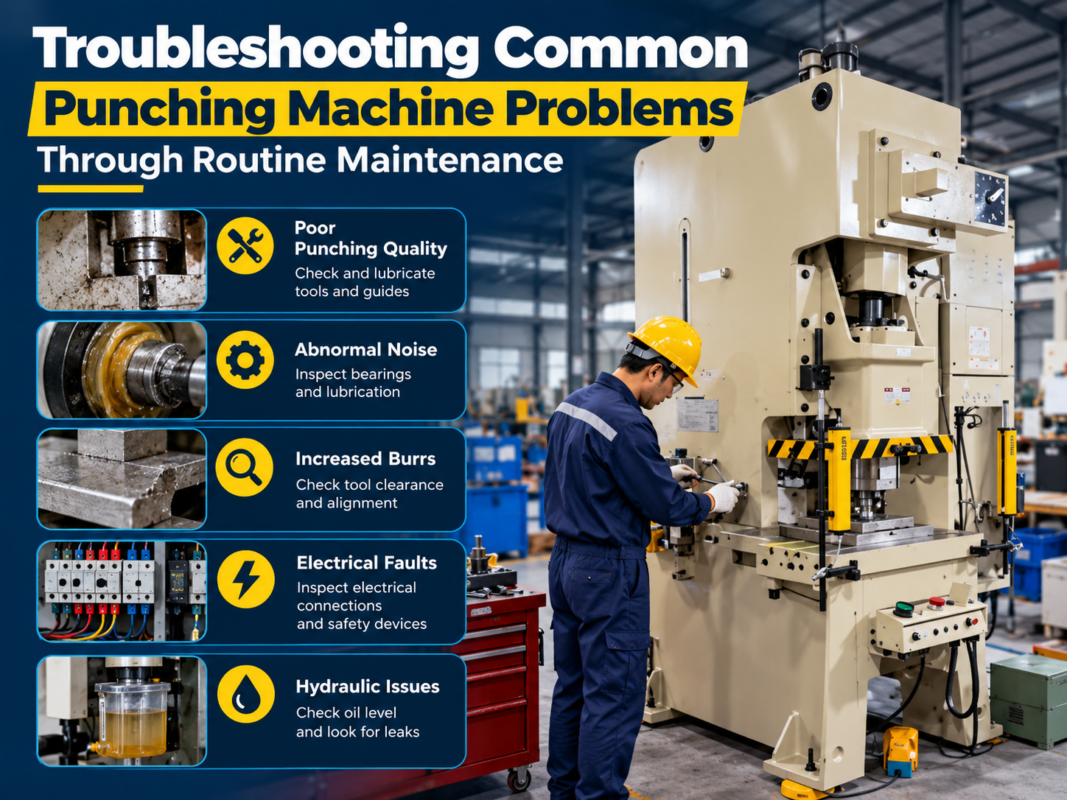
Troubleshooting Checklist: Step-by-Step
If you are currently facing speed loss, follow this systematic checklist to identify the root cause:
| Step | Action | What to Look For |
|---|---|---|
| 1 | Check Oil Level & Quality | Is the reservoir full? Is the oil foamy (air) or milky (water)? |
| 2 | Monitor Temperature | Is the oil over 60°C? Check the cooling system and heat exchanger. |
| 3 | Inspect Filters | Check the suction strainer and return filters for clogs or debris. |
| 4 | Test Pump Pressure | Use a pressure gauge to see if the pump reaches its rated PSI/Bar. |
| 5 | Check Relief Valve | Ensure the setting hasn’t vibrated loose. Listen for bypassing sounds. |
| 6 | Inspect Cylinder Seals | Perform a bypass test to check for internal leakage across the piston. |
| 7 | Verify Electrical Signals | Check PLC outputs and solenoid coils for proper voltage and activation. |
Frequently Asked Questions (FAQ)
Why does my hydraulic press slow down only when it gets hot?
This is almost always due to a drop in oil viscosity. As hydraulic oil heats up, it becomes thinner. If your pump or cylinder seals are slightly worn, the thinner oil leaks through these gaps much more easily than cold, thick oil. This internal leakage reduces the effective flow reaching the cylinder, causing the speed to drop. Improving your cooling system or switching to a higher-viscosity index oil may help.
Can a clogged air breather cause speed loss?
Yes. The hydraulic reservoir needs to “breathe” as the oil level rises and falls with the cylinder movement. If the air breather is clogged, a vacuum can form in the tank, making it difficult for the pump to draw oil. This leads to cavitation, noise, and a significant reduction in flow and speed.
How often should I change the hydraulic oil to prevent these issues?
For most industrial applications, hydraulic oil should be changed every 2,000 to 4,000 hours of operation, or at least once a year. However, it is better to rely on oil analysis. Regular testing can tell you the exact state of the oil’s additives and the level of contamination, allowing you to change it only when necessary while preventing damage to the system.
Is speed loss always a hydraulic problem?
Not necessarily. Mechanical issues such as dry or misaligned gibs (the guides that the ram slides on) can create excessive friction. If the motor has to work harder to overcome mechanical resistance, the system may appear to slow down. Always ensure the lubrication system for the ways and gibs is functioning correctly.
Conclusion
To troubleshoot hydraulic press speed loss during operation requires a blend of mechanical intuition and technical knowledge. By understanding that speed is a function of flow, you can systematically eliminate variables—starting from the reservoir and pump, moving through the valves, and ending at the cylinder. Regular maintenance, such as monitoring oil temperature, replacing filters, and checking for internal leaks, is the best way to prevent speed loss before it impacts your bottom line.
At HARSLE, we understand that every minute of downtime is a lost opportunity. Our hydraulic presses are engineered for durability and ease of maintenance, featuring top-tier components that stand up to the rigors of heavy industrial use. If you are experiencing persistent issues or are looking to upgrade to a more reliable metal fabrication solution, our team of experts is ready to assist you with technical support and industry-leading machinery. Keep your production moving at full speed with the right knowledge and the right equipment.