Used Laser Cutting Machine Vs New Machine: Which Is Better Factory?


Comparison Summary: The Great Factory Dilemma
In the rapidly evolving world of metal fabrication, the decision to invest in a laser cutting machine is one of the most significant capital expenditures a factory owner will face. The central question often boils down to a choice between immediate cost savings and long-term technological superiority: Used Laser Cutting Machine Vs New Machine: Which Is Better Factory? This debate is not merely about the price tag; it encompasses production efficiency, maintenance reliability, software compatibility, and the overall trajectory of your business growth.
A used laser cutting machine offers an attractive entry point for startups or shops with limited capital. It allows a facility to acquire high-end brands at a fraction of their original cost. However, this comes with the baggage of wear and tear, outdated control systems, and the potential for frequent downtime. On the other hand, a new machine from a reputable manufacturer like HARSLE provides the latest in fiber laser technology, comprehensive warranties, and energy efficiency that can significantly lower the cost per part over time.
As fiber laser technology has advanced, the gap between older CO2 lasers (often found on the used market) and modern fiber lasers has widened. Even early-generation fiber lasers lack the sophisticated beam shaping and high-speed piercing capabilities of today’s models. Therefore, the choice depends heavily on your specific production volume, the materials you intend to cut, and your internal capacity for machine maintenance. This guide will break down every facet of this comparison to help you determine which path leads to the highest Return on Investment (ROI) for your specific factory environment.
Used Laser Cutting Machine Overview: Pros and Cons
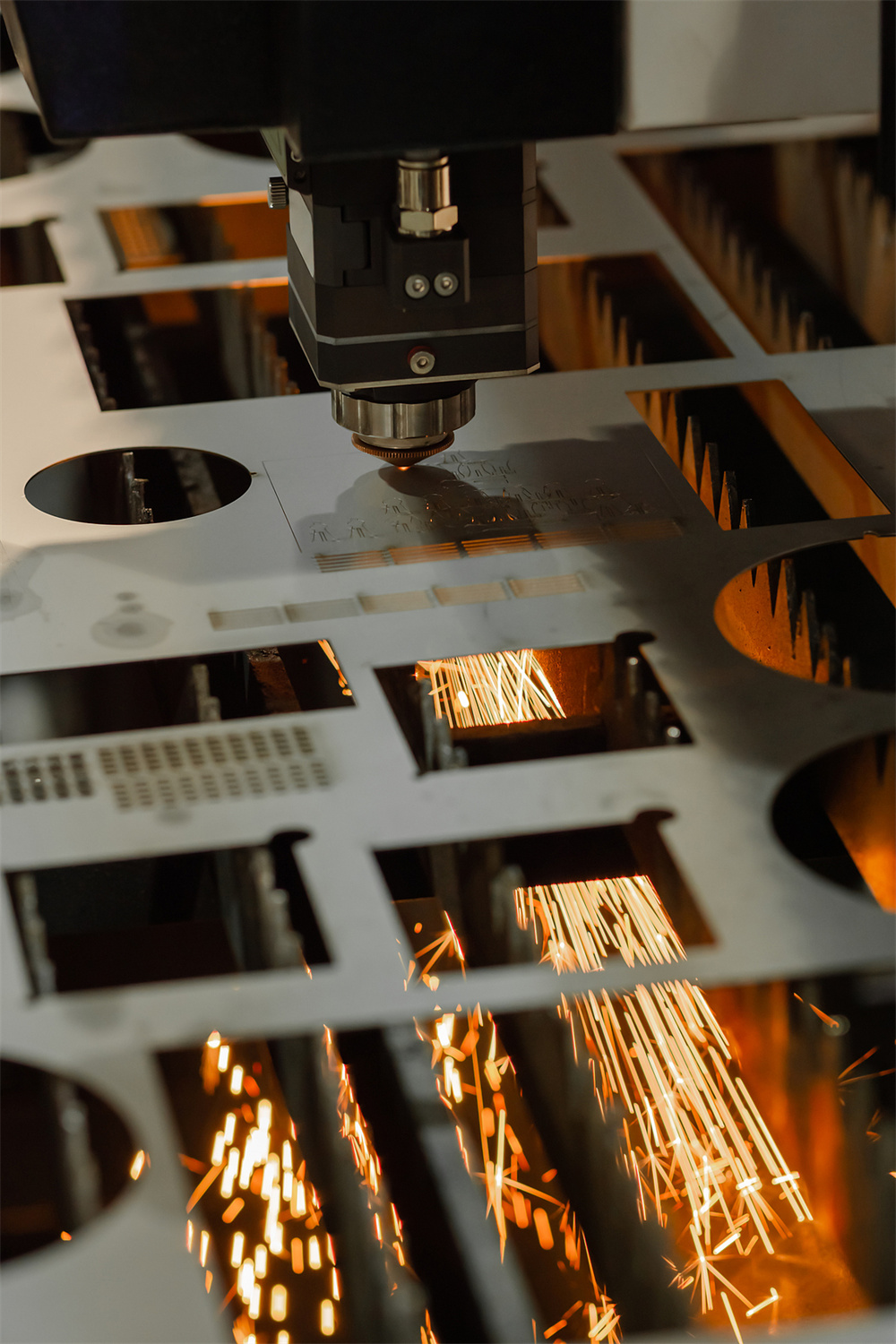
The secondary market for industrial machinery is vast. When considering a used laser cutting machine, the primary driver is almost always the initial purchase price. For a factory looking to add a secondary machine for low-volume prototyping or to handle overflow work, a used unit can seem like a bargain. You might find a 4kW fiber laser that originally cost $300,000 selling for $80,000 after five to seven years of service. This allows for a much faster payback period if the machine remains operational.
However, the risks associated with used equipment are substantial. First, there is the issue of the laser source. Fiber laser sources have a finite lifespan, typically rated for 100,000 hours, but their efficiency can degrade over time due to environmental factors or poor maintenance. If the source fails shortly after purchase, the replacement cost can easily exceed the initial savings. Furthermore, used machines often lack the latest safety features and environmental controls, which may lead to compliance issues in certain jurisdictions.
Another critical factor is the “hidden cost” of relocation. Moving a precision laser cutting machine is not as simple as moving a forklift. It requires professional decommissioning, specialized transport, and expert re-installation and calibration at the new site. These costs, combined with the lack of a manufacturer’s warranty, mean that the buyer assumes all the risk from day one. If the previous owner did not keep meticulous maintenance logs, you might be inheriting a machine with underlying structural issues or worn-out linear guides that compromise cutting accuracy.
New Laser Cutting Machine Overview: The HARSLE Advantage
Investing in a new laser cutting machine, such as those offered by HARSLE, represents a commitment to the future of your factory. A new machine comes with the latest technological breakthroughs, including higher power densities, intelligent autofocus cutting heads, and advanced CNC systems that are intuitive and easy to learn. For a factory aiming for high-volume production and tight tolerances, the reliability of a new machine is indispensable.
One of the most significant advantages of a new machine is the warranty and after-sales support. When you purchase from HARSLE, you aren’t just buying hardware; you are securing a partnership. This includes installation by factory-trained technicians, comprehensive training for your operators, and a guarantee that spare parts will be available for years to come. In the event of a technical glitch, remote diagnostics can often solve the problem in minutes, preventing the costly multi-day outages common with older, unsupported used machines.
Furthermore, new machines are designed with modern energy-saving standards. Modern fiber lasers are significantly more efficient than their predecessors, consuming less electricity and requiring less cooling capacity. They also feature optimized gas flow systems that reduce the consumption of nitrogen and oxygen during the cutting process. Over a five-year period, these operational savings can often offset a large portion of the price difference between a new and a used machine. Additionally, new machines come with the latest software suites that offer better nesting algorithms, reducing material waste and further increasing profitability.
Specification Comparison Table
To better understand the technical divergence, let’s compare a typical 5-year-old used fiber laser with a brand-new HARSLE fiber laser cutting machine.
| Feature | Used Fiber Laser (Approx. 5 Years Old) | New HARSLE Fiber Laser Machine |
|---|---|---|
| Laser Source Efficiency | 85-90% of original power | 100% (Latest Generation) |
| Cutting Speed (1mm SS) | Approx. 25-30 m/min | Approx. 45-60 m/min |
| Positioning Accuracy | ±0.05mm (subject to wear) | ±0.02mm to ±0.03mm |
| Software Features | Basic nesting, manual lead-ins | AI-driven nesting, auto-collision avoidance |
| Warranty | None or 30-day limited | 1-3 Years Comprehensive |
| Maintenance Cost | High (Frequent part replacement) | Low (Preventative only) |
| Energy Consumption | Higher (Older cooling/drive tech) | Optimized (Eco-mode features) |
Best-fit Applications: Where Each Machine Shines
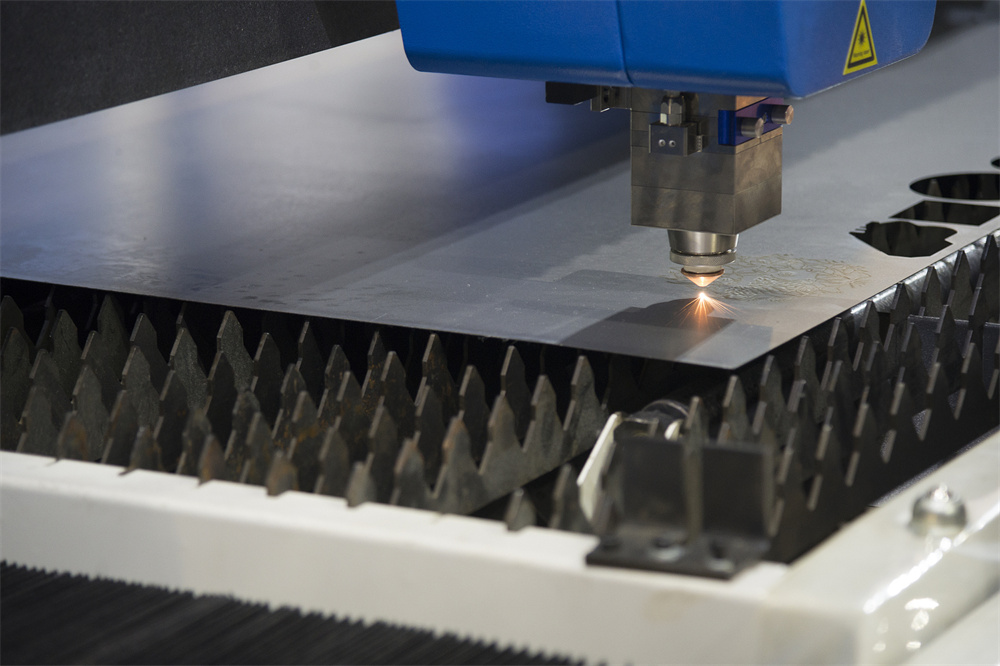
Determining whether a used or new machine is better for your factory depends largely on your application. If your factory operates as a job shop where you handle a wide variety of low-precision tasks, or if you are a hobbyist transitioning into a small business, a used machine might suffice. It allows you to learn the ropes of CNC laser cutting without a massive financial burden. It is also suitable for cutting thicker materials where speed is less of a factor than the sheer ability to cut through the plate.
Conversely, if your factory is a Tier 1 or Tier 2 supplier for industries like automotive, aerospace, or medical devices, a new machine is almost mandatory. These industries require strict adherence to tolerances and documented process consistency. A new HARSLE machine provides the repeatability necessary to pass rigorous quality audits. Furthermore, if your business model relies on high-speed production of thin to medium-gauge sheet metal, the increased acceleration and cutting speeds of a new machine will allow you to outcompete shops using older technology.
Another application where new machines excel is in the integration of automation. Modern machines are built with “Industry 4.0” in mind, featuring interfaces for automatic loading and unloading systems, tower storage, and robotic sorting. Retrofitting an older, used machine with these capabilities is often technically impossible or prohibitively expensive. Therefore, if your long-term goal is a fully automated “lights-out” manufacturing facility, starting with a new, compatible platform is the only logical choice.
Cost and Maintenance Comparison: The Total Cost of Ownership
When asking “Which is better for your factory?”, you must look at the Total Cost of Ownership (TCO). The purchase price is just the tip of the iceberg. For a used machine, the TCO includes the purchase price + decommissioning + shipping + installation + immediate repairs + higher utility bills + lost revenue during downtime. It is not uncommon for a used machine to require $20,000 in repairs within the first year of operation, especially if components like the chiller, bellows, or cutting head optics need replacement.
For a new machine, the TCO is more predictable: Purchase price + scheduled preventative maintenance. While the initial outlay is higher, the financing options for new equipment are often much more favorable. Banks and leasing companies are more willing to offer lower interest rates and longer terms for new machinery because the asset retains its value better and serves as more reliable collateral. This can result in monthly payments that are surprisingly manageable compared to the erratic repair costs of a used unit.
Maintenance on a new HARSLE machine is also simplified. Modern designs emphasize accessibility, allowing operators to perform routine checks and cleaning quickly. Advanced sensors monitor the health of the laser source and the cutting head in real-time, alerting the operator to potential issues before they cause a breakdown. In contrast, maintaining a used machine often involves “detective work” to find out why a specific axis is drifting or why the beam quality has suddenly dropped, leading to hours of non-productive troubleshooting.
Recommendation: Making the Final Decision
So, Used Laser Cutting Machine Vs New Machine: Which Is Better Factory? The recommendation depends on your business stage. If you are in a “proof of concept” phase with very limited capital and no immediate need for high-speed production, a carefully inspected used machine from a reputable dealer (not a private auction) can be a stepping stone. However, you must budget at least 20-30% of the purchase price for immediate maintenance and setup.
For the vast majority of established factories and ambitious startups, a new laser cutting machine is the superior investment. The combination of higher productivity, lower operating costs, and the peace of mind provided by a manufacturer’s warranty creates a more stable foundation for business growth. In a competitive market, the ability to produce parts faster, cheaper, and with better quality than your neighbor is the key to winning contracts. HARSLE’s range of fiber laser machines offers the perfect balance of performance and value, ensuring that your factory stays at the forefront of the metal fabrication industry.
Before making a purchase, we suggest performing a 3-year cash flow analysis. Compare the projected revenue from a new machine’s higher output against the lower initial cost of a used machine. In most cases, the increased capacity and reduced downtime of the new machine will result in a significantly higher net profit by the end of the second year.
FAQ: Frequently Asked Questions
1. How long does a fiber laser source typically last?
Most modern fiber laser sources are rated for approximately 100,000 hours of operation. However, this assumes a clean environment and proper maintenance of the cooling system. In a used machine, you must check the actual “on-time” and “emission-time” in the system logs to gauge how much life is left.
2. Can I upgrade the software on a used laser cutting machine?
It depends on the controller. Many older machines use proprietary hardware that is not compatible with modern, AI-enhanced nesting software. Upgrading the entire control system is possible but often costs as much as a significant down payment on a new machine.
3. What is the main cause of failure in used laser machines?
The most common failures include the cooling system (chiller), the laser delivery fiber, and the precision mechanical components like the rack and pinion or ball screws. If these have not been lubricated and maintained correctly, they will lead to poor cut quality and frequent breakdowns.
4. Does HARSLE offer financing for new machines?
HARSLE works with various global financial partners to provide flexible leasing and financing options for our customers. This helps factories acquire the latest technology while preserving their working capital for other operational needs.
5. Is it harder to train operators on a new machine?
Actually, it is usually easier. Modern CNC interfaces are designed to be user-friendly, often featuring touchscreens and graphical representations of the cutting process. Older machines often require knowledge of complex G-code and manual adjustments that have been automated in newer models.
6. How much can I save on electricity with a new fiber laser?
Compared to an old CO2 laser, a new fiber laser can reduce electricity consumption by up to 70%. Compared to an early-generation fiber laser, the savings are smaller (around 10-20%) but still significant when considering 24/7 factory operations.