
Press Brake Buying Guide: How to Choose the Right Machine for Your Metal Fabrication Shop


Introduction to Press Brake Procurement
Investing in a press brake is one of the most significant capital expenditures a metal fabrication shop will undertake. Whether you are upgrading an existing facility or starting a new production line, the decision-making process for Press Brake Buying: Choose Machine Metal Fabrication Shop requirements involves more than just looking at a price tag. A press brake is the heart of the bending department, and its precision, speed, and reliability directly dictate the quality of your finished products and your overall profitability.
In the modern manufacturing landscape, the variety of available technologies—ranging from traditional hydraulic systems to high-speed electric and sophisticated hybrid models—can be overwhelming. This guide is designed to walk you through every critical factor, from identifying your specific production needs to evaluating long-term return on investment (ROI). By the end of this article, you will have a clear roadmap for selecting a HARSLE press brake that aligns perfectly with your shop’s operational goals.
Identifying Buyer Pain Points in Metal Bending
Before diving into technical specifications, it is essential to address the common challenges fabricators face. One of the primary pain points is inconsistent bend accuracy. Many shops struggle with ‘boating’ effects or variations in angles across the length of a part, which leads to high scrap rates and wasted material. This is often caused by a lack of proper crowning systems or structural deflection in older or lower-quality machines.
Another significant issue is the skills gap. As experienced operators retire, finding personnel who can manually calculate bend allowances and set up complex sequences is increasingly difficult. Modern shops need machines with intuitive CNC interfaces that simplify the programming process, allowing less experienced operators to produce high-quality parts with minimal training. Furthermore, long setup times for tool changes and backgauge adjustments can create bottlenecks in production, especially for small-batch or custom jobs.
Finally, maintenance and downtime represent a major concern. A machine that is difficult to service or lacks readily available replacement parts can halt production for weeks. Buyers must look for machines built with globally recognized components (such as Rexroth hydraulics or Schneider electrics) to ensure that maintenance is straightforward and parts are accessible. Addressing these pain points early in the buying process ensures that the chosen machine solves problems rather than creating new ones.
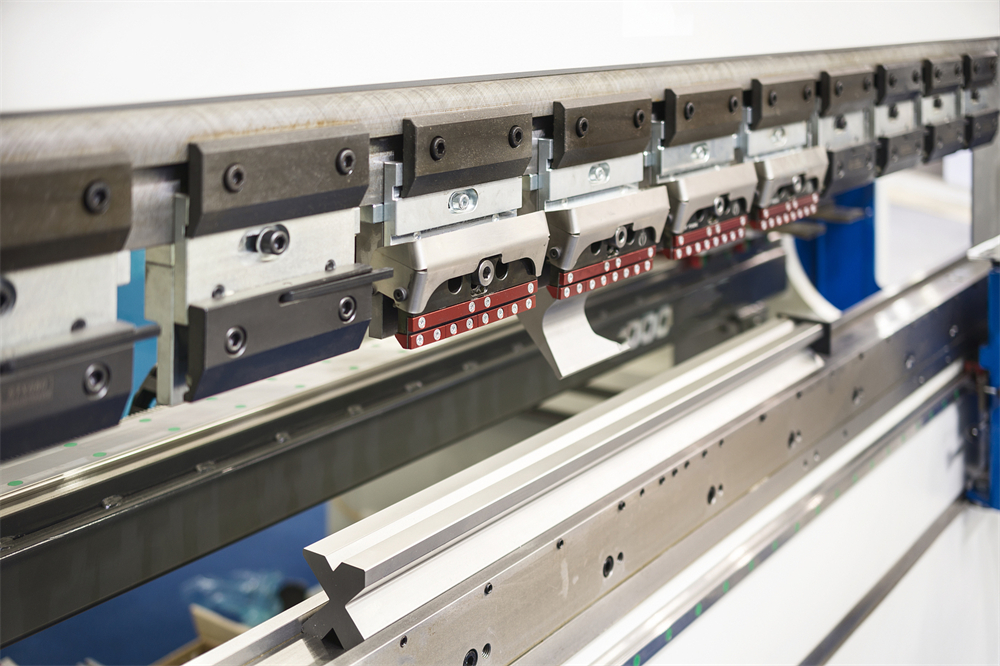
Machine Type Selection: Hydraulic, Electric, or Hybrid?
The first major decision in the Press Brake Buying: Choose Machine Metal Fabrication Shop journey is selecting the drive system. Each technology offers distinct advantages depending on your application.
Hydraulic Press Brakes
Hydraulic press brakes are the workhorses of the industry. They are known for their high tonnage capacity and ability to handle very thick materials. HARSLE’s hydraulic models utilize advanced valve systems to control the flow of oil to the cylinders, providing consistent pressure. They are generally more affordable upfront than electric models and are ideal for heavy-duty fabrication where raw power is the priority.
Electric Press Brakes
Electric press brakes have gained massive popularity for thin-to-medium gauge applications. Instead of hydraulic fluid, they use high-torque servo motors and belt-drive systems. The primary benefits are speed, energy efficiency (they only consume power when moving), and extreme precision. Because there is no oil, there are no thermal expansion issues, meaning the first bend of the day is as accurate as the last. They are also much quieter and require less maintenance.
Hybrid Press Brakes
Hybrid machines combine the best of both worlds. They use a small hydraulic system driven by a servo motor. This setup provides the high tonnage of hydraulics with the energy efficiency and speed of electric machines. Hybrid systems significantly reduce oil consumption and heat generation, leading to longer component life and lower operational costs. For shops that handle a wide variety of material thicknesses, a hybrid press brake is often the most versatile choice.
Key Specifications: Tonnage and Length
Choosing the right size and power is the most critical technical step. If you undersize the machine, you risk damaging the frame; if you oversize it, you waste money and floor space.
Calculating Tonnage
Tonnage is the amount of pressure the press brake can exert. The required tonnage depends on the material type (mild steel, stainless steel, aluminum), thickness, and the V-opening of the die. A standard formula for mild steel is: P = 650 x S² x L / V, where P is tonnage, S is material thickness, L is length, and V is the die opening. It is always recommended to buy a machine with 20-30% more capacity than your maximum requirement to avoid running the machine at its limit constantly.
Bending Length and Distance Between Uprights
The bending length refers to the maximum width of the sheet you can bend. However, you must also consider the distance between the side frames (uprights). If you are bending a long part that needs to pass through the machine, the distance between uprights is the limiting factor. Additionally, consider the throat depth—the space behind the tools—which determines how deep a flange you can bend before hitting the machine frame.
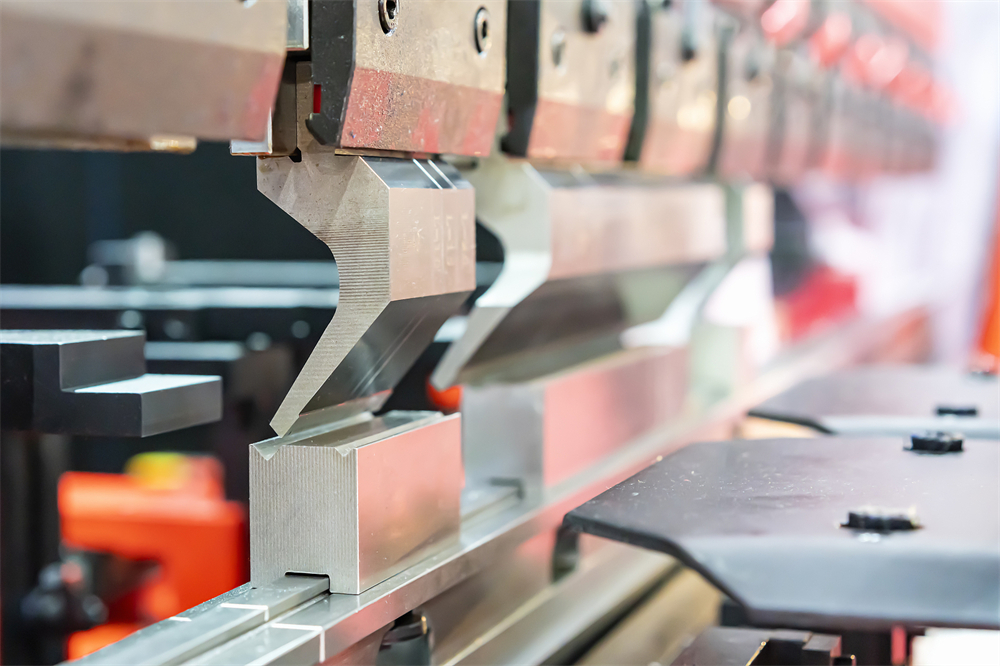
Accuracy and Productivity Factors
Accuracy is not just about the machine’s ability to hit a target; it is about repeatability. Several features contribute to this:
Crowning Systems
When a press brake applies pressure, the bed and the ram naturally deflect or ‘bow’ in the center. Without compensation, the bend angle will be wider in the middle than at the ends. A crowning system (either hydraulic or mechanical) counteracts this deflection. Mechanical crowning is often preferred for its precision and lack of dependence on oil temperature. HARSLE machines often feature CNC-controlled crowning that automatically adjusts based on the programmed tonnage.
Backgauge Complexity
The backgauge is the ‘stop’ that positions the metal. A basic 2-axis backgauge (X and R) moves forward/backward and up/down. For complex parts with multiple bends or tapered flanges, a 4-axis (X, R, Z1, Z2) or even a 6-axis backgauge is necessary. The more axes you have, the less manual handling the operator needs to do, which drastically increases productivity and safety.
CNC Controllers
The ‘brain’ of the machine is the CNC controller. Systems like the Delem DA-66T or DA-69T offer 3D visualization, allowing operators to see the part being bent in real-time. These controllers can automatically calculate the bend sequence, check for collisions, and suggest the best tool setup. High-end controllers also support offline programming, meaning the engineering department can prepare the programs while the machine is still running another job.
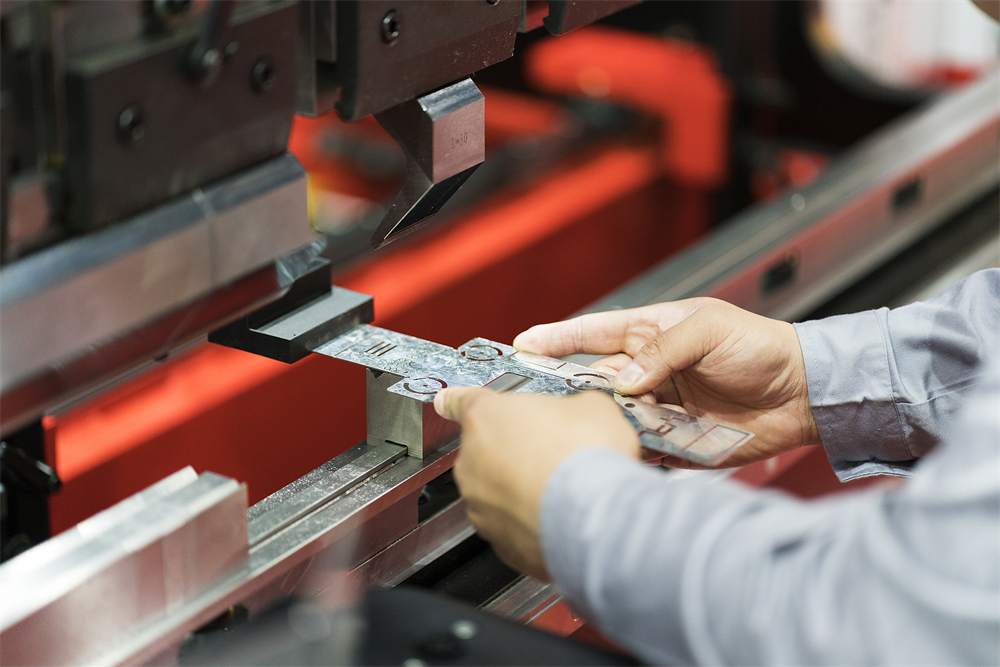
Supplier Evaluation: Why HARSLE?
When you Choose Machine Metal Fabrication Shop equipment, the manufacturer is as important as the machine itself. Evaluating a supplier involves looking at their manufacturing standards, component sourcing, and after-sales support.
HARSLE has established itself as a leader in the industry by focusing on ‘Value Engineering.’ This means providing high-end features—like laser safety guards, quick-release clamping, and premium CNC systems—at a competitive price point. When evaluating HARSLE or any supplier, ask the following:
- Component Quality: Does the machine use world-class brands for its electronics and hydraulics?
- Technical Support: Is there a dedicated team for remote troubleshooting and on-site training?
- Warranty and Parts: What is the warranty period, and are wear parts kept in stock for immediate shipping?
- Customization: Can the manufacturer modify the stroke, open height, or throat depth to suit specific needs?
Cost and Return on Investment (ROI)
The true cost of a press brake is the Total Cost of Ownership (TCO). This includes the purchase price, energy consumption, maintenance, and the cost of labor. A cheaper machine might seem attractive initially, but if it requires frequent repairs or has a slow setup time, it will cost more in the long run.
To calculate ROI, consider the following:
| Factor | Impact on ROI |
|---|---|
| Energy Efficiency | Electric and Hybrid models can reduce electricity bills by up to 60%. |
| Setup Speed | Quick-change tooling and CNC programming can reduce setup time from 30 minutes to 5 minutes. |
| Scrap Reduction | Precision crowning and high-end backgauges can reduce material waste by 5-10%. |
| Labor Costs | Intuitive controllers allow less skilled (and less expensive) labor to operate the machine effectively. |
By investing in a higher-quality HARSLE CNC press brake, most shops find that the machine pays for itself within 18 to 24 months through increased throughput and reduced waste.
Frequently Asked Questions (FAQ)
1. What is the difference between NC and CNC press brakes?
An NC (Numerical Control) press brake typically controls only the depth of the ram and the position of the backgauge with simple inputs. A CNC (Computer Numerical Control) press brake uses a sophisticated computer to manage multiple axes, crowning, and bending sequences automatically, often with graphical interfaces.
2. How do I know if I need a crowning system?
If you are bending parts longer than 2 meters (approx. 6-7 feet), a crowning system is almost always necessary to ensure a consistent angle across the entire length of the bend. For shorter parts, it may be less critical but still beneficial for high-precision work.
3. Can I bend stainless steel on a standard press brake?
Yes, but stainless steel requires significantly more tonnage (roughly 50% more) than mild steel of the same thickness. It also requires specialized tooling to prevent surface marking and to handle the material’s higher springback.
4. What maintenance is required for a hydraulic press brake?
Regular maintenance includes checking oil levels, changing filters, inspecting hoses for leaks, and greasing the guideways and backgauge screws. Keeping the machine clean and the oil cool is key to longevity.
Conclusion: Making the Right Choice
Choosing the right press brake is a balancing act between current needs and future growth. By focusing on the Press Brake Buying: Choose Machine Metal Fabrication Shop criteria outlined in this guide—tonnage, length, drive system, and control technology—you can ensure that your investment drives your business forward. HARSLE is committed to providing the metal fabrication industry with machines that combine precision, durability, and ease of use.
Ready to upgrade your shop’s capabilities? Contact the experts at HARSLE today for a personalized consultation and a detailed quote tailored to your specific production requirements. Let us help you find the perfect bending solution for your business.












