
Press Brake Applications in Elevator and Lift Component Fabrication: A Comprehensive Industrial Guide


Introduction to Press Brake Applications in Elevator and Lift Component Fabrication
The elevator and lift industry is one of the most demanding sectors in modern urban infrastructure. As buildings reach higher into the sky, the requirements for safety, precision, and aesthetic appeal in elevator components become increasingly stringent. Central to the manufacturing of these complex systems is the press brake. Press Brake Applications In Elevator Lift Component Fabrication are diverse, ranging from the structural skeleton of the lift car to the highly polished decorative panels that passengers interact with daily.
In this industrial guide, we will explore how HARSLE’s advanced CNC press brakes facilitate the production of high-quality elevator parts. We will delve into the technical nuances of bending various materials, the specific machine configurations required for the industry, and the workflow optimizations that lead to increased productivity. Whether you are a manufacturer looking to upgrade your facility or a technical engineer seeking to understand the intricacies of lift fabrication, this article provides a deep dive into the essential role of metal bending technology.
Application Scenario: Key Components in Elevator Manufacturing
Elevator fabrication involves a wide array of parts, each with unique geometric and structural requirements. The versatility of a CNC press brake allows it to handle everything from heavy-duty structural steel to thin-gauge decorative stainless steel. Below are the primary application scenarios where press brakes are indispensable.
1. Elevator Car (Cabin) Enclosures
The elevator car is the most visible part of the system. It consists of wall panels, ceilings, and floors. These components require precise 90-degree bends and often complex multi-bend profiles to ensure they fit together seamlessly. Any deviation in the bending angle can lead to gaps or misalignments, which are unacceptable in high-end installations. Press brakes ensure that the large sheets of stainless steel or powder-coated carbon steel are bent with uniform accuracy across their entire length.
2. Door Panels and Frames
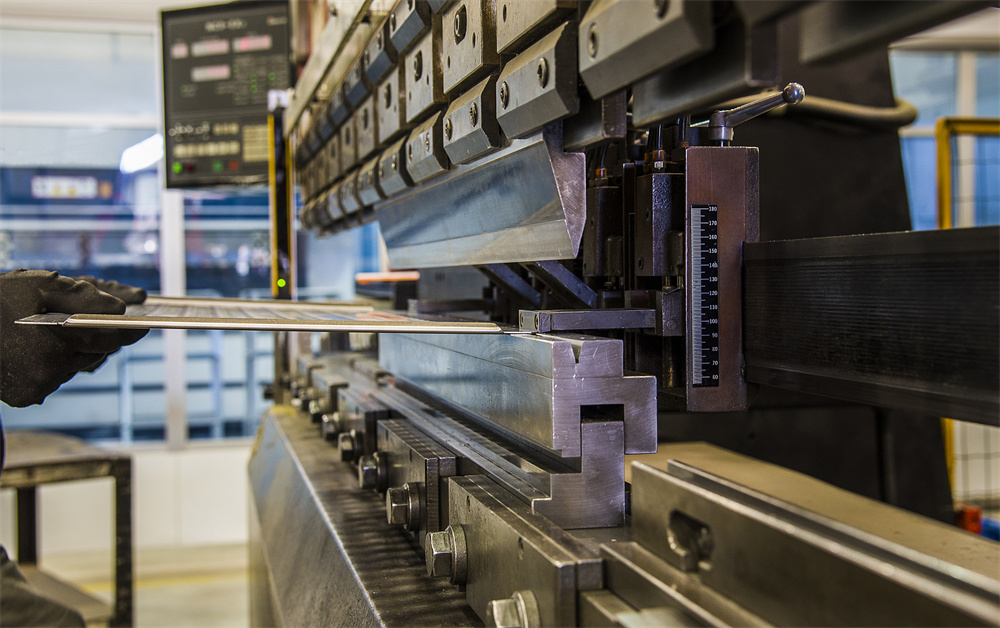
Elevator doors must operate smoothly and withstand frequent use. The fabrication of door panels involves creating stiffening ribs and precise edges that house the sliding mechanisms. The frames (jambs) also require complex bending to accommodate the structural interface between the elevator shaft and the building floor. High-speed CNC backgauges are critical here to handle the rapid positioning required for these multi-step bending sequences.
3. Guide Rail Brackets and Structural Supports
While the interior is about aesthetics, the structural components are about safety and load-bearing capacity. Guide rail brackets hold the rails that the elevator travels on. These are typically made from thicker galvanized or hot-rolled steel. Press brakes used for these applications must provide high tonnage and exceptional repeatability to ensure that every bracket is identical, maintaining the vertical alignment of the lift system.
4. Control Panel Housings and Sills
The fixtures inside the car, such as the COP (Car Operating Panel) and the floor sills, require intricate bending. Sills, often made of extruded aluminum or heavy stainless steel, must be bent to withstand the weight of passengers and freight carts crossing over them. Small-scale, high-precision bending is the hallmark of these components.
Material and Process Requirements
The elevator industry utilizes a specific set of materials that demand specialized handling during the bending process. Understanding these requirements is vital for selecting the right Press Brake Applications In Elevator Lift Component Fabrication strategy.
Stainless Steel (Aesthetic and Functional)
Stainless steel (grades 304 and 316) is the standard for elevator interiors due to its durability and appearance. However, stainless steel has a high yield strength and significant springback. Fabricators must use CNC controllers with advanced springback compensation algorithms. Furthermore, to prevent surface marring on polished or mirrored finishes, “no-mar” bending techniques—such as using urethane die inserts or protective films—are essential.
Galvanized and Carbon Steel
For the hidden structural parts, galvanized steel offers excellent corrosion resistance. The challenge here is the thickness variation and the potential for the zinc coating to flake if the wrong tooling is used. Press brakes must be calibrated to handle the specific tonnage requirements of these tougher materials without compromising the integrity of the coating.
Precision and Tolerance Standards
In elevator fabrication, tolerances are often as tight as +/- 0.5mm. This is because the components are part of a larger assembly where cumulative errors can lead to mechanical failure or excessive noise during operation. The use of hydraulic crowning systems is mandatory to ensure that the bend angle remains consistent across the entire length of long panels, preventing the “canoe effect” where the center of the bend is shallower than the ends.
Recommended Machine Configuration for Elevator Fabrication
To meet the rigorous demands of the lift industry, a standard press brake is often insufficient. HARSLE recommends a specific configuration tailored for high-precision, high-volume production.
1. Advanced CNC Control Systems
Controllers like the Delem DA-66T or DA-69T are preferred. These systems offer 3D visualization, allowing operators to see the bending sequence before the first hit. This reduces setup time and eliminates errors in complex part geometries. The ability to import CAD files directly into the controller ensures that the digital design is perfectly translated into the physical part.
2. Multi-Axis Backgauge (6-Axis or more)
Elevator components often have asymmetrical shapes. A 6-axis backgauge (X1, X2, R1, R2, Z1, Z2) allows for independent movement of the gauge fingers, enabling the machine to grip and position complex parts securely. This is particularly useful for door frames and structural brackets that require non-parallel bends.
3. Hydraulic Crowning and Deflection Compensation
As mentioned, maintaining a consistent angle over 3 or 4 meters is critical for wall panels. A CNC-controlled hydraulic crowning system automatically adjusts the bed’s deflection in real-time based on the tonnage applied, ensuring a perfect 90-degree bend from end to end.
4. Specialized Tooling and Quick-Change Systems
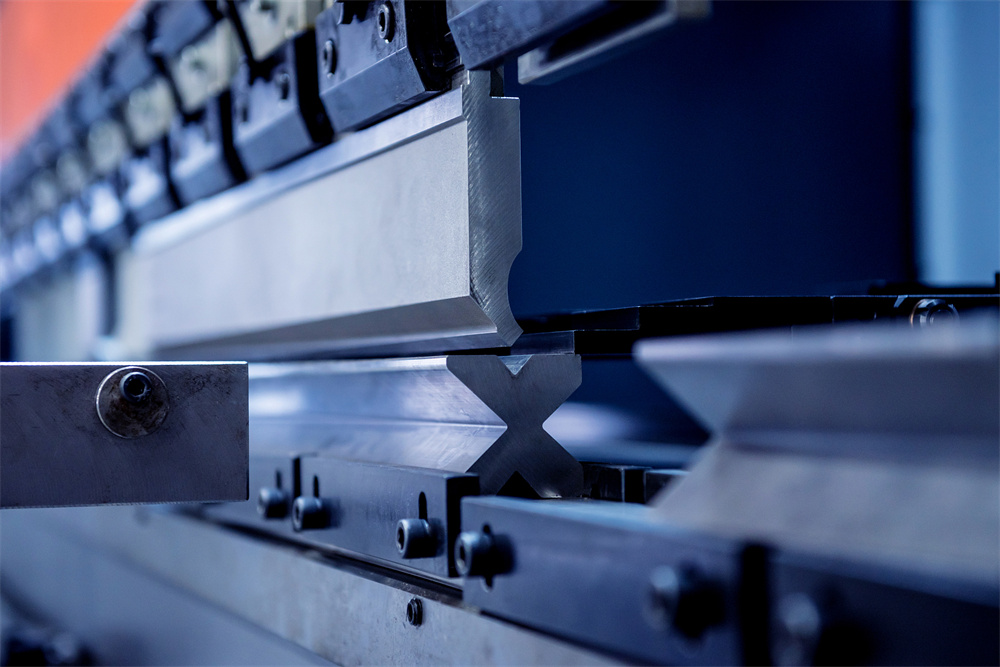
Time is money in high-volume fabrication. Quick-change clamping systems (like the Wila or Promecam styles) allow operators to switch between different tool sets in minutes. For elevator work, gooseneck punches are often required to clear deep returns on door channels, while multi-V dies allow for quick transitions between different material thicknesses.
Workflow: From Raw Sheet to Finished Component
The efficiency of Press Brake Applications In Elevator Lift Component Fabrication depends on a streamlined workflow. Here is how a typical production cycle looks in a modern facility:
- Design and Simulation: Engineers create the part in 3D CAD software. This file is then processed through CAM software to determine the optimal bending sequence and tool selection, ensuring no collisions occur during the process.
- Material Preparation: Sheets are laser-cut or sheared to size. For decorative panels, a protective laser film is often applied to the stainless steel to protect the surface during handling and bending.
- Machine Setup: The operator loads the CNC program. The backgauge moves into position, and the required tooling is installed using the quick-change system.
- The Bending Process: The operator follows the 3D instructions on the screen. For large panels, sheet followers (front supports) may be used to assist the operator in lifting the material as it bends, preventing back-bending and reducing physical strain.
- Quality Inspection: The first part is checked using digital protractors or laser angle measurement systems integrated into the press brake. Once verified, the batch production begins.
Productivity Benefits of Using HARSLE Press Brakes
Investing in high-quality machinery for elevator fabrication yields significant long-term benefits. HARSLE machines are designed to maximize these advantages:
- Reduced Material Waste: Precision bending means fewer scrapped parts. In an industry where high-grade stainless steel is a major cost driver, reducing waste directly impacts the bottom line.
- Enhanced Safety: Modern press brakes come equipped with laser guarding systems (like DSP or LazerSafe) that protect the operator without slowing down production. This is vital for maintaining a safe workplace in high-speed environments.
- Consistency Across Batches: Whether you are bending the first or the thousandth part, the CNC system ensures identical results. This is crucial for elevator companies that provide replacement parts years after the original installation.
- Energy Efficiency: HARSLE’s servo-hybrid press brakes consume significantly less power than traditional hydraulic systems, reducing operational costs and the carbon footprint of the manufacturing facility.
Case Example: Upgrading a Lift Component Factory
A mid-sized elevator manufacturer in Southeast Asia was struggling with manual press brakes that led to a 15% rejection rate on decorative door panels due to angle inconsistencies and surface scratches. After consulting with HARSLE, they implemented a 160T/3200mm CNC Press Brake equipped with a Delem DA-66T controller and a hydraulic crowning system.
The results were immediate. The rejection rate dropped to less than 1%, and the setup time for new parts was reduced by 60%. By utilizing the 3D simulation feature, they were able to design more complex, interlocking panel systems that reduced the need for secondary welding, further speeding up their assembly line. This transition allowed them to take on larger contracts for luxury high-rise developments where aesthetic perfection was a non-negotiable requirement.
Frequently Asked Questions (FAQ)
What is the best press brake for bending stainless steel elevator panels?
For stainless steel panels, a CNC hydraulic press brake with a high-precision controller (like Delem) and a crowning system is best. It is also important to use specialized tooling and protective films to avoid scratching the polished surface.
How do I calculate the tonnage needed for elevator brackets?
Tonnage depends on the material type, thickness, and the V-opening of the die. For thick structural brackets (e.g., 6mm-10mm steel), you will typically need a machine in the 100-ton to 200-ton range. HARSLE provides tonnage charts and software to help calculate this accurately.
Can one press brake handle both thin decorative sheets and thick structural parts?
Yes, provided the machine has a wide enough range of pressure control and you have the appropriate interchangeable tooling. A 160-ton machine is often a versatile “sweet spot” for many elevator manufacturers.
How often should a press brake used in lift fabrication be maintained?
Daily checks of oil levels and cleanliness are essential. A full professional service, including hydraulic oil filtration and calibration of the backgauge and ram, should be performed every 2,000 operating hours to maintain the high precision required for elevator components.
Conclusion: Elevate Your Production with HARSLE
The role of Press Brake Applications In Elevator Lift Component Fabrication cannot be overstated. From the structural integrity that ensures passenger safety to the flawless finish of the cabin interior, the press brake is the heart of the fabrication process. By choosing the right machine configuration and following industry best practices, manufacturers can achieve unprecedented levels of efficiency and quality.
At HARSLE, we specialize in providing the metalworking industry with cutting-edge solutions tailored to specific application needs. Our range of CNC press brakes is engineered for precision, durability, and ease of use. If you are looking to enhance your elevator component production or have questions about the best machinery for your facility, our team of experts is ready to assist you. Contact HARSLE today to discover how we can help you reach new heights in manufacturing excellence.


