
Comprehensive Guide: How to Troubleshoot Press Brake Bend Angle Variation Across the Workpiece


Introduction to Bend Angle Consistency in Metal Fabrication
In the world of precision metal fabrication, achieving a consistent bend angle across the entire length of a workpiece is one of the most significant challenges operators face. Whether you are working with a small bracket or a four-meter-long structural component, even a minor deviation in the bend angle—often referred to as the ‘canoe effect’ or ‘bowing’—can lead to significant assembly issues, structural weaknesses, and costly material waste. For manufacturers using HARSLE machinery, understanding the mechanics of these variations is the first step toward achieving perfection in every stroke.
Bend angle variation typically manifests as a difference between the angle at the ends of the workpiece compared to the center. In most cases, the center of the bend tends to be more obtuse (wider) than the ends. This phenomenon is primarily caused by the physical deflection of the machine’s frame, ram, and bed under the immense pressure required to deform metal. However, other factors, including material properties, tooling wear, and hydraulic synchronization, also play critical roles. This guide provides a deep dive into how to troubleshoot press brake bend angle variation across the workpiece, ensuring your production line remains efficient and accurate.
As industries move toward higher automation and tighter tolerances, the tolerance for error has shrunk. A variation of just 0.5 degrees can be the difference between a high-quality part and a rejected one. By mastering the troubleshooting techniques outlined in this article, operators can maximize the lifespan of their HARSLE equipment and maintain a competitive edge in the market. We will explore the technical nuances of machine deflection, the importance of crowning systems, and the environmental variables that often go unnoticed in a busy shop floor environment.
Key Considerations for Identifying Angle Variations
Before diving into mechanical adjustments, it is essential to categorize the potential causes of angle variation. The first consideration is Material Consistency. Sheet metal is rarely perfectly uniform. Variations in thickness, even within the same batch, can lead to different resistance levels during the bend. Furthermore, the grain direction of the metal significantly impacts springback. Bending with the grain versus against the grain will yield different results, and if a long workpiece has inconsistent grain orientation, the angle will naturally vary across its length.
The second major consideration is Machine Deflection. Every press brake, regardless of its build quality, will experience some level of deflection when tonnage is applied. The side frames of the machine tend to spread apart, and the ram and bed bow away from each other in the center. This creates a larger gap between the punch and the die in the middle of the machine compared to the ends, resulting in a shallower bend (a wider angle) in the center. Troubleshooting this requires a thorough understanding of the machine’s crowning system and its ability to compensate for this physical reality.
Thirdly, Tooling Condition and Alignment must be evaluated. Worn dies or punches can cause uneven pressure distribution. If the tooling is not perfectly seated or if there is debris between the tool and the holder, the resulting bend will be inconsistent. Operators should also check for ‘ram drift’ or synchronization issues between the Y1 and Y2 cylinders. If one side of the ram is slightly lower than the other, the angle will vary linearly from one end of the workpiece to the other, rather than bowing in the center.
Finally, consider the Environmental and Operational Factors. Temperature fluctuations in the hydraulic oil can affect the viscosity and, consequently, the responsiveness of the valves. Similarly, the cleanliness of the machine and the lubrication of the guides play a subtle but vital role in maintaining the precision of the ram’s movement. A comprehensive troubleshooting approach must account for these external variables alongside the mechanical and material factors.
Technical Details: The Mechanics of Deflection and Compensation
To effectively troubleshoot press brake bend angle variation across the workpiece, one must understand the physics of the ‘C-frame’ deflection. When the hydraulic cylinders apply force to the ram, the reaction force from the workpiece pushes back. Because the cylinders are located at the ends of the ram, the center of the ram and the center of the bed are the points of maximum deflection. This is why the center of a long part often lacks the ‘depth’ of the ends, leading to an under-bent middle section.
Crowning Systems: The Primary Solution
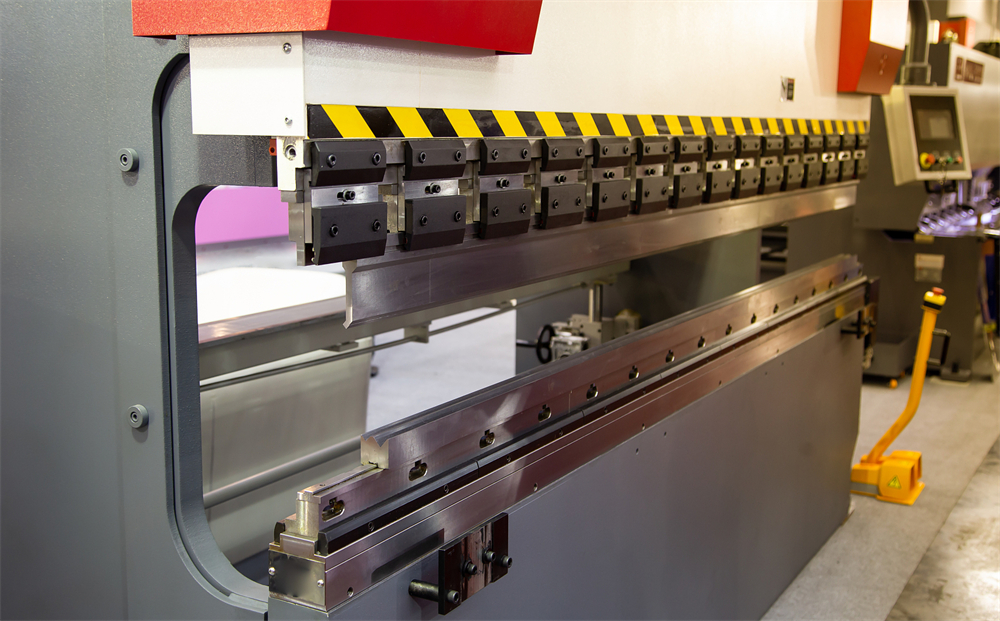
Modern HARSLE press brakes utilize crowning systems to counteract deflection. There are two primary types: Hydraulic Crowning and Mechanical Crowning. Hydraulic crowning involves auxiliary cylinders built into the lower bed. As the bending tonnage increases, the CNC controller activates these cylinders to push the center of the bed upward, mirroring the deflection of the ram. Troubleshooting a hydraulic crowning system involves checking the proportional valves and ensuring the CNC’s crowning table is correctly calibrated for the material type and thickness being used.
Mechanical crowning, on the other hand, uses a series of wedges or ‘waves’ in the lower tool holder. These wedges are adjusted via a motor to create a curve in the bed. Mechanical crowning is often preferred for its stability and lack of reliance on hydraulic seals. If you notice angle variation, check if the mechanical crowning motor is reaching its commanded position or if there is mechanical binding in the wedge system. A common troubleshooting step is to perform a ‘dry run’ with a dial indicator to ensure the bed is actually moving as the CNC commands.
Ram Parallelism and Y1/Y2 Synchronization
The Y1 and Y2 axes represent the two hydraulic cylinders controlling the ram. If these are not perfectly synchronized, the ram will tilt. This results in a ‘slanted’ bend where one end of the part is over-bent and the other is under-bent. Most modern CNC systems use linear encoders to track the position of each cylinder to within microns. Troubleshooting this involves checking the encoder scales for dirt or damage and ensuring the hydraulic valves are firing symmetrically. If the variation is linear across the workpiece, the issue is almost certainly Y1/Y2 synchronization rather than crowning.
The Role of Tooling and Bed Leveling
Sometimes the issue isn’t the machine’s electronics but its physical foundation. If the press brake is not perfectly leveled on the shop floor, the frame can twist slightly, leading to inconsistent results. Furthermore, the ‘bed-to-ram’ parallelism must be checked periodically. Using a precision ground block and a feeler gauge, an operator can verify if the distance between the ram and the bed is consistent across the entire length of the machine when under no load. If this baseline is off, no amount of crowning will perfectly fix the bend angle variation.
Selection Advice: Choosing the Right Machine for Precision
When selecting a press brake to minimize bend angle variation, the first feature to look for is a High-Quality CNC Crowning System. For long workpieces (over 2.5 meters), an automatic crowning system is not just an option; it is a necessity. HARSLE’s WE67K series, for example, integrates advanced crowning technology that communicates directly with the DELEM or Cybelec controller to calculate the required compensation in real-time based on material data.
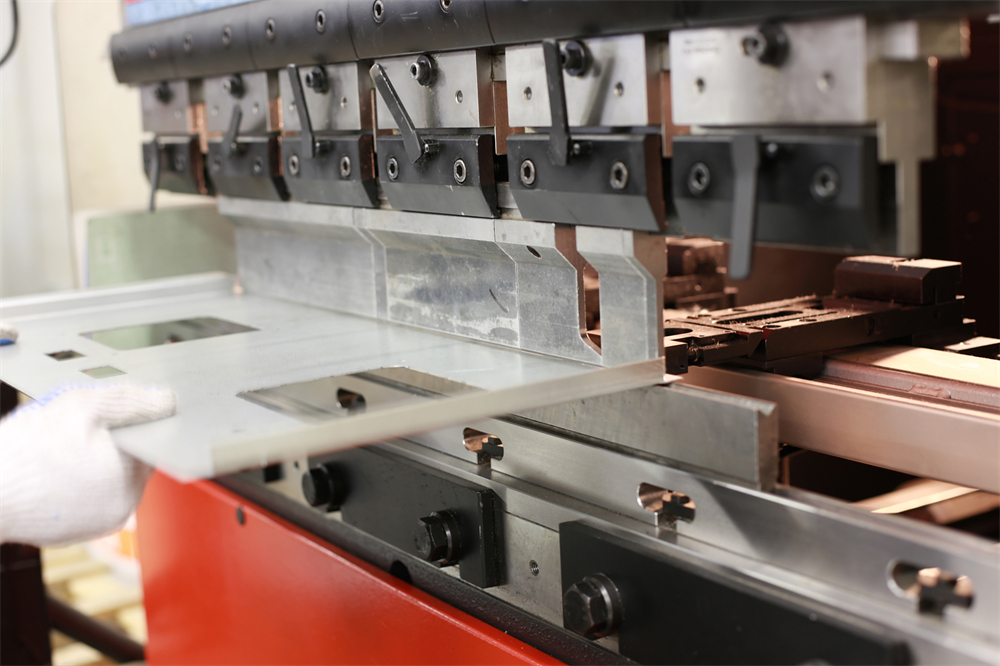
Another critical factor is the Frame Rigidity. A heavier, more robust frame will naturally deflect less, putting less strain on the crowning system. When comparing machines, look at the weight of the machine and the thickness of the side plates. A machine that is ‘overbuilt’ for its tonnage rating will always provide more consistent results than a lighter machine pushed to its limits. Additionally, consider the Throat Depth; while a deeper throat allows for larger flanges, it can also introduce more frame flex, so choose a balance that fits your specific production needs.
Checklist for Buyers:
- Control System: Does the CNC support multi-axis crowning and real-time deflection compensation?
- Encoder Precision: Are the linear encoders high-resolution (0.001mm) and protected from dust?
- Hydraulic Components: Are the valves from reputable brands like Rexroth or Hoerbiger? High-quality valves ensure consistent response times.
- Tooling Compatibility: Does the machine use standard European or New Standard tooling that is easy to replace and maintain?
- Angle Measurement Systems: For ultra-high precision, consider machines equipped with laser angle measurement systems that adjust the bend on the fly.
Finally, consider the After-Sales Support. Troubleshooting complex angle variations often requires expert guidance. Choosing a manufacturer like HARSLE ensures you have access to technical documentation and support teams who understand the specific kinematics of your machine. Investing in a machine with a user-friendly interface also reduces the likelihood of operator error, which is a frequent but overlooked cause of angle variation.
Frequently Asked Questions (FAQ)
1. Why is my bend angle different in the middle than at the ends?
This is usually due to machine deflection. Under pressure, the ram and bed bow away from each other in the center. Without a crowning system to compensate by pushing the center of the bed up, the punch does not penetrate as deeply into the die in the middle, resulting in a wider (more obtuse) angle.
2. How do I know if my crowning system is working correctly?
You can test this by bending a long test strip of material. If the angle is consistent at the ends but wide in the middle, increase the crowning value in the CNC. If the middle is over-bent (tighter angle), decrease the crowning. If the machine does not respond to these changes, the crowning motor or hydraulic valve may be faulty.
3. Can worn tooling cause angle variation across the workpiece?
Yes. If the die or punch is worn unevenly—which often happens if the machine is frequently used for small parts in the center—the tooling profile will change. When you eventually bend a long part, the worn center section will produce a different angle than the less-worn ends.
4. Does material grain direction really matter?
Absolutely. Metal is more ‘stiff’ when bending against the grain. If a large sheet has been sheared in a way that the grain direction changes relative to the bend line, or if the sheet has internal stresses from the rolling process, the springback will vary, causing angle inconsistencies.
5. How often should I calibrate the Y1 and Y2 axes?
For high-precision shops, a quick check of the Y1/Y2 synchronization should be part of the monthly maintenance routine. A full recalibration is typically required after any major hydraulic service or if you notice a consistent linear variation in bend angles from left to right.
6. What is the benefit of laser angle measurement?
Laser angle measurement systems monitor the bend in real-time and feed data back to the CNC. If the system detects the angle is not reaching the target due to material thickness variation or deflection, it automatically adjusts the ram depth during the stroke to ensure perfection.
Conclusion: Achieving Perfection in Every Bend
Troubleshooting press brake bend angle variation across the workpiece is a blend of science, mechanical intuition, and meticulous maintenance. By understanding that deflection is an inherent physical property of metal bending, operators can stop fighting the machine and start using its compensation systems effectively. Whether it is through the fine-tuning of a HARSLE mechanical crowning system or the careful selection of high-quality tooling, the goal remains the same: absolute precision.
Consistency in the shop floor starts with the machine but ends with the operator’s knowledge. Regularly checking for frame levelness, maintaining hydraulic oil quality, and understanding the nuances of material springback are all essential components of a successful fabrication process. As you continue to push the boundaries of what is possible with sheet metal, remember that a well-maintained and correctly calibrated press brake is your most valuable asset. By following the steps outlined in this guide, you can eliminate the ‘canoe effect’ and ensure that every part leaving your facility meets the highest standards of quality and accuracy.
For those looking to upgrade their capabilities, HARSLE offers a range of CNC press brakes designed specifically to tackle these challenges. With advanced software and robust hardware, our machines provide the stability and control needed for the most demanding industrial applications. Stay proactive in your maintenance, stay informed on your technical settings, and your press brake will provide years of reliable, high-precision service.












